REVIEW · VENICE
Venice Film Tour: Explore Iconic Movie Locations
Book on Viator →Operated by deTourist Venice Valerio Coppo · Bookable on Viator
Venice turns into a movie set. This Venice Film Tour strings together real spots from classic and modern films across the city, led by Valerio Coppo. I love the way the guide ties each stop to what was filmed there, so Venice feels like a story you can actually walk through. One watch-out: the route is packed for about two hours, so bring comfortable shoes and expect steady walking.
I also like that the experience keeps things practical and photo-friendly, not just a list of famous sights. You’ll get short clips on a tablet to match the scene to the location, plus a mobile ticket that keeps the whole thing easy to manage while you’re moving.
In This Review
- Key highlights you’ll notice fast
- Entering Venice from the train station that launches big-screen plots
- Campo del Ghetto to San Stae: Senso’s romance, then a Grand Canal funeral scene
- Grand Canal as cinema’s early proving ground, not just a pretty view
- Rialto markets: the terrace scene from The Tourist and Bond-style theatrics
- Santa Maria dei Miracoli to Scuola Grande di San Marco: Welles and Sorrentino on the same route
- Ca’ Rezzonico and Teatro La Fenice: Drax’s office and Venice’s phoenix theatre
- Scala Contarini del Bovolo to Campo Santa Maria Formosa: Othello’s legend and Spider-Man’s fake damage
- Campo San Barnaba to the Gritti Palace: Indiana Jones, Summer Time, and Woody Allen
- Basilica di Santa Maria della Salute and Piscina Sant’Agnese: Lara Croft’s Illuminati and Hepburn’s routine
- Hotel Danieli and Doge’s Palace: Moonraker gadgets and the final-scene kind of square
- Price and value: $185.43 for a guided movie map in about two hours
- Who this Venice Film Tour fits best
- Should you book this Venice Film Tour?
- FAQ
- How long is the Venice Film Tour?
- What is the price per person?
- What language is the tour offered in?
- Is pickup available?
- Are there admission tickets needed for the stop locations?
- What if my trip gets canceled due to weather?
- Is there any access fee I should know about?
Key highlights you’ll notice fast
- Valerio Coppo’s film-to-place storytelling across famous classics and newer hits
- Tablet scene clips so you instantly connect screen and street
- A tight 2-hour pace with frequent, manageable stops
- Quieter lanes and off-the-usual-route corners for a less crowded Venice feel
- Ticket-free stops listed for the locations so you spend more time seeing and less time budgeting
- Private tour setup where only your group participates
Entering Venice from the train station that launches big-screen plots
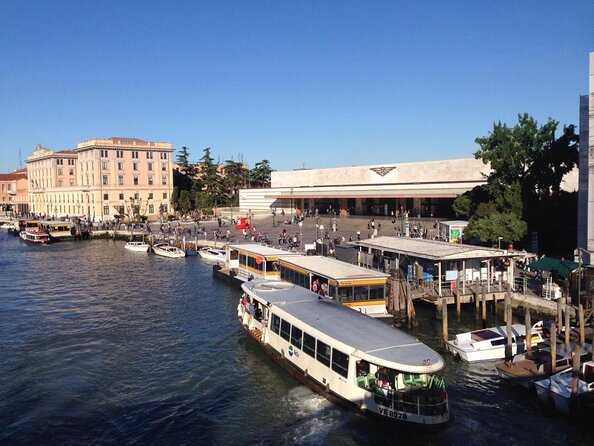
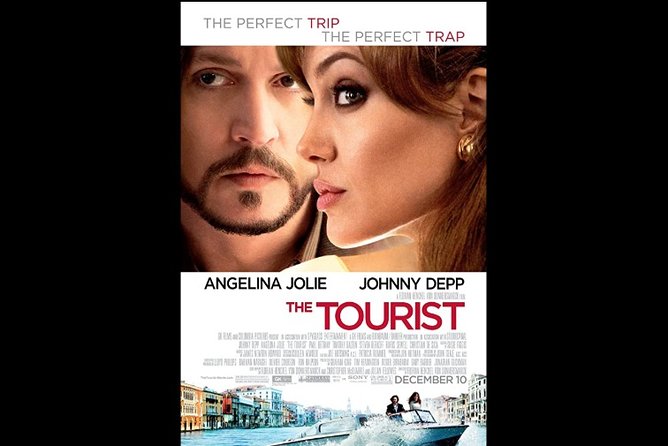
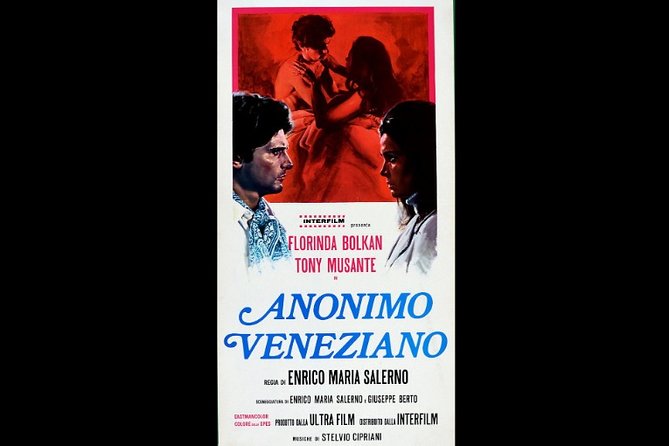
The tour starts at the railway station, a spot filmmakers love because it instantly signals arrival, departure, and trouble. You’ll hear how the station shows up in movies like The Anonymous Venetian (1970) and The Tourist (2010), plus an especially memorable moment from Venice, the moon and you (1958) featuring Alberto Sordi.
What I like about beginning here is simple: it gives you a clear “start scene.” You’re not yet deep into the maze of canals and campos, so you can get your bearings fast before the story gets more cinematic.
You can also read our reviews of more tours and experiences in Venice.
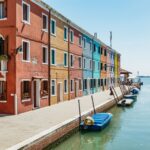
Campo del Ghetto to San Stae: Senso’s romance, then a Grand Canal funeral scene
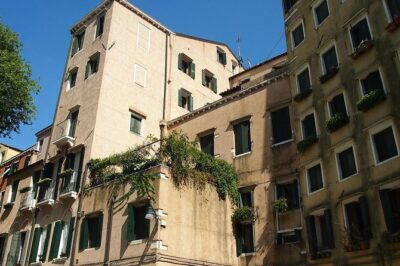
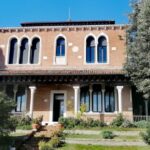
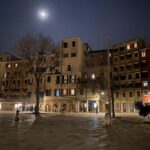
From the station, the walk heads into the Campo del Ghetto in Venice’s Jewish Ghetto area. This is where Luchino Visconti sets the beginning of the passion between Livia Serpieri and Franz Mahler in Senso (1954). It’s a meaningful stop because you’re not only spotting a movie connection; you’re also stepping into one of Venice’s most historically layered neighborhoods.
Then you move on to Chiesa di San Stae (Eustachio), where Don’t Look Back Now (1973) uses the idea of funeral boats in final scenes. The church sits with an imposing Baroque facade facing the Grand Canal, so it’s an easy place to look up and orient yourself even if your camera roll is already full.
Practical tip: expect this to be more about sight lines and atmosphere than big-ticket attractions. The value here is understanding why these spots work on film.
Grand Canal as cinema’s early proving ground, not just a pretty view
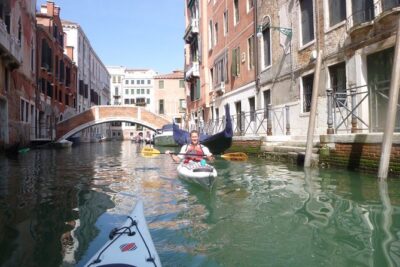
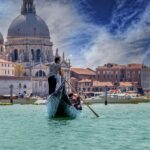
Next comes the Grand Canal, and the guide really frames it as Venice’s original “screen.” In 1896, Alexandre Promio filmed boats and men at work, creating an early rundown in cinema history. After that, the Grand Canal keeps showing up in movies because it’s instantly recognizable: moving water, dense architecture, and lots of cinematic angles.
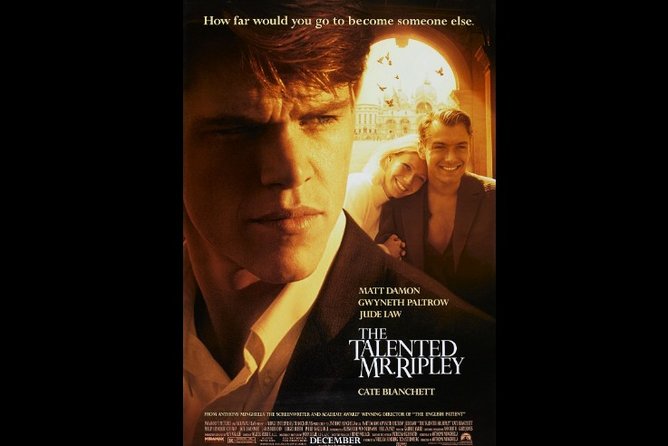
You’ll also connect modern examples to real facades and canal viewpoints, including The Talented Mr. Ripley (1999), where Ripley’s Venetian apartment is presented as a fusion of two canal-facing buildings, and The Merchant of Venice (2004) with Al Pacino.
If you’ve ever watched Venice onscreen and wondered why it looks so specific, this stop answers it. The canal is not a generic backdrop. It’s part of the plot machinery.
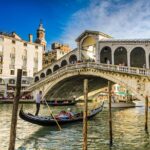
Rialto markets: the terrace scene from The Tourist and Bond-style theatrics
At Mercati di Rialto, you’ll hear about The Tourist (2010), where Johnny Depp launches himself from a terrace onto a stall. This market area gives you that perfect mix of everyday Venice and big-screen surprise, because the location still feels like a working place rather than a stage set.
Across the canal, the tour also points out the kind of palace collapse fans remember from Casino Royale (2006). The movie part is fiction, but the takeaway is real: Rialto’s architecture and slopes are built for drama, even when you’re just walking through for lunch.
Pro move: pause, look across the water, then look back. That back-and-forth is where movie locations start clicking.
Santa Maria dei Miracoli to Scuola Grande di San Marco: Welles and Sorrentino on the same route
A short hop brings you to Chiesa di Santa Maria dei Miracoli, a small, beautiful church known for polychrome marble. Orson Welles chose it for the wedding of Otello and Desdemona in Othello (1952). Even if you’re not a hardcore Welles fan, you’ll appreciate why this kind of ornate interior would be irresistible to a filmmaker.
Right nearby, the tour connects the area to Bread and Tulips (1999), where a flower shop tied to Licia Maglietta’s character appears in the story (the shop itself is fictional, but the filming inspiration is grounded in the neighborhood).
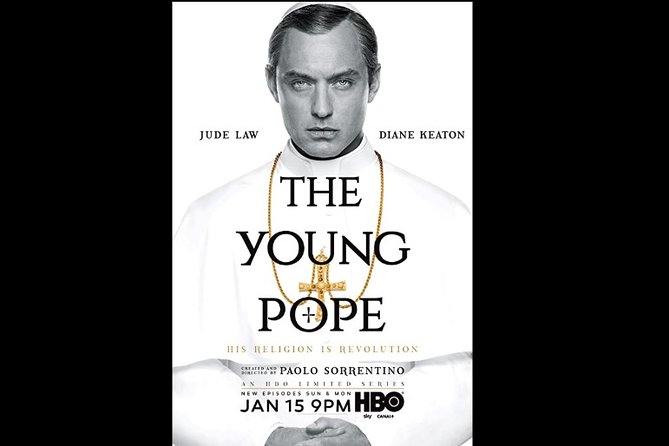
Then the route moves to Scuola Grande di San Marco, a location used for The New Pope (2019) directed by Paolo Sorrentino and starring Jude Law. This kind of stop is great if you like modern prestige TV, because it shows Venice isn’t only “classic movie postcard” territory.

Ca’ Rezzonico and Teatro La Fenice: Drax’s office and Venice’s phoenix theatre
At Ca’ Rezzonico, you’ll hear how the palace becomes a fictional office for Drax in Moonraker (1979). In real life, it functions as a civic museum now, but the movie connection is the point of the stop: seeing how a grand interior space gets repurposed for action and power on screen.
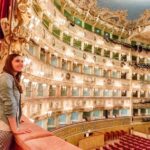
Then you reach Teatro La Fenice, which plays a big role in Senso (1954). The film starts during a performance of Il Trovatore staged at La Fenice, and the stop connects that to the devastating fire in 1996. The theater was rebuilt and reopened in 2003, which adds an extra layer to the “watch the movie here” feeling.
One extra detail I love in this stop: the name La Fenice (the phoenix) fits the building’s history. The theater had already been partially destroyed by a fire in 1836, then it rose again.
Scala Contarini del Bovolo to Campo Santa Maria Formosa: Othello’s legend and Spider-Man’s fake damage
Next up is Scala Contarini del Bovolo, the spiral staircase known through legend as the house of Desdemona. In Orson Welles’s Othello (1952), the location is used as the home of Brabanzio (not in Venice, but in Cyprus in the story), and the tour explains how that choice helped put the spot on the cultural map.
Then you head to Campo Santa Maria Formosa, tied to Spider-Man: Far From Home (2019). In the movie, the “damage” to the campo looks dramatic, but it’s all fictional. In real life, you get to appreciate the corner of Venice that the film temporarily pretended to destroy.
This is the kind of stop that makes the whole tour worth it for people who want surprises. You’re standing in places that look like set design, but they’re still lived-in streets and open squares.
Campo San Barnaba to the Gritti Palace: Indiana Jones, Summer Time, and Woody Allen
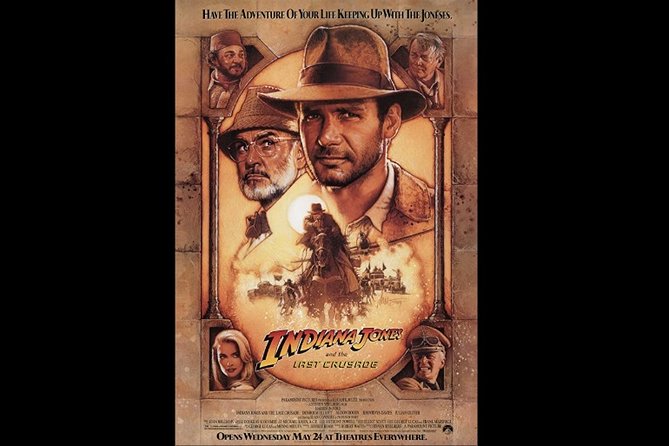
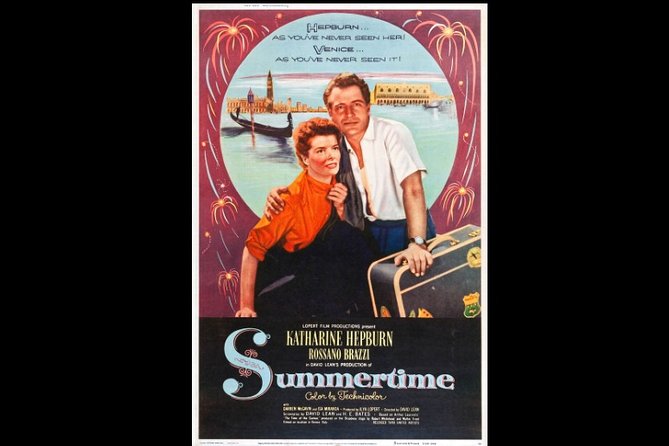
At Campo San Barnaba, you’ll get two kinds of movie nostalgia at once. The tour points to the church area connected to Indiana Jones and the Last Crusade (1989), where Indy finds the X that never indicates the place to dig. Then it also connects the area to Summer Time (1955), with Katharine Hepburn’s character wandering Venice and accidentally falling into the canal near San Barnaba.
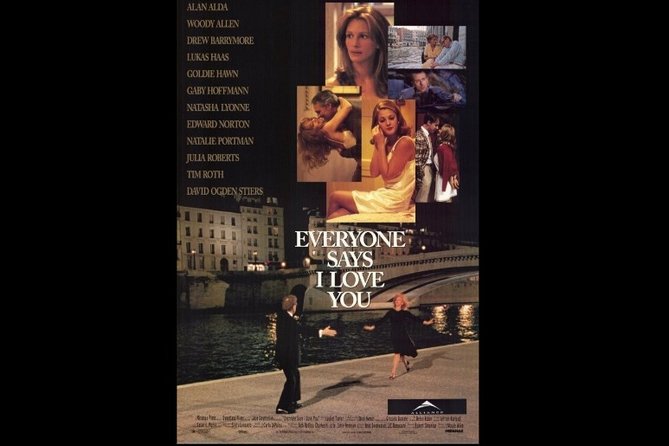
The route continues to Gritti Palace, a luxury hotel once tied to the Doge’s family palace and residences of Vatican ambassadors. More recently, it’s a setting for scenes in Everyone Says I Love You (1996), directed by Woody Allen and starring Julia Roberts.
This stretch works well because it balances action-movie landmarks with elegant Venice textures. One minute you’re in treasure-hunt mode; the next you’re thinking about real hotel history.
Basilica di Santa Maria della Salute and Piscina Sant’Agnese: Lara Croft’s Illuminati and Hepburn’s routine
You’ll then reach Basilica di Santa Maria della Salute, which appears in Lara Croft: Tomb Raider (2001). The tour explains that what shows up in the film isn’t actually the basilica interior you’d expect, since the room used is from a painted setting elsewhere. Still, the basilica’s exterior presence connects you to the cinematic idea of Venice as a clue-filled stage.
This stop also ties to The Talented Mr. Ripley (1999), where the basilica appears behind Ripley in dialogue with Dickie’s father. The tour points out that Ripley’s dialogue happens relative to a terrace at the Hotel Westin Europa & Regina on the opposite side of the canal.
Then you move to Piscina Sant’Agnese, which the tour links to Everyone Says I Love You (1996), including Julia Roberts jogging there. It’s also connected to Summer Time (1955), where Katharine Hepburn freshens up during her Venice stay.
I like these stops because they remind you Venice isn’t only about canals and churches. It’s also about how people live their days in watery spaces.
Hotel Danieli and Doge’s Palace: Moonraker gadgets and the final-scene kind of square
At Hotel Danieli, you’ll hear about multiple layers of film usage. The movie connection includes Vittorio de Sica’s The Journey (1974) starring Sophia Loren and Richard Burton. The tour also connects the hotel to Moonraker (1979), where it’s the hotel of Holly Goodhead, plus Viaggi di Nozze (1995) for the wedding-night story.
Even without stepping inside, this stop gives you a feeling for how Venice premium settings keep getting reused in cinema: grand facades, romantic distance, and views that look expensive even in daylight.
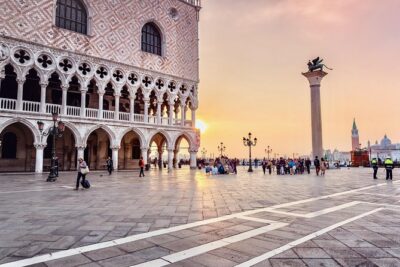
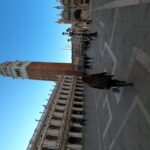
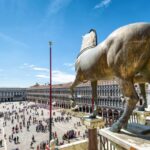
Finally, the tour ends at Doge’s Palace and the surrounding Piazza area. This is where you’ll hear about James Bond moments tied to Moonraker (1979), including the unique gondola-hovercraft idea. The guide also connects Bond’s hotel view in Casino Royale (2006), plus Orson Welles’s choice of the palace facade south of the basilica for an Othello dialogue moment (Othello, 1952).
The stop also links to The Talented Mr. Ripley (1999), where the final scene takes place at café tables in the Piazza. And if you watch modern prestige series, you’ll hear about scenes filmed here for The Young Pope (2019) starring Jude Law and Diane Keaton.
This last section is the payoff: you finish in the city’s most iconic public space, with a dozen film references bouncing around your head in a good way.
Price and value: $185.43 for a guided movie map in about two hours
At $185.43 per person for roughly 2 hours, you’re paying for three things: a licensed guide, a tight route that hits cinematic highlights across Venice, and a curated pace that prevents you from wasting time guessing which places are worth your effort.
This isn’t a “wander alone and hope” experience. The guide does the work of connecting film scenes to the real geography, including quick references and practical navigation between stops. Since it’s offered in English and your group stays together, it’s easier to ask questions than it is on a big bus tour.
A few value notes that matter:
- The tour uses mobile tickets, so you don’t need to manage paper confirmations while walking.
- Pickup is offered, which can save time if you’re managing luggage or starting in a less convenient corner.
- It’s set up as a private tour/activity, meaning only your group participates. For couples, cinephile friends, or families, that can feel more relaxed than being one voice in a crowd.
- Booking tends to happen about 56 days in advance on average, so if your dates are fixed, I’d plan on reserving sooner.
One practical Venice gotcha: on certain dates, people staying outside Venice for a day visit may need to pay a €5 access fee. The tour notes the official city page for details and exemptions, so check that before you go.
Who this Venice Film Tour fits best
I’d put this tour at the top of your list if you fall into any of these categories:
- You love movies and you want the fun “wait, I’ve seen this” moment, but with real Venice context.
- You want less time in crowds and more time in quieter streets, with guidance on where to walk.
- You’re traveling with kids who recognize modern references like Spider-Man and can handle a fast, 2-hour walk.
It also fits if you care about pacing. Most stops are short (often around 10–15 minutes), so the day doesn’t balloon into an all-day commitment.
The tour is listed as suitable for most travelers, and service animals are allowed. It’s also near public transportation, which helps if you need to adjust plans.
Should you book this Venice Film Tour?
Yes, if your goal is a compact Venice hit with a strong theme. The price makes sense when you factor in a licensed guide, a structured 2-hour route, and the film-to-location connections that turn ordinary streets into “I get it” moments.
I’d skip it only if you want a slow, do-your-own-thing day focused on museums and long indoor visits. This tour is built for outdoor scenes, big landmarks, and short stops that keep the story moving.
If you book, wear comfortable shoes, carry water, and come with at least a few films in mind. The guide’s approach rewards that curiosity.
FAQ
How long is the Venice Film Tour?
It runs about 2 hours (approx.). The stops are short, so the walk is designed to keep a steady rhythm across Venice.
What is the price per person?
The tour costs $185.43 per person.
What language is the tour offered in?
The tour is offered in English.
Is pickup available?
Yes. Pickup is offered.
Are there admission tickets needed for the stop locations?
The tour lists the stop locations with free admission. That helps keep the experience from turning into a ticket-line day.
What if my trip gets canceled due to weather?
The experience requires good weather. If it’s canceled due to poor weather, you’ll be offered a different date or a full refund.
Is there any access fee I should know about?
On certain dates, if you’re staying outside Venice and visiting for the day, you may need to pay a €5 access fee. The tour points to the official city page for details and exemptions.