REVIEW · VENICE
Murano & Burano Islands Guided Small-Group Tour by Private Boat
Book on Viator →Operated by City Wonders Ltd · Bookable on Viator
Two islands, one lagoon day, zero hassle. This small-group tour uses a private boat so you avoid the public-water squeeze, while your guide links Murano and Burano to Venice’s artisan roots, often with storytelling that makes the ride fly by. I like that the group stays tight (max 22), which helps you hear history instead of just bobbing along.
I love the glassblowing demonstration in Murano. You get a real working workshop moment, then a chance to browse the gallery and shop with a tour discount. I also love Burano lace-making, plus the free time to wander canal-side walkways and enjoy the island’s postcard colors at your own pace.
One drawback to plan around: the lace-making demonstration is not always available on Monday tours, and the order of what you see can shift based on local conditions and availability. If you’re visiting specifically for a certain demo, it’s worth keeping your expectations flexible.
In This Review
- Key things that make this tour work
- Private water taxi: the most pleasant way to leave Venice
- Murano glassblowing workshop: watching mastery at work
- Murano time: canals, churches, and a chance to breathe
- Burano lace and color: canals, houses, and a museum stop
- Pacing in 5 hours: how the timing really feels
- Price and value vs self-guided ferries
- Should you book this Murano and Burano boat tour?
- FAQ
- How long is the Murano & Burano guided small-group tour?
- Is hotel pickup included?
- How big is the group?
- Does the tour include the glassblowing and lace-making demonstrations?
- Is the lace-making demonstration always available on every day?
- Does Venice have an access fee you should register for?
Key things that make this tour work
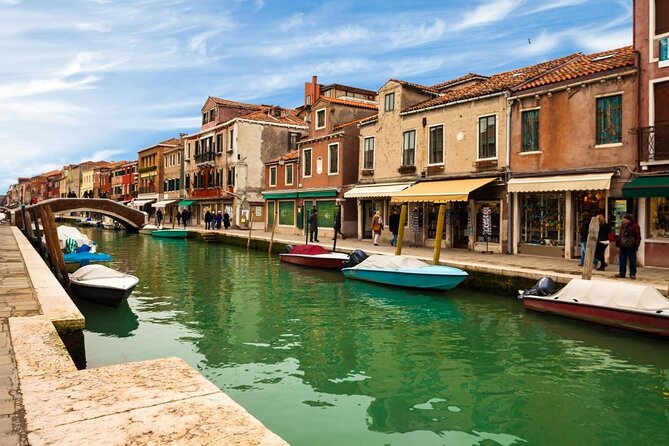
- Private water taxi: your boat is just for your tour group, not a moving crowd.
- Working artisan demos: glassblowing in Murano and lace-making in Burano, with admissions included.
- Small group max 22: easier listening and a more personal feel.
- Real island time: you’re not trapped in a showroom for the whole day.
- Order and demo availability may change due to local schedules.
Private water taxi: the most pleasant way to leave Venice
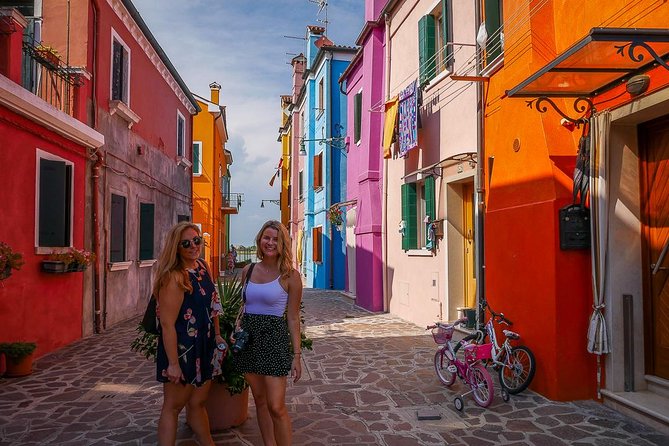
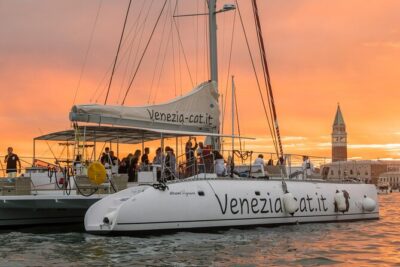
The best part of this day is the transport style. In Venice, most people bounce around by vaporetti (the public water buses). This tour runs on a private boat just for your group, so you get a quieter, less chaotic start and a calmer ride across the lagoon. If you’ve ever tried to figure out which floating stop to run for while everyone else is doing the same, you’ll appreciate how much less stressful this feels.
You also get guided context while you’re on the water. The guide typically uses the boat time to explain Venice as a trading powerhouse and to connect that story to what you’re about to see on the islands. It’s a smart way to use the time, because lagoon travel can otherwise feel like dead time.
Group size matters here. With 22 people or fewer, you’re more likely to hear the guide clearly and to fit your questions in without the tour turning into a lecture you catch only every other sentence. And since you’re not constantly waiting around for a public boarding flow, the day keeps moving with less friction.
You can also read our reviews of more boat tours in Venice



Murano glassblowing workshop: watching mastery at work
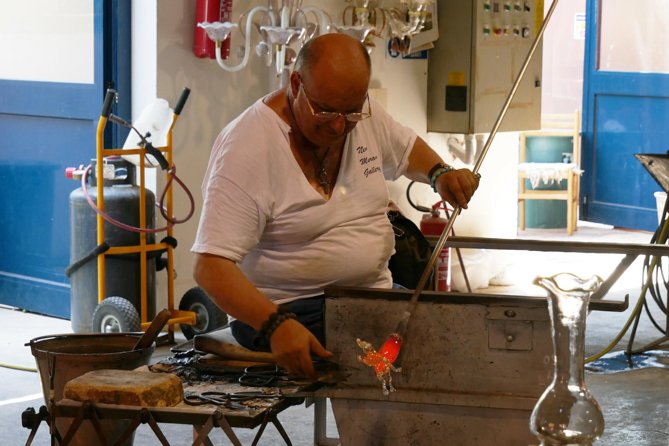
Isola di Murano is the classic reason people make the trip. The tour brings you to a specially chosen glass workshop where you can watch artisans shape molten glass using techniques linked to Murano’s long tradition. The story matters: in medieval times, the craft was protected fiercely, and sharing secrets could be punished severely. That background makes the demo feel more than just a show.
What you’ll actually do here is twofold. First, you watch the glassblowing demonstration—a hands-on look at modern glassblowers using once-guarded know-how. Second, you step into a showroom or gallery space where you can admire finished pieces and browse at your leisure. If you buy something, the tour setup includes a discount, which is a nice bonus if you spot something you truly want to take home.
A key expectation-setting point: the demo is usually brief. Think of it as exposure to the process, not a slow, step-by-step lesson. The trade-off is that you’re not locked away. You get enough time for your own walk and for looking at Murano beyond the workshop doors.
If you’re the type who likes to understand how a craft works (even at a high level), Murano is a strong stop. If you only want hands-on time, keep your expectations realistic and focus on what you can observe: color, timing, and how the glass changes right in front of you.
Murano time: canals, churches, and a chance to breathe
You’ll spend about 2 hours 30 minutes at the Murano stop, and that time is where the tour becomes more than a demo-and-done checklist. Yes, you’ll have the workshop visit. Then you can wander. Murano is quieter than central Venice in a very noticeable way, so it’s a relief if the streets and waterways of Venice start to feel like sensory overload.
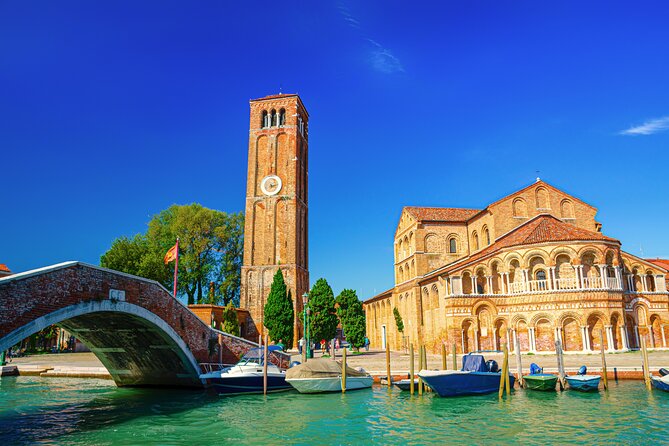
You may also have the option to explore parts of Murano that visitors often miss when they rush: peaceful canals, local corners, and even historic sites such as the Byzantine-style church mentioned as a possible stop. The important thing is that you can choose your own tempo. Some people use the time for photos and a slow coffee. Others look for a second workshop space or just roam until the island’s rhythm clicks.
Also, plan for weather and light. This tour runs in all weather, but the conditions you’ll feel most are heat and sun during the walking portions. Some spots have little shade, so bring a hat, sunscreen, and water, especially in warmer months. Even if you’re moving around with the group, you’ll be outside long enough that comfort will affect how much you enjoy the day.
Burano lace and color: canals, houses, and a museum stop
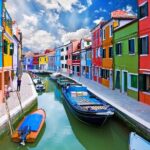
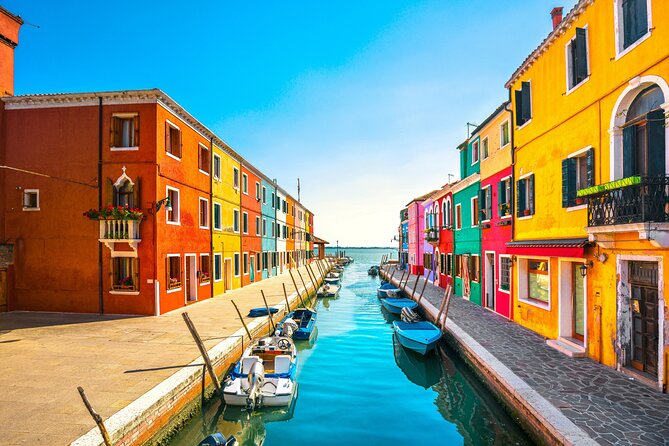
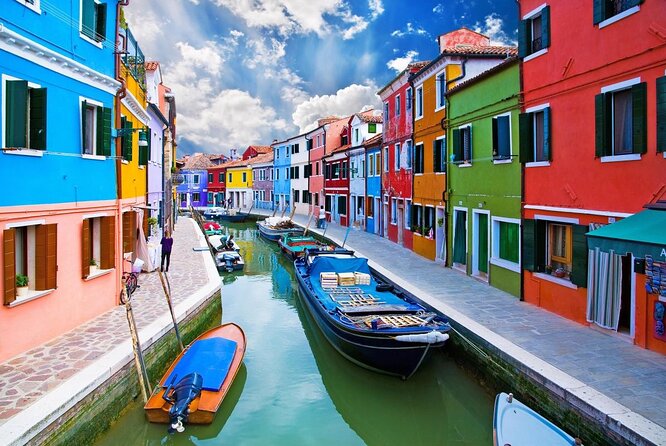
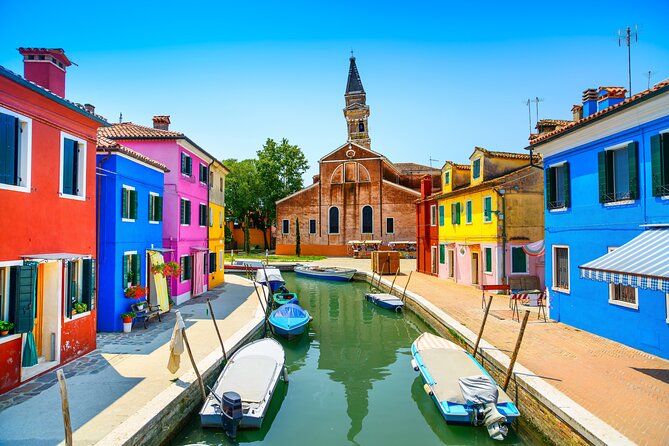
Then comes Isola di Burano, the island famous for handmade lace and for those cheerful, wildly recognizable houses. Burano is less about big monuments and more about small details that hit hard visually. When you arrive, you’ll notice the colors right away—painted so sailors could recognize home from the sea.
The tour’s lace stop is anchored by a lace-making demonstration by local artisans. This is the moment where you get to see the craft being stitched by hand, in the way it has been for generations. As with Murano, expect the demo to be a window into the process, not a long workshop class.
After that, you’ll have time to decide how to spend your 2 hours 30 minutes. The tour includes admission access for a lace museum option, and you can also simply wander the canal-side walkways for photos and atmosphere. A lot of people use Burano time for a meal too—some guides and schedules naturally leave room for lunch, and it fits the island vibe well.
One practical caution: the lace demonstration is not always offered on Monday tours. If you’re visiting on Monday and lace is your main obsession, keep it in mind and plan to enjoy Burano even if that specific moment changes.
Burano is also where the day feels most photogenic. If you enjoy taking time with reflections on water, peeling back layers of color, and finding angles off the main paths, Burano is where you’ll want your camera out and your pace slow.
Pacing in 5 hours: how the timing really feels
This is a roughly 5-hour tour, including lagoon travel and both islands. The itinerary structure is simple: Murano first, then Burano, and then you return to Venice by boat. Still, the order and exact demonstration flow can vary due to local conditions and availability.
In practice, you’re doing two separate island visits with guided moments inside each one. That’s useful because it balances structure with freedom. The guided part gives you meaning: why Murano’s glass mattered, why Burano’s lace survived, and how these crafts tied into Venice’s trade identity. The free part gives you breathing room: you can linger where you like and skip what doesn’t hold your interest.
The biggest timing win is not having to navigate transport yourself. Venice can be tricky even when everything is running smoothly. Here, you get coordinated boat movement and a guide to handle the day’s rhythm, plus the chance to ask questions while you travel.
The other timing win is that you’re not stuck for ages on a single island. Two half-block islands works well for many people because it keeps variety high without turning the day into a sprint. If you’re short on time in Venice, this format gives you two iconic craft destinations in one go.
You can also read our reviews of more guided tours in Venice




Price and value vs self-guided ferries
At $36.28 per person, the key question isn’t whether you could do cheaper. You can. Public ferries and self-guided wandering are often far less expensive. The value here is what you get bundled: private round-trip boat transport for your group, a guide, and admission tickets tied to the demonstrations.
So, the tour is best value if you want:
- less hassle moving around the lagoon
- a guide to explain what you’re seeing while you’re traveling
- access to working artisan demonstrations without having to line everything up yourself
It’s less ideal if you want a long, unstructured museum day where you pay only for transport and wander freely all afternoon. Some people also feel that the demo itself is short, and they’re left thinking they mostly paid for the boat. That’s a fair comparison, as long as you go in understanding what the day prioritizes: coordinated craft stops plus time to explore, not an all-day class.
For couples, families, and solo travelers, the small-group cap helps the price feel more reasonable because you’re not paying for a huge bus-like experience. And if you’re the sort who wants to get your bearings fast in Venice, the guided commentary can make the trip feel like more than the sum of its parts.
One more practical note: the Municipality of Venice has an Access Fee that applies on specific dates. The tour recommends checking the official guidelines and completing registration through the provided link before your visit. If you ignore this step and you’re traveling on a date when it applies, you could run into last-minute frustration.
Should you book this Murano and Burano boat tour?
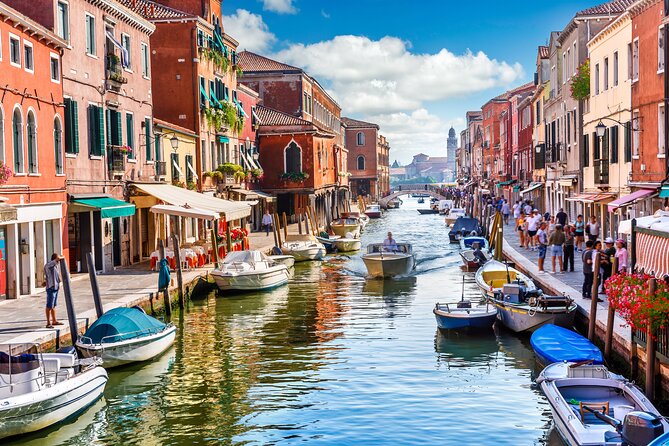
Book it if you want a low-stress way to see Venice’s craft islands with private-boat comfort and a guide who can connect glass and lace to the bigger Venice story. If you’ve got limited time and you like the idea of scheduled craft moments plus real island wandering, this is a strong match.
Skip it or reconsider if you know you’re happy doing things solo and you mainly want the islands for photos and shopping with no guided context. In that case, self-guided ferries can be simpler and cheaper.
My tiebreaker logic: if the thought of managing boats, timing, and hearing explanations in a loud public setting makes you tired, this tour removes that friction. If your top priority is a long, hands-on craft lesson, then you may find the demonstrations shorter than you hoped and should plan to pair the visit with extra independent learning time.
FAQ
How long is the Murano & Burano guided small-group tour?
It’s about 5 hours in total, with approximately 2 hours 30 minutes at each island (Murano and Burano).
Is hotel pickup included?
No. The tour does not include hotel pickup and drop-off.
How big is the group?
The experience runs with a maximum of 22 travelers.
Does the tour include the glassblowing and lace-making demonstrations?
Yes. It includes a glassmaking demonstration in Murano and a lacemaking demonstration in Burano, and admission tickets are included.
Is the lace-making demonstration always available on every day?
No. The lace-making demonstration is not always available on Monday tours.
Does Venice have an access fee you should register for?
Yes, on specific dates. The tour notes that Venice has introduced an Access Fee, and you should check the official guidelines and complete any required registration before your visit.