REVIEW · VENICE
The Dark Side of Venice: Mysteries and Legends
Book on Viator →Operated by Private Tours of Venice · Bookable on Viator
Venice can look like pure romance. Then this tour peels back the shutters and the pretty stories. I like that it’s a private, crowd-skipping walk with a dedicated English guide, and I like the way the tour mixes legends with the real, messy side of the city—think plague-era care, grim palazzo lore, and canal-level secrets. One thing to consider: the mood is “dark and historical,” not a full-on haunted-house scare, so if you only want jumpy spooky, you may find it more measured than you hoped.
You’ll start at 6:00 pm, so you get softer light, quieter streets, and a chance to hear Venice’s underbelly without fighting midday crowds. It runs about 2 hours, ends at Punta della Dogana, and keeps moving at a steady walking pace with short stops—about 20 minutes each.
Here’s the good part: you’re not just seeing sights. You’re getting a story-driven route that connects Venice’s buildings to the people who lived there when life was harsher, and rumor had real power.
In This Review
- Key highlights worth planning around
- Why this Venice mysteries-and-legends walk feels different
- Timing and crowd management: the 6:00 pm start at Campo Santo Stefano
- Ponte delle Meraviglie and the 7 sisters legend near Accademia
- Squero di San Trovaso: the wooden gondola shipyard stop
- Zattere at night: Hospital for the Incurable and the French disease
- Palazzo Dario and the story behind the closed doors
- Basilica di Santa Maria della Salute: dome views and a last major landmark
- Punta della Dogana: the bow-shaped finale with big city views
- Price and value: what $226.37 buys you in real Venice time
- What you’ll actually get from the guide (and how to make it better)
- Who should book this tour, and who might skip it
- Should you book this dark-side Venice walk?
- FAQ
- How long is the tour?
- Is this a private tour?
- What language is the tour offered in?
- Where does the tour start and end?
- What time does the tour begin?
- Are entry tickets included?
- Is hotel pick-up included?
- Cancellation and weather basics
Key highlights worth planning around
- A private guide just for your group: no crowd shuffle, and your questions shape what you hear
- Ponte delle Meraviglie + the 7 sisters legend near Accademia: a spooky starting myth in a very walkable area
- Squero di San Trovaso stop: see the classic wooden gondola shipyard tied to how Venice built its icons
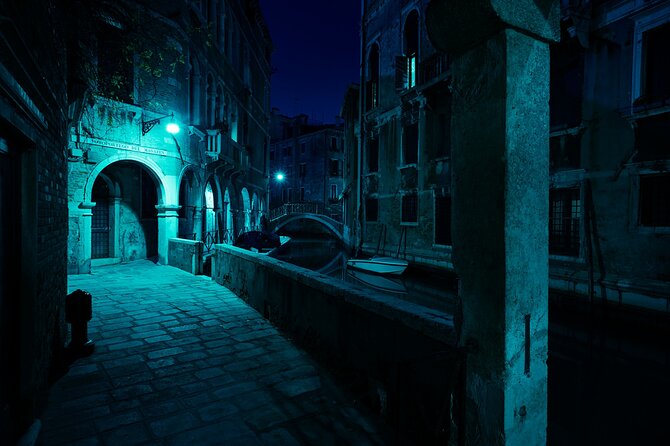
- Zattere promenade at night: moonlit pavements leading to the Hospital for the Incurable, now tied to art education
- Palazzo Dario story stop: you get the lore even though the building is closed to the public
- Punta della Dogana viewpoints: the pointed landmark gives you one of the best payoffs for the effort
Why this Venice mysteries-and-legends walk feels different
This isn’t a checklist tour with a few spooky facts added at the end. It’s designed like a guided walk through ideas: rumor, punishment, survival, and reputation. That matters because Venice’s “dark side” isn’t just monsters. It’s also how power worked, how people got treated, and how the city protected its image.
Two guides can walk the same streets and tell two totally different stories. Locals like Annalisa, Desi, and Bianca (spelling can vary) are known for keeping the narration grounded and human—scheming included—while still making the route easy to follow.
The tour also avoids the trap of being only doom and gloom. You’ll hear plague-era context at Zattere, you’ll connect gondola culture to a working shipyard at Squero di San Trovaso, and you’ll end with a view big enough to feel like a reward, not a come-down.
You can also read our reviews of more tours and experiences in Venice.
Timing and crowd management: the 6:00 pm start at Campo Santo Stefano
Starting at 6:00 pm is a smart choice in Venice. You get:
- fewer people on many lanes
- more comfortable temperatures than peak afternoon
- better “story lighting” for evenings, when canal-adjacent details actually pop
You begin at Campo Santo Stefano, 30124 Venezia, and the tour finishes at Punta della Dogana – Pinault Collection. There’s pickup from a designated meeting point, not hotel door-to-door service, so build in a little time to reach the area before departure.
The route works best when the weather behaves. Since it’s a walking experience, plan for the idea that good weather is required. If conditions force a change, you’ll be offered another date or a refund.
Ponte delle Meraviglie and the 7 sisters legend near Accademia
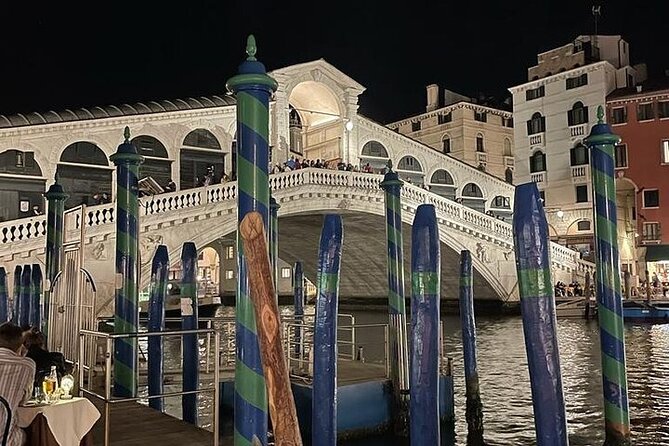
Your walk kicks off in the Dorsoduro / Accademia zone, just by the Ponte delle Meraviglie, also known as the Bridge of Wonders. It’s close to the Academia Galleries, but the focus is less on art and more on story.
This first stop is built around a legend: the tale of seven sisters who lived here long ago. Even if you treat legends as legends, they do something useful. They show how communities explain place and power when hard records are missing. In Venice, that “meaning-making” is part of how the city stays itself.
What to expect: a short, high-impact myth moment paired with orientation so you know where you are.
Possible drawback: since this is a quick stop (about 20 minutes), if you want every detail of the legend, you’ll need to ask your guide follow-up questions.
Squero di San Trovaso: the wooden gondola shipyard stop
Next comes the workshop side of Venice. You’ll reach Squero di San Trovaso, a classic wooden shipyard where gondolas were built and repaired. This is the place where Venice’s iconic look wasn’t magic—it was carpentry, skill, and constant maintenance.
Why it’s valuable: lots of gondola scenes are stagey. Here, you get the craft connection. You learn that the gondola is both a symbol and an object with a real supply chain of labor.
How long it lasts: around 20 minutes.
Tickets: the admission here is not included, so budget a bit for on-site entry.
If you care about how Venice actually functions—tools, work, and tradition—this is one of the stops that feels most “grounded,” even while the tour keeps its darker storytelling tone.
Zattere at night: Hospital for the Incurable and the French disease
The tour then moves along the Fondamenta Zattere promenade. Picture water-facing stone, evening light, and a route that feels calm even when Venice is full. This part of town is often photographed for views, but the real payoff is what your guide connects to it.
You’ll hear about the Hospital for the Incurable, built to offer hospitality to people suffering from what was then called the French disease—today, syphilis. The building is now tied to the Academy of Fine Arts, which is a striking example of how a place can shift roles without losing its imprint.
What I like about this stop: it turns an attractive waterfront walk into a lesson about how cities handle stigma, illness, and care. Venice had (and still has) a reputation for beauty. This reminds you beauty didn’t erase suffering; it just lived beside it.
Tickets: included here, so you’re not juggling extra expenses mid-tour.
Time: about 20 minutes.


Palazzo Dario and the story behind the closed doors
Then you hit one of the tour’s most intriguing contrasts: Palazzo Dario. Your guide frames it as the palace that kills, tied to unpleasant events involving its first owner and later residents, with death woven into the rumor.
Here’s the practical part: the palazzo is currently closed to the public, so you’re not touring rooms. This stop is about the story you hear in front of the building—how a structure becomes a legend machine when people repeat what they fear.
Tickets: not included, because you’re not entering.
Time: about 20 minutes.
Consideration: if you’re hoping for interior access, lower your expectations now. The value is in narrative and location, not museum time.
Basilica di Santa Maria della Salute: dome views and a last major landmark
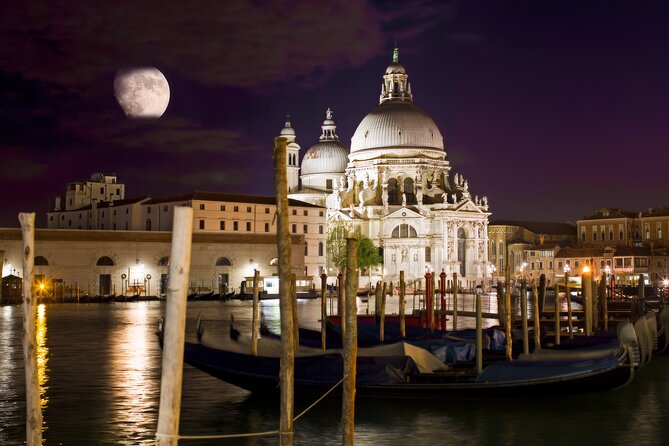
Your next stop is the Basilica di Santa Maria della Salute, considered one of Venice’s most beautiful churches. The dome is a key reason—visible from all over the city—so this isn’t just a spiritual landmark. It’s also a navigation marker and an unmistakable silhouette.
What to expect: the tour uses this last major architectural stop to land the story arc and set you up for the final viewpoint.
Tickets: admission here is not included.
This is a good moment for photos, too, but the tour keeps you moving. You’ll get enough time to look closely without turning it into a long detour.
Punta della Dogana: the bow-shaped finale with big city views
The walk ends at Punta della Dogana, famous for its singular pointed shape that resembles the bow of ships. This is the kind of place that makes Venice feel cinematic, because the geometry of the landmark gives you a clear framing device for the city.
Why the finale works: after darker, heavier stops, this view feels like a release valve. You can look out, catch your breath, and let the stories settle instead of racing forward.
Tickets: included here.
Time: about 20 minutes.
It’s also a smart landing spot because Punta della Dogana sits in an area that’s easy to orient from afterward, whether you’re grabbing a late dinner or continuing to explore.
Price and value: what $226.37 buys you in real Venice time
At $226.37 per person for about 2 hours, this tour isn’t the cheapest way to spend an evening in Venice. But it also isn’t trying to compete with bargain group buses.
Here’s what you’re paying for, and why it’s often worth it:
- Private experience: only your group participates, so you’re not negotiating for space in tight lanes
- Dedicated local guide: the narration is the product, especially when the route connects legends to real places
- A curated route: you get a shipyard stop, a night promenade tied to a hospital history, and multiple story points you’d likely miss on your own
- Mobile ticket + group discounts: the tour is organized for easier check-in, and group pricing can help if you’re traveling with others
The main financial “gotcha” is admissions. Some stops are free, but others are not included—like Squero di San Trovaso, Palazzo Dario (not entered), and Basilica di Santa Maria della Salute. You’ll want to budget for those so the final total feels clear, not surprise-y.
What you’ll actually get from the guide (and how to make it better)
This is the part that often determines whether a dark-legend tour feels fun or flat.
The best versions of this experience lean on three guide skills:
- Keeping the stories human, not just dates and labels
- Reading your questions, so the tour lands where your interests sit
- Connecting myths to places you can point at, like the bridge, the shipyard, the hospital site, and the closed palazzo
If you end up with a guide like Annalisa, the storytelling tone can get very blunt and current—over-tourism, modern scams, and how people keep trying to profit off Venice’s image. If your guide is Desi or Bianca, you may get a more history-forward approach that still keeps the pace lively.
How you can help the tour: ask your guide one question early, then follow the thread. If you’re curious about the gondolas, ask how the shipyard relates to Venice’s power. If you’re more interested in the human side, ask about how the hospital’s mission worked back then.
Who should book this tour, and who might skip it
You’ll likely love this tour if:
- you want Venice stories with an edge, but still tied to real buildings
- you prefer a private guide who can adjust to your interests
- you enjoy a mix of legend + historical context rather than pure scares
- you’re the type who likes ending with a strong viewpoint payoff
You might skip it if:
- you want lots of indoor time and museum-style stops (several key places are short stops or not entered)
- you’re only in Venice for the art highlights and don’t care about the darker civic side
- you dislike walking in the evening and expect a sit-down experience
Should you book this dark-side Venice walk?
If you want Venice without the rose-colored filter, this is a great call. The route hits the city’s major storytelling engines: where gondolas were made, where illness was handled, and where legends attach themselves to stone. The private format makes it feel personal, and the end at Punta della Dogana gives you a satisfying view to close the night.
Book it if your ideal evening includes walking, asking questions, and hearing why Venice became the way it is—not just how it looks.
FAQ
How long is the tour?
It runs for about 2 hours.
Is this a private tour?
Yes. It’s a private tour/activity, and only your group participates.
What language is the tour offered in?
The tour is offered in English.
Where does the tour start and end?
It starts at Campo Santo Stefano, 30124 Venezia VE, Italy and ends at Punta della Dogana – Pinault Collection (Dorsoduro area), 30123 Venezia VE.
What time does the tour begin?
The start time is 6:00 pm.
Are entry tickets included?
Some are included and some are not. Entry is free at stops like Dorsoduro/Accademia and Zattere and at Punta della Dogana. Admission is not included for places like Squero di San Trovaso and Basilica di Santa Maria della Salute, and Palazzo Dario is currently closed to the public.
Is hotel pick-up included?
No. There is pickup from a designated meeting point, not hotel pick-up and drop-off.
Cancellation and weather basics
If you cancel in time, you can get a full refund, and the tour requires good weather. If it’s canceled due to poor weather, you’ll be offered a different date or a full refund. Also note that on certain dates there may be a €5 access fee for people staying outside Venice for the day, with details at cda.ve.it.