REVIEW · VENICE
Morning Walking Tour of Venice with Mini Cruise
Book on Viator →Operated by Consorzio Vidali Group · Bookable on Viator
Venice in one sharp morning. This tour packs the big sights into a walk-first format, then adds water time with a short gondola ride and a motorboat through the Giudecca Canal. You’ll see San Marco in the early light, then shift gears toward Rialto and the Jewish Ghetto while a guide connects stories to modern street life.
I like that it’s built like an efficient hit list: Piazza San Marco, the Ponte di Rialto, Canal Grande, and Strada Nova all land within a couple hours. I also appreciate the way the guide ties the city’s past to what you still see today, including a stop by Venezia Santa Lucia where everyday Venice comes into focus.
One consideration: this is often run in a multilingual way, and if you’re in a mixed-language group, you may feel the pacing slow down or your English time get shorter. On top of that, some departures don’t provide strong audio support, so crowded streets can make it harder to catch every word.
In This Review
- Key things to know before you go
- A Venice morning that moves fast: route overview and what you’ll actually see
- Start at Riva degli Schiavoni: the morning energy and how to find the group
- Piazza San Marco and the early wow factor that lasts all day
- Ponte di Rialto and Canal Grande: the photos are good, the stories make it better
- Gondola crossing at Santa Sofia: budget €2 and expect a quick handoff
- Strada Nova and the walk that explains how Venice functions
- The Jewish Ghetto stop: a small time slot with a big meaning
- Finishing near Stazione Venezia Santa Lucia: modern Venice in plain sight
- Price and value: what you pay for, and what you should add mentally
- Language mix and audio: how to protect your experience in real Venice crowds
- Walking level and pace: what to wear and how far you may go
- Who this tour suits best (and who should skip it)
- Should you book this Venice morning walking tour?
- FAQ
- How long is the Morning Walking Tour of Venice with Mini Cruise?
- Where do I meet, and where does the tour end?
- Is the tour offered in English?
- What is included in the price?
- What isn’t included?
- Do I get a gondola ride during the tour?
- How much walking should I expect?
- Is there an extra Venice access fee?
- What happens if the weather is bad?
Key things to know before you go
- 2 hours (approx.) focused on major Venice highlights, starting at Riva degli Schiavoni at 9:30 am
- Piazza San Marco and Rialto are first, so you’re aiming to beat the worst crowds
- A short gondola ride is included in the plan but costs extra, typically €2
- You’ll cover several neighborhoods, including the Jewish Ghetto and the area near Venezia Santa Lucia
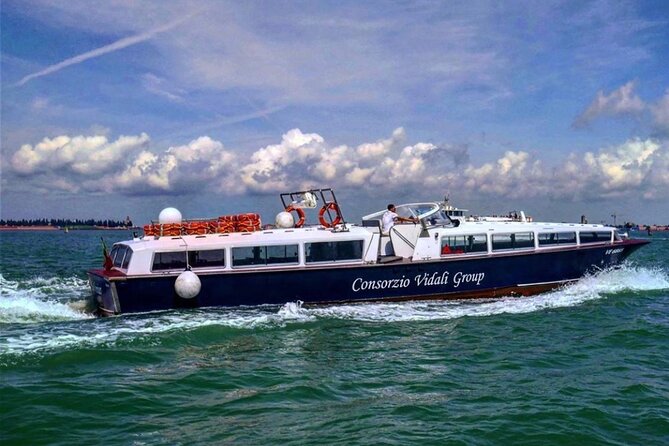
- Expect a mix of walking and water, including a motorboat along the Giudecca Canal
- Max group size is 25, which is manageable but still tight in narrow lanes
A Venice morning that moves fast: route overview and what you’ll actually see
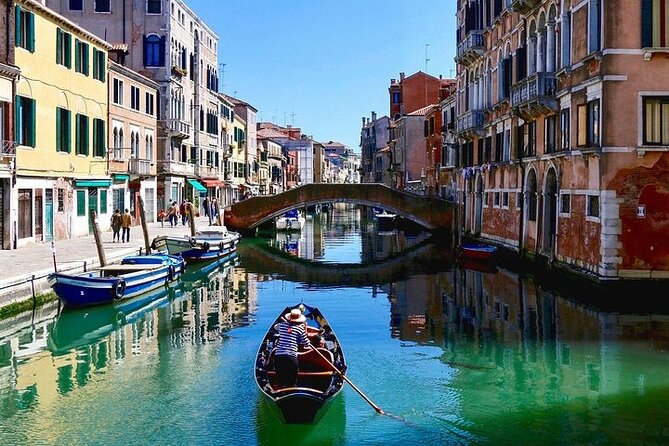
This is the kind of tour you take when you want to understand Venice quickly, without building your own complicated plan. The structure is straightforward: walk key streets and squares, then break the pace with short rides by water. It’s a good way to get your bearings before you start wandering on your own later.
The route is designed around big landmarks and easy-to-recognize sights: Piazza San Marco, the Rialto Bridge, and views along Canal Grande. From there, it turns toward places that help explain how Venice is organized—main roads like Strada Nova, plus the older, more historically charged streets of the Jewish Ghetto area.
If you’re the type who wants a broad overview rather than hours of one deep topic, this format fits. If you prefer a slower walking pace with lots of unbroken time for one language and one theme, you may find the schedule a bit tight.
You can also read our reviews of more walking tours in Venice
Start at Riva degli Schiavoni: the morning energy and how to find the group
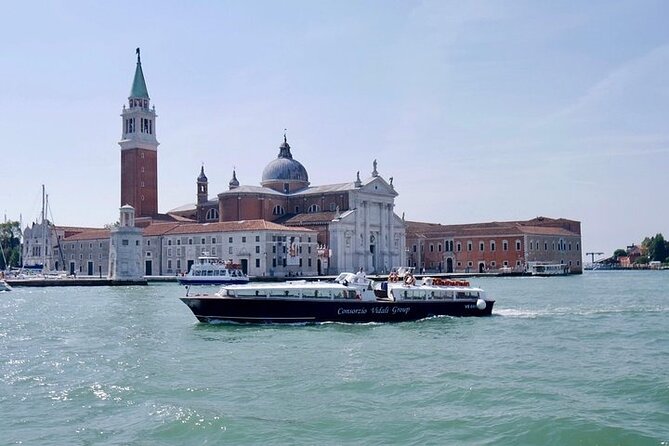
You meet at Riva degli Schiavoni, 4142, 30122 Venezia VE, at 9:30 am. This is a smart start point because you’re near the water’s edge, close to the old-center flow, and it makes sense for a route that includes boat time. It’s also close to public transportation, which helps if your morning timing is a little imperfect.
The one practical thing to plan for is accuracy. One tricky part of Venice tours is that meeting points can look similar block to block. If the instructions are vague or you’re arriving a bit late, give yourself time to confirm the exact spot before the start.
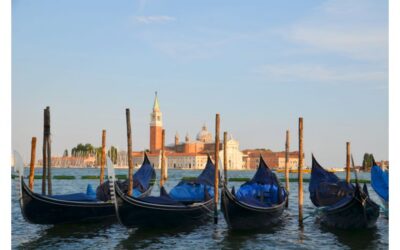
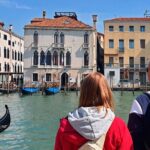
When the tour gets going, the first stop sets the mood: the tour looks toward the basin of Saint Mark, where you can admire palaces and the luxury hotels that line the central waterfront. It’s a quick photo moment, but also a clue about Venice’s layout: water in front, buildings facing it, and a street web that funnels you toward the squares.
Piazza San Marco and the early wow factor that lasts all day
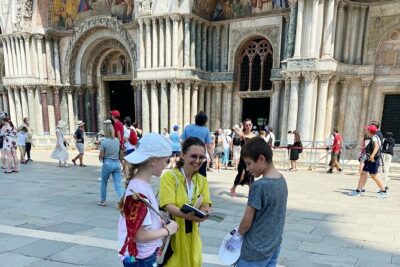
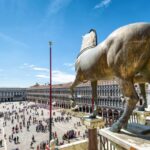
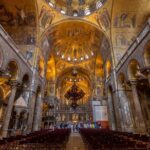
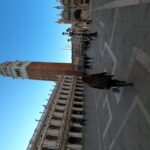
The tour moves quickly to Piazza San Marco, where you get about 15 minutes. This is the heart of Venice and the one square everyone recognizes—big, dramatic, and packed with symbolism. Even if you’ve seen photos, being there in the morning helps. Light and timing change the feel of the place, and you’re less likely to be stuck behind a long line of visitors.
A good tour here isn’t just about showing you buildings. It’s about learning what Venice was trying to do with power and trade—how the city’s wealth shaped its center, and why the square became a stage. Expect the guide to connect anecdotes and history to what you see around you, not just recite dates.
The downside is simple: 15 minutes is not enough to explore the square in detail. Think of this as the orientation stop. You’ll want to come back later on your own if you want slower wandering, museum time, or a deeper look at architecture.
Ponte di Rialto and Canal Grande: the photos are good, the stories make it better
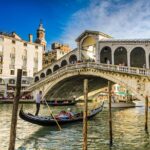
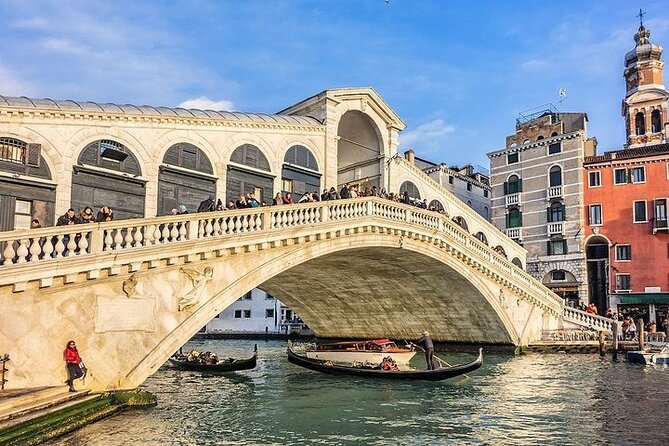
Next up is Ponte di Rialto, about 10 minutes. This is one of the most famous bridges in Venice, and it’s easy to see why: it’s old, distinctive, and positioned right where the city’s main water traffic runs. Even standing there briefly, you’ll feel the bridge’s role as a connector.
From there, the tour shifts toward Canal Grande for about 10 minutes. Canal Grande is Venice’s main canal and the scene-setter for almost everything people imagine about the city. Looking down the canal helps you understand why so many buildings face the water and why travel is often more about waterways than streets.
One strength of the tour is that it treats these spots as part of a system, not isolated postcard stops. If the guide is on form, you’ll connect the bridge and canal to how people moved, where commerce happened, and how neighborhood identity formed around water access.
Gondola crossing at Santa Sofia: budget €2 and expect a quick handoff
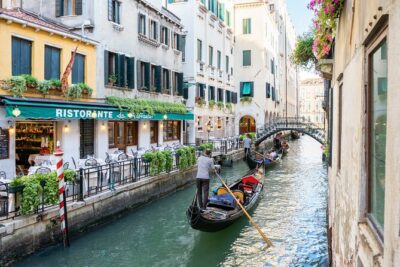
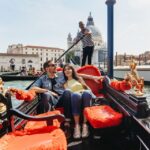
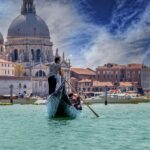
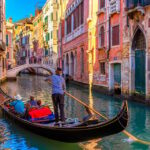
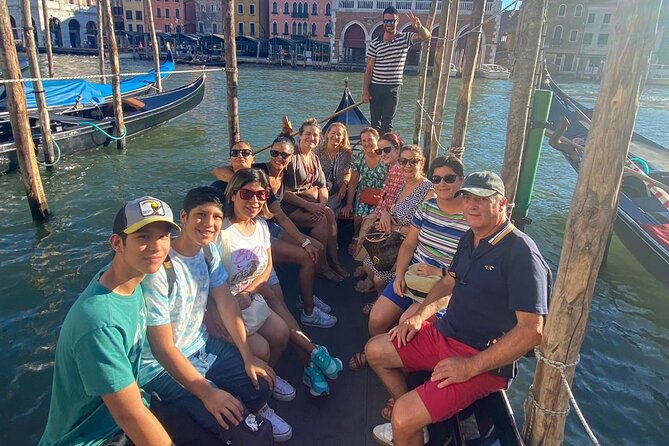
A key moment comes at Chiesa di Santa Sofia (about 10 minutes). Here, you’ll cross the Grand Canal on a gondola to reach the other side near the Rialto Market area. The gondola ride isn’t included in the tour price; the additional cost is listed as an inexpensive €2.
This short gondola hop is mainly about perspective. You’re not trying to turn it into a long romantic cruise. Instead, you’re getting a controlled taste of the gondola experience while the route keeps moving. If you hate spending money on a quick ride, you’ll still get plenty of canal views from the walking sections. But if you want one classic Venice moment without building your own plan, the small extra cost can feel fair.
After that, the timing keeps you moving rather than lingering. Rialto is busy and the streets tighten around the market area, so it’s worth keeping your expectations realistic: you’ll see the shape of the neighborhood more than you’ll shop it like a pro.
You can also read our reviews of more boat tours in Venice


Strada Nova and the walk that explains how Venice functions
Strada Nova is next, with about 20 minutes on the main road that cuts through a lot of the city. This is where the tour turns from landmark sightseeing into street-level understanding. It’s also one of the best ways to learn how Venice gets from point A to point B when the canals and alleys do most of the work.
You’ll likely notice how busy and narrow some streets feel, even in a morning slot. That’s normal for Venice, and it’s also why audio matters. If you’re trying to hear your guide over foot traffic, choose your place in the group carefully and stay close enough that you’re not stuck behind taller shoulders.
Strada Nova is a good stop if you like that in-between feeling—still within the central story of Venice, but less about crowds gathered at one iconic point. It also sets you up mentally for the jump to the Jewish Ghetto area, where you’ll see a different layer of Venice’s past.
The Jewish Ghetto stop: a small time slot with a big meaning
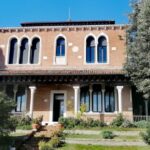
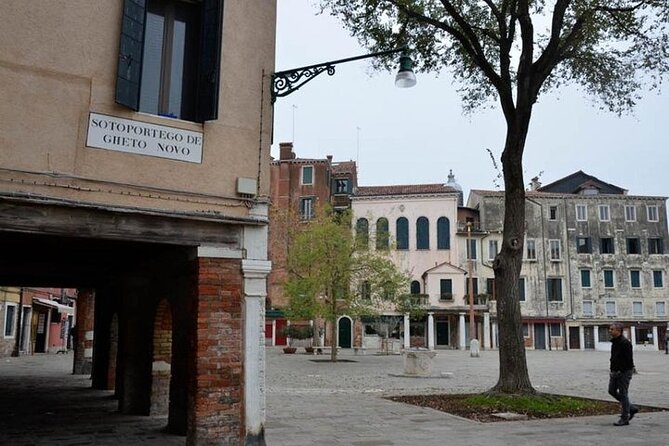
The tour includes Antico Quartiere Ebraico, the Jewish Ghetto area (about 15 minutes). This is the first ghetto in the world, and it’s where the English word ghetto traces back to Venice’s history. It’s one of the most important stops on the route because it reframes the city beyond art and architecture and into lived human history.
I like that this tour doesn’t treat the Ghetto as a quick photo checkbox. When the guide is clear, you’ll understand that the Venetian Republic forced Jews to live in this area, and that the neighborhood’s identity was shaped by policy and restrictions, not just geography.
That said, 15 minutes is still 15 minutes. You’re getting the context and key sights, not a full guided history lesson. If this subject hits a personal interest button for you, plan to return later for a slower, more focused walk.
Finishing near Stazione Venezia Santa Lucia: modern Venice in plain sight
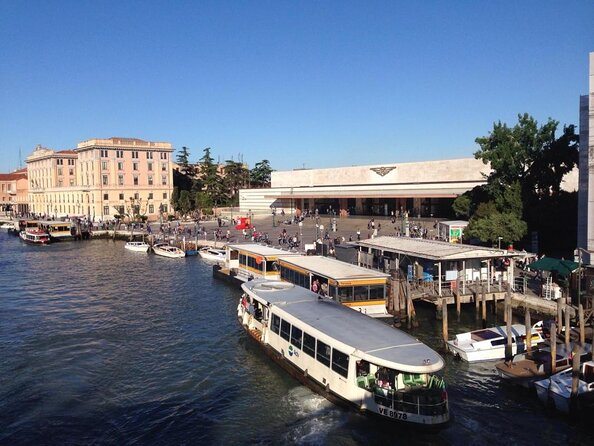
The last listed stop is Stazione di Venezia Santa Lucia, with about 15 minutes. In front of the railway station, your guide talks about daily life in modern time—how Venetians live now, not just what the city was like long ago.
This ending helps a lot because it keeps the tour from becoming purely time-locked to the medieval era. It’s a practical finish too: if you’re continuing your trip by train, the location is convenient. Even if you’re not, Santa Lucia gives you a strong sense of where the city connects outward.
If you want to keep exploring, this is a good mental handoff point. You’ll likely feel more confident splitting off from the group afterward because you have a clearer map of the city’s main neighborhoods and routes.
Price and value: what you pay for, and what you should add mentally
The price is $29.79 per person, for about 2 hours (approx.) with a mobile ticket and English service. It’s also listed as having private transportation included, which fits the water parts of the experience and keeps the schedule controlled.
Here’s the value logic I’d use: you’re paying for a guided orientation to several major stops plus guided context, not for transportation alone. You also get the benefit of a single morning route that helps you avoid wasting time figuring out connections between Venice’s neighborhoods.
What’s not included is crucial for budgeting:
- Gondola ride: additional €2
- Food and drinks
You might also want to factor in that Venice sometimes charges a €5 access fee on certain dates for visitors staying outside Venice who visit for the day. The rules depend on the date, and the tour info points you to the official Venice access fee page for exemptions and details.
In practice, if you take the gondola upgrade and you plan to grab a snack later, you’ll have a pretty clear, controlled total cost. The tour is priced low enough that it doesn’t feel like you have to overthink it—but it’s high enough that you’ll want the guide to deliver real information.
Language mix and audio: how to protect your experience in real Venice crowds
Even when the tour is offered in English, the reality of a mixed group is that the guide may switch between languages. Several past departures describe a guide speaking multiple languages, with English sometimes starting after another language segment finishes. That can stretch the experience and reduce how much you hear about the specific sites while you’re standing in front of them.
This is the main reason some people rate the tour lower. It’s not that the route lacks important stops—it’s that the pacing can be harder when attention and time get split.
Audio is the other practical issue. Venice streets can swallow sound, especially around crowded landmarks. Some people have struggled to hear without stronger audio support, and a boat audio problem has even been noted as something that needed repair on one occasion. If you know you have trouble hearing in noisy outdoor settings, come prepared to lean in and position yourself well.
The silver lining: multiple guides have been praised by name for making the experience work in English. Names that came up include Irena, Julie, and Martha. If your guide is one of these, you can feel a little more confident that the explanation will land.
Walking level and pace: what to wear and how far you may go
This isn’t a sit-and-look-around tour. It’s a morning of walking plus short water segments. One clear tip from the overall experience level is to treat it like a moderate city walk: plan for several miles on uneven stone and crowded sidewalks.
If you’re wearing comfy shoes, you’ll enjoy it more. If you’re thinking flip-flops or thin sandals, Venice will punish that choice quickly. Also bring a light layer; mornings can be cooler near the water, and your body won’t be moving at the same pace during gondola and boat stops.
Pace-wise, it’s set up to move from square to bridge to canal to streets without long breaks. That’s great for people who like momentum. It can feel rushed for people who expect unhurried time at each landmark.
Who this tour suits best (and who should skip it)
This works best if you:
- Want an overview morning with clear stops and a guide-led story
- Are visiting for the first time and need help getting your bearings fast
- Like mixing iconic sights with one meaningful stop like the Jewish Ghetto
It may not fit you as well if you:
- Need an English-only group with no waiting between languages
- Require strong audio support to hear every explanation
- Prefer longer stays at each major landmark rather than a hit-list route
Also, accessibility is noted as not recommended but possible for travelers with walking disabilities. If mobility is a concern, it’s worth considering the amount of walking involved and how tight some streets can get.
Should you book this Venice morning walking tour?
I’d book it if you’re the type who wants a guided plan that covers San Marco, Rialto, Canal Grande, Strada Nova, and the Jewish Ghetto in one morning, plus a taste of gondola and motorboat water travel. For $29.79, the value is in the way it stitches major neighborhoods together so you can make better choices later in your trip.
Skip or reconsider if you know you’ll be upset by multilingual pacing, possible delays beyond the listed 2-hour window, or if hearing the guide is essential for your enjoyment. In Venice, those small differences decide whether a tour feels worth it or not.
If you do book, go in expecting a fast-moving orientation. With good footwear, some patience for the language mix, and a willingness to treat this as your launchpad for more self-guided wandering, you’re likely to leave with a much better sense of how Venice fits together.
FAQ
How long is the Morning Walking Tour of Venice with Mini Cruise?
It’s listed as about 2 hours.
Where do I meet, and where does the tour end?
You start at Riva degli Schiavoni, 4142, 30122 Venezia VE, Italy at 9:30 am. The tour ends at Venezia Santa Lucia, 30121 Venice, Metropolitan City of Venice, Italy.
Is the tour offered in English?
Yes, it’s offered in English, and you’ll receive a mobile ticket.
What is included in the price?
The price includes an explanation of Venice’s history plus anecdotes and mysteries, and private transportation.
What isn’t included?
Food and drinks aren’t included, and the gondola ride costs extra (listed as an additional €2).
Do I get a gondola ride during the tour?
The plan includes a short gondola crossing, but it’s an extra cost of €2.
How much walking should I expect?
Be ready for several miles of walking; one description notes around 5 to 6 miles total.
Is there an extra Venice access fee?
On certain dates, day-trippers staying outside of Venice may need to pay a €5 access fee. Details and exemptions are listed on the official Venice access fee page linked in the tour info.
What happens if the weather is bad?
If the tour is canceled due to poor weather, you’ll be offered a different date or a full refund.