REVIEW · VENICE
Venice Sightseeing Small Group Walking Tour with a Local Guide
Book on Viator →Operated by Raphael Tours & Events · Bookable on Viator
Venice clicks into place on foot. This 2-hour walking tour helps you understand how Venice works—where the trading world was, why the bridges matter, and how the city got built across water—while you move through the major neighborhoods with a local expert like Gianmarco.
What I like most is the fast orientation. You’re guided through places that give you a mental map for the rest of your stay, and the pacing works well for first-time Venice visitors. A second big plus: you get real storytelling, not just a checklist—topics tied to the former maritime republic, Marco Polo’s background, and the key power centers around Rialto and San Marco.
One consideration: it’s still a walking tour of uneven Venice streets, and you should expect stairs and plenty of steps over bridges and along church-area corners. On hot days, it can feel like a proper workout, even if the guides work hard to keep you moving in the shade when possible.
In This Review
- Key things you’ll notice on this Venice walking tour
- Why this walk is a smart way to start Venice
- Small group size and guide style: what “local” really changes
- Price and time value: is $48-ish worth it?
- The exact walking arc: from Dorsoduro to St Mark’s Square
- Stop 1: Campo San Pantalon — the opening beats
- Stop 2: Scuola Grande di San Rocco — art and power in the same story
- Stop 3: Ponte di Rialto — the trade center in physical form
- Stop 4: Casa di Marco Polo — the traveler story with local roots
- Stop 5: Basilica dei Santi Giovanni e Paolo (San Zanipolo) — doges and civic memory
- Along the route: Campo Santa Margherita and the Frari area with Titian
- Stop 6: Piazza San Marco — finish line with maximum options
- What the route feels like in real life (stairs, shade, and photo moments)
- Who this tour fits best (and who should choose differently)
- Quick practical tips so you enjoy every stop
- Should you book this Venice walking tour?
- FAQ
- How long is the Venice Sightseeing Small Group Walking Tour?
- How many people are in the group?
- What language is the tour offered in?
- Where does the tour start and end?
- What major sights will I see?
- Is there a lot of walking or stairs?
- Do you go into the sights during the tour?
- Is there an access fee to consider for some visitors?
- Is the tour affected by weather?
Key things you’ll notice on this Venice walking tour
- Small group size (max 15) keeps questions from getting lost and the vibe from feeling like a factory line
- English local guide gives you context about Venice’s trading past while you walk through the real neighborhoods
- Rialto Bridge to St Mark’s Square connects two of Venice’s strongest “this-is-why-it matters” areas
- Marco Polo’s house area and the stories around him add variety beyond just churches and canals
- Stairs and bridge crossings are part of the deal, so comfortable shoes are non-negotiable
- You finish at Piazza San Marco, which sets you up for a focused afternoon/evening plan
Why this walk is a smart way to start Venice
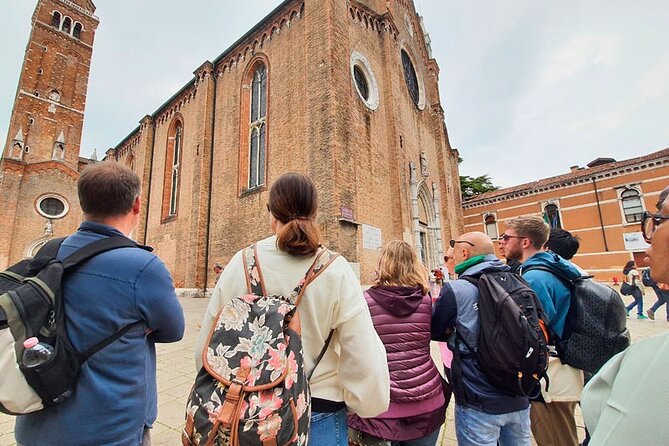
Venice can be overwhelming in the best way. Streets twist, canals cut across your path, and “the center” keeps moving depending on what you’re looking at. This tour helps you get your bearings quickly, because it’s designed to link the big iconic points with the neighborhoods that make them make sense.
I like that the experience is built around a local guide who explains how Venice functioned as a maritime republic. That context changes how you look at the city. Instead of seeing random buildings and squares, you start recognizing the logic: where commerce clustered, how different districts developed, and why the city is arranged the way it is when you build on hundreds of small islands.
You’ll also appreciate the practical length. At around 2 hours, you’re not committing half a day to walking, yet you still cover enough ground to feel oriented for the rest of your trip. Guides also share recommendations for where to eat and how to spend your free time once you’re done—helpful when you’re trying to avoid wasting your first afternoon wandering in circles.
You can also read our reviews of more walking tours in Venice


Small group size and guide style: what “local” really changes
This is capped at 15 travelers, and it shows. With smaller groups, you’re more likely to hear answers clearly, and the guide can adapt on the fly if people ask questions about what they’re seeing.
In the feedback I’ve read closely, a recurring theme is how guides work the group dynamic. People singled out guides such as Valentina for being patient, friendly, and genuinely engaged with each member of the group—not just reciting dates. Julia was praised for strong local storytelling, while Flavia and Irene were noted for making the walk feel smooth and easy to follow.
You should also expect a guide who keeps the tour moving but doesn’t ignore curiosity. Several accounts mention clear Q&A and room to ask things like what you’re looking at, why it’s important, or what to do next. If you’re the type of traveler who likes to understand the “why,” this structure fits you well.
The main trade-off is that it’s still a guided walk, not a slow museum visit. If your goal is to linger and photograph every corner for long stretches, you may need to plan extra time afterward to slow down on your own.
Price and time value: is $48-ish worth it?
At $48.37 per person for about 2 hours, this tour is priced like a solid “orientation plus highlights” option rather than a deep-dive ticketed attraction. That’s a good deal for Venice, because the city’s best experience often comes from knowing where to walk and what to notice while you’re there.
What makes the value work is the pairing of two things:
- You get a guided route that connects multiple major sights efficiently.
- You get local context that helps you understand what you’re seeing without paying museum entry fees or spending hours in lines.
Also, because it’s limited to 15 people, you’re typically not paying for a crowd experience. That matters in Venice, where large groups can make it hard to hear, hard to move, and hard to enjoy the quiet beauty between the headline landmarks.
If you’re hoping for inside-the-sites access, just know the tour is mainly about seeing and learning as you go. It’s a great “first pass,” then you return on your own if something really grabs you.
The exact walking arc: from Dorsoduro to St Mark’s Square
The tour starts in Campiello dei Squelini in Sestiere Dorsoduro, and it ends at Piazza San Marco. That start-to-finish choice is smart: it pulls you through historic Venice in a way that ends at the most famous public square, so you can transition naturally into sightseeing, a rest, or a meal nearby.
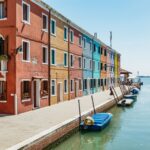
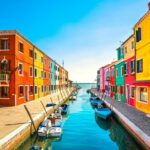
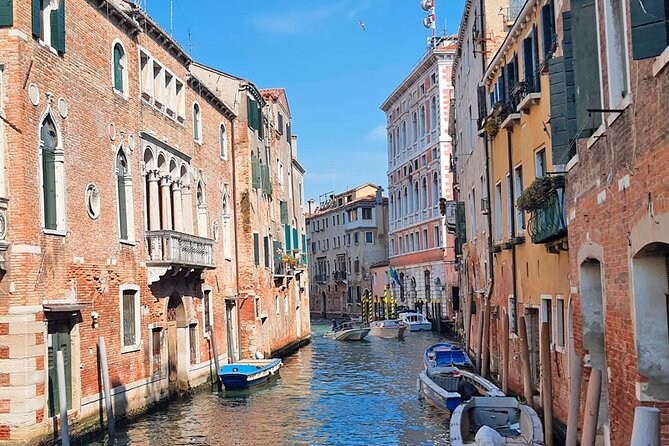
You’ll move along pedestrian streets and over charming footbridges. Venice is basically a city of connected islands, and this kind of route makes that reality obvious. Even if you’ve looked at maps before, there’s a big difference between seeing water on a screen and walking across tiny bridge links while your guide explains the geography.
Stop 1: Campo San Pantalon — the opening beats
This is a good “warm-up” starting point. You get your first anchor moment for where you are in Venice, and the guide sets expectations for what’s coming next. Campo areas in Venice tend to be small public rooms in the open air, and starting here helps the tour feel like it belongs to the neighborhood rather than just marching from landmark to landmark.
A practical tip: at the very beginning, watch where the group naturally forms. Venice streets can be narrow, and your best photos (and your best hearing) usually happen when you’re standing in the right spot at the right time.
You can also read our reviews of more guided tours in Venice



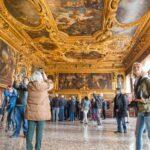
Stop 2: Scuola Grande di San Rocco — art and power in the same story
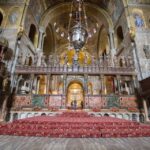
This stop connects culture to Venice’s history of civic pride. Scuole in Venice weren’t just buildings; they were part of the social and community framework that supported the city’s identity. Your guide’s job here is to connect the building’s role to the larger pattern of how Venice organized itself.
Even if you don’t go inside on this tour, you’ll likely leave with a clearer sense of how Venice valued art and public institutions—and why those institutions grew where they did.
Stop 3: Ponte di Rialto — the trade center in physical form
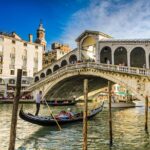
Rialto is the “you’re here because Venice was built on commerce” zone. The Rialto Bridge area is one of the most recognizable images of Venice, but on a guided route you learn what to notice beyond the postcard angle.
The biggest win is understanding why this crossing became such a focal point. Venice’s layout was always about moving people and goods across water in efficient ways, and the bridge helps you visualize that network. When you later walk around Rialto on your own, you’ll have a framework for reading it like a city, not just a view.
Stop 4: Casa di Marco Polo — the traveler story with local roots
This stop brings a different flavor to the walk. Instead of focusing only on the city’s architecture and politics, you get the Marco Polo connection—where one of the world’s most famous travelers was born.
This is a great moment for travelers who like “human history.” You’ll often find it’s easier to remember Venice when it’s tied to personalities, and Marco Polo gives the story a hook that doesn’t rely only on dates and institutions.
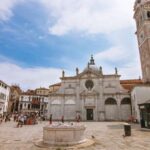
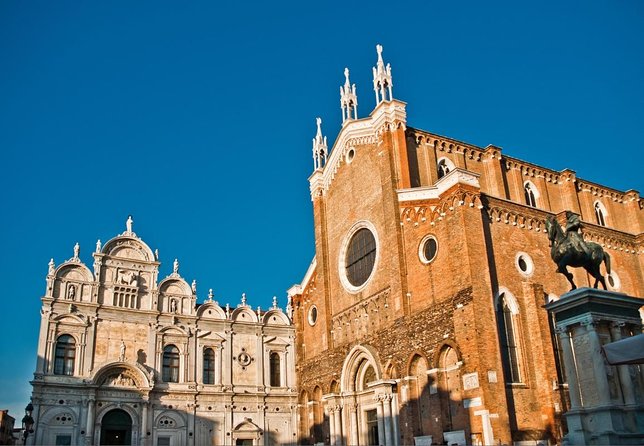
Stop 5: Basilica dei Santi Giovanni e Paolo (San Zanipolo) — doges and civic memory
This is one of the major “Venice’s power was real” stops. The church area is tied to doges, and that link changes the atmosphere: you’re no longer just seeing a beautiful building, you’re seeing a place connected to how Venice honored its leadership.
Expect your guide to point out what makes this area significant and how it fits the wider story of the city-state. It’s also a natural spot to slow down briefly, because church areas are often more open and easier for the group to reorganize.
Along the route: Campo Santa Margherita and the Frari area with Titian
Between headline stops, you’ll also pass through or near Campo Santa Margherita and the area around the Basilica di Santa Maria Gloriosa dei Frari, where Titian is buried. This is a strong “Venice as art capital” thread woven into the walk.
Even without a formal interior visit, knowing Titian is part of the story helps you look up at facades and understand why Venice attracted major artists in the first place.
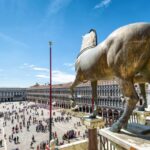
Stop 6: Piazza San Marco — finish line with maximum options
The tour ends at Piazza San Marco, which is exactly where you want to land. You’ll step out with a sense of direction and context, not just exhaustion and photos.
Piazza San Marco is a destination you can enjoy in layers: first the wide-open square feel, then the surrounding buildings, then how the city’s energy changes once you’re sitting down. Ending here means you can plan your next move with confidence—whether you want to explore more side streets, find a café, or line up a longer visit to a specific site you now understand better.
What the route feels like in real life (stairs, shade, and photo moments)
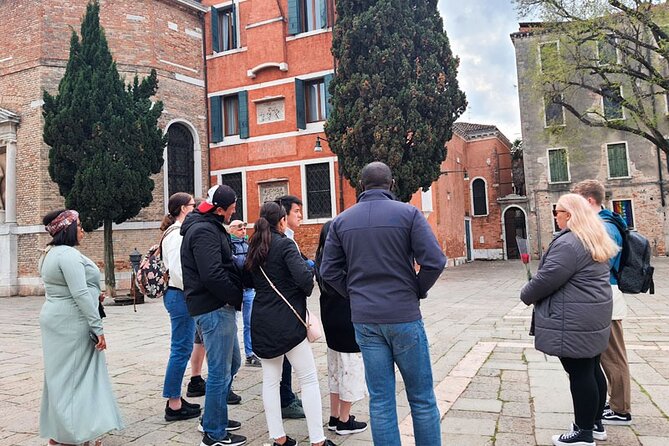
Venice walking is mostly about rhythm, not distance. You’ll walk through pedestrian streets, across bridges, and up and down many steps. One theme in feedback is that it can involve quite a bit of stair climbing, so if stairs are a problem for you, don’t assume this is a casual stroll.
Hot weather is another real factor. Several accounts mention guides working to keep groups in the shade on warm days. That’s a big deal because Venice heat can feel intense in narrow streets.
Photo-wise, you should expect some moments where the group keeps moving and you’re not always able to stop for long. There can also be bridges and tighter lanes where staying close matters for both hearing and timing. I recommend you plan to take your best photos at the stops and major squares, then come back later for the “linger and shoot” version.
Audio via headset can also vary. One account mentioned not being able to hear the guide through the headset, so if you notice sound problems, it’s worth telling the guide right away so they can fix it quickly.
Who this tour fits best (and who should choose differently)
This tour is ideal if you want:
- A guided orientation to major Venice sights in a short time
- A local narrative about Venice’s maritime republic and how neighborhoods connect
- A manageable pace with a small group and lots of time for questions
It’s also a strong choice if you’re arriving and want a first-day plan that doesn’t require buying multiple tickets or committing to a full day.
You might consider a different option if:
- You need step-free routes or very limited walking
- You want lots of inside access to churches and museums (this is mainly a walk-and-learn format, not an entry-heavy tour)
- You’re traveling with kids who get bored by history-focused explanations
Quick practical tips so you enjoy every stop
A few small choices make the day better:
- Wear comfortable, grippy shoes. Venice floors can be slick, and the tour includes stairs.
- Bring water, especially in summer. Even if the guide keeps you in shade at times, you still spend time walking.
- Bring your questions early. The best guides answer in a way that helps you notice the next landmark better.
- If you care about inside visits, plan to come back later. This kind of tour is best as a roadmap, then you choose what deserves deeper time.
Also keep an eye on the €5 access fee rule. On certain dates, day visitors staying outside Venice may need to pay a fee for entering the city (check the official details at the time you go). If that applies to you, it’s smart to factor it into your day plan.
Should you book this Venice walking tour?
Yes—if you want a well-run, small-group introduction that connects Venice’s biggest sights to the stories behind them, this is a strong pick for the price. It ends in the right place (Piazza San Marco), covers the type of landmarks you’ll actually build your future itinerary around, and the guide style—names like Valentina, Gianmarco, Julia, Flavia, Irene, and Daisy show up in feedback—leans toward clear answers and patient pacing.
Book it soon after you arrive, because the context will make the rest of your walk around Venice feel easier. Skip it only if stairs or long, uninterrupted walking would make you miserable, or if you’re specifically looking for a tour that spends time inside major buildings.
FAQ
How long is the Venice Sightseeing Small Group Walking Tour?
It lasts about 2 hours (approx.).
How many people are in the group?
The tour is limited to a maximum of 15 travelers.
What language is the tour offered in?
The standard tour is English only. The private option can be done in English, Spanish, and German.
Where does the tour start and end?
It starts at Campiello dei Squelini (Sestiere Dorsoduro) and ends at St. Mark’s Square (Piazza San Marco).
What major sights will I see?
You’ll see highlights such as the Rialto Bridge area and St. Mark’s Square, plus stops including Scuola Grande di San Rocco, Casa di Marco Polo, and Basilica dei Santi Giovanni e Paolo (San Zanipolo).
Is there a lot of walking or stairs?
Yes. It’s a walking tour on Venice’s streets and footbridges, and there can be quite a few stairs.
Do you go into the sights during the tour?
This is a sightseeing walk focused on passing key places. You should plan on returning later if you want to go inside.
Is there an access fee to consider for some visitors?
On certain dates, travelers staying outside Venice and visiting for the day may be required to pay a €5 access fee. Check the official information for which dates apply.
Is the tour affected by weather?
Yes. The experience requires good weather, and if it’s canceled due to poor weather you’ll be offered a different date or a full refund.