REVIEW · VENICE
The gems of the lagoon. Torcello Burano Murano
Book on GetYourGuide →Operated by ANDREAPAOLO BARBINI TOUR LEADER · Bookable on GetYourGuide
Three islands, one easy rhythm across the lagoon. What makes this trip fun is how fast it flips scenes: a quiet, almost medieval Torcello, a color-soaked Burano built around fishing and lace, then Murano’s glass world where family workshops still run like they used to. With your guide Andreapaolo Barbini, you get context you can actually use, not just facts dumped on the group.
I particularly love two things. First, the stops are built around crafts you can see working, not just souvenir shopping: you’ll visit a glass production site in Murano and a lace-focused workshop in Burano. Second, the pacing feels friendly for a short outing, with time to look up from the guide and really take in the lagoon views from Torcello’s Romanic tower. The only real drawback to plan for is that the 24h ACTV vaporetto ticket is mandatory for getting around and costs extra.
In This Review
- Key Points to Know Before You Go
- Why These Three Islands Still Matter in Venice’s Lagoon
- Getting Started at Fondamente Nuove (and Riding the Vaporetto)
- Torcello’s Romanic Tower and the Medieval Mood
- Burano’s Lace Workshop and the Color-Spotting Game
- Murano Glass: Walking the Glassmaker Street
- Price and Value: What $65 Covers (and What Costs Extra)
- The Guide Makes It Work: Andreapaolo’s Story Style
- How Long It Really Feels (and When You’ll Want to Pause)
- Who This Trip Suits Best
- Should You Book This Tour?
- FAQ
- Which islands are included in this lagoon trip?
- How much time does the outing take?
- What’s included in the tour price?
- Do I need a vaporetto ticket?
- Where do we meet the group?
- Can I cancel for a refund?
Key Points to Know Before You Go
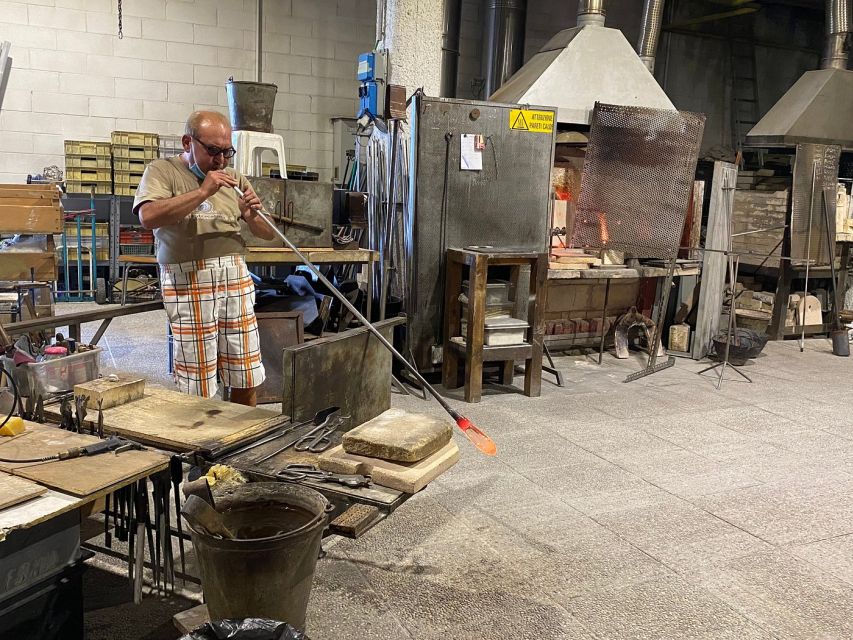
- Murano glass, inside a real factory setting: you’ll walk through the “glasser’s street” area and see masters at work in a family-run environment.
- Burano lace tradition in a working context: you can watch the last lace workers doing the old handmade process.
- Torcello feels time-warped: the island is described as an area where life still looks like it did centuries ago, including the view from the Romanic tower.
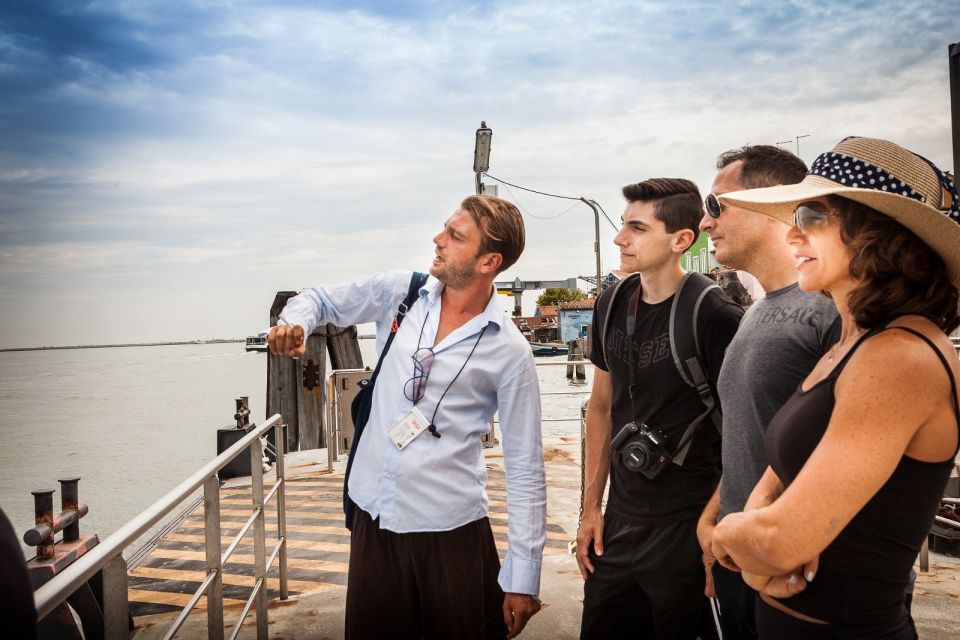
- Guide quality can make the difference: Andreapaolo (and the tour style in general) focuses on clear stories plus practical answers.
- Small-group potential: you may end up with just a couple of people, which makes questions easier and helps you move smoothly.
Why These Three Islands Still Matter in Venice’s Lagoon
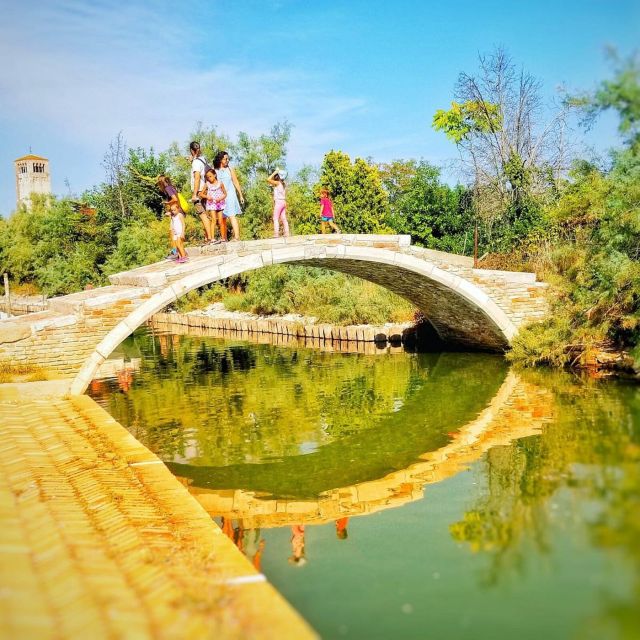
Venice gets most of the attention, but the lagoon is where you see the system behind the magic. This trip is smart because it pairs three “reasons to exist” islands in one half-day flow: Torcello as an early settlement, Burano as a fishing and lace community, and Murano as the glass-making engine.
You also get a useful change of pace. Torcello slows you down. Burano makes you look up at buildings and down at details. Murano makes you watch hands and learn why certain materials and techniques matter. If you only do Venice proper, it’s easy to miss how different these island cultures really are.
You can also read our reviews of more tours and experiences in Venice.
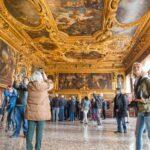

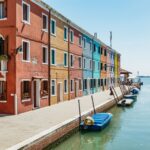
Getting Started at Fondamente Nuove (and Riding the Vaporetto)
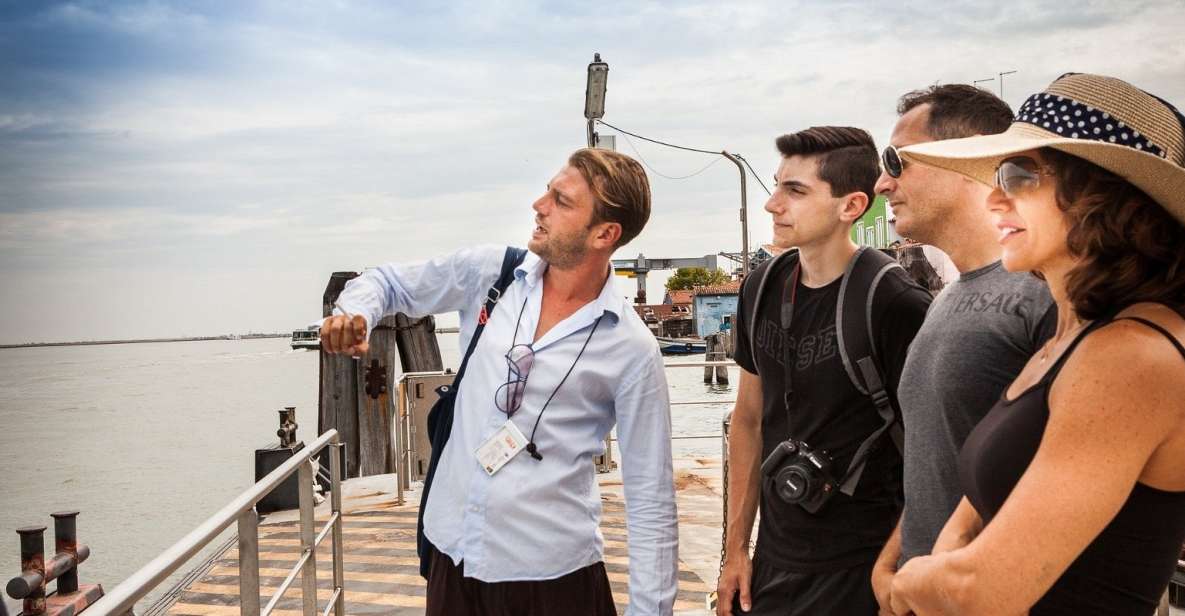
You meet at Fondamente Nuove, right in front of the ticket shop at Gate B. That matters because you’re not starting from the thickest tourist crush, and you’re positioned to connect with lagoon transport quickly.
The big practical thing: this experience depends on using the ACTV vaporetto service, and the 24h daily ticket is required. It isn’t included in the tour price. The good news is that once you have that ticket, you’re using Venice’s real transit system instead of waiting around for a bus timetable. The tour itself is designed around those vaporetto connections, which is exactly how Venetians move between islands.
On top of that, the tour highlights the vaporetto as Venice’s long-running mode of travel (service starting in 1895). Even if you’re not a transit nerd, it helps you feel like you’re in the lagoon, not just visiting it from the shore.
Torcello’s Romanic Tower and the Medieval Mood
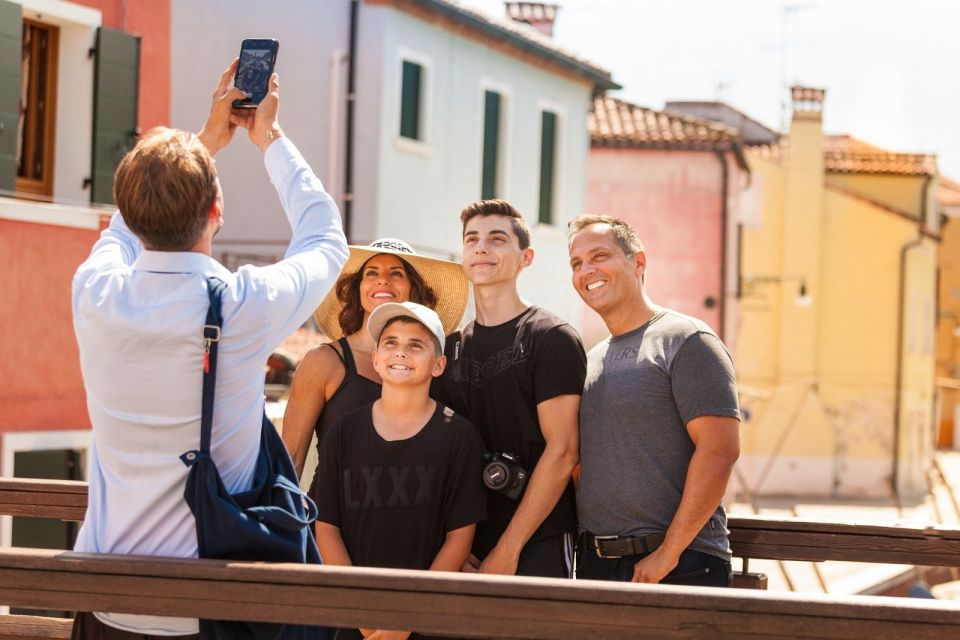
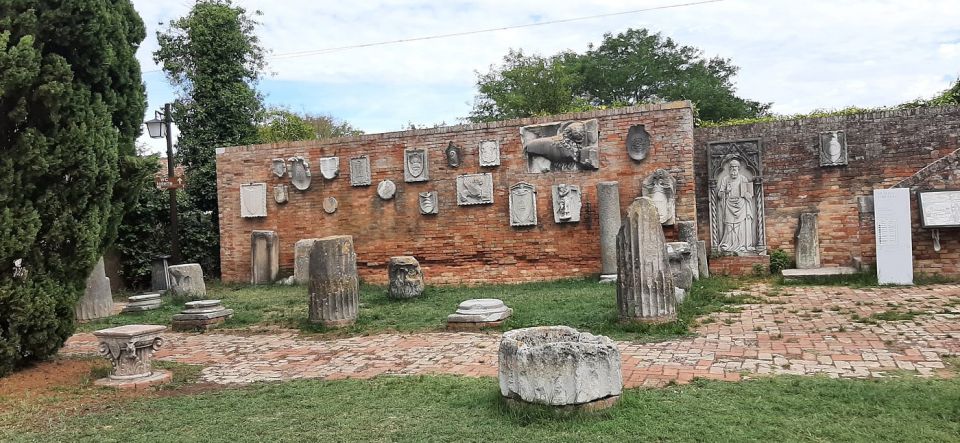
Torcello is where the trip becomes atmospheric fast. This island is presented as the first Venice community, and it keeps that “older than Venice’s tourist version” feeling. The approach here is simple: you see the island’s archaeological area and then you get the landmark viewpoint that frames the lagoon.
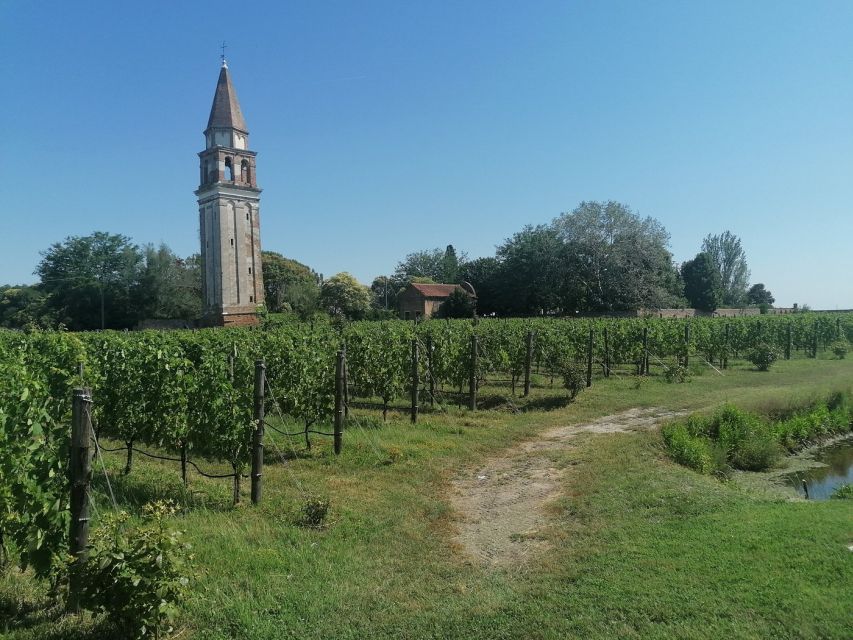
The standout moment is the Romanic tower. The trip includes time at the tower area so you can look out and understand what you’re actually traveling through: islands scattered across water, narrow channels, and the sense that everything depends on boats and weather. That view is a big reason Torcello works even if you’re not the type who loves ruins.
Another detail worth noting is the living picture the tour gives you. Torcello is described as an area where only a handful of residents remain today, and the atmosphere is compared to a dark-ages city where things feel like they did centuries ago. You’re not going to a theme park. Expect slower streets, quieter corners, and lots of time for your eyes to adjust.
Possible drawback to keep in mind: Torcello’s appeal is quiet and visual. If you’re looking for nonstop activity every minute, this part might feel calm rather than exciting.
Burano’s Lace Workshop and the Color-Spotting Game
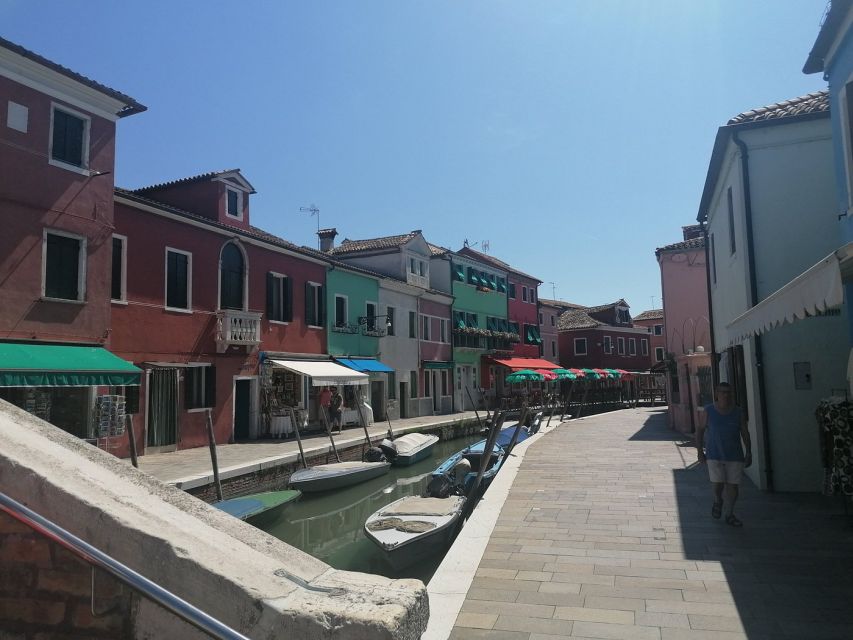
Then the trip shifts gears to Burano, which is basically a masterclass in how one small community can develop an identity so strong it becomes a landmark. Burano is famous for fishermen, but the tour also puts its cultural engine front and center: the millenial lace-making industry.
What I like about the way this is handled is that you’re not just hearing the word lace. You’re visiting one of the last lace factories, where older lacemakers are still doing the handmade work. Watching that kind of craft in action changes how you see the end products. Lace stops being a tourist buy and becomes a process: patient, repetitive, and exacting.
There’s also a very practical tip built into the flow. Around midday, the suggestion is to take lunch time in Burano for local seafood. That timing makes sense because you’re already in the area where the community culture is strongest, and you won’t be stuck eating quickly back in Venice while you’re tired.
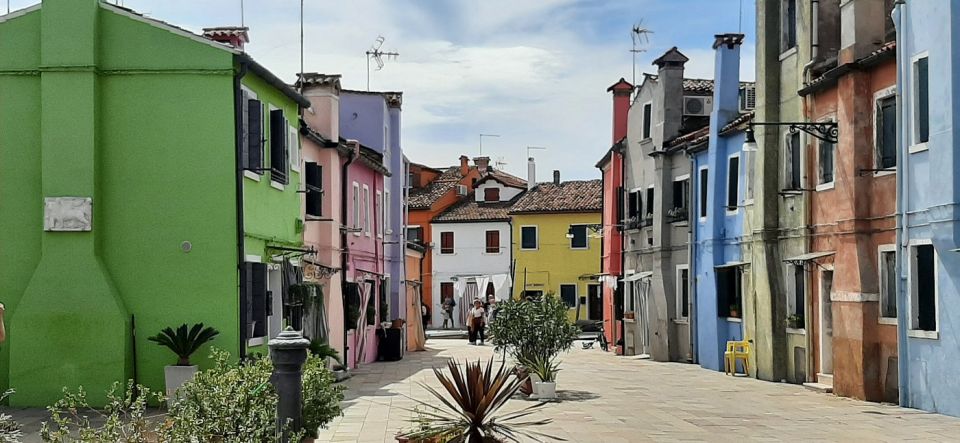
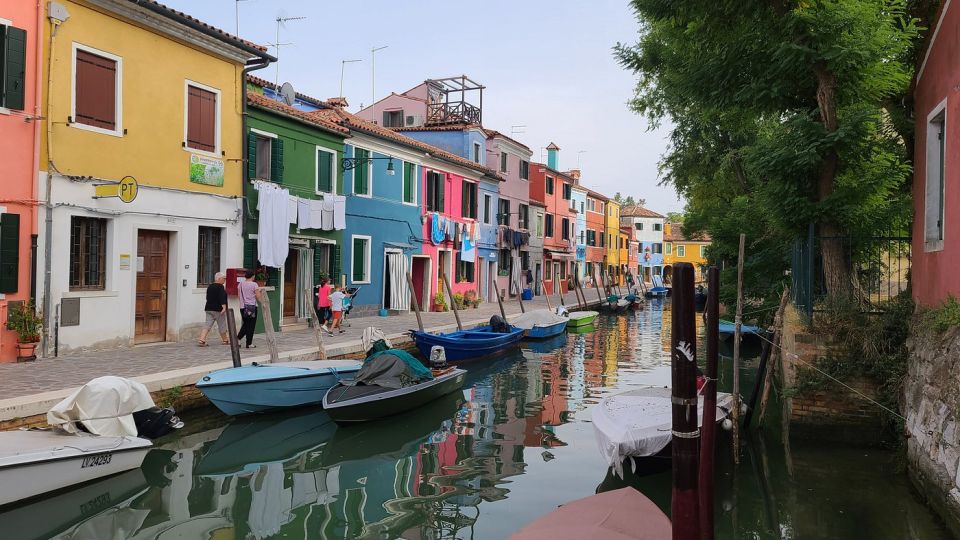
Burano also rewards people who look closely. Even if you don’t know the names of the buildings or the history of every alley, the island’s skyline does the storytelling for you. It’s easy to spend extra minutes there just turning your head, checking colors, and watching how locals move through their day.
Consideration: Burano can be a “camera town,” so if you want fewer photo delays, keep your pacing steady. Let other people photograph first, then you’ll have an easier time soaking in the details without getting stuck in a crowd loop.
Murano Glass: Walking the Glassmaker Street
Next is Murano, and this is where the tour becomes hands-on in a different way. Murano is tied to glass production at scale, and the focus here is not theory. You’re visiting a glass industry where you can see production and the way a family workshop environment works.
The tour route goes through the “glasser’s street,” with a walking component that takes you to a real glass factory setting. The idea is that you don’t just see a showroom. You see the workflow: masters working, a family art gallery concept, and the sense that glass making is still treated as craft and not just retail.
Two specific details make Murano especially valuable on a guided outing. First, the tour frames Murano as the biggest glass industry in the world. Even if you already knew Murano was famous, a guide helps you understand what makes the fame practical: the techniques, the repetition, and the way knowledge stays inside families. Second, it emphasizes that last producing families are still working in a style compared to methods from about a thousand years ago. That comparison might sound dramatic, but it pushes you to notice continuity rather than treating it as a modern novelty.
Murano is also ideal for questions. If you’re curious about the difference between types of glass or why certain pieces look the way they do, a good guide can help you connect what you’re watching to the practical result.
Possible drawback: Murano can tempt you into buying glass on impulse. If you’re price-sensitive, treat the first factory visit as research. Then decide later once you’ve seen how wide the styles are and how different workshops price their work.




Price and Value: What $65 Covers (and What Costs Extra)
The price is listed at $65 per person, and that number is only fair if you understand what’s included. In this case, key admission elements are wrapped into the tour price:
- Murano glass industry visit (included, listed as 8 euros)
- Torcello archaeological area (included, listed as 5 euros)
Those included items help justify the cost because you’re paying for guided access, not just being told where to walk. The overall value increases because the tour organizes the route between islands in a way that matches how the lagoon transport works.
The big extra you must plan for is the 24h vaporetto ticket for ACTV, listed at 25 euros. That is mandatory to join, and it’s not the tour operator’s choice. It’s the lagoon’s reality. Still, once you pay for that ticket, you have flexibility for your day in and around Venice, even beyond the tour.
In other words: the $65 isn’t the full cost, but the structure helps. You’re effectively paying for expert guidance plus included visits, then separately paying for the public transport you’d likely use anyway.
The Guide Makes It Work: Andreapaolo’s Story Style
A strong guide can turn a good itinerary into a memorable day, and this one leans into clarity and interaction. Andreapaolo Barbini is described as personable and helpful, the type who will answer what you ask and adjust explanations as you go.
One theme that comes through is balance. The tour keeps the big picture (how these island communities connect to Venice) but doesn’t ignore the human side (how crafts stay alive, what life is like on Torcello, and why Burano’s identity sticks). Another detail: the tour is designed to handle weather. Even with heavy rain in the mix, the overall experience remains enjoyable because the guide keeps the group moving and the story coherent.
Language is worth a small note. The tour runs in English and Italian. If English is your main language and you find fast explanations hard to catch, it helps to ask one question at a time. In practice, you’ll usually get enough context from listening to the pacing and the guide’s willingness to repeat or reframe.
How Long It Really Feels (and When You’ll Want to Pause)
The schedule is set up for a half-day feel, with an itinerary time listed at about 5.5 hours. That’s a sweet spot for three islands: you get enough time to see each place as more than a quick stop, but you’re not stuck all day.
One reason that matters is fatigue. Lagoon travel involves some waiting and some standing. You also have walking time at each island, especially in Murano and the factory areas. If you’re the type who easily gets tired standing, build a little margin into your day.
The best “pause” moments come naturally:
- At Torcello when you look out from the tower.
- At Burano when you slow down and do color-spotting along the skyline.
- At Murano when you watch glass making and let your eyes adapt to the process.
If you try to rush all three islands, you’ll miss what makes the trip worth it.
Who This Trip Suits Best
This experience fits you if you want Venice’s lagoon culture without committing to a full-day itinerary. It’s especially good for people who like craft and working processes: glass making in Murano and lace making in Burano are both presented as living traditions, not just museum displays.
It’s also a smart choice if you’re traveling with limited time. Three islands in one guided loop saves you from planning the order and figuring out transport connections from scratch.
On the other hand, if you only care about big-ticket sights in Venice itself, you might prefer to stay in the city that day. Torcello’s main strength is atmosphere and a quieter kind of sightseeing, not high-energy crowd moments.
Should You Book This Tour?
Yes, if you want the lagoon to feel like a place with real communities, not just postcards. The value is strongest when you care about process—watching craft in action in Murano and Burano—and when you like the contrast between Torcello’s calm and the other two islands’ identities.
I’d especially book it if:
- You want guided context that helps you connect the islands to Venice’s bigger story.
- You like seeing how things get made, even if you’re not a “craft person” yet.
- You’d rather ask questions than guess your way through factories.
If you hate walking, dislike public transport days, or you want minimal extra costs, then you’ll probably feel the friction of the mandatory vaporetto ticket. But if that doesn’t bother you, this is one of the more focused ways to experience the Venetian lagoon’s character in a short window.
FAQ
Which islands are included in this lagoon trip?
It includes visits to Torcello, Burano, and Murano.
How much time does the outing take?
The trip is scheduled for about 5.5 hours.
What’s included in the tour price?
The price includes visits tied to Murano glass production (listed as 8 euros) and the Torcello archaeological area (listed as 5 euros).
Do I need a vaporetto ticket?
Yes. A 24h ACTV vaporetto ticket is mandatory to join and costs 25 euros, and it is not included in the tour price.
Where do we meet the group?
You meet in front of the Fondamente Nuove ticket shop at Gate B.
Can I cancel for a refund?
Yes. Free cancellation is offered up to 24 hours in advance for a full refund.