REVIEW · VENICE
Venice: Entrance Ticket to the Naval Historical Museum
Book on GetYourGuide →Operated by D'Uva · Bookable on GetYourGuide
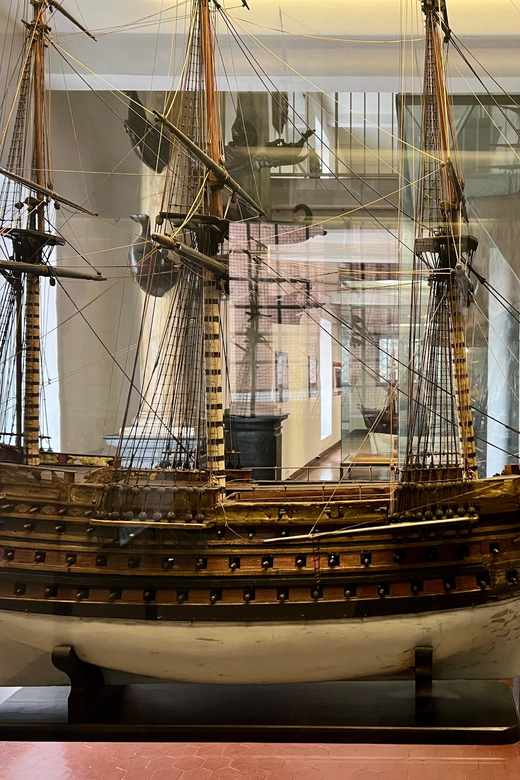
A small museum with a big maritime story. I love the ship models and the eye-opening collection of boats from China and the Far East, all set in a 15th-century building near Venice’s old naval works. One thing to keep in mind: this is an entry ticket, not a guided tour, so you’ll get the most if you’re happy reading labels at your own pace.
You’re stepping into MUNAV, the Naval Historical Museum of Venice, the most important naval museum in Italy. It’s owned by the Italian Navy and managed by the Ministry of Defense, which helps explain the museum’s serious, factual tone. With about 6000 square meters and five exhibition floors, you can easily fill 90 minutes without rushing—or you can slow down if you’re the kind of person who stops for the tiny details.
In This Review
- Key Highlights Worth Planning For
- Getting to MUNAV: San Marco, the Arsenal, and an easy walk
- Price and value: what $18 buys you in 1.5 hours
- Your visit plan: how to use your 90 minutes well
- Inside the 15th-century Granary: what five floors feels like
- Venice’s naval timeline: from early Venetian boats to modern Navy models
- The standout section: boats from China and the Far East
- Ship models, paintings, and documents: how to read this museum
- Skip-the-line entrance: small time saver, big Venice advantage
- Who this museum is best for
- Small pets note: what you can bring
- Should you book this Naval Historical Museum ticket?
- FAQ
- Where is the Naval Historical Museum of Venice located?
- How long does the visit take?
- How much is the entrance ticket?
- What is included with the ticket?
- Is a guided tour included?
- Can I skip the line?
- Is free cancellation available?
- Is reserve and pay later available?
- Does the museum allow small pets?
- Who owns and manages the museum?
Key Highlights Worth Planning For
- Skip-the-line entry: Use the separate entrance to cut waiting time.
- Five-floor layout: Spread out displays across a large 6000-square-meter site.
- Venice’s naval reach: From ancient Venetian boats to modern Italian Navy models.
- China and Far East collection: A standout set of boats and materials that expands your sense of trade and contact.
- Military stewardship: Owned by the Italian Navy and managed by the Ministry of Defense.
- Self-guided pacing: 1.5 hours that works well for independent visitors.
Getting to MUNAV: San Marco, the Arsenal, and an easy walk
If you’re starting around Piazza San Marco, getting to MUNAV is painless. The museum is about a 5-minute walk from the square and it sits adjacent to the Ancient Arsenal of Venice. That matters because you can build a smooth mini-route: San Marco area first, then straight into Venetian naval land.
The Arsenal location also changes how you experience the museum. Venice’s lagoon life wasn’t just scenery—it was logistics, shipbuilding, and control of waterways. Walking up to a naval site like this gives you the right mindset before you ever see a single model.
You can also read our reviews of more tours and experiences in Venice



Price and value: what $18 buys you in 1.5 hours
At $18 per person, this ticket lands in the “reasonable for a focused museum stop” category. For your money, you get entry to the museum’s full space and time to explore at your pace, with a total duration listed at about 1.5 hours.
You’re also not stuck in a slow queue. The skip-the-line option through a separate entrance is a real value driver in Venice, where time disappears fast. The catch is that you’re on your own—there’s no guided tour included—so consider this a good fit if you’re comfortable exploring independently.
Your visit plan: how to use your 90 minutes well
The museum’s setup is designed for a proper walk-through. It’s housed in a 15th-century building that once served as the Granary of the Serenissima Republic. Think of it as part history, part storage legacy, and part museum stage—so your best strategy is to move floor by floor without trying to read everything on every wall.
Here’s a practical way to pace your 1.5 hours:
- Start on the main exhibits where the museum sets the timeline from early Venetian maritime activity to later developments.
- Middle of your visit: spend extra time with ship models and documents. These displays tend to be the most rewarding if you slow down.
- Last stretch: focus on the standout sections, especially the boats from China and the Far East, then end with any paintings or written materials you still want to see.
Don’t worry if you don’t hit every display. With five floors, finishing everything would turn your visit into a school assignment. Instead, aim for the big stories and the most visually detailed items.
Inside the 15th-century Granary: what five floors feels like
The museum covers roughly 6000 square meters and spreads exhibits across five exhibition floors. That’s enough room that the experience won’t feel like a quick glance and done.
You’ll see a mix of:
- historical artifacts
- ship models
- paintings
- documents
That variety is one of the best reasons to go. Ship models are the fast visual win. Documents and artifacts add the slower, nerdy context. Paintings can help you connect naval history to the way Venice viewed itself—ships weren’t just tools; they were symbols.
Because this is self-guided, your enjoyment will depend on how you like to absorb museum information. If you enjoy reading and comparing objects, you’ll do well. If you only want high-level highlights and motion, you might find the quieter document-heavy parts slower than you expected.
Venice’s naval timeline: from early Venetian boats to modern Navy models
A big promise of MUNAV is that it spans Venice’s maritime tradition across time. You’ll move through displays that cover early Venetian boat history up to contemporary Italian Navy models.
Why that matters: it helps you see that Venice wasn’t only about one golden-age moment. It was a working maritime power for a long time, and the museum tries to show how naval design, purpose, and influence evolve.
You’ll likely notice the shift in emphasis across eras. Early material can feel closer to “how they traveled and worked in the lagoon.” Later exhibits tend to look more like structured naval engineering and formal classification—especially once you get into Italian Navy models.
You can also read our reviews of more historical tours in Venice






The standout section: boats from China and the Far East
One of the most compelling parts of the museum is the exceptional collection of boats from China and the Far East. This is where the museum quietly stops being only a local Venetian story.
Instead, it becomes a story about contact—trade routes, technology exchange, and how Venice fit into a wider world of sailing and shipbuilding. Even if you’re not a history expert, you can usually tell when a museum is showing you something unusual. This collection is explicitly described as exceptional, and it gives you a strong reason to visit beyond the basics.
Practical tip: when you see these displays, compare them with the Venetian boat models nearby. Look for differences in structure, design choices, and how the ships are represented through models and accompanying information. That comparison often turns a “nice exhibit” into a “now I get it” moment.
Ship models, paintings, and documents: how to read this museum
The museum’s mix of object types is useful because each one tells a different kind of story.
- Ship models help you understand shape and scale. They’re a fast way to grasp design ideas without needing technical background.
- Paintings can add mood and context. They’re often about more than accuracy; they communicate how ships and maritime life were seen.
- Documents slow you down, but that’s the point. Documents and written materials can clarify names, purposes, or the why behind certain developments.
Since there’s no guided tour included, you’ll get the most by using a simple rule: pick one or two themes to follow. For example, you can focus on how shipbuilding changes over time or how Venice’s maritime identity appears across different materials.
If you’re someone who typically skips museum labels, this might not be your fastest win. But if you’re willing to spend time reading just the key text blocks, the payoff is real.
Skip-the-line entrance: small time saver, big Venice advantage
Venice rewards smart timing. The museum’s separate entrance for skip-the-line entry is a practical advantage. In a city where lines can grow quickly around big landmarks, it helps you keep your day flexible.
Also, starting near San Marco and ending at a museum with a straightforward entry flow keeps your pacing sane. You won’t have to cram your visit between crowds in a way that makes you grumpy.
Who this museum is best for
MUNAV is a good match if you like museums that are factual, object-based, and not overly showy. The overall rating of 4.7 out of 5 supports that the experience lands well across a broad public.
Here’s where it really fits:
- You’re curious about how Venice functioned as a maritime power.
- You like ship models and visual history.
- You want a step away from only canals and gondolas, into the machinery and paperwork side of naval life.
It might be less satisfying if you:
- only want modern Venice sightseeing and very little reading
- expect a guided narrative walking you through the story
- need constant interactive elements to stay engaged (this museum leans more traditional)
One nice factor from the feedback you’ll see on the museum is that it works for general audiences, not just specialists. That usually means the exhibits are accessible, even when the subject gets technical.
Small pets note: what you can bring
If you travel with a small pet, the museum allows access to rooms and outdoor spaces as long as your pet is carried in its own carrier or held in your arms during the visit. Guide dogs for visually impaired visitors are exempt from this rule.
So if you’ve been trying to plan a Venice itinerary that doesn’t leave pets behind, this is worth remembering.
Should you book this Naval Historical Museum ticket?
Book it if you want a calm, structured museum experience that connects Venice to the sea in a practical way. The combination of ship models, documents, and a truly standout collection of boats from China and the Far East makes it more than just a local stroll through displays.
Skip it if you’re craving a guided experience or you strongly prefer hands-on attractions over reading and looking closely. Since there’s no guided tour included, your enjoyment will depend on whether you’re happy exploring on your own for about 1.5 hours.
In short: if you’re the type who likes to understand how things worked—ships, design, trade, and naval organization—this ticket is good value for the time you’ll spend.
FAQ
Where is the Naval Historical Museum of Venice located?
It’s in Veneto, Italy, about a 5-minute walk from Piazza San Marco, and adjacent to the Ancient Arsenal of Venice.
How long does the visit take?
The duration is listed at about 1.5 hours.
How much is the entrance ticket?
The price is $18 per person.
What is included with the ticket?
The ticket includes entry to the Naval Historical Museum.
Is a guided tour included?
No. A guided tour is not included.
Can I skip the line?
Yes. You can use a separate entrance for skip-the-line access.
Is free cancellation available?
Yes. You can cancel up to 24 hours in advance for a full refund.
Is reserve and pay later available?
Yes. You can reserve your spot and pay nothing today.
Does the museum allow small pets?
Yes, access is permitted for small pets if they are carried in their own carrier or held in your arms for the duration of the visit.
Who owns and manages the museum?
The museum is owned by the Italian Navy and managed by the Ministry of Defense.