REVIEW · VENICE
The Murano Glass Museum in Venice
Book on Viator →Operated by Weekend in Italy · Bookable on Viator
Glass tells Venice’s real story. This Murano stop is interesting because you get admission to the Museo del Vetro plus secure entry that helps you avoid ticket-line hassles, and the museum’s setup makes Murano glass history feel organized and clear from the start. One drawback: it is not very hands-on, so younger kids may lose interest faster than adults.
What I like most is the way it’s arranged: the galleries move in time order, and each room focuses on a different era of glassmaking. You also get extra support once you’re inside (there’s a free audio guide in multiple languages), which makes it easier to enjoy even if you’re not an expert. Add in a calm garden area, and you can slow down after the exhibits.
For value, this is a simple ticket—about $26.43 per person, good for roughly 1 to 3 hours. Do watch for the optional catch: on certain dates, people visiting as a day trip from outside Venice may need to pay a €5 access fee (check the official site).
In This Review
- Key things to know before you go
- Why the Murano Glass Museum feels like a smart Venice add-on
- Price and what $26.43 really covers
- Getting in without stress: ticket entry and English access
- Museo del Vetro’s layout: Roman archaeology below, Murano glory above
- The ground-floor Roman section: early works that set context
- The chronological Murano galleries (15th to 20th centuries)
- Using the audio guide so the visit stays interesting
- How long to plan: the 1 to 3 hour range makes sense
- Garden area and the museum shop: nice stops, not the main event
- Who should book this ticket (and who might feel underwhelmed)
- Ticket delivery problems: how to avoid the entry-day headache
- How I’d fit this into a Venice day trip to Murano
- Should you book the Murano Glass Museum ticket?
- FAQ
- How much is the Murano Glass Museum ticket?
- Where is this experience located?
- How long does the visit take?
- Is the tour offered in English?
- What’s included with the ticket?
- What is not included in the price?
- How soon will I get confirmation after booking?
- Is the museum close to public transportation?
- Is this experience suitable for most travelers?
- Is there any additional access fee for day-trippers outside Venice?
- What is the cancellation policy?
Key things to know before you go
- Skip-the-line style entry that can save you time at one of Venice’s best-known glass stops
- Chronological galleries that trace Murano glass from early influences into the 15th–20th centuries
- Free audio guide in multiple languages, useful if you want context without a guide
- Two big worlds in one museum: Roman works below, Murano glass above
- A tranquil garden area, but it’s not a huge space
- Best for adults and older kids, since the museum is mostly observation-based
Why the Murano Glass Museum feels like a smart Venice add-on
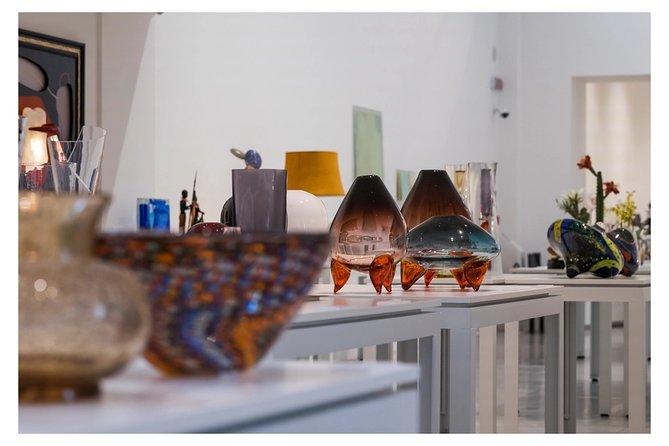
Venice has plenty of sights that look good in a photo. The Murano Glass Museum (Museo del Vetro) is different. It gives you the behind-the-scenes story of how Murano glass became what it is today—design, technique, and style evolving over centuries.
If you like art history, this museum is especially satisfying because it treats glass like a craft with a timeline. You’re not just looking at objects; you’re seeing how changes happened room by room, period by period. That structure matters, because otherwise museum glass can blur together.
This ticket also makes sense if your Venice day is tight. You’re getting admission to a must-see destination, with secure entry included, and the visit typically lands in the 1 to 3 hour range—enough time to read the key pieces and use the audio guide without turning the museum into a marathon.
You can also read our reviews of more museum experiences in Venice



Price and what $26.43 really covers
At about $26.43 per person, you’re paying for the essential thing: an entrance ticket to the museum. That matters in Venice, where you often pay for convenience as much as for the museum itself.
What this price includes:
- Entrance ticket (so you can get into Museo del Vetro)
What it does not include:
- Private transportation
- Snacks
So the value question becomes simple: do you want access to one of the world’s largest Murano glass collections, plus the museum’s guided-by-layout experience? If yes, the ticket price is fair for what you get. If you’re only mildly curious about glass, you may treat it as a nice stop rather than a centerpiece.
There’s one more cost consideration. On certain dates, some day visitors staying outside Venice may have to pay a €5 access fee. The exact days and exemptions are handled by the official rules, so check the posted guidance before you finalize your plan.
Getting in without stress: ticket entry and English access
This experience is offered with English. That’s helpful because the museum experience can feel deeper when you can follow the explanations without guessing.
The big practical win here is secure entry and the promise of bypassing potential ticket lines. In Venice, time is real money. Even a short wait can derail your schedule, especially if you’re moving between islands or trying to see other sights the same day.
Confirmation is set up so that you receive it within 48 hours of booking, if available. I always tell people to keep your confirmation info handy on your phone, plus a screenshot as a backup. It’s a low-effort way to prevent entry day headaches.
One more practical note: the museum is near public transportation, so you’re not locked into a private transfer plan. That’s good if you’re trying to keep your day flexible.
Museo del Vetro’s layout: Roman archaeology below, Murano glory above
Walk into Museo del Vetro and you’ll quickly notice something: the museum doesn’t try to teach you everything at once. It splits the story into distinct spaces, and that makes your visit easier to process.
A key part of the layout:
- Ground floor: an archaeological section with Roman works dated from the 1st to the 3rd century A.D.
- First floor: the museum’s main Murano glass collection, laid out chronologically
This vertical storytelling is one reason the museum can feel more “complete” than a typical glass exhibit. You start with earlier glass materials and culture, then you move into the Murano timeline where the design and production story really develops.
For many people, that structure is the difference between glass as a novelty and glass as a craft with roots.
The ground-floor Roman section: early works that set context
The Roman archaeology area is small compared to what you’ll see upstairs, but it’s a smart starting point. You’re looking at Roman works from the 1st to 3rd century A.D., which helps you connect Murano glass to older traditions rather than treating it like it appeared from nowhere.
Even if you’re not focused on Roman history, this floor gives you perspective on glass as a material. It helps you notice themes such as form and technique that later show up in more refined Murano creations.
In short: if you want to understand why Murano glass got famous, this early context makes the later rooms easier to appreciate.






The chronological Murano galleries (15th to 20th centuries)
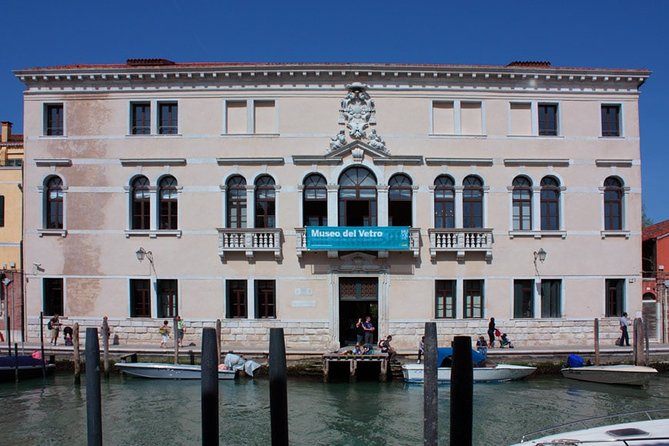
Upstairs is where the museum earns its reputation. The first floor holds the largest historical collection of Murano glass in the world, with pieces dating from the 15th to the 20th century. Many works are described as world-famous masterpieces, which is a big deal if you want to see iconic designs without chasing individual churches or private collections.
The rooms are organized by time period. That means you’re not just wandering from object to object. You’ll see how styles and approaches evolve across centuries, and you can connect changes to what’s happening in design more broadly.
If you’re an art history fan, this chronological flow is a real plus. If you only want the highlights, you still benefit because the timeline helps you prioritize what to look at.
Using the audio guide so the visit stays interesting
One theme from inside the museum experience is that it works better when you slow down and add context. The good news: there’s a free audio guide available in different languages.
Here’s how to make that work for you:
- Use the audio guide early, so the first rooms give you a map in your head.
- If you feel your attention drifting, switch back to the audio guide for a few key pieces instead of reading everything.
- Don’t rush. Glass objects reward time. Even small shifts in style can be easier to spot when you’re not speed-walking.
The museum isn’t designed like a hands-on workshop. So the audio guide is the tool that turns looking into understanding. If you skip that, you may still enjoy the beauty, but the visit can feel more like a viewing gallery than a story.
How long to plan: the 1 to 3 hour range makes sense
The visit is listed as approximately 1 to 3 hours. That range is realistic because you can go two ways:
- Quick but focused: use the audio guide for the main rooms, skim labels, and hit the Roman section briefly.
- Slower and deeper: stay with the timeline rooms, listen to more descriptions, and spend time in the garden area afterward.
The garden is described as tranquil but not extensive. Translation: it’s a nice reset after glass rooms, not a separate attraction that needs hours. I’d treat it like a breather, then decide whether you want to return for a second pass on any pieces that stood out.
Garden area and the museum shop: nice stops, not the main event
The museum includes a garden area that people describe as peaceful. It’s a good place to step out of indoor lighting and reset your eyes before you head back into the exhibits.
The museum shop is also there, but it’s said to be small. The practical takeaway is simple: if you want Murano glass shopping, you’ll likely find more variety across Murano itself. So the shop here is more like a convenient extra than a reason to change your plan.
If shopping is part of your day, plan time to explore Murano’s local glass stores outside the museum. The museum is best treated as the history stop; Murano is the shopping stop.
Who should book this ticket (and who might feel underwhelmed)
This is one of those experiences that depends on your interest level in craft and design.
You’ll probably love it if:
- you enjoy art history and design timelines
- you like museums where exhibits are arranged by era
- you want a clear story of how Murano glass grew and changed over centuries
You may not love it as much if:
- you’re going with kids who need interaction to stay engaged
- you expect a workshop-style experience
One specific point worth keeping in mind: the museum is not interactive. Even when kids are curious at first, the format can make interest fade. If you’re traveling with a child, it helps to go in with an expectation that it’s mainly viewing and listening, not doing.
For older kids, teens, and adults, the museum tends to work better because the structure and audio support can keep the story moving.
Ticket delivery problems: how to avoid the entry-day headache
One of the most important practical lessons from similar ticket experiences is this: if your ticket doesn’t scan or doesn’t arrive as expected, entry can become stressful. In the worst case, some ticket delivery failures can lead to being asked to pay again at the door.
I can’t control how a third-party delivery system behaves. But you can control what you bring:
- Save your confirmation email and reservation details on your phone.
- Screenshot the important pages.
- Plan to arrive with enough buffer time so one hiccup doesn’t destroy your day.
This is exactly the kind of situation where secure entry and proper ticket confirmation matters. If you want the least hassle, double-check your booking details before you travel and keep them accessible on-site.
How I’d fit this into a Venice day trip to Murano
If you’re doing Murano as part of a broader Venice itinerary, I’d treat this ticket as your anchor activity for the island. The museum gives you the context first; then the rest of Murano becomes more meaningful.
A practical pacing idea:
- Start with the museum, using the audio guide.
- Take a short break in the garden area.
- Then shift to wandering: glass shops, viewpoints, and the general rhythm of Murano.
Because the visit is 1 to 3 hours, it’s flexible. You can do it early to avoid crowds or later if you want to see Murano first and then ground your visit in history.
Should you book the Murano Glass Museum ticket?
Book it if you want a structured look at Murano glass history, from Roman beginnings to the 15th–20th century masterpieces. The value is strongest when you’ll actually use the free audio guide and take your time with the timeline rooms. It’s also a smart choice if you’re short on time in Venice and want secure entry that can reduce waiting.
Skip it or rethink if you’re expecting an interactive experience or you’re traveling with children who need hands-on activities to stay interested. In that case, you may enjoy Murano more as a strolling, shopping, and photo day, with the museum as an optional add-on rather than a must-do.
If your plans are set, and you understand it’s mostly for viewing and listening, this ticket is a solid, practical way to experience one of Venice’s signature crafts.
FAQ
How much is the Murano Glass Museum ticket?
The price is listed as $26.43 per person.
Where is this experience located?
It’s in Venice, Italy, at the Murano Glass Museum (Museo del Vetro).
How long does the visit take?
The duration is approximately 1 to 3 hours.
Is the tour offered in English?
Yes, it is offered in English.
What’s included with the ticket?
An entrance ticket to the museum is included.
What is not included in the price?
Private transportation and snacks are not included.
How soon will I get confirmation after booking?
Confirmation is received within 48 hours of booking, subject to availability.
Is the museum close to public transportation?
Yes, it is near public transportation.
Is this experience suitable for most travelers?
Most travelers can participate.
Is there any additional access fee for day-trippers outside Venice?
On certain dates, most travelers staying outside of Venice who plan to visit for the day may be required to pay a €5 access fee. Check the official details and exemptions at https://cda.ve.it.
What is the cancellation policy?
This experience is non-refundable and cannot be changed for any reason.