Venice is easier with a local plan. This small-group walking tour threads the needle between big-name sights and quieter lanes, so you cover a lot without feeling like you’re part of a human conveyor belt. I love the small-group pace and the chance to ask a local guide questions as you walk. One thing to watch: it’s a highlights-style overview, so if you want a slow, monument-by-monument deep study of every church and palace, you’ll probably want extra time afterward.
You’ll spend about two hours outside on a classic Venetian route: starting at Campiello dei Squelini, moving through Campo San Polo and Campo dei Frari, then finishing at St Mark’s Square. It’s offered in English, capped at 20 people, and the stops listed on the route are free to enter—so your money goes into the walking plan and local perspective.
In This Review
- Key things I’d focus on before you go
- What you actually get for $24 in Venice
- Campiello dei Squelini to Campo San Polo: learning Venice by its edges
- Campo dei Frari and San Giovanni e Paolo: doges, power, and stone
- Ponte di Rialto: the canal postcard, seen with context
- Piazza San Marco: ending at St Mark’s Square without getting lost afterward
- Guides, group pace, and how the tour feels in real life
- What to wear and bring (because Venice doesn’t do flat)
- Who this tour suits best (and who should think twice)
- Should you book this Venice highlights and street-plan tour?
- FAQ
- How long is the Venice highlights and hidden gems small group walking tour?
- Where do I meet the guide, and where does the tour end?
- Is the tour in English?
- Is food included?
- How big is the group?
- Are there admission tickets required for the listed stops?
- Do I need to pay the €5 access fee?
Key things I’d focus on before you go
- Small group, up to 20: easier listening, less crowding, and a guide who can actually respond to questions.
- A route that mixes squares and canalside icons: you get Rialto views and the St Mark’s finale without only chasing postcards.
- Local context you can ask about: the best part is conversational—why places matter and how Venetians live around them.
- Free stops on the itinerary: no extra ticket surprises at the listed viewpoints and squares.
- Ends at St Mark’s Square: convenient if you want to continue on your own after the tour.
- Audio support may be used: if you’re sensitive to sound quality, come prepared to ask for clarification when needed.
What you actually get for $24 in Venice
At $24 per person for about two hours, this tour isn’t priced like a museum day—it’s priced like a street-smart orientation plus story time. That’s important in Venice, where good walking routes can save you hours of wandering, especially when your first instinct is to sprint toward the obvious landmarks.
You’re paying for three things: a local guide, a managed group size (up to 20), and a sequence of stops that makes sense geographically. Even if you don’t remember every detail afterward, you’ll come away with a better mental map—where the squares sit, how the streets thread together, and what to notice when you return later.
Also, there’s no hotel pickup. The tour starts at a precise meeting point (Campiello dei Squelini) and ends at Piazza San Marco, so you can treat it like a timed walking appointment rather than a “big bus replacement.”
You can also read our reviews of more walking tours in Venice


Campiello dei Squelini to Campo San Polo: learning Venice by its edges
The tour kicks off at Campiello dei Squelini, by a colored wall. It’s a small start on purpose. Venice is built from campi and campielli—little civic spaces that feel like neighborhood living rooms. Starting there helps you shift your mindset from landmark-chasing to city-reading.
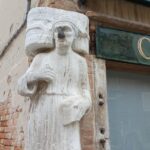
From there, you head to Campo San Polo. This square is a great example of how Venice layers meaning onto ordinary-looking space. You’ll hear about an important historical building connected to a confraternity named after San Rocco, known as a protector against plague. That kind of detail matters because Venice’s big stories often live in small places—signs, statues, and associations that don’t scream from a distance.
What I like about this segment: it’s where you start trusting the guide. The route shows you that Venice’s “main sites” aren’t random; they connect to civic life, trade, and beliefs. You’re learning how to look, not just where to stand for a photo.
Possible drawback to consider: if you’re the type who only wants the most famous views right away, you may need a little patience before you reach Rialto and St Mark’s. But that patience usually pays off later, because you’ll understand what you’re seeing instead of just ticking boxes.
Campo dei Frari and San Giovanni e Paolo: doges, power, and stone
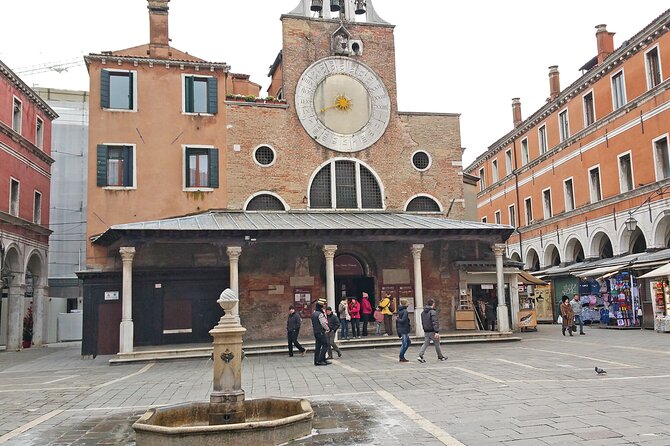
Next comes Campo dei Frari, where the tour steers you toward the Church of San Giovanni e Paolo. This is one of Venice’s grand monument settings, and it comes with a very specific claim: many doges, the past leaders of Venice, chose to rest there.
Why this stop works on a walking tour: it gives you a human anchor for the city’s political past. You’re not just hearing that Venice had leaders—you’re standing in an area tied to remembrance and legitimacy. Even if churches aren’t your usual thing, the doge connection turns the space into something more than architecture.
How this helps you as a visitor: once you grasp that doges are linked to burial choices and civic honor, you’ll start noticing similar themes elsewhere. You begin to recognize Venice as a city that commemorates itself in stone and ritual, not only in art galleries.
Small practical note: this portion is still walking-through-city-squares style. Expect “stop, listen, look, move on,” not long inside-the-building time. If you want a deeper church visit, plan to follow up independently after you finish the tour.
Ponte di Rialto: the canal postcard, seen with context
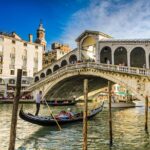
Then you reach Ponte di Rialto for a view of the bridge over the Grand Canal. The tour frames Rialto as the oldest of the four bridges spanning the canal—an easy detail to remember, and one that instantly adds weight to the scene.
Rialto is one of those places where, without a plan, you can burn time standing in the busiest part of town with nothing but your own elbow-room concerns. A small-group tour helps because your guide can time your stop and point out what to notice while you’re there.
What you’ll get here is less about a formal lecture and more about orientation: where to look, what the bridge signifies historically, and how it fits into the broader network of Venetian spaces you’ve already visited.
Tip for your photos: don’t just aim straight at the bridge. Venetian views work best when you capture the canal as a corridor—boats, alignments, and the way buildings step down toward the water.
Piazza San Marco: ending at St Mark’s Square without getting lost afterward
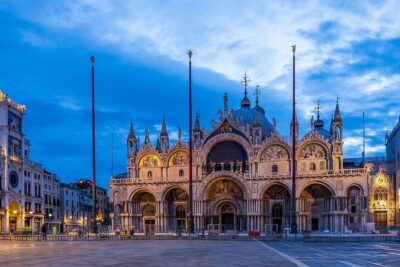
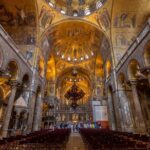
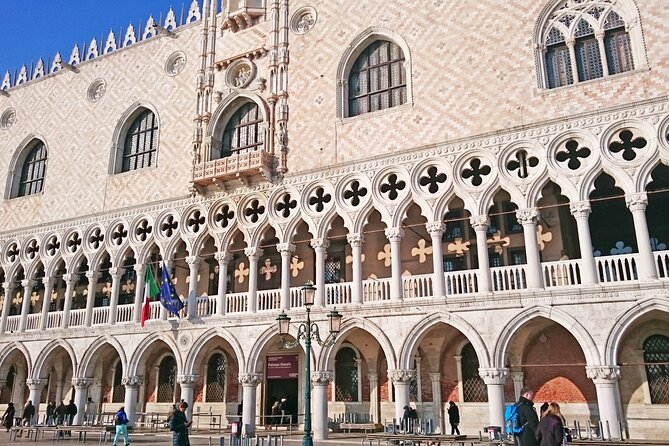
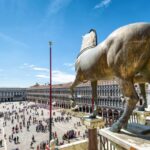
The tour finishes at Piazza San Marco, which is Venice’s government-and-center square. You’ll spend time at St Mark’s Square and hear why it became the heart of the city, surrounded by major civic buildings and facilities connected to Venetian power.
This ending is smart. You start in residential-style squares, move through civic and commemorative spaces, then land at the most dramatic public stage. If your plan includes museum stops or a longer walk around the lagoon edge afterward, you’ll be positioned to continue without needing to re-orient.
How to make the most of the finale: after the guide wraps up, take 10 minutes to simply stand and watch how people use the space—where they pause, where they funnel, and which corners feel like gathering points. Even if your feet are tired, that little pause helps you translate what you heard into real city behavior.




Guides, group pace, and how the tour feels in real life
A huge part of why this tour gets strong marks is the guide quality. Names that come up include Valentina, Anna, and Daisy, and the common thread is local perspective—plus the kind of humor that keeps long history from turning into background noise.
Since the group size maxes out at 20, the experience tends to be listen-friendly. You’re not forced into a single-file line where questions vanish into the crowd. I also like that the route includes moments where you can ask things along the way instead of waiting for a single Q-and-A at the end.
That said, a couple practical issues show up in the feedback: on at least one occasion, audio was hard to understand and the start time ran later than expected. If you rely on sound equipment for the narration, I’d bring extra attention to the basics—stay close to the guide at stops, and don’t be shy about asking for a repeat if you miss a key point.
What to wear and bring (because Venice doesn’t do flat)
This is an outdoor walking tour, so good shoes matter more than most people expect. Venice streets aren’t just uneven—they’re uneven in a way that changes after every turn, and you’ll be moving between small spaces on stones and bridges.
Bring a light layer. Even when the day looks calm, Venice can cool down fast, and some people felt challenged by the late-light timing when tours ran behind.
If you like to take photos, also plan for short waiting moments. At Rialto and in the approach to St Mark’s, the flow of foot traffic can change quickly, so you’ll want to be ready to reposition rather than demand the perfect shot.
Who this tour suits best (and who should think twice)
This tour is a strong fit if you’re:
- In Venice for a first time and need a fast way to understand how the city’s squares and canals connect.
- Traveling with limited time and want an efficient walk that still feels grounded in local life.
- Interested in the city’s civic and religious threads—confraternities, doges, and why leaders chose certain spaces to be remembered.
It’s less ideal if you want:
- A long, in-depth visit inside major buildings, with slow time for art and interior details.
- A route that focuses only on the most famous monument facades with minimal walking complexity.
A helpful way to think about it: this is best as your orientation, then you branch out on your own. Do it early in your trip if you can. You’ll get more from every second you spend wandering afterward.
Should you book this Venice highlights and street-plan tour?
I think this is a smart buy for the price—$24 for a two-hour, small-group walk that ends at St Mark’s Square and includes free stops is a good value equation. The biggest reason to book is the format: you’re not just looking at sites, you’re learning how to interpret them while you walk.
Book it if you want a local-guided route that helps you avoid aimless roaming and gives you context you can use later. If you’re picky about schedules and audio clarity, pick a day with good weather and show up a little early so you can settle in before the walk starts.
FAQ
How long is the Venice highlights and hidden gems small group walking tour?
It runs for about 2 hours.
Where do I meet the guide, and where does the tour end?
You meet at Campiello dei Squelini, 30123 Venezia VE, Italy. The tour ends at St. Mark’s Square (Piazza San Marco), 30124 Venezia VE, Italy.
Is the tour in English?
Yes, it’s offered in English.
Is food included?
No. Food and drinks are not included.
How big is the group?
The tour has a maximum of 20 travelers.
Are there admission tickets required for the listed stops?
The itinerary stops listed are free (no admission ticket required for those stops).
Do I need to pay the €5 access fee?
On certain dates, visitors who are staying outside of Venice for the day may be required to pay a €5 access fee. You can check which dates apply and possible exemptions at https://cda.ve.it.