REVIEW · VENICE
Venezia Audioguide – TravelMate app for your smartphone
Book on GetYourGuide →Operated by MyWoWo Srl · Bookable on GetYourGuide
Venice without waiting for anyone sounds pretty good. This TravelMate audioguide lets you explore at your own pace with offline audio on your smartphone, so you can pause, replay, and keep walking. I also like that the app includes text for the audio files, plus a quiz section that turns sightseeing into quick learning breaks. One thing to keep in mind: one review flagged accuracy issues with specific numbers, so use the guide for direction and context, not as a stopwatch for stairs.
The upside is you get a professional-feeling guide experience without collecting paper tickets or tracking a group. The downside is that it’s still an app: if you’re hoping for perfect, hyper-precise facts at every stop, you may feel a little skeptical when a detail sounds off. Luckily, you can always double-check important stuff in person—Venice is right there in front of you.
In This Review
- Key takeaways (the stuff that matters)
- A Smartphone Audioguide That Lets You Roam Venice Your Way
- Price and Value: What $6 Buys You in Real Venice Time
- How the TravelMate App Works (No Tickets, Just Activation)
- Using It Offline in Venice: Earphones, Text, and Battery Reality
- The Audio Lineup: From St. Mark’s to The Ghetto
- Venice introduction and local cuisine wonders
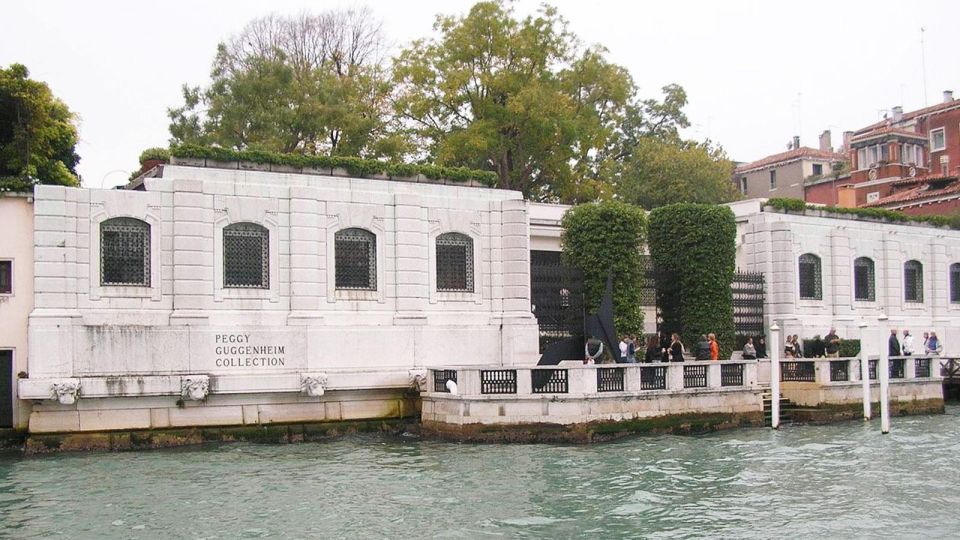
- Accademia Gallery and Guggenheim for art breaks
- Correr Museum, Marciana Library, and the library/museum vibe
- Doge’s Palace and St. Mark’s Basilica for the big icons
- Grand Canal and Arsenal for city scale and structure
- Biennale for modern culture timing
- La Fenice Theater and performance-world curiosity
- Cà D’Oro and Cà Rezzonico for Venice’s homegrown grandeur
- Murano and Rialto Bridge for day-trip energy and anchor sights
- Rialto and the city’s market-area feel
- San Sebastiano, San Zanipolo, and the church-stroll option
- Scuole di S. Giorgio degli Schiavoni and Scuola Grande di San Rocco
- Basilica of the Friars and a different religious flavor
- The Ghetto for a more human Venice
- Quizzes and the Benefit of Learning in Small Bites
- The One Drawback to Watch: Accuracy and Specific Numbers
- Who This Fits Best (and who should consider alternatives)
- Should You Book This TravelMate Venice Audioguide?
- FAQ
- How do I download the TravelMate app?
- Do I need paper tickets to start?
- Where do I find the activation code?
- Is there a meeting point?
- How long is the audio content, and how many parts are included?
- Can I listen offline in Venice?
- Can I read the content as well as listen?
- What languages are available?
- Is there a quiz in the app?
- Is it wheelchair accessible?
Key takeaways (the stuff that matters)

- Download once, use for years: valid 1095.5 days from first activation, and it does not expire.
- 85 audio moments, 255 total minutes: enough to cover a meaningful slice of Venice without rushing.
- Online or offline listening: keep going even when data is weak between alleys and bridges.
- You can read the audio files: handy when you want to skim or can’t listen.
- Includes a quiz section: short questions that help you remember what you just heard.
- No meeting point to hunt down: start wherever you are after activation.
A Smartphone Audioguide That Lets You Roam Venice Your Way
Venice works best when you’re moving at your own speed. You can stop for a view, drift into a side street, then come back when you feel like it. That’s exactly the promise here: you’re not tied to a schedule, and you’re not waiting for someone to gather the group.
What makes this experience interesting is how it tries to give you that guide-on-your-shoulder feeling, even though you’re solo. The audio contents are professionally created by top authors and interpreted by TV and radio professionals, so it doesn’t sound like a dry text-to-speech script. Instead, it’s the kind of narration that helps you connect names to places, and places to stories.
And you’re doing it with something you already carry: your smartphone. That means no paper tickets to collect, no handing over documents, and no awkward reliance on a “third-party device.” You also don’t have to commit to one listen—these audio files are designed for repeat use.
One more practical bonus: the guide is wheelchair accessible, which matters in a city where route planning can be tricky. I’d still plan your walk and transfers with care, but it’s good to know the product is built with access in mind.
You can also read our reviews of more tours and experiences in Venice



Price and Value: What $6 Buys You in Real Venice Time

At $6 per person, this is one of those deals that only makes sense if you’ll actually use it. The full package includes 85 audio content pieces with a total runtime of 255 minutes. That’s about four hours and a bit of listening—enough for a long afternoon, or a couple of shorter sessions across different days.
Here’s the real value angle: Venice is expensive in all the obvious ways, and this is a low-cost way to add depth without paying for another guided tour. Even better, you don’t just get a one-time “tour.” The guide is valid 1095.5 days (about three years) from your first activation, and it doesn’t expire. That turns the purchase into a small long-term travel tool.
If you’re the type who re-watches favorite museums at home, you’ll probably like this. You can replay the sections when you notice something new in the moment, or when you return to a neighborhood later. And because the app offers both audio and text, you can choose what works for you—headphones while walking, text when you’re taking a rest.
How the TravelMate App Works (No Tickets, Just Activation)
This isn’t a classic “meet a guide, start the tour” experience. There’s no meeting point to start. You download the app, activate it using your code, and then begin wherever you prefer.
Activation is handled through the confirmation email (or the GetYourGuide app if you use it). You’ll find an activation code tied to a barcode—specifically a 10-digit number just under the barcode in an orange frame. That code is the key that unlocks your Venice audio pack.
The logistics are refreshingly simple:
- Download the app called TRAVELMATE from the Play Store (Android) or the App Store (iOS).
- Locate your activation code in your email (or in the GetYourGuide app).
- Enter it in the app, then start listening immediately.
If you’ve ever wasted time hunting for a start point in Venice, this “start anywhere” style can feel like a relief. You still need to use your own common sense for navigation and timing, but at least you’re not beholden to anyone else.
Using It Offline in Venice: Earphones, Text, and Battery Reality

Venice internet can be moody, especially when you’re between buildings and on bridges. That’s why the offline option matters. You can listen online or offline, so you can plan a smooth day without worrying that every alley needs a connection.
I also like that the app lets you read the text of the audio files. If you’re walking when it’s windy or crowded and headphones aren’t comfortable, you can switch to reading. It’s also helpful when you want to skim a section quickly before a photo stop.
Earphones are recommended for the best listening experience. Practically speaking, that means you can focus on the narration without broadcasting it to everyone around you. And Venice already has enough background noise—you don’t want to add your own.
Battery note (not a dealbreaker, just real life): if you’re using audio for a few hours, keep your phone charged. Venice days involve cameras, maps, messages, and photo bursts. Audio listening won’t kill your battery instantly, but it adds up.
The Audio Lineup: From St. Mark’s to The Ghetto

This guide covers a solid mix of Venice: major landmarks, art stops, neighborhoods, and cultural highlights. You’ll find sections for St. Mark’s, the Doge’s Palace, and the Grand Canal, plus islands and districts like Murano and The Ghetto. There are also museum and performance-world stops, including Guggenheim and La Fenice Theater.
Rather than force one rigid path, I’d treat the sections as a menu. Pick a cluster for the day. Then when you stumble upon something on your walk, you can hop to the matching audio section and keep going.
Here’s how the named stops work as a practical sightseeing plan.





Venice introduction and local cuisine wonders
Start with the Venice introduction. Even if you’ve visited before, it can help you frame what you’re seeing and why the city is laid out the way it is. Then jump into local cuisine content. Food sections are especially useful because they give you context for what you’ll likely see on menus and in markets.
The practical win: you don’t wander hungry and confused. You can listen, then make better choices when you’re deciding what to try.
Accademia Gallery and Guggenheim for art breaks
If you like art, use the Accademia Gallery and Guggenheim sections as your museum anchors. Museums can be hit-or-miss when you go in “cold.” Audio helps you slow down and notice details instead of just drifting.
Even if you don’t go into every museum deeply, the audio sections help you connect names you’ll hear with the spaces you’re walking through. The drawback is simple: museums have their own pace and rules, so the listening time can feel shorter than you expect.
Correr Museum, Marciana Library, and the library/museum vibe
Correr Museum and Marciana Library fit together because they lean into the “Venice as record and collection” feeling. These are the stops where audio can turn “a beautiful room” into “a place with layers.”
Practical tip: if you’re trying to keep your day moving, pick just one of these on a given day. Otherwise you can end up listening to everything but feeling like you really saw nothing.
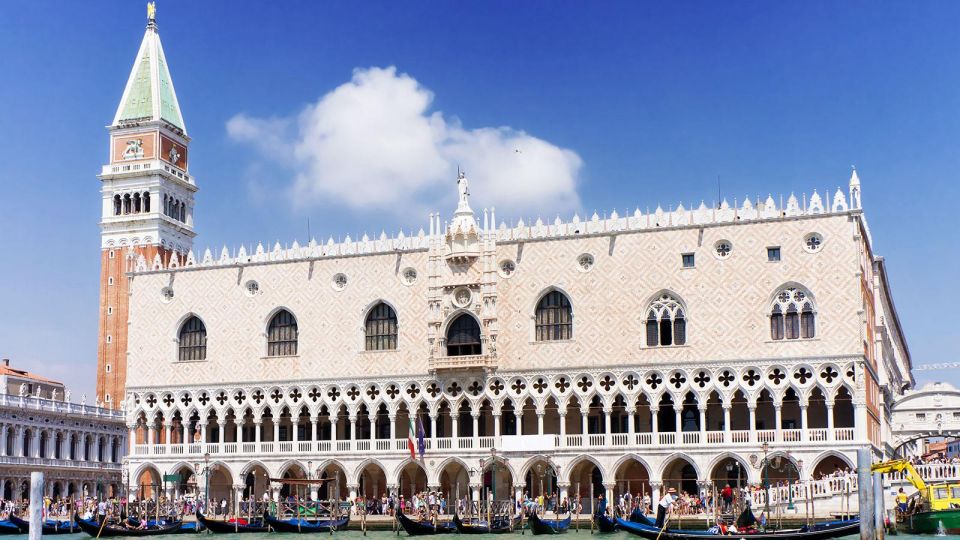
Doge’s Palace and St. Mark’s Basilica for the big icons
Doge’s Palace and St. Mark’s are the center-of-the-map stops. This is where an audioguide earns its keep, because both are the kind of places where people love to take photos—but the audio helps you understand what you’re looking at as you walk through or around.
One caution from a review: some content includes specific numbers that may not match reality. That doesn’t mean the whole guide is wrong. It does mean that if you’re using the audio for exact measurements—especially anything like stair counts—verify on-site. Venice is full of details, and it’s easy for a small error to feel big.
Grand Canal and Arsenal for city scale and structure
The Grand Canal is Venice in motion. A dedicated audio section helps you appreciate what the canal means beyond the postcard view—especially if you’re pairing listening with actual boat rides or long canal walks.
Then there’s Arsenal, which adds a different angle: not postcard Venice, but the city’s organized power and infrastructure. This kind of section can break up the “pretty buildings” effect and give you a more grounded sense of how Venice functioned.
Biennale for modern culture timing
Biennale is the “Venice beyond old stone” topic. Even if you’re visiting outside major events, this section can help you understand why people associate Venice with contemporary art culture. It also gives you another reason to explore beyond the classic tourist circuit.
If you’re not into contemporary art, you can still use the section as context rather than a checklist. Think of it as a lens for what you might notice later.
La Fenice Theater and performance-world curiosity
La Fenice Theater is a great stop for anyone curious about Venice as a stage. Audio here can help you look at the building and think about the tradition of performance in the city, even if your visit is just a quick glance from the outside.
This is also a nice “break” option if you want culture without another long museum floor plan.
Cà D’Oro and Cà Rezzonico for Venice’s homegrown grandeur
Cà D’Oro and Cà Rezzonico both point toward Venice’s residential-luxury tradition. These sections can be great when you’re walking a neighborhood where the architecture starts to blur together.
A practical approach: listen to one of these when you’re actually in front of the façade or entering a related area. Otherwise it’s easy to lose the connection between story and place.
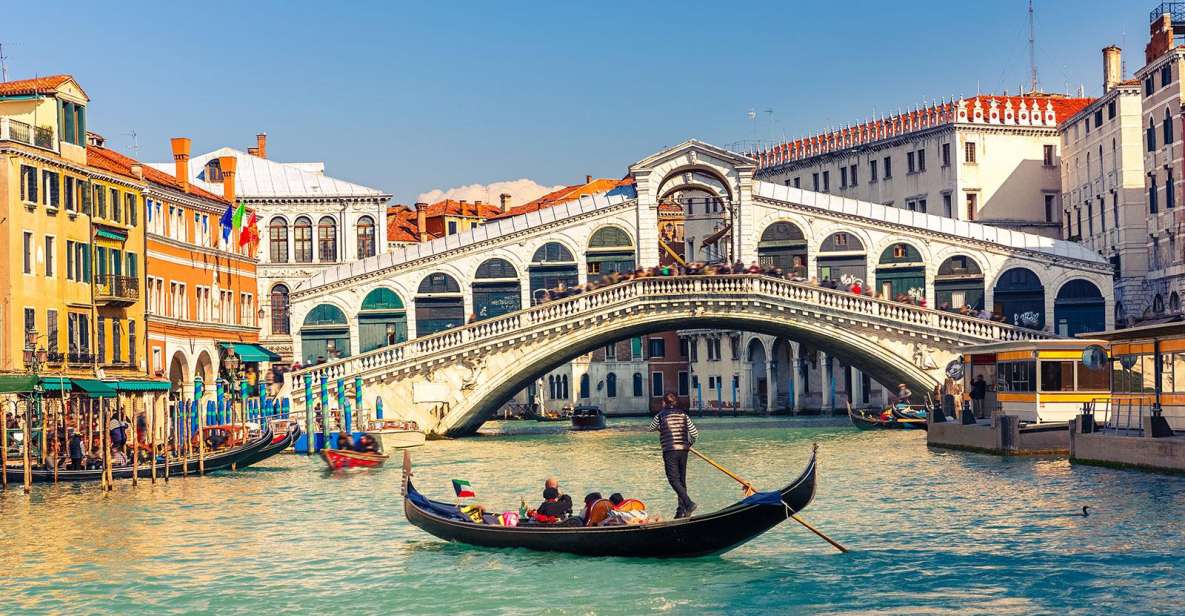
Murano and Rialto Bridge for day-trip energy and anchor sights
Murano gives you the island side of Venice, which is ideal for an easy “change of scenery” break. Rialto Bridge is the anchor moment: a place people naturally want to see, and an audio section helps you shift from crowd-watching to place-awareness.
If you’re short on time, Rialto is often the better immediate use of listening. Murano might deserve more attention if you’re planning extra walking or shopping time.
Rialto and the city’s market-area feel
Even when you’re not buying anything, the area around Rialto can feel like the “heart that beats fast.” The audio section helps you frame what you’re seeing in a bigger picture sense, rather than just counting tourists and cameras.
San Sebastiano, San Zanipolo, and the church-stroll option
San Sebastiano and San Zanipolo are good for a slower church walk. Churches are where Venice shows its layered past, and an audio section gives you something to listen for beyond decoration and view angles.
Practical drawback: religious sites can have quiet times or visitor limits. Audio is helpful, but keep your volume and your pace respectful.
Scuole di S. Giorgio degli Schiavoni and Scuola Grande di San Rocco
These two named stops are perfect if you like the social side of Venice. Audio here can turn what looks like ornate architecture into a story about community structures.
Because these places can be visually detailed, listening while you’re actually in front of the artwork matters. If you just pass by quickly, you’ll miss the point.
Basilica of the Friars and a different religious flavor
The Basilica of the Friars adds another church-style stop, giving you variety from the big-name basilicas. It’s a useful “mid-level” attraction for when you want something quieter or less crowded than the most famous highlights.
The Ghetto for a more human Venice
The Ghetto is the most emotionally grounded section on the list. Even without deep topic details in the guide description, the location alone signals that this is about lived history and community life.
If you’re choosing what to listen to, I’d prioritize the Ghetto section if your goal is to understand Venice as a real place, not just a museum.
Quizzes and the Benefit of Learning in Small Bites

This app includes a quiz section with short questions about the city. I like this for two reasons. First, it breaks the monotony of long listening. Second, quizzes help you remember what you just heard while it’s still fresh.
A good use plan: listen to one or two sections, then do a quiz. If the quiz is quick, it won’t slow you down. If it’s longer, it becomes a mini rest.
This is also where the app can work well for repeat use. If you return later, the quiz can refresh your memory faster than re-listening to everything.
The One Drawback to Watch: Accuracy and Specific Numbers

Here’s the honest caution based on a review: some content may have questionable accuracy, especially when it includes exact numbers. One example mentioned was a claim about how many steps you need to climb to reach a tower at St. Mark’s Basilica.
That matters because Venice is the kind of place where visitors sometimes treat audioguides as authority. This guide isn’t an authority document. It’s a helpful companion.
So use it like this:
- Let the audio orient you and explain themes.
- If you hear a very specific claim (stairs, measurements), trust but verify once you’re on-site.
- Don’t let one questionable detail ruin the whole day.
In my view, this is still a good purchase if your expectations are realistic. You’re buying flexibility and context, not a scientific report.
Who This Fits Best (and who should consider alternatives)
I think this is a strong match for you if:
- You want to explore Venice at your own pace.
- You like learning through listening but don’t want a group schedule.
- You’ll actually use the guide more than once, given it stays valid for years.
- You want offline flexibility so your day doesn’t depend on data.
It may be less ideal if:
- You’re the type who expects perfect factual precision down to exact step counts.
- You only want a short, one-day “do this, then that” guided route with no self-management.
Still, even if you’re picky about facts, this can work as a low-pressure way to get an entertaining overview. You can always confirm details in person when it matters most.
Should You Book This TravelMate Venice Audioguide?

If you’re looking for a budget-friendly way to add real context to Venice, I’d say yes. For $6, you’re getting 85 audio pieces, about 255 minutes of professionally made narration, plus text and quizzes, and you can use it online or offline. The ability to replay it for 1095.5 days makes it feel like a travel tool, not a one-time ticket.
But don’t treat it like a precision guide. If you hear specific measurements or numbers, verify on-site. With that mindset, this audioguide can help you get oriented fast and enjoy Venice more—without the hassle of meeting anyone.
FAQ
How do I download the TravelMate app?
For Android, download TRAVELMATE from the Play Store. For iOS, download TRAVELMATE TM from the App Store.
Do I need paper tickets to start?
No paper tickets are required. You download the app and activate it using your code.
Where do I find the activation code?
In your email, look for Show activity details or Show your tickets here, then scan the barcode in the orange frame. The 10-digit code is the small number just under the barcode. You can also find it in the GetYourGuide app under Show ticket in the App.
Is there a meeting point?
No meeting point is required to start. You can download the app and begin wherever you prefer.
How long is the audio content, and how many parts are included?
The audioguide includes 85 audio content items with a total duration of 255 minutes.
Can I listen offline in Venice?
Yes. You can listen online or offline.
Can I read the content as well as listen?
Yes. You may read the text of the audio files in the app.
What languages are available?
The audio guide is included in Chinese, English, French, German, Italian, Russian, and Spanish.
Is there a quiz in the app?
Yes. There is a quiz section with short questions to play and learn about the city.
Is it wheelchair accessible?
Yes, the activity is wheelchair accessible.