REVIEW · VENICE
Venice: Leonardo Da Vinci Museum Entrance Ticket
Book on GetYourGuide →Operated by Leonardo da Vinci Museum - Venice · Bookable on GetYourGuide
Leonardo’s ideas still feel modern. This small interactive museum turns da Vinci’s sketches into working machines across Earth, Water, Fire, and Air, and it includes a mind-bending 360-degree mirror room.
I especially love how much you can do with your own hands. You’re not just reading captions—you’re trying out inventions that explain how they work, plus there are puzzles and interactive stations that keep adults and kids busy.
One possible drawback: it’s not huge. You can wrap it up in 30–60 minutes if you skim and move fast, so it’s best as a focused stop, not a full-day plan.
In This Review
- Key things to know before you go
- Getting To Leonardo Da Vinci Interactive Museum in Campo San Rocco
- What The $10 Ticket Covers (and why it’s good value)
- Your Self-Guided Route: Mirror Room, Four Elements, and the Film
- Earth, Water, Air, and Fire Machines: Rebuilt to Leonardo’s Designs
- Leonardo the Artist: Backlit Painting Replicas Worth Pausing For
- Leonardo the Scientist: Anatomy and Medical Studies That Add Depth
- Hands-On Play for Kids (and Adults Who Still Want to Try)
- Time It Right: How Long To Plan and Last Entry
- Bookshop Perks and Photo-Friendly Details
- Who This Museum Suits Best (and who should consider something else)
- Should You Book This Leonardo Da Vinci Museum Ticket?
- FAQ
- How long should I plan to spend at the Interactive Da Vinci Museum?
- Where is the meeting point for this ticket?
- Is there a guided tour included with the ticket?
- Are kids allowed, and do they need to be with an adult?
- What is the last time I can enter?
- Can I take photos inside, and is there any benefit at the bookshop?
Key things to know before you go
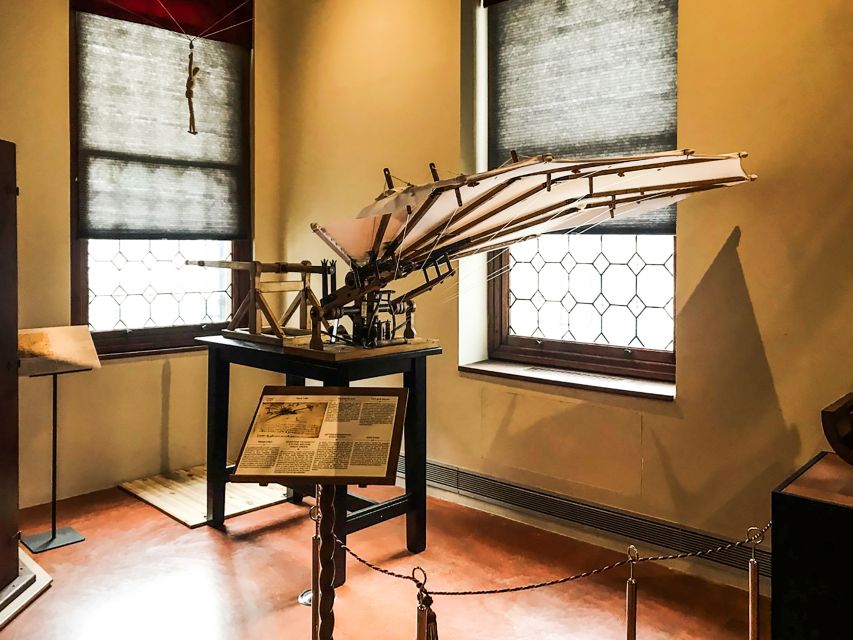
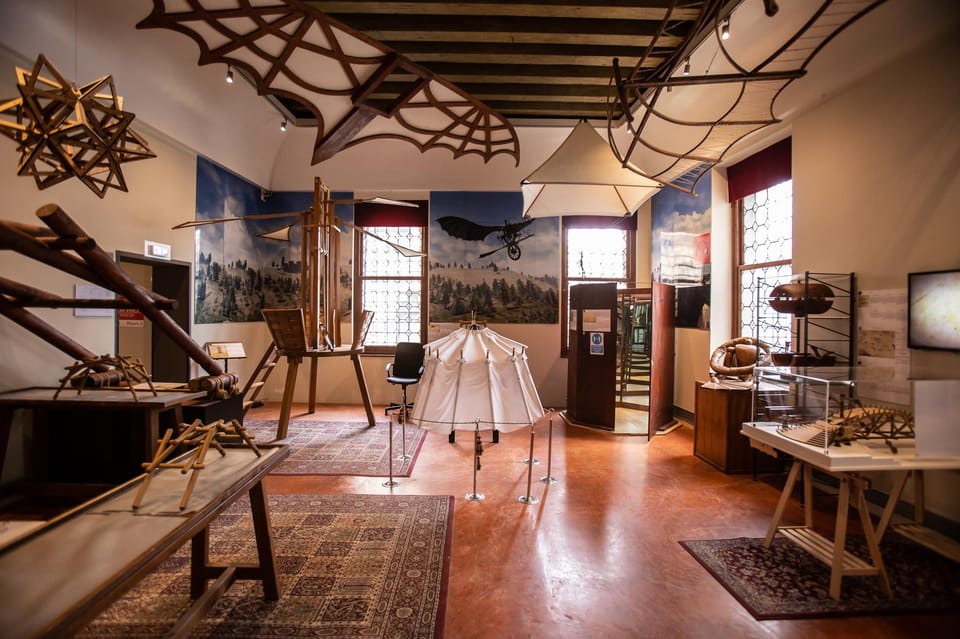
- Four elements layout: Earth, Water, Air, and Fire organize Leonardo-style machines into clear zones.
- Hands-on working models: Many exhibits are rebuilt according to da Vinci’s original designs (with proportions adjusted if needed).
- Art + science side-by-side: High-resolution backlit painting replicas sit next to anatomy and medical studies.
- Multilingual explanations on site: Signage and descriptions are available in Italian, English, French, German, Spanish, and Russian.
- Photo-friendly inside exhibits: You get the chance to take photos during your visit.
- A modern “play museum” feel: There are interactive activities, puzzles, and even creative tools for kids.
Getting To Leonardo Da Vinci Interactive Museum in Campo San Rocco
The museum’s meeting point is the museum itself: Leonardo da Vinci Interactive Museum, CAMPO SAN ROCCO, 3052 VENEZIA. Look for the Edificio Scolettta di San Rocco—it’s in front of the Scuola Grande di San Rocco, and behind the Chiesa dei Frari.
This is the kind of location that rewards calm searching. Once you find the building, entry is straightforward: you present your ticket to the reception staff and head inside. If you’re expecting a separate tour guide meet-up spot, you might be surprised—this ticket is for the exhibition access, not a guided tour with a person.
Also, it’s a good indoor break in Venice. The reviews highlight it as a comfortable stop, and the museum layout makes it easy to move through without getting stuck in long lines.
You can also read our reviews of more tours and experiences in Venice



What The $10 Ticket Covers (and why it’s good value)
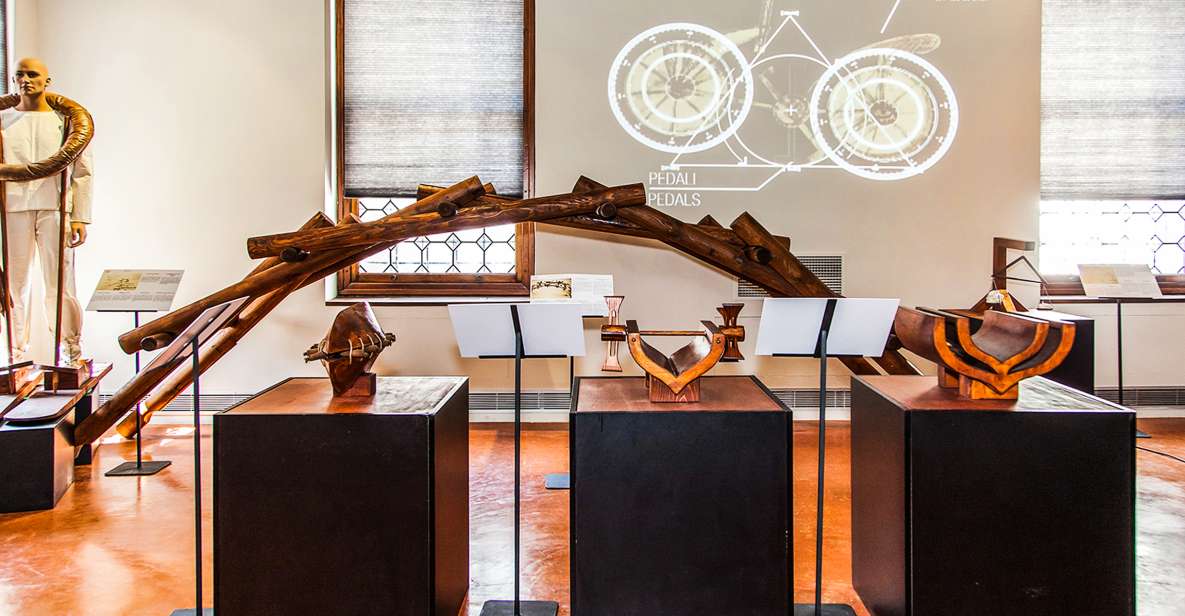
At $10 per person, the ticket price is hard to argue with—especially in Venice, where many cultural stops cost more for less active time. Here you get a self-paced entrance ticket and the chance to take photos inside, which makes the visit feel more like an experience than a quiet viewing.
A few details help the value click:
- You can spend your time on exhibits that you can operate or interact with, not just look at behind glass.
- The museum includes multimedia and descriptions, so even if you want deeper context, you have it available.
- There’s free admission for children under 3, which makes it easier if you’re traveling with toddlers and need something weatherproof.
There’s also a small but useful perk: 10% discount in the bookshop. If you want a Leonardo-themed souvenir that feels connected to what you saw, plan to browse before you leave.
One thing not included: a guided tour. You’ll be exploring on your own, following exhibit signs and using the on-site information.
Your Self-Guided Route: Mirror Room, Four Elements, and the Film
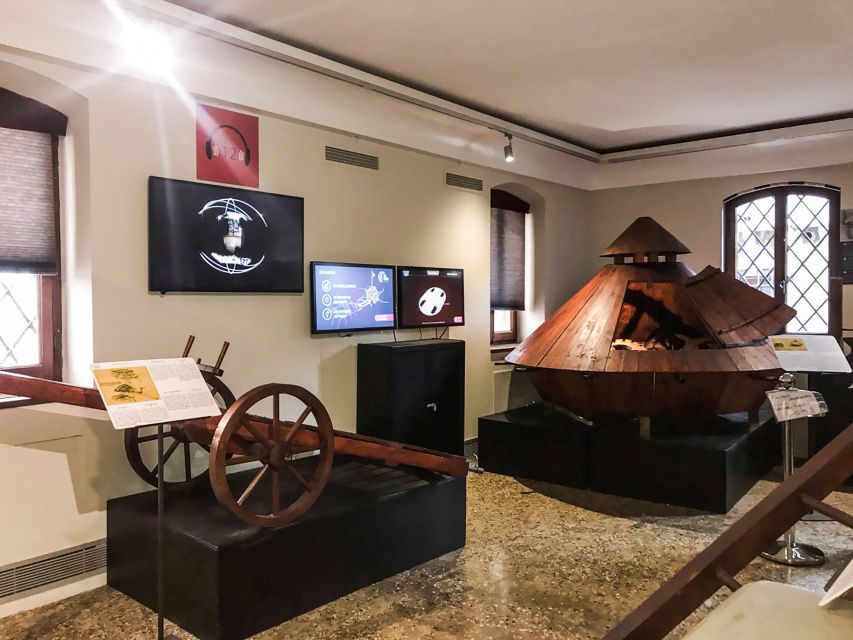
Because this is self-guided, you’ll feel in control of pacing. Some people finish quickly—around 30–60 minutes—while others linger for more hands-on play closer to 1.5 hours.
A smart way to structure your visit:
- Start with the most visually memorable room. The mirror box/360-degree mirror room is the standout for many visitors because it’s playful and immediately gets you thinking about perspective and design.
- Then move into the themed sections. The museum runs through the four elements—Earth, Water, Air, and Fire—so you can follow the logic of how da Vinci explored problems through different physical ideas.
- Use the included multimedia context. There’s a film that gives background on da Vinci’s life in a clear, short format. It helps if you’re not already steeped in his work.
If you’re traveling with kids, this route works well because you can return to the hands-on stations when attention dips. For adults, the film and multilingual labels keep it from feeling like a collection of gimmicks.
Earth, Water, Air, and Fire Machines: Rebuilt to Leonardo’s Designs
The core of the exhibition is the machines. These are faithful reproductions built to da Vinci’s concepts, and the museum notes that machines were rebuilt according to his designs, with changes only when necessary to handle proportions.
That matters, because it turns da Vinci from a name on a museum wall into an engineer you can almost test-drive. In each element zone, you get to see how his thinking connects to real-world mechanics—how forces move, how structures balance, and how systems function.
A few practical tips to get more out of this part:
- Slow down at the interactive models. If something can be adjusted or triggered, try it yourself before you read every label.
- Expect some exhibits to be puzzle-like. The museum includes brainy hands-on moments, including a wood bridge puzzle on the second floor, which benefits from an extra set of hands.
Also, the museum is described as small but efficient. The four-element structure keeps you from wandering aimlessly, which is useful when you’re crisscrossing Venice and already mentally tired from canals and crowds.
Leonardo the Artist: Backlit Painting Replicas Worth Pausing For
Even if you came for the inventions, don’t skip the art side. The museum shows high-resolution backlit replicas of da Vinci’s major paintings. Backlighting helps you see detail more clearly than a standard flat display, and it rewards a slower look.
Here’s what makes this section useful rather than decorative: you start noticing how da Vinci’s interests overlap. The same mind behind machines also studied form, anatomy, light, and observation. Even without prior art education, the museum format nudges you to compare how he observed the world with tools and with paint.
If you like to take your time, carve out a little extra here. Many visitors love the technical exhibits, but the painting replicas help you understand why da Vinci wasn’t just an inventor—he was also an artist and visual researcher.
You can also read our reviews of more museum experiences in Venice






Leonardo the Scientist: Anatomy and Medical Studies That Add Depth
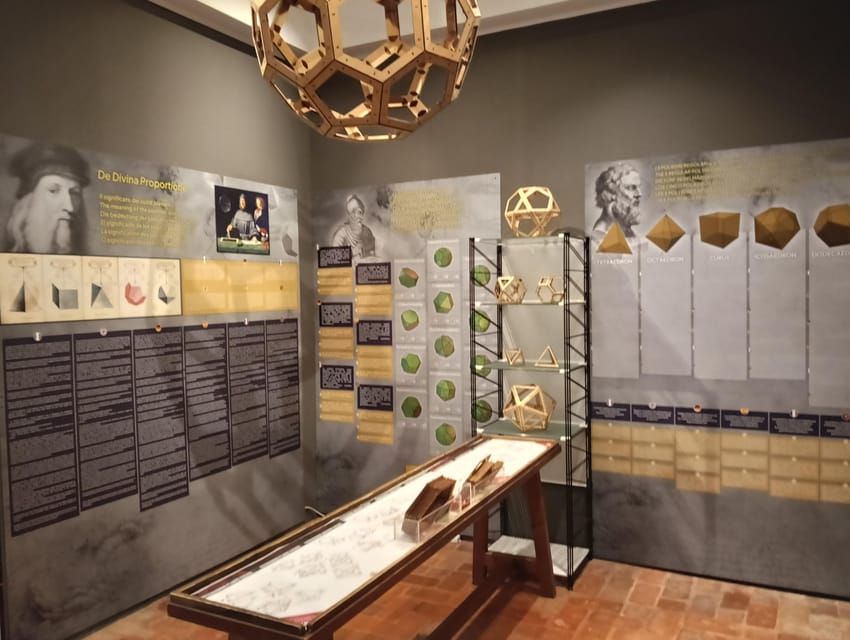
One of the most compelling parts is the focus on human anatomy. You’ll learn about da Vinci’s studies of the body and his medical work, which changes how you see him. Instead of thinking of da Vinci as only a painter or inventor, the museum presents him as someone who repeatedly tried to understand how the world works from the inside out.
Expect clear explanations paired with exhibit visuals. Descriptions are available in multiple languages—Italian, English, French, German, Spanish, and Russian—so you’re not stuck translating in your head.
This section also helps if you’re bringing teenagers. The museum’s hands-on style makes the science feel approachable, and the anatomy focus gives the visit a real theme beyond just machinery.
Hands-On Play for Kids (and Adults Who Still Want to Try)
This place is family-friendly in a practical way. Many visitors highlight that it’s interactive for kids and adults of many ages, with hands-on activities that don’t feel watered down.
For younger kids, the museum offers creative activities—reviews mention iPads for children to draw like da Vinci and other playful engagement. For adults, the interactions often feel more like problem-solving stations than simple play.
A small note on etiquette: if you’re going with children, remind them that these are functioning exhibits. Some stations invite touching and operating, but parents should keep kids focused so everyone gets a fair turn.
Age rules to remember:
- Children under 3 get free admission.
- Children under 15 can enter only if accompanied by an adult.
If you’re traveling with a mixed-age group, this museum is a good compromise. Everyone can find something to do instead of splitting off into separate interests.
Time It Right: How Long To Plan and Last Entry
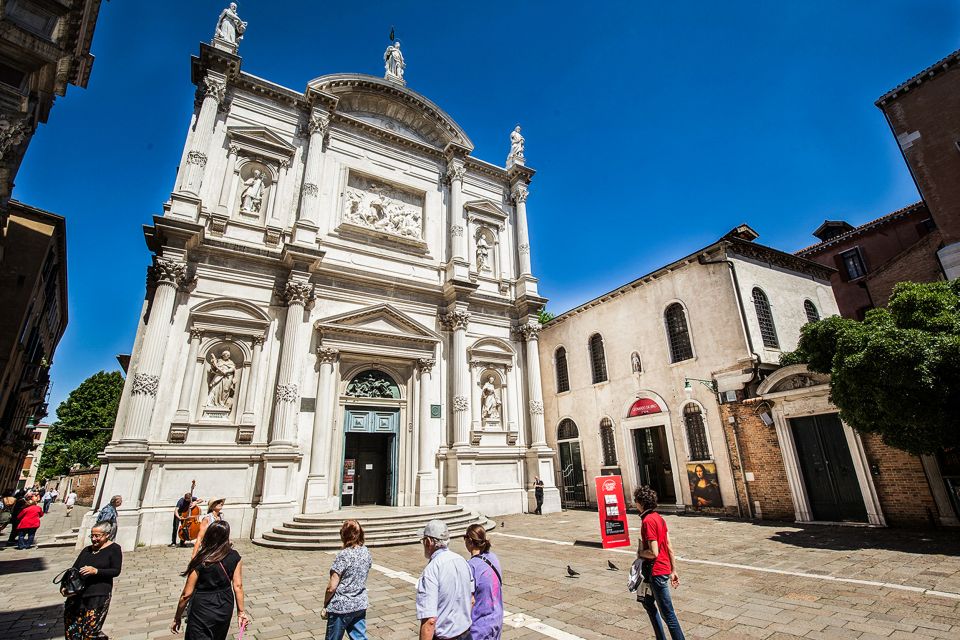
For planning, give yourself about 1 to 1.5 hours. Some people manage a shorter pass in 30–60 minutes, especially if they focus on the most interactive areas and skip deeper reading. If you want the full experience—machines, anatomy, art replicas, plus a few puzzles—lean closer to 90 minutes.
Also, watch the timing. The last entrance is 1 hour before closing time. In practice, this means you should arrive with enough slack to start calmly, not sprint at the end.
If you want a more relaxed visit, choose a time slot that isn’t peak. The museum is small, so crowding changes the vibe fast.
Bookshop Perks and Photo-Friendly Details
Yes, you can take photos inside. That makes it easier to remember what you tried and what you learned, especially with interactive exhibits that feel better when you can review details later.
Don’t rush past the bookshop. You’ll get a 10% discount on purchases, and the shop is a good place to pick up Leonardo-themed gifts while the experience is still fresh in your mind.
If you want an optional audio layer, bring a phone and pay attention to QR instructions near the start area. One tip from the on-site experience: scan the QR code connected with the audio guide at the shop area so you don’t have to backtrack later.
Finally, expect a calm indoor stop. It’s designed more like a modern interactive museum than a traditional art gallery, so you can move at your own pace without feeling like you’re disturbing anyone.
Who This Museum Suits Best (and who should consider something else)
This ticket works especially well if you:
- want a hands-on break from walking Venice streets
- like science, engineering, or “how does that work” questions
- are traveling with kids and need an activity that holds attention
- enjoy seeing how art and science connect in one person
It may not be ideal if you want a giant, museum-sized exhibition with a huge number of originals. This is more compact, designed for interaction and understanding. If your idea of a perfect Leonardo stop is a marathon of deep scholarship, you may feel the time goes quickly.
That said, compact can be a feature, not a bug. If you’re limited on time, this is an easy, focused way to get a strong Leonardo hit without burning your whole day.
Should You Book This Leonardo Da Vinci Museum Ticket?
Book it if you want value, hands-on learning, and a clear theme—four elements plus machines, anatomy, and art replicas—all in a self-guided format. The $10 price makes it an easy add-on, and the interactive stations give you more than passive viewing.
Skip it only if you’re looking for a big, guided, lecture-style experience. This museum is about exploring at your own pace, trying the machines, and taking the time you need—nothing more, nothing less.
If you’re deciding between “something quick and fun” vs. “something long and scholarly,” this one leans toward the first. And in Venice, that’s usually the winning strategy.
FAQ
How long should I plan to spend at the Interactive Da Vinci Museum?
Plan about 1 to 1.5 hours. Some people finish in roughly 30–60 minutes, depending on how much time you spend with the interactive machines and puzzles.
Where is the meeting point for this ticket?
The meeting point is at the museum itself: Leonardo da Vinci Interactive Museum, Campo San Rocco, 3052 Venezia, in the Edificio Scolettra di San Rocco, in front of the Scuola Grande di San Rocco and behind the Chiesa dei Frari.
Is there a guided tour included with the ticket?
No. This ticket is for entry to the museum and the exhibition, not a guided tour.
Are kids allowed, and do they need to be with an adult?
Yes, but there are rules: children under 15 must enter with an adult. Children under 3 years old can enter for free.
What is the last time I can enter?
The last entrance is 1 hour before closing time.
Can I take photos inside, and is there any benefit at the bookshop?
You can take photos inside. The ticket also includes a 10% discount on purchases in the bookshop.