REVIEW · VENICE
Morning Walking Tour of Venice with Gondola Ride
Book on Viator →Operated by Insidecom srl · Bookable on Viator
Venice by foot, then by gondola. This 3-hour morning combo links a Venice walking tour with a gondola ride, so you leave with real orientation instead of just photos. You’ll pass key sights around St Mark’s area and the Grand Canal corridor, with a guide guiding your pace through the narrow streets.
I like two things a lot. First, the walking portion is built to give you context as you move: you hear why Canal Grande matters, why Marco Polo’s story shows up here, and what you’re looking at on the main facades. Second, the gondola is short and sweet—about 30 minutes—so it feels like a highlight instead of a half-day commitment.
One consideration: the gondola ride itself usually has no onboard commentary, and you may be in shared seating with other people. If you’re hoping for a narration-style history talk on the water, plan on getting the story on land.
In This Review
- Key points to know before you go
- How the 3-hour morning combo actually feels
- Starting at Calle larga de l’Ascension: your Venice anchor point
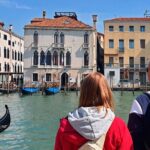
- Canal Grande stop: learning the city’s main water highway
- Piazza San Marco area plus a quick Marco Polo story
- Santa Maria della Salute: plague vow, big baroque drama
- La Fenice in Campo San Fantin: Venice at its opera pace
- Saints John and Paul: Venice’s burial vault mindset
- Campo Santa Maria Formosa: the square that feels more local
- The gondola ride: shared boat, short glide, and usually no narration
- When weather flips the plan
- Meeting logistics and group size: how to avoid the common headaches
- Is the $87.70 price fair for this Venice morning?
- Who should book this (and who should think twice)
- FAQ
- How long is the tour?
- What time does the tour start?
- Where do I meet the tour representative?
- What’s included in the price?
- Is the gondola ride narrated or explained?
- Is the tour offered in English?
- What happens if the gondola ride is canceled due to bad weather?
- Can I cancel for a full refund?
- Is there an extra access fee for day-trippers?
- Should you book this Venice morning walk plus gondola?
Key points to know before you go
- A fast first-timer route: about 1.5 hours walking, then a 30-minute gondola to connect the city’s landmarks to the waterway layout
- Big sights in a short time: Canal Grande, Piazza San Marco area, Santa Maria della Salute, La Fenice, Saints John and Paul, and Campo Santa Maria Formosa
- Guide impact shows up: people call out guides like Monica, Christine, and Antonella for making the walk feel alive
- Gondola is shared and usually not narrated: up to 5 per boat, and the ride has no explanations
- The morning start helps: booking early and starting at 9:00 am can reduce the worst crush in tight walkways
- Bad weather can change the water plan: the gondola can be suspended, so you need to check at the departure point
How the 3-hour morning combo actually feels
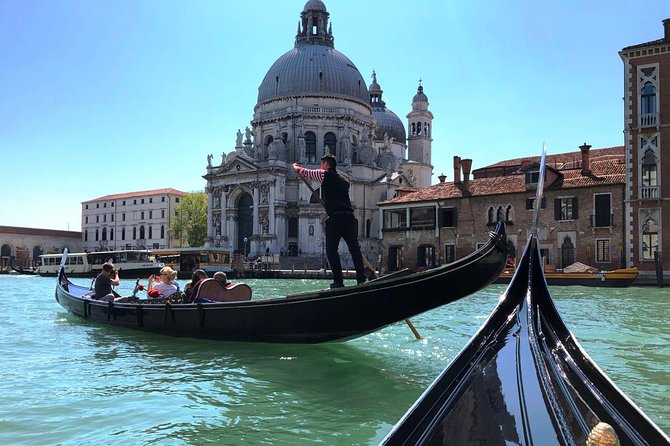
This is a practical Venice intro: you cover more ground before the city fully wakes up, then you slow down on the water. The walking portion is collective and paced so you can keep up through alleys and over bridges. After that, you switch to the gondola for a short glide that’s more about perspective than endurance.
At $87.70 per person for roughly 3 hours, the value mostly comes from the pairing. A guided walk helps you understand what you’re seeing (instead of just standing in front of famous stone), and the gondola gives you that Venice-only sensation of moving through canals. The trade-off is that the gondola ride is brief and not designed as a guided lecture on the water.
You can also read our reviews of more walking tours in Venice
Starting at Calle larga de l’Ascension: your Venice anchor point
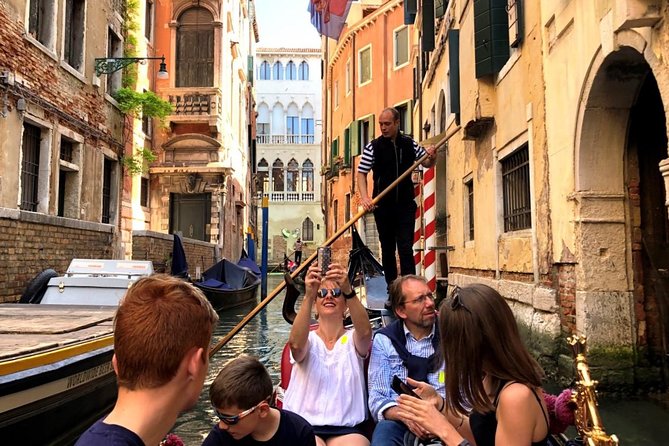
The tour begins at Calle larga de l’Ascension, 30124 Venezia VE, and it ends back at the meeting point. That matters because Venice can feel like a maze in minutes—so having a fixed starting stake helps you navigate later on your own.
The start time is 9:00 am, and it’s a good move. Multiple reviews point out that early touring reduces the crowd impact in narrow intersections. If you’re even a few minutes behind, don’t assume someone will chase you down; there are reports of tours moving on without much back-and-forth help.
Canal Grande stop: learning the city’s main water highway
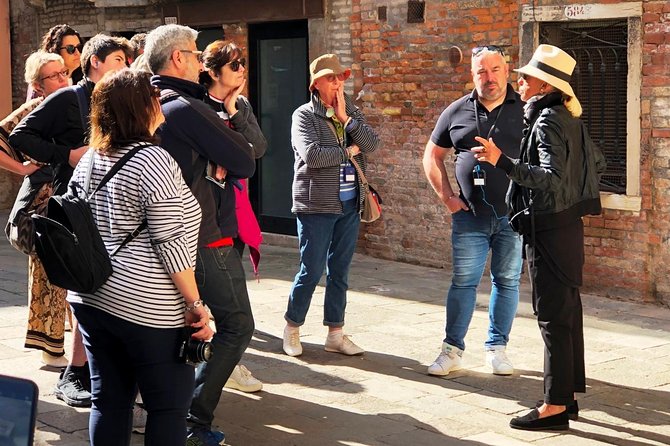
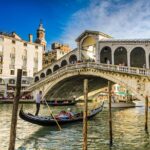
One of the first anchor moments is Canal Grande, the main artery through the historic center. It’s about 3,800 meters long and runs in an inverted S, separating the historic center into two parts, from Ponte della Libertà to the Bacino di San Marco.
You get about a 20-minute stop here, and an admission ticket is included for this segment. That’s a nice detail because it turns the stop from just “look and point” into something with an entry component. In a city where time gets eaten by crowds and detours, having ticket access early can save you hassle later.
What I like about this stop is the mental map it gives you. Once you understand that Canal Grande is the spine, you start noticing how side canals and bridges feed into it—so the gondola ride (even short) makes more sense.
Piazza San Marco area plus a quick Marco Polo story
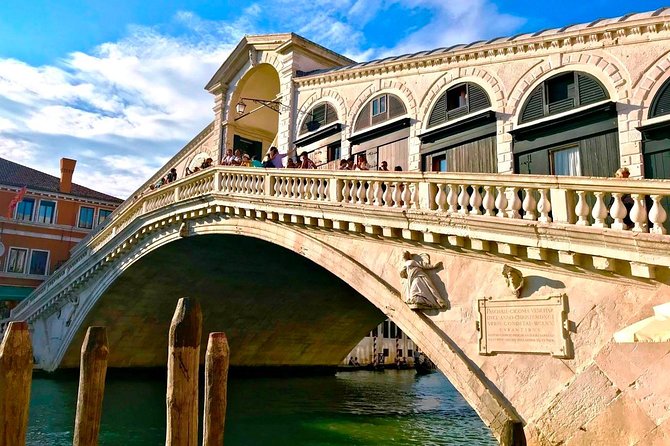
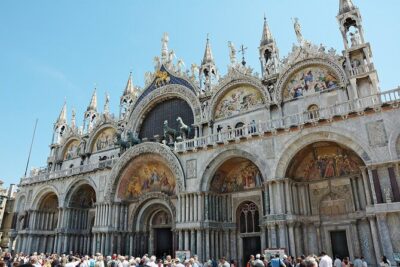
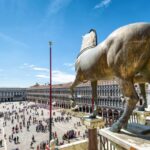
You’ll also spend a brief moment at Piazza San Marco. The stop is short (around 5 minutes) and entry is free for this part, so think of it as a taste and orientation rather than a long sit-down visit. St Mark’s Square is famous for a reason, but Venice can steal time fast, so short stops work best when you have a guide connecting dots.
During the walk, there’s also a Marco Polo moment. You’ll hear that Marco Polo was an Italian traveler, writer, ambassador, and merchant, and that his travel report in the Far East was collected in Il Milione. Even if you’ve heard the name before, tying it to how knowledge circulated in Europe at the end of the 1200s gives the city a sharper story line than postcards do.
The caution here: with limited time, you won’t get the “slow museum” pacing. You’re getting the big framing so you can plan a second pass later if you want more depth.
Santa Maria della Salute: plague vow, big baroque drama
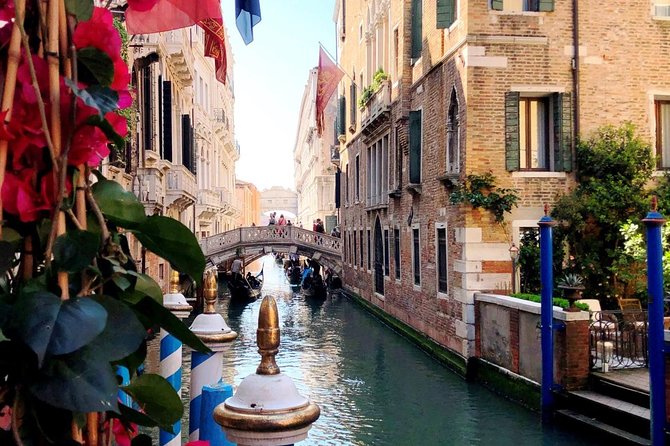
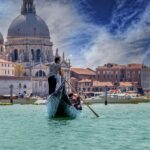
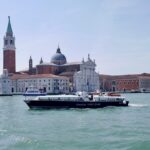
Santa Maria della Salute is one of the sights you’ll come across on the route, and it’s a strong one to know before you see it. The basilica sits in the area of Punta della Dogana and is designed so it stands out in views over St Mark’s Basin and the Grand Canal.
It was designed by Baldassare Longhena with attention to Palladio’s models—so it’s not just decorative; it’s a deliberate style conversation. And the origin story adds weight: it was a votive offering by Venetians to the Virgin Mary to save them from the plague that decimated the population between 1630 and 1631.
You’ll also hear that the cult became deeply rooted in Venice, and Mary was added to the list of patron saints. In December 1921, Pope Benedict XV elevated it to a minor basilica. When you know this background, you stop treating the building like a photo backdrop and start seeing why Venetians built it.
You can also read our reviews of more tours and experiences in Venice
La Fenice in Campo San Fantin: Venice at its opera pace
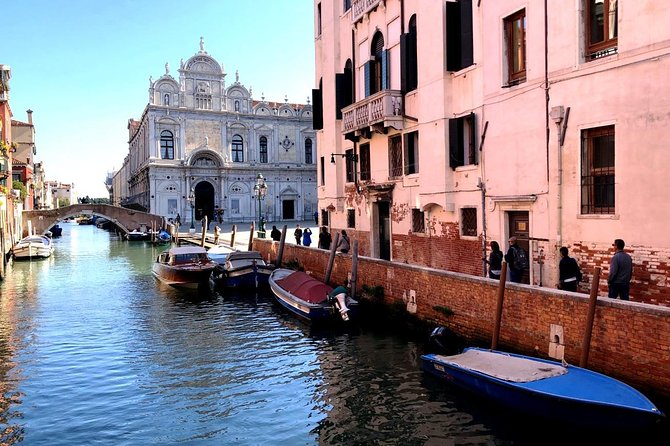
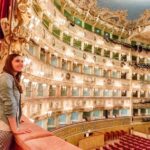
Another key stop is Gran Teatro La Fenice, located in the Sestiere di San Marco in Campo San Fantin. This is today’s main opera house in Venice and one of the world’s prestigious venues.
La Fenice is known for the traditional New Year’s Concert, and it has a track record of being destroyed and rebuilt twice. It has hosted major opera and symphonic seasons, plus the International Festival of Contemporary Music. Hearing that on a morning walk adds a different kind of energy to the area—because you’re seeing not just a monument, but a living stage.
Saints John and Paul: Venice’s burial vault mindset
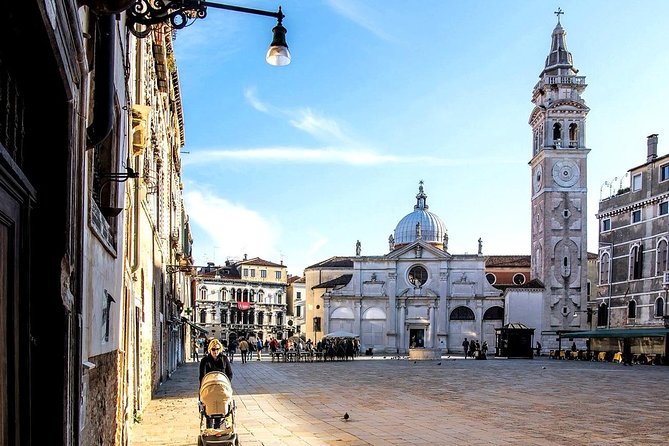
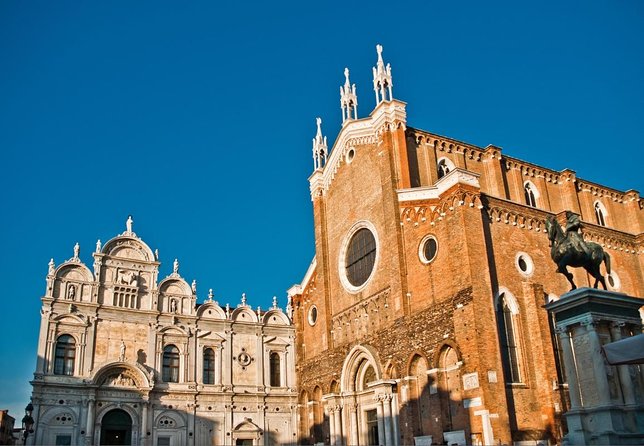
You’ll also pass the Basilica of Saints John and Paul. It’s described as one of Venice’s most impressive medieval religious buildings, along with Santa Maria Gloriosa dei Frari.
The big idea is that it’s often called the pantheon of Venice because so many doges and important figures have been buried there since the 13th century. The basilica sits in the campo of the same name in the Castello district. In September 1922, Pope Pius XI elevated it to minor basilica status.
This is a great stop to understand how Venice treated power and legacy. It wasn’t only about trade and ships; it was also about who got remembered—and where.
Campo Santa Maria Formosa: the square that feels more local
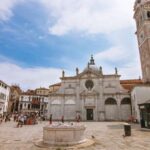
Campo Santa Maria Formosa is another part of the route and tends to land well with people who want a Venice beyond the main showpiece square. It’s located in the Castello district and is one of the largest squares in the city.
The detail that makes it real: a total of nine calli and eleven bridges branch off from it, with some bridges simply connecting entrances to palaces. The name comes from the church of Santa Maria Formosa.
Even if your time in the square is limited, this kind of stop helps you read Venice like a system. You start to see how “campi” function as neighborhood hubs rather than just open-air scenic spots.
The gondola ride: shared boat, short glide, and usually no narration
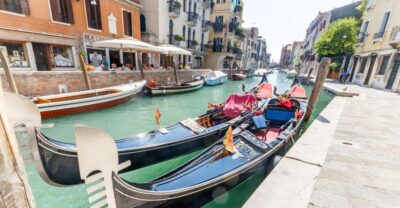
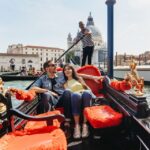
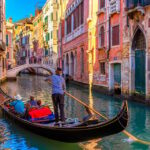
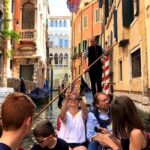
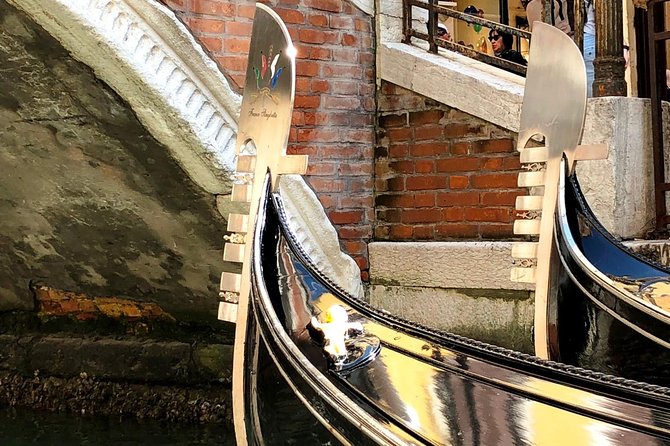
After the walking tour, you move into the gondola portion. The structure matters: a gondola can host up to 5 people, and the group may be divided into smaller groups with different gondolas. In a collective tour, you might share your ride with other people too.
The ride is about 30 minutes, and the key rule is that no commentary is provided during the gondola. That’s the biggest expectation-setting point. Some gondoliers do end up chatting or singing, based on what people report, but you shouldn’t count on that as part of the package.
In terms of what you’ll notice, focus on technique and geometry. Gondoliers thread low overhanging bridges and narrow canals, then you get the broader views that come with passing near the Grand Canal corridor. Even with no narration, the motion tells you something: Venice isn’t wide like a city on roads—it’s tight like a puzzle.
Also, be aware of seating. Some riders report sitting sideways and missing certain views. If you care about a particular view angle, know that shared boats don’t always give you the best seat.
When weather flips the plan
This experience requires good weather, and the gondola ride might be suspended in bad conditions. If that happens, you’re told you need to go to the tour departure point to find out whether the tour takes place and what alternative options are available.
So keep your plan flexible that morning and don’t assume you’ll get a clear answer without showing up.
Meeting logistics and group size: how to avoid the common headaches
This is a collective tour. That can be great—cheaper than private, and you get a social vibe—but it also means the group can spread out. One review called out a group size around 23 people and the difficulty of keeping radio communication strong while strung out through walkways and over bridges.
My advice is simple: if there are any devices for audio guidance, stay as close to the guide as you comfortably can. Venice streets are narrow enough that a little repositioning can mean the difference between hearing clearly and missing sentences.
And then there’s timing. There are hard negative reports tied to arriving late and assuming someone will handle it. Show up a few minutes early. Have your voucher ready. If you’re traveling with kids or anyone with slower walking pace, start the day with buffer time.
Is the $87.70 price fair for this Venice morning?
For many people, this combo is a good first buy because it’s two experiences tightly linked: a guided walking route plus a gondola ride. The walking portion focuses on placement—where sights sit relative to each other—while the gondola gives you the water perspective that’s hard to replicate on foot.
Where it can feel overpriced is when your expectations match a fully narrated gondola or a private-boat experience. Since the gondola ride usually has no commentary, you’re paying for the ride itself plus the fact that the gondola is included after the walk.
If you want a gondola as a short celebration, and you’re fine picking up the stories on land, the value lands. If you want the gondola to function like a guided theater of history, you might feel shortchanged by the ride format alone.
Who should book this (and who should think twice)
This works best for:
- First-timers who want to get bearings fast in Venice
- People who like a structured route but don’t want to commit to hours and hours of walking
- Families and mixed-age groups who want the gondola as a visible payoff
- Anyone who wants to connect Canal Grande and St Mark’s area sights in one morning
I’d think twice if:
- You’re counting on the gondola for the main storytelling (it’s typically not narrated)
- You strongly prefer smaller groups or a more customized pace
- You’re traveling with a strict mobility constraint and can’t handle a brisk 1.5-hour walking segment
- You’re the type who needs lots of time sitting with each stop rather than moving through it
Also, keep an eye on the Venice day-tripper access fee. The data notes that on certain dates visitors staying outside Venice may be required to pay a €5 access fee. Check the official schedule linked in the tour details before you go.
FAQ
How long is the tour?
It’s listed at about 3 hours total: a 1.5-hour walking tour plus a 30-minute gondola ride.
What time does the tour start?
The start time is 9:00 am, and the tour runs back to the meeting point after the gondola ride.
Where do I meet the tour representative?
Meet at Calle larga de l’Ascension, 30124 Venezia VE, Italy.
What’s included in the price?
The guided walking tour and the gondola ride are included. The tour also includes an admission ticket at the Canal Grande stop, and Piazza San Marco is listed as free.
Is the gondola ride narrated or explained?
No. The tour data says no commentary or explanations are provided during the gondola ride.
Is the tour offered in English?
Yes. The tour is offered in English, and in some date ranges it may be operated with a bilingual guide if groups are combined.
What happens if the gondola ride is canceled due to bad weather?
The gondola might be suspended in bad weather. You’re required to go to the tour departure point to see whether the tour takes place and learn what alternatives are available.
Can I cancel for a full refund?
Yes, free cancellation is available up to 24 hours in advance for a full refund.
Is there an extra access fee for day-trippers?
On certain dates, visitors staying outside of Venice who are visiting for the day may be required to pay a €5 access fee. Exemptions and the applicable days are listed on the official city site linked in the tour details.
Should you book this Venice morning walk plus gondola?
I’d book it if your top goal is a smart first pass: hear the stories, learn the layout, and then do a gondola ride without turning it into a long, tiring day. The route hits the famous anchors—Canal Grande, St Mark’s area sights, Santa Maria della Salute, La Fenice, Saints John and Paul, and Campo Santa Maria Formosa—so you’ll know what to revisit later.
I’d skip (or shop more carefully) if you’re paying mainly for a narrated gondola experience or you dislike shared groups. In that case, you might want a different setup that focuses more on the water portion.