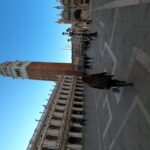
REVIEW · VENICE
Creative Venice: Artisan Excellence and Craftsmen Workshops
Book on Viator →Operated by deTourist Venice Valerio Coppo · Bookable on Viator
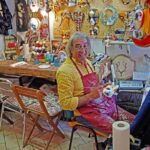
Venice’s best souvenirs are made by hand. The Creative Venice craft tour, guided by Valerio, leads you through artisan workshops and working shops where you can watch how things are made, from textiles to glass.
I love the behind-the-scenes access to small studios you’d be unlikely to find on your own. I also like the unhurried feel and how the tour can adjust to your group, so you’re not sprinting through stops just for photos. The one thing to consider: each workshop visit is short, so you’ll want to plan on coming back later if you fall in love with a particular craft.
In This Review
- Key things to look for
- What makes this Venice craft walk feel different
- Rialto start: Campo San Giacomo and the Pescheria’s real tempo
- San Polo and the Rialto shoe shop: ceramics for the table and recycled soles
- Campo Manin hats and Campo Santo Stefano paper marbling
- San Salvador atelier and Murano glass jewelry: small studios, refined hands
- Cannaregio textiles and soprarizzo velvet: where old looms still matter
- Price and value: what $182.17 buys for 3 hours
- Should you book Creative Venice?
- FAQ
- How long is the Creative Venice tour?
- Where do we meet the guide?
- Is pickup included?
- What language is the tour offered in?
- What kinds of crafts will I see?
- Are there admission fees at the stops?
- Is this a private tour?
- Is there pressure to buy during the tour?
- What is the cancellation window for a full refund?
Key things to look for

- Valerio’s guide style: city context plus practical workshop details, with an easy pace
- Actual craft process: watching production ideas behind textiles, paper marbling, ceramics and more
- Hands-on Venice materials: from recycled shoe components to old-loom velvet weaving
- Murano glass connection: see hand-executed glass jewelry work done with traditional techniques
- No-shopping-pressure vibe: visits are about the craft, not forcing purchases
What makes this Venice craft walk feel different
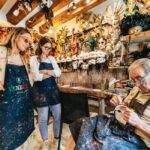
Most Venice tours chase big sights. This one chases the people who make things. You start in the center at Campo San Giacomo di Rialto, then work your way through markets and small shops that still run on old skills—textiles, ceramics, paper techniques, recycled footwear, hats, and glass jewelry.
The guide matters here. Valerio’s approach comes through as personable and story-driven, with lots of city color tied to what you’re seeing. That’s the difference between seeing a product and understanding why it exists.
You also get a structure that stays manageable. The visit is about three hours, and the stops are designed to feel like conversations with artisans rather than timed museum checkpoints. That’s a big win if you like Venice at walking speed.
You can also read our reviews of more tours and experiences in Venice

Rialto start: Campo San Giacomo and the Pescheria’s real tempo
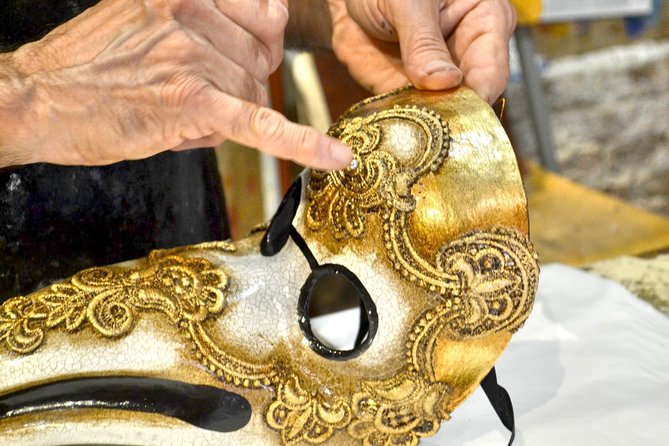
You’ll begin at Campo San Giacomo di Rialto, right by the church traditionally considered to be among the oldest in Venice. It’s a smart opening: before you hit markets and workshops, you get your bearings in a place that’s long been at the center of daily life.
Next comes the Mercato del Pesce al Minuto—Rialto’s fish market, known for being loud and raw in the best way. Expect fishmongers arranging catches over heavy crushed ice, seagulls doing their own unpaid work, and locals browsing in the two halls of the Pescheria. The market’s age—generations of Venetians doing this for centuries—gives you a sense that craft and trade are part of Venice’s DNA, not just an artsy hobby.
Practical tip: if you’re sensitive to noise or strong smells, go in knowing this is part of the point. It’s not a quiet “cultural moment.” It’s Venice as it actually sounds.
San Polo and the Rialto shoe shop: ceramics for the table and recycled soles
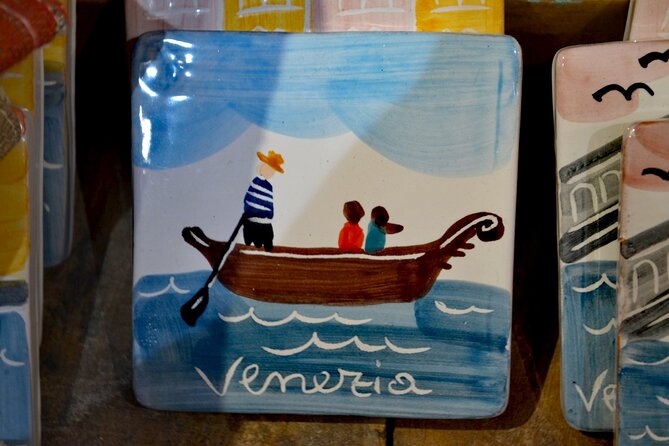
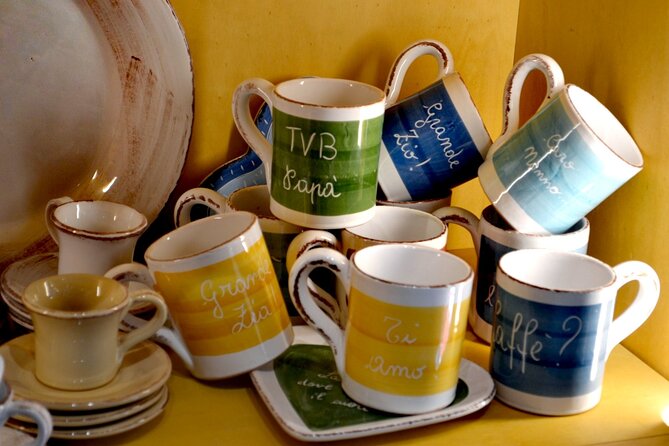
After Rialto’s energy, you shift to San Polo, where you visit a local artisan working with traditional rural products. The theme here isn’t just pottery—it’s the values behind it: family meals, time with friends, and the kind of home celebration that comes from eating and sharing, not from rushing.
The ceramics are described as bright in color, with lively patterns and quality materials, but what makes this stop interesting is the contrast with industrial production. You’re seeing how craft can stay “human-scale,” meant for everyday life and small gatherings rather than mass manufacturing.
Then you head to a traditional shoe shop at the Ponte di Rialto area, where the story gets even more Venice. The shop highlights a recycling mindset: old bicycle tyres used as waterproof, hardwearing soles; jute sack canvases turned into linings; and even rag fabric from old clothes transformed into uppers. Necessity becomes a design principle.
They also connect the style to Venetian tradition with shoes inspired by the 18th-century splendour of the Serenissima republic—like Veneziane—often finished with velvet or bright oriental silks. The key detail: these shoes are hand-sewn, made in the true manner, and built on know-how passed down over generations while also looking ahead.
Good to know: this stop can be a little more visual than hands-on, but it’s still meaningful because the guide explains the “why” behind each material choice.
Campo Manin hats and Campo Santo Stefano paper marbling
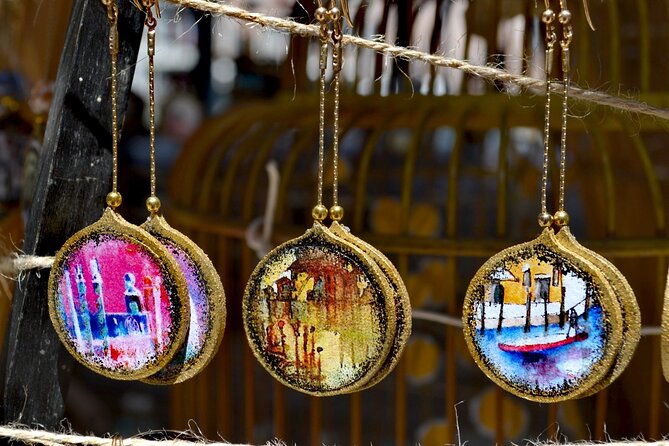
At Campo Manin, you meet Giuliana’s tiny hat shop, an official historic place recognized by the Veneto Region. The shelves are packed with hats for different Venice roles and seasons: Panama hats (imported directly from Ecuador since 1980), gondolier’s hats, Carnevale hats, waterproof options, woolly hats, and even wedding hats.
This stop is fun because it’s so Venice-specific without being costume-y. Hats in this city have history—roles, festivals, and weather needs all folded into one object. You’ll leave with a better sense of why a hat can be both practical and cultural.
From there, you go to Campo Santo Stefano and meet a “maestro marmorizzatore”—a master of ancient paper techniques. In Italian, maestro means expert and teacher, and Venetians also use it as a respectful greeting for an older person. That word sets the tone: this isn’t just a maker; it’s someone preserving a technique.
The paper marbling technique uses the lagoon’s water and changes through the day to create shades of color that are hard to reproduce any other way. If you like art that looks effortless, this stop gives you the opposite: it shows how much skill sits underneath the final sheet.
You’ll also see standout designs mentioned as flowers—tulips, roses, and trees—and a series of fish that smile, where the fish are “petrified” on paper as if fossil remains. It’s whimsical on the surface, but the effect is based on real method.
Practical tip: paper art is fragile and travel-heavy. If you buy something, plan how you’ll protect it for the rest of your trip—paper doesn’t love backpacks.
San Salvador atelier and Murano glass jewelry: small studios, refined hands
In the heart of Venice, between Rialto Bridge and St. Marco square, you visit an atelier at the Chiesa di San Salvador area. Since 2007, a couple of artists have worked there in a cozy setting that focuses on the relationship between object and viewer. That angle is refreshing: it’s not just “look at the craft,” it’s also “how do you see it?”
You can expect to admire sculptures and jewelry, with delicate glass flowers, dreamlike cut-iron shapes, and wood turned into reborn tree forms. The shop also includes nomadic scenes and other imaginative pieces, so even if you’re not a hardcore “craft person,” you’ll probably connect to at least one style choice.
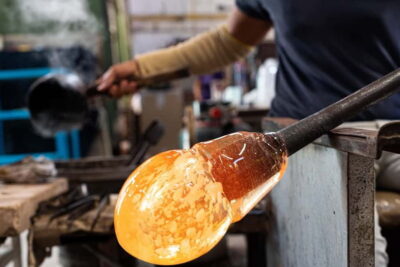
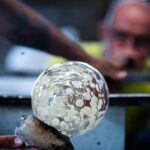
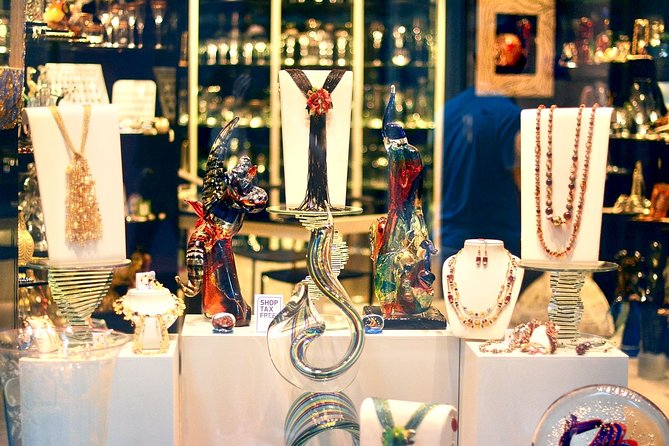
Then you continue to a shop producing jewelry with Murano glass, executed entirely by hand. The focus here is on traditional Venetian glass work and techniques like glass blowing and lamp-working. The beads are hand-made by small local workshops, which matters because it connects you back to the idea that “Murano” isn’t just one factory—it’s a network of skills in motion.
One consideration: the glass jewelry section is relatively short. You’ll get a sense of the craft, but if you want deeper Murano time, use this stop as a taste and then plan an optional follow-up on your own.






Cannaregio textiles and soprarizzo velvet: where old looms still matter
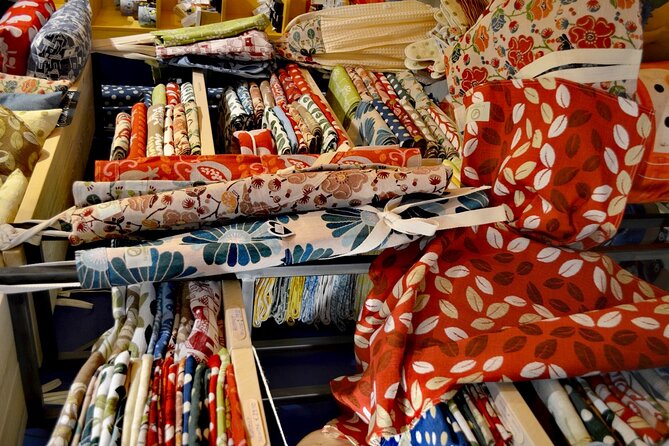
Your final stretch heads to Cannaregio, where you visit a textile company producing fine fabrics for both furnishing and high fashion: velvets, damasks, lampases, brocatelles, and the special soprarizzo velvet.
What makes this textile stop more than “fabric browsing” is the claim that the soprarizzo velvet is still hand made, and the production uses 18 looms from the 18th century. Those looms previously belonged to the silk guild of the Republic of Venice—so you’re standing in a living link to the city’s organized craft past.
If you like the practical side of history, this part is satisfying. You can see how a craft survives because the infrastructure (the looms and techniques) survives. And because the guide frames it, you’ll notice the difference between a fabric that’s simply dyed and woven and a fabric with a specific making tradition behind it.
Textile shops can sometimes feel salesy, but the whole tour is designed around craft context first. Even if you’re not shopping, watching how fabrics are described and what materials are emphasized helps you see Venice differently.
Price and value: what $182.17 buys for 3 hours
At $182.17 per person for about three hours, this tour isn’t cheap in the casual-sightseeing sense. But it can be good value if you care about process, not just places.
Here’s what you’re paying for that you don’t usually get on your own:
- A licensed guide (Valerio) who connects the dots between Venice’s material culture and the city’s daily life
- Time inside artisan settings where you can see how products are made and how skills are taught
- A tight route that covers multiple craft disciplines—textiles, ceramics, paper marbling, recycled shoe design, hats, and hand-executed glass jewelry
- Stops marked as free on admission, so you’re not stacking museum ticket costs on top of the price
Also, the tour is private in the sense that only your group participates. A flexible, small-group pace matters in Venice. It means you can ask questions without feeling like you’re holding everyone back.
If you’re the type who enjoys Venice through hands and materials—threads, pigments, paper, recycled components—this price starts to look more reasonable. If you’re mostly chasing sweeping views and major monuments, this might feel like too much “workshop time” and not enough postcard time.
Should you book Creative Venice?
Yes, if you want Venice the way you can’t easily plan yourself: by watching artisans work and learning what makes each craft Venetian. I think it’s especially worth it if you’re curious about how things are made—whether it’s ancient paper marbling, hand-sewn recycled shoes, or soprarizzo velvet on old looms.
Book it if:
- You like craft details and don’t mind a busy walking day in the historic center
- You enjoy asking questions and getting context, not just browsing shops
- You’d rather spend three hours with makers than with another long line
I’d skip it or pair it with lighter plans if:
- You need lots of time for major monuments and iconic viewpoints
- You’re looking for a full deep Murano glass day, since some craft stops here are brief
If you’re on the fence, treat it like a strong “materials sampler.” Then let whatever catches your eye guide your next day’s exploring.
FAQ
How long is the Creative Venice tour?
It lasts about 3 hours.
Where do we meet the guide?
You meet at Campo San Giacomo di Rialto, in front of the church near the fountain in the middle of the square.
Is pickup included?
Pickup is offered as personalized pick-up only if you book a private group. Otherwise, you should meet at the general meeting point in Campo San Giacomo di Rialto.
What language is the tour offered in?
The tour is offered in English.
What kinds of crafts will I see?
You’ll see Venetian craft work related to textiles, glass jewelry, ancient paper marbling, ceramics, recycled shoe-making, and hats.
Are there admission fees at the stops?
The stops listed all show admission ticket free.
Is this a private tour?
Yes. Only your group participates.
Is there pressure to buy during the tour?
The tour format focuses on artisans and their work, and there’s no purchase obligation or pressure mentioned in the information you provided.
What is the cancellation window for a full refund?
You can cancel up to 24 hours in advance for a full refund.