REVIEW · VENICE
Venice: Doge’s Palace and St. Mark’s Basilica Guided Tour
Book on GetYourGuide →Operated by Doooing · Bookable on GetYourGuide
Venice has a way of stunning you fast, and this tour moves quickly. You start at St. Mark’s Basilica to see the famous mosaics and learn the stories behind UNESCO-site splendor, then continue to the Doge’s Palace for Gothic politics and power.
What I like most is the combination of skip-the-line entry and an expert live guide who keeps things moving at a good pace. I also love the extras that aren’t just photo stops: you get access to the Loggia dei Cavalli terrace and St. Mark’s Museum, so the visit feels like more than two big buildings.
One thing to think about before you go: St. Mark’s Basilica has a strict dress code (knees and shoulders covered), and the tour isn’t suitable for wheelchair users or people with mobility impairments.
In This Review
- Key things that make this tour worth your time
- Meeting at Torre dell’Orologio: don’t let the crowd slow you down
- St. Mark’s Basilica first: mosaics, meaning, and the dress code reality
- The dress code is strict. Plan for it.
- Skip-the-line: what it really buys you
- Palazzo Ducale: Gothic politics, doges, and palace secrets
- What to expect in the palace
- Loggia dei Cavalli terrace: where you feel the building’s scale
- St. Mark’s Museum: context that makes the basilica click
- Timing, pacing, and how to avoid the common day-trip headaches
- What to bring (and what to leave behind) for a smoother visit
- Bring
- Avoid
- Price and value: when the guide is worth paying for
- Should you book this Venice Doge’s Palace and St. Mark’s Basilica tour?
- FAQ
- How long is the Venice Doge’s Palace and St. Mark’s Basilica guided tour?
- Where do I meet the tour staff?
- Does the tour include skip-the-line entry?
- Which languages are the live guides available in?
- Is there a dress code for St. Mark’s Basilica?
- Is this tour suitable for wheelchair users or people with mobility impairments?
- What should I bring?
- Are pets allowed?
- What happens if I need to cancel?
Key things that make this tour worth your time
- Skip-the-line, separate entrance means less wasted time at the doors
- Expert live guide for both landmarks, with clear explanations and good pacing
- Doge’s Palace history and Gothic architecture tied to how Venice actually ran
- Loggia dei Cavalli terrace access for a different perspective of the complex
- St. Mark’s Museum included, so you get context beyond what’s on the basilica floor
- Strict basilica dress code you’ll need to plan around before you arrive
Meeting at Torre dell’Orologio: don’t let the crowd slow you down
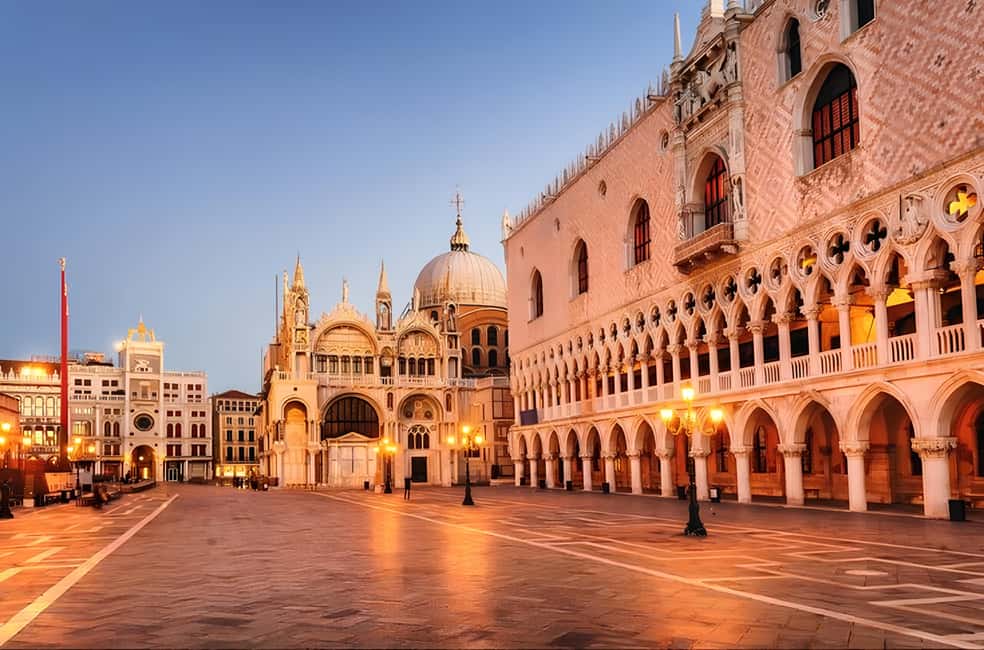
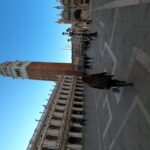
You’ll meet near the Torre dell’Orologio (the Clock Tower) by a Change Shop, and your guide team is easy to spot: staff will hold a blue flag that says Doooing Experience. This is one of those Venice meeting points that can be simple once you know the landmark, but confusing if you rely only on coordinates.
Here’s my practical advice: arrive a few minutes early, scan for the blue flag, and use the clock tower as your anchor. One smart tip that keeps people from wandering is to look around under the blue clock tower—that’s where you’ll be in the right area even when Venice crowds make everything look the same.
Also, wear shoes you can stand in for a while. Venice turns your feet into a measuring tool for whether a day was smooth or miserable.
You can also read our reviews of more guided tours in Venice


St. Mark’s Basilica first: mosaics, meaning, and the dress code reality
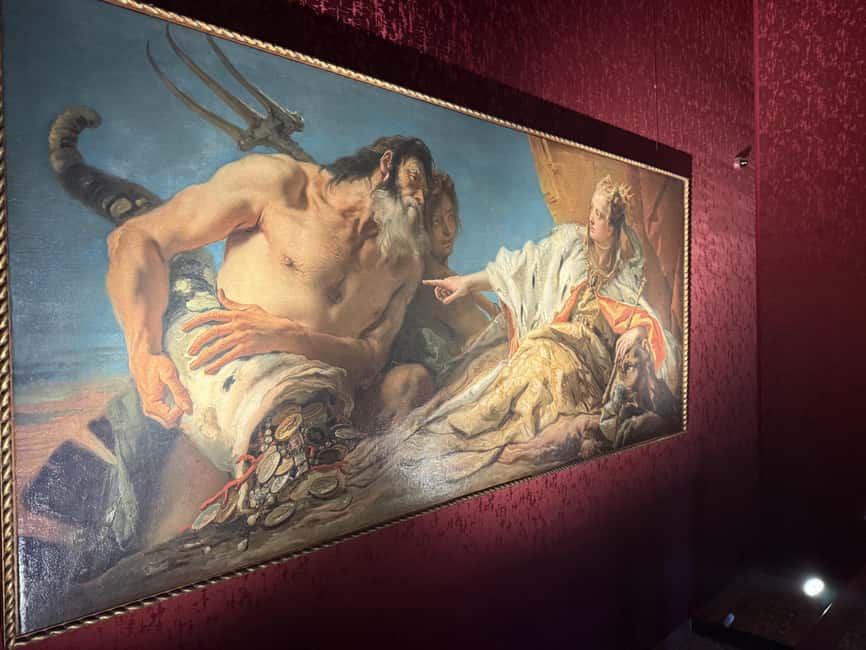
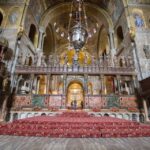
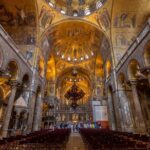
Starting at Basilica di San Marco makes sense. It’s the most famous building on the route, and it also sets the tone for Venice: power, trade, religion, and art all tangled together.
You get guided access to see the mosaics and centuries-old architecture, and your guide should help you connect what you’re looking at to why it mattered. The basilica isn’t just pretty—it’s a visual argument for Venice’s status, and the mosaics are part of that story. With an expert talking you through it, you’ll notice details you would likely miss if you went in on your own.
The dress code is strict. Plan for it.
This is the biggest practical concern. Knees and shoulders must be covered at all times. That means no shorts, no bare shoulders. If you show up underdressed, you may lose time (or be turned away).
If you’re traveling in cooler months, layers can be your friend. In warmer weather, bring something light that still covers—think a scarf or a light cover-up you can adjust quickly at the entrance.
Skip-the-line: what it really buys you
The big promise here is skip-the-line access through a separate entrance. In Venice, the line is often the experience-killer. Time under the sun (or in the cold) drains your energy. With this format, you spend that energy looking instead of waiting.
That said, basilica visits still have crowd flow once you’re inside, so it’s not a private palace. The benefit is that you get started sooner and keep your momentum.
Palazzo Ducale: Gothic politics, doges, and palace secrets
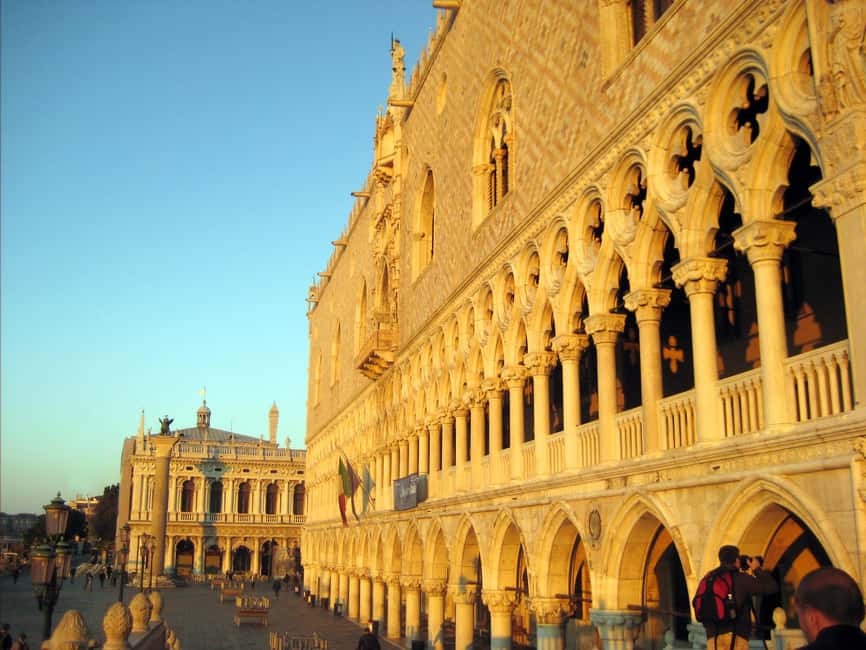
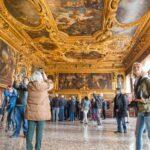
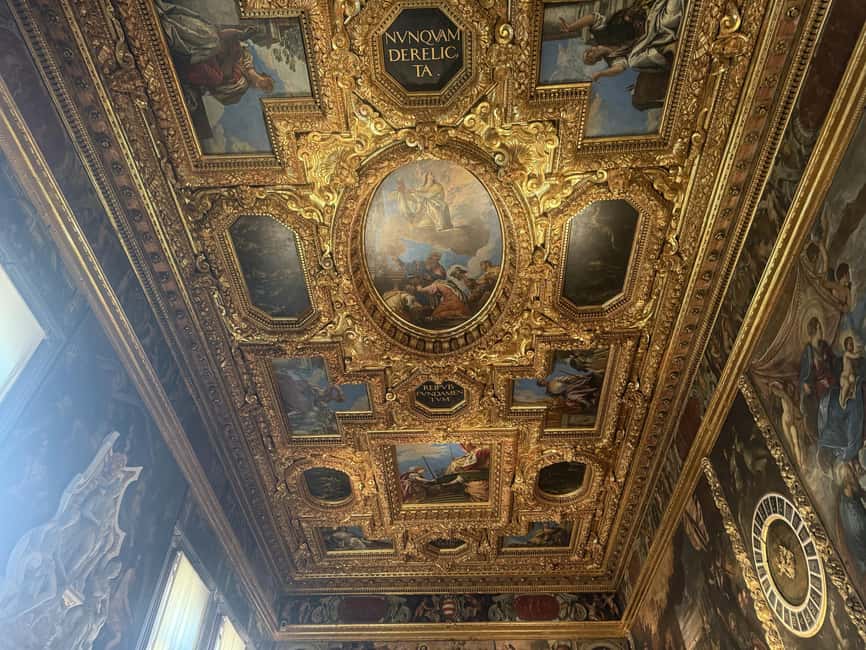
After the basilica, you head to Palazzo Ducale, the former residence of the Venetian doges and a symbol of how power worked in the city. This is where your guide’s job matters a lot, because the palace can look like beautiful architecture on first glance.
With a guide, you’ll understand what you’re seeing. You’re not just walking halls—you’re moving through spaces tied to government, authority, and control. You’ll get a sense of how Venice functioned, including how leaders operated inside a building that was designed to impress and enforce.




What to expect in the palace
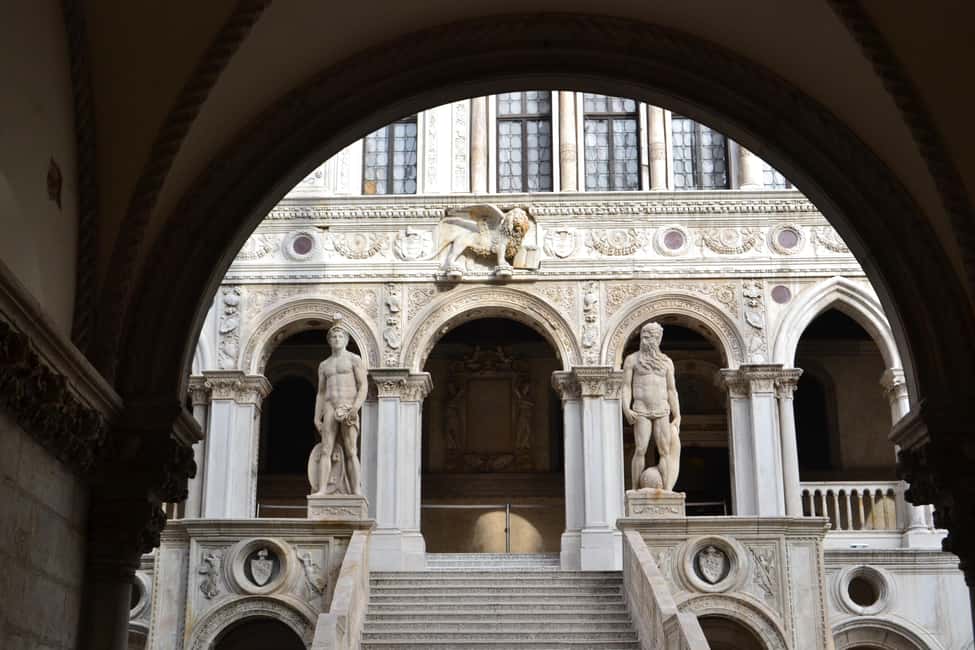
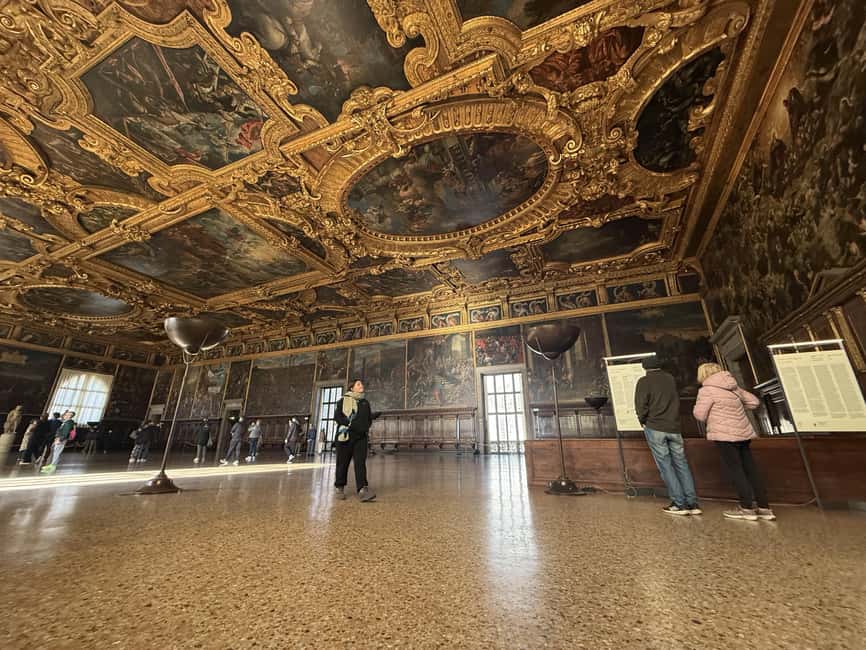
You’ll explore the palace’s Gothic architecture, and you’ll likely spend time in major rooms and chambers where the history of Venetian politics comes alive. One of the most praised parts of this tour is how guides connect the dots—explaining not only what the rooms are, but why they were built the way they were.
A practical note: some people are surprised by the extent of what they end up seeing inside the palace complex (including sections like prison areas, and in at least one case, more challenging movement than expected). The takeaway for you is simple: read your booking details carefully and be ready for extra walking within the palace.
Loggia dei Cavalli terrace: where you feel the building’s scale
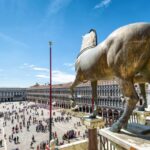
Most basilica-and-palace days turn into a sprint of photos. The Loggia dei Cavalli terrace changes that rhythm. It gives you a chance to slow down and understand the layout of the palace area in relation to Venice around it.
Even if you don’t consider yourself an architecture person, terrace time helps you place what you just learned. It’s easier to grasp the scale and design choices when you step back and see angles you don’t get from the interior corridors.
This stop also tends to be a nice emotional shift. After rooms full of formal history, an outdoor terrace is a reset button: fresh air, a break from indoor crowds, and a moment to process what the guide has been explaining.
St. Mark’s Museum: context that makes the basilica click
The St. Mark’s Museum included here is one of the reasons this tour feels more complete. Museums inside major sites can go either way—either they add value, or they feel like an extra line item.
On this route, the museum functions like a translator. It gives context for what you’ve been seeing in the basilica, so you understand the why behind the art and religious setting. If mosaics and religious art are your thing, you’ll usually enjoy this part because it helps turn “beautiful” into “I get it.”
Even if you’re more of a history-and-power traveler, museum time can still pay off. It’s not just about looking at objects; it’s about learning how St. Mark’s and Venice shaped their identity through art and collection.
Timing, pacing, and how to avoid the common day-trip headaches
This is a 3-hour guided experience, and that time is tight on purpose. You’re covering two major landmarks plus the museum and terrace access, so the guide has to keep things moving.
In practice, what matters most is pacing and group management. Several guides in this program are praised for keeping a steady rhythm—presenting information clearly without dragging the group through every corner. That balance is key because the buildings are big, and boredom can sneak in fast if you’re stuck waiting.
Still, you should plan for the reality of Venice timing: late arrivals and short transitions can slow a group before you even start. If you want the best experience, be early for the meeting point, and keep your belongings minimal so check-in is fast. Large bags aren’t allowed, and you don’t want to waste your entry time dealing with storage.
What to bring (and what to leave behind) for a smoother visit
Venice travel is easiest when you travel light. This tour has clear rules, and they matter because the sites are strict and entry points can get crowded.
Bring
- Comfortable shoes (non-negotiable)
- Something to cover shoulders and knees for the basilica
Avoid
- Pets
- Weapons or sharp objects
- Luggage or large bags
- Backpacks
- Alcohol and drugs
If you’re the type who likes a daypack for water and snacks, you may need to rethink that for this specific tour. Since backpacks aren’t allowed, plan your carry-around strategy so you can enter smoothly.
Price and value: when the guide is worth paying for
Price isn’t provided here, but one booking report mentioned €95 and flagged it as pricey. That doesn’t automatically mean it’s bad value—it means you should judge it against what you’re buying.
You’re paying for three things that are hard to recreate on your own:
- Skip-the-line entry (less waiting time is real value in Venice)
- Expert live interpretation for both sites (this is what turns sight-seeing into understanding)
- Included access to Loggia dei Cavalli terrace and St. Mark’s Museum, which many ticket-only options don’t bundle in the same way
If you’re the kind of traveler who enjoys facts, stories, and how art connects to politics, a guided format usually earns its keep. If you mostly want quiet time in the basilica and palace without commentary, you might prefer self-guided tickets. But given how much you cover in just 3 hours, the guide helps you make that time count.
Should you book this Venice Doge’s Palace and St. Mark’s Basilica tour?
I’d book it if you want the two biggest Venice “power and art” landmarks in one efficient package, and you like having a guide turn buildings into stories. The skip-the-line entry is a strong plus, and the added Loggia dei Cavalli terrace plus St. Mark’s Museum makes the tour feel like more than a checklist.
I would not book it if:
- you can’t follow the basilica dress code (knees and shoulders covered)
- you need wheelchair-friendly access (this tour isn’t suitable for wheelchair users or mobility impairments)
- you prefer to move at your own pace without a guided schedule
If you’re flexible, comfortable standing/walking, and you want an organized way to understand Venice’s most symbolic sites, this is a solid choice.
FAQ
How long is the Venice Doge’s Palace and St. Mark’s Basilica guided tour?
The tour duration is 3 hours.
Where do I meet the tour staff?
Meet your staff next to the Torre dell’Orologio, in front of the Change Shop. They’ll be holding a blue flag with the words Doooing Experience.
Does the tour include skip-the-line entry?
Yes. You get skip-the-line access through a separate entrance.
Which languages are the live guides available in?
Live guides are available in Italian and English.
Is there a dress code for St. Mark’s Basilica?
Yes. You must have knees and shoulders covered at all times.
Is this tour suitable for wheelchair users or people with mobility impairments?
No. It’s listed as not suitable for wheelchair users and people with mobility impairments.
What should I bring?
You should bring comfortable shoes.
Are pets allowed?
No, pets are not allowed.
What happens if I need to cancel?
The activity is non-refundable.