REVIEW · VENICE
Venice Walking Tour with Audioguide on Your Smartphone
Book on Viator →Operated by TouringBee · Bookable on Viator
Venice without the group shuffle. I like the smartphone audio with an offline map, because you can pause and restart whenever you want. I also like the mix of big icons and odd little detours, from the Bridge of Sighs to Il Gobbo di Rialto. The main drawback: the GPS marker can lag, so you’ll want a calm minute to find the exact spot.
This route takes about 2 hours, with 25 short audio recordings plus illustrations so you can match what you hear to what you see. It’s fully self-guided, so you won’t have a human to pull you back on track, and you’ll need your own headphones.
In This Review
- Key points before you go
- A smartphone route through Venice’s big icons
- Price and value: why $8.42 can work in Venice
- Start point, phone setup, and the “where am I?” reality
- Stop-by-stop: Bridge of Sighs into Doge’s Palace
- St Mark’s Square viewpoints: Campanile, Basilica, and Torre dell’Orologio
- Caffè Florian and Procuratie arcades: a pause with purpose
- Rialto’s market heart: Ponte di Rialto, Campo San Giacomo, Mercato
- Canal Grande moments: what to watch from the water
- Quiet Venice details: Ca’ d’Oro, San Cassiano, and the Rialto side streets
- Ponte delle Tette to Frari Basilica: intrigue and major art
- How to pace it: 2 hours on foot, or spread it out over days
- Who should book this audio tour—and who should not
- Should you book this Venice smartphone walking tour?
- FAQ
- Is this a self-guided tour?
- Do I need headphones?
- How long is the tour?
- Is it available in English?
- Are entrance tickets included for the stops?
- Where does the tour start and end?
Key points before you go
- Self-guided, stop-and-restart pacing lets you stretch the same route over multiple days.
- Offline map + landmark illustrations help you follow the route even when cell service gets spotty.
- 25 audio recordings cover history, legends, and everyday Venice.
- A smart mix of classics and side stops (St Mark’s, Rialto) plus more quirky corners (Ponte delle Tette).
- No entrance tickets included—you’ll get the sights, but paid interiors are on you.
A smartphone route through Venice’s big icons
This is the kind of Venice experience I love because it’s flexible. You’re not glued to a group pace, and you can linger when a scene catches your eye—then keep moving when you’re ready. With a phone in your hand and an audio track in your ears, you get a guided-feeling walk without the pressure of staying with strangers.
The route is built around the “greatest hits” area of central Venice: St Mark’s, Rialto, and the connected Grand Canal stretches. Then it adds a few smaller stops that make the city feel less like a checklist. You’ll hear about famous landmarks like the Doge’s Palace and Basilica di San Marco, but you’ll also stop for stories tied to spots people often rush past.
It’s designed for an easy day: about two hours on foot, with short stops (often around 10 minutes). That matters in Venice, where you can lose time fast just turning corners.
You can also read our reviews of more walking tours in Venice



Price and value: why $8.42 can work in Venice
At about $8.42 per person, the value comes from access and options, not from guided escorting. You’re paying for a phone-based guide that includes offline navigation, 25 recordings, and illustrations. That’s a lot of content for a small price, especially in a city where most “guided” help costs far more.
The other value angle is control. If you only want the St Mark’s part today, you can stop. If you want Rialto at a different time of day, you can come back and continue later. The tour also gives 1 year access, so it’s not a single-use ticket.
One practical caution: this isn’t a substitute for paid entry to the big interiors. The tour includes no entrance fees, so if you want to go inside places like the Doge’s Palace or St Mark’s Basilica, you’ll plan and pay separately.
Start point, phone setup, and the “where am I?” reality
The listed meeting point is Calle Seconda de la Fava, 4196, 30122 Venezia VE, Italy. The tour ends back at the same spot. That gives you a clear anchor if you like starting at a fixed point.
But the experience is self-guided. After you download and activate the tour in the app, you follow the route on the mobile map. One helpful detail: the provider states you can download and start anywhere—so you’re not locked into arriving exactly at the meeting location first.
Before you leave your hotel, do these quick steps:
- Download the audio tour and maps on Wi-Fi (so you’re not hunting for a connection).
- Bring your own headphones. They’re not included.
- Once you’re outside, open the map view and take a slow look around before you start walking.
If your location marker seems off (it can happen), don’t panic. One of the best practical tips I’ve seen for this kind of Venice routing is to do a slow 360° check to orient yourself, because sometimes the icon lags behind your real position.
Stop-by-stop: Bridge of Sighs into Doge’s Palace
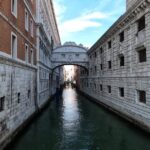
Your first big emotional hit is the Ponte dei Sospiri (Bridge of Sighs). The audio frames it as a poetic connector between the Doge’s Palace and the New Prison. Look for the delicate stone detail, and don’t miss the story thread about prisoners crossing to their fate—Venice loves romance, but it also loves consequences.
From there, you head to Palazzo Ducale (Doge’s Palace). This is where Gothic Venice shows its power. You’ll hear about opulent chambers and artworks by Tintoretto and Veronese. Even if you don’t go inside, the palace mass along the Grand Canal is a statement piece, and the audio helps you notice why.
A useful way to pace these stops: give yourself one minute to take photos, then switch attention to the audio narration. If you try to do everything at once—recording, reading the map, taking pictures—you’ll lose the story thread.
Also remember: the tour doesn’t include interior tickets. The audio is built for the sight and context, not guaranteed access into ticketed spaces.
St Mark’s Square viewpoints: Campanile, Basilica, and Torre dell’Orologio
Once you’re in St Mark’s Square, you’ll get a cluster of landmarks that all feel like they belong to the same show. The Campanile di San Marco is your height boost. You’ll hear about the bronze Moors that strike the hours, and the promise of city and lagoon views from the summit. Even without the ascent, the tower’s presence makes the whole square feel anchored.
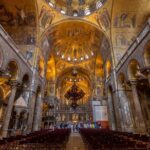
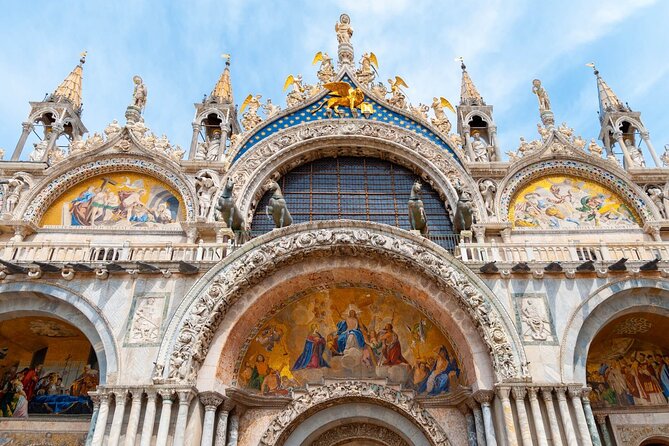
Next is Basilica di San Marco, described as a Byzantine masterpiece. Plan to look for the golden mosaics, the intricate marble façade, and the famous horses of St Mark. The audio approach here is simple: help you see these elements as symbols of Venetian wealth and influence, not just decoration.
The route then adds Torre dell’Orologio (Clock Tower). It’s Renaissance in style, with two bronze Moors striking the hours. This stop is short, but it’s a good reset. You’re standing in the same plaza world, but the story shifts from faith and power to timekeeping and craft.
If your phone battery is getting low, this is a good area to take a breather and charge briefly. St Mark’s can be a lot of looking, and it’s easy to run down power while photos and audio run together.
You can also read our reviews of more tours and experiences in Venice




Caffè Florian and Procuratie arcades: a pause with purpose
A standout mid-route stop is Caffè Florian in Piazza San Marco. The big detail in the narration: it’s been around since 1720 and has hosted famous names like Casanova. The audio helps you frame it as more than a café break—it’s part of the square’s long story of social life.
Then you’ll walk past the Procuratie Vecchie and Procuratie Nuove. These buildings form an architectural ensemble around the square. The audio context: once they housed government offices and procurators, later becoming a backdrop for cafés and shops. In other words, the place where you sit for a coffee also connects to how Venice governed itself.
Here’s how to make this break count. When the narration pauses or shifts, decide whether you want a seat now or a photo now. If you’re trying to move quickly, grab a pastry and keep walking. If you want the classic Venice moment, sit for a short drink and let the square do the work.
Rialto’s market heart: Ponte di Rialto, Campo San Giacomo, Mercato
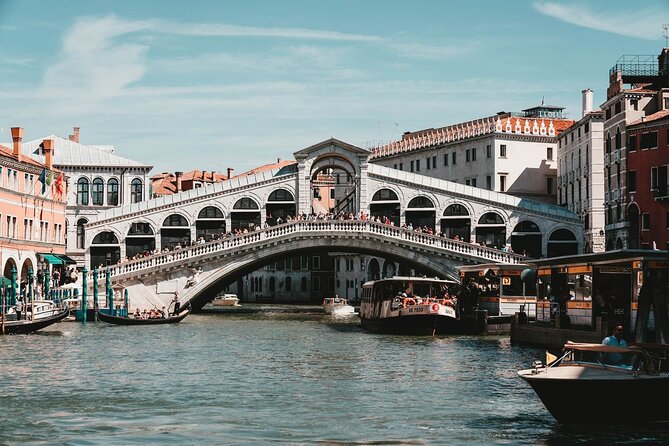
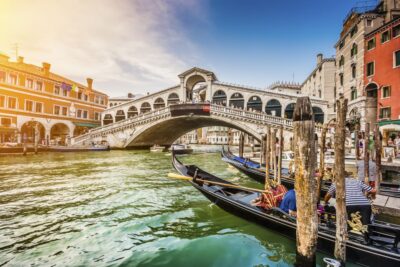
Next comes Ponte di Rialto, the iconic bridge spanning the Grand Canal. The audio gives it a commerce angle: a symbol of Venetian trade. As you approach, you’ll likely see the market energy around the area. Look for the views from the arched walkways and enjoy how the bridge acts like a stage—every angle feels like it’s meant to be photographed.
The route then shifts to Campo San Giacomo di Rialto, described as a lively square with a market feel, plus a historic church and clock tower in the mix. This is a good place to slow down, because it feels more local than the busiest square corridors.
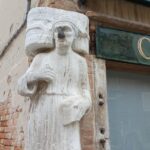
From there, you hit a small folklore stop: Il Gobbo di Rialto. It’s a whimsical hunchback figure with legends attached—good luck, or a connection to an old moneylender. This is the kind of detail that turns Venice into something personal. Even if you don’t fully buy the legend, it makes the city feel alive.
Then comes Mercato di Rialto, where the narration leans into senses: fresh produce, seafood, and local specialties. The iconic Rialto Bridge backdrop keeps pulling your attention back to the big picture while you take in the smaller details.
Practical tip: if you want to buy snacks here, build it into your timing. The audio stops are short. A spontaneous food purchase can turn a 10-minute segment into 25 fast.
Canal Grande moments: what to watch from the water
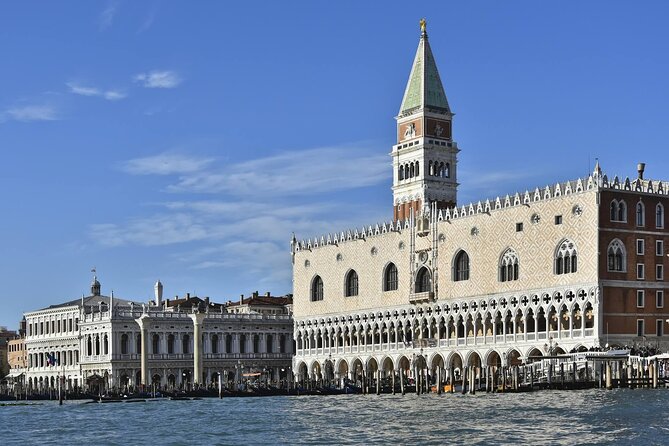
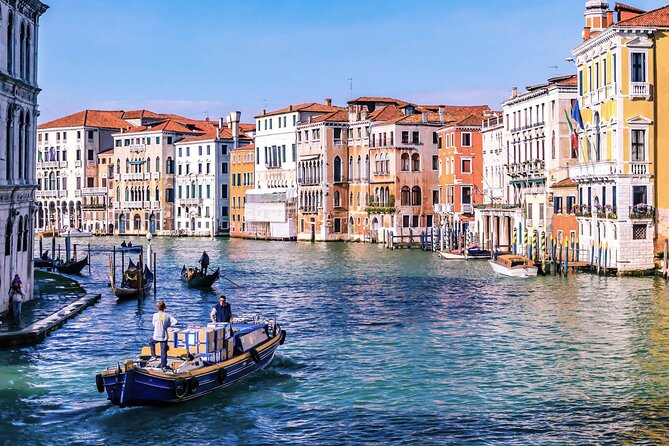
The itinerary includes Canal Grande, Venice’s main waterway. The idea is to pair your walking perspective with a boat view: the narration points you toward using a vaporetto so you can absorb the palaces lining the canal.
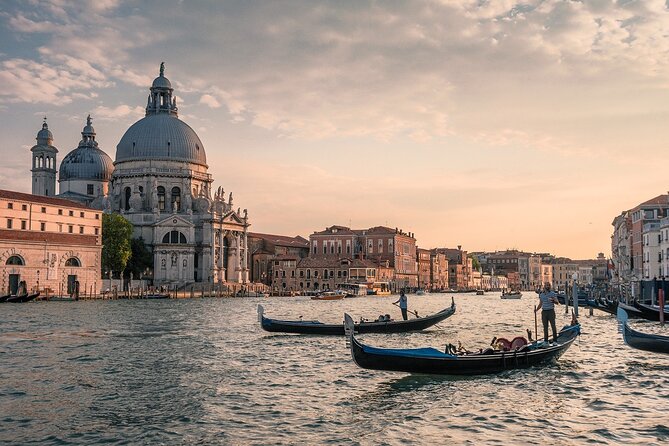
This is where you’ll get a different Venice brain. From land, you see facades and angles. From the water, you understand the canal as the actual street grid. The route also mentions catching views of Rialto Bridge and the elegance of the Grand Canal at sunset—so if you can time it, this is the moment to do it.
If you’re doing this in daylight only, it still works. Watch for how the palaces line up like stages along the curve. And remember: boat time matters. Give yourself a little cushion so you aren’t racing your audio prompts.
Quiet Venice details: Ca’ d’Oro, San Cassiano, and the Rialto side streets
A major art-and-architecture stop is Ca’ d’Oro (Golden House) on the Grand Canal. The narration calls it Venetian Gothic and highlights the intricate façade. You’ll also hear that the collection inside includes Renaissance treasures—again, tickets aren’t included, so think of this as a guided way to recognize what you’re looking at, then decide if you want to pay for interior time.
Next is Chiesa di San Cassiano, presented as a more off-the-radar choice. It’s described as Baroque, with artistic treasures and impressive altarpieces. The point here is simple: you’re getting out of the most crowded visual lane, so you can reset.
This is also where your photo strategy should shift. At big squares, you take skyline shots. In churches and side streets, you focus on details—door carvings, façade texture, or the feel of the space outside before you even decide whether to go in.
If you’re traveling with another person, this kind of stop is good because you can split attention: one person focuses on the audio story while the other checks the surroundings for the right entrance and angle.
Ponte delle Tette to Frari Basilica: intrigue and major art
Venice gets more complicated at Ponte delle Tette (Bridge of Breasts). The audio ties the name to courtesans: it was once linked to a red-light district boundary. Today, the bridge is a small story marker, with a name that carries intrigue into the canal network.
This is a fun stop because it breaks the usual postcard tone. Venice wasn’t just saints and palaces. It also had livelihoods, rules, and shadows. Hearing that in context makes the city feel more truthful.
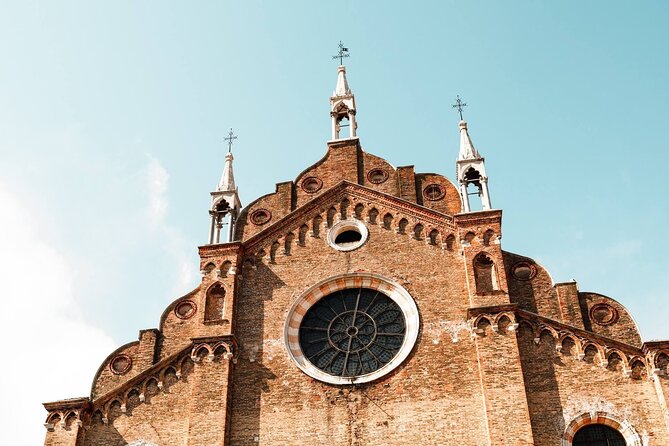
Then you move to Basilica dei Frari, another art anchor. The narration calls it a Gothic masterpiece housing major works like Titian’s Assumption and Bellini’s Madonna. It also mentions the vast interior and the cloisters as a respite from the city’s push.
As with other ticketed sites, plan for a separate entry decision. The tour content can guide you to what matters, but it doesn’t include admissions.
How to pace it: 2 hours on foot, or spread it out over days
Even though the route is listed at about two hours, the structure fits real Venice walking. Most stops are around 10 minutes, which means you’re not stuck doing long stretches of empty audio. You can stop and restart on the app, and you can also revisit later with your 1-year access.
Here’s a pacing plan that usually works:
- Do the St Mark’s cluster first thing (tower, basilica, clock tower).
- Take the café and arcades as your mid-day rest.
- Save Rialto market time for when you’re in the mood to browse and snack.
- If you’re short on time, skip the most optional side stops first and keep the core route.
If you find that GPS is occasionally off, slow down at each pin. This tour is short enough that careful positioning pays off. A minute of patience beats a half-hour wandering the wrong canal side.
Who should book this audio tour—and who should not
This works best if you want independence. You’ll like it if you prefer to wander without negotiating a group rhythm, and if you enjoy learning by pacing yourself between landmarks.
It’s also a smart choice for solo travelers who want to keep their own tempo and don’t want to pay for a human guide just to hit a few key sights. The app has offline navigation, and the audio content is structured around 25 stops and stories.
You might want a different format if:
- You hate troubleshooting apps or GPS.
- You want guaranteed ticketed access to major interiors included in the price.
- You’re traveling with limited phone battery and don’t plan to charge.
The self-guided nature is the tradeoff. No one will rescue you if a map marker slips. The flip side is you get freedom.
Should you book this Venice smartphone walking tour?
Yes, with a few conditions you can control.
Book it if you want a low-cost way to connect the big landmarks—Bridge of Sighs, Doge’s Palace, St Mark’s, Rialto—with short lessons that make the city make sense. It’s also great if you like the idea of returning later and picking up where you left off, since you’re not committing to one rigid schedule.
Skip it or plan a backup if your phone navigation usually frustrates you. Bring headphones, download offline materials in advance, and expect occasional marker lag. If you do that, this walk can be a solid, flexible Venice day without a group agenda.
FAQ
Is this a self-guided tour?
Yes. You download the audio guide app, activate your purchase, and follow the route using the app map. There is no human guide.
Do I need headphones?
Yes. The tour does not include smartphone headphones, so you should bring your own.
How long is the tour?
It takes about 2 hours on average.
Is it available in English?
Yes. The tour is offered in English, and the audio guide provides access in the language you choose.
Are entrance tickets included for the stops?
No. Entrance fees or tickets are not included, even though many stops are listed with admission ticket free.
Where does the tour start and end?
The meeting point is Calle Seconda de la Fava, 4196, 30122 Venezia VE, Italy, and the activity ends back at the meeting point.