REVIEW · VENICE
Venice: Jewish Ghetto Walking Tour with Synagogues Visit
Book on Viator →Operated by Walks In Europe · Bookable on Viator
Venice’s Jewish Ghetto hits you in the feels. This 2-hour walk pairs synagogue visits with street-level history in Cannaregio, right where daily life and hardship shaped the neighborhood. I like that it’s a small-group route, so the guide can keep the pace tight and answer questions as you move from square to square.
My favorite part is how the tour turns tiny details into meaning: the fortified-island story of 1516, the bas-reliefs in Campo del Ghetto Nuovo, and the chance to see two synagogues with expert guidance from the Jewish Museum team. One possible drawback: the area is compact, so you’ll spend real time standing for explanations, and the meeting point can be tricky to find if you don’t arrive early.
In This Review
- Key things you’ll notice on this Venice Jewish Ghetto walk
- Entering Venice’s Jewish Ghetto: why this route feels different
- Meeting point and timing: Campo di Ghetto Nuovo to back again
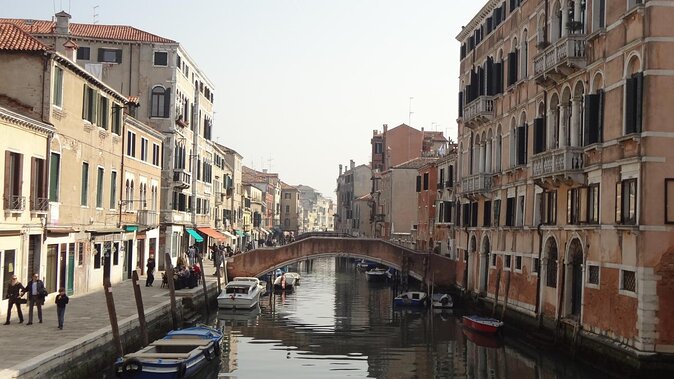
- Ghetto Ebraico and the Cannaregio shift: from history to daily life
- Ghetto Vecchio: where artisans, shops, and galleries make it human
- Campo del Ghetto Nuovo: the fortified island story (and those bas-reliefs)
- Spanish Synagogue and Levantine Synagogue: what you need to know before you go in
- The Napoleon moment: why the ghetto’s gates mattered (and why the neighborhood still feels Jewish)
- Price and value: is $88.10 a fair trade for 2 hours?
- Who this tour suits best (and who might want a different Venice plan)
- Should you book this Venice Jewish Ghetto tour?
- FAQ
- How long is the Venice Jewish Ghetto walking tour with synagogues visit?
- What language is the tour offered in?
- What’s included in the price?
- Are the Jewish Museum and synagogue interiors both included?
- Is the Levantine Synagogue included on every day?
- What should I wear for the synagogue visit?
- Where do I meet and when does the tour end?
Key things you’ll notice on this Venice Jewish Ghetto walk
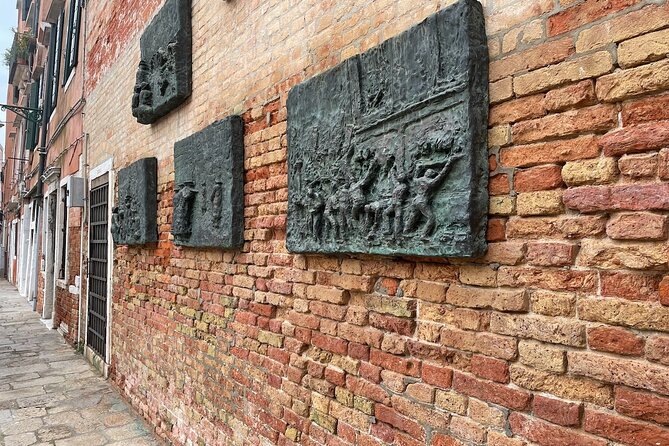
- Campo di Ghetto Nuovo bas-reliefs and other stone details that many visitors miss.
- The switch from restricted ghetto life to the wider Venetian “floating city” after Napoleon.
- Cannaregio’s residential feel, with Hebrew and Italian signs guiding you in.
- A rare visit to the Spanish Synagogue and Levantine Synagogue via guides connected to the Jewish Museum.
- A route that threads through places tied to memory, including the deportation memorial.
- A maximum group size of 10 travelers, which helps keep questions from getting lost.
Entering Venice’s Jewish Ghetto: why this route feels different
If you’ve only seen Venice’s major sights, the Jewish Ghetto can feel like a side street you almost walked past. That’s exactly the point. This tour slows you down and gives you a map made of stories, not just buildings.
You’ll start in the Ghetto Ebraico area and move through the adjacent Cannaregio district. The guide doesn’t treat it like a museum hallway. Instead, you connect what you’re seeing—signs, squares, architecture, and memorials—to what happened here over centuries.
And yes, there are synagogues. But the best part is that the synagogues don’t float in space as “must-sees.” You understand why these specific sites mattered, and why they survived.
You can also read our reviews of more walking tours in Venice



Meeting point and timing: Campo di Ghetto Nuovo to back again
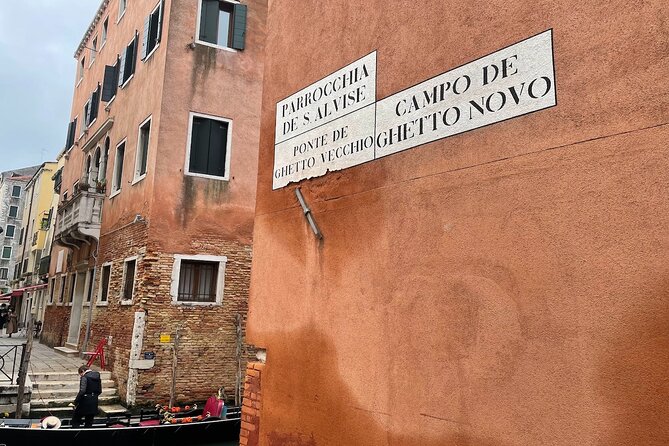
This tour starts and ends back at Campo di Ghetto Nuovo, 30121 Venezia VE. You’ll want to arrive 5 to 10 minutes early, because once it starts, it’s not possible to join late.
Venice loves to test your sense of direction. Even if you’re good at navigating canals and calli, the meeting square can be hard to spot if you show up right on time. I strongly suggest you build in extra time to get your bearings. Do one quick loop near the square before the start so you don’t waste the first part of your tour searching.
The good news: the meeting point is near public transportation, so you can come in without complicated transfers. The tour is also built for a normal walking pace—mostly flat, but expect time on your feet.
Ghetto Ebraico and the Cannaregio shift: from history to daily life
Stop 1 takes you into the heart of the Jewish Ghetto area. You’ll meet your local guide and begin a small-group walk that focuses on the Ghetto Ebraico and the Cannaregio district. The time here isn’t just “look and learn.” The guide points you toward places that most casual Venice wanderers never notice—especially the quieter, more local corners.
Then you move toward Cannaregio, and this is where the neighborhood vibe changes. Cannaregio is more residential, and you feel it the moment you enter. Hebrew and Italian signage shows up to guide you toward the synagogue areas, which is a small detail but an important one. It reminds you that this isn’t only about old stones. It’s about a community’s footprint on everyday streets.
Ghetto Vecchio: where artisans, shops, and galleries make it human
The tour includes time around the Ghetto Vecchio (Old Ghetto) area. This is where you slow down and absorb the “small town inside Venice” feel.
Expect artisan workshops, galleries, shops, and delis. That matters. It’s easy to think of a ghetto as a closed chapter—something sealed in time. Here, the daily commercial energy keeps moving, and the guide helps you see what changed and what stayed.
If you like neighborhoods you can actually picture as a place where people ate, shopped, prayed, and argued, you’ll enjoy this segment.
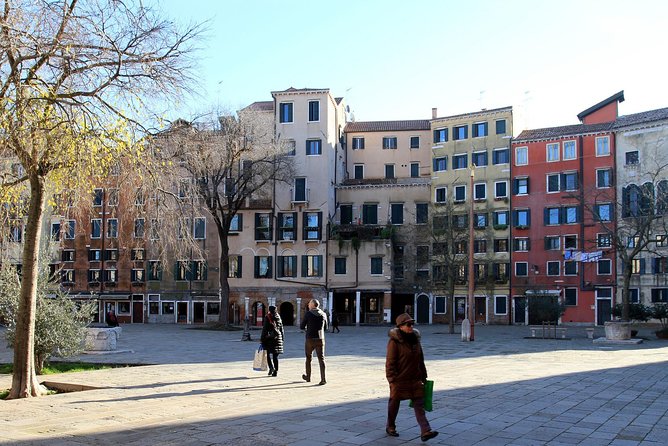
Campo del Ghetto Nuovo: the fortified island story (and those bas-reliefs)
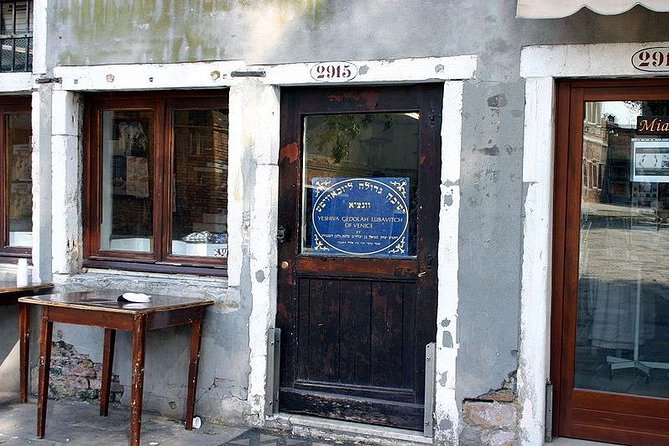
Next comes one of the tour’s “how did I miss that?” moments: crossing the bridge into Campo del Ghetto Nuovo (New Ghetto Square).
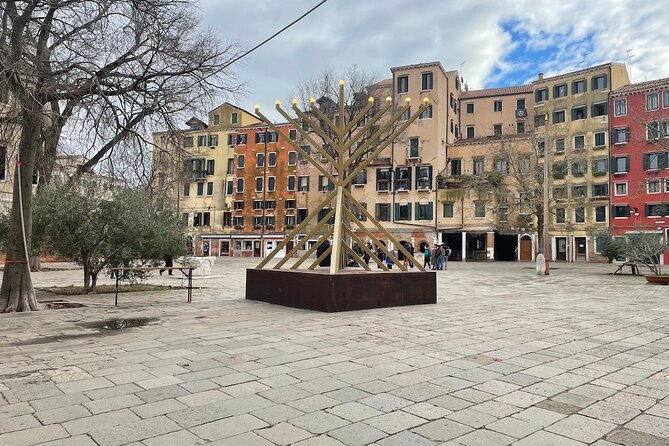
Campo del Ghetto Nuovo was founded as a fortified island in 1516. The guide explains how and why Venetian Jews were confined to the island—and how it became densely populated. That story is heavy, but the route keeps it grounded. You’re not just hearing dates. You’re standing in the spatial logic of the place.
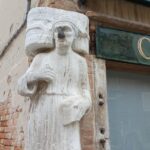
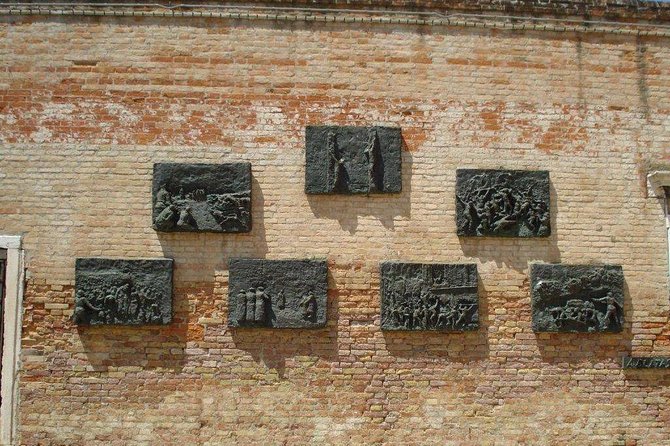
Then look down. The tour highlights a series of bas-reliefs in the square—an art-and-memory detail that many visitors overlook. You’ll also hear about the ground-level elements that connect the site to the lived experience of the community. One review specifically called out the stepping stones on the ground, and that kind of detail is exactly why a guided walk matters.
You’ll also pass important sites along the way, including:
- the deportation memorial
- the Levantine Synagogue
- the Jewish Museum of Venice
Even if you don’t go inside the museum, you’ll understand why these stops belong on the same line.






Spanish Synagogue and Levantine Synagogue: what you need to know before you go in
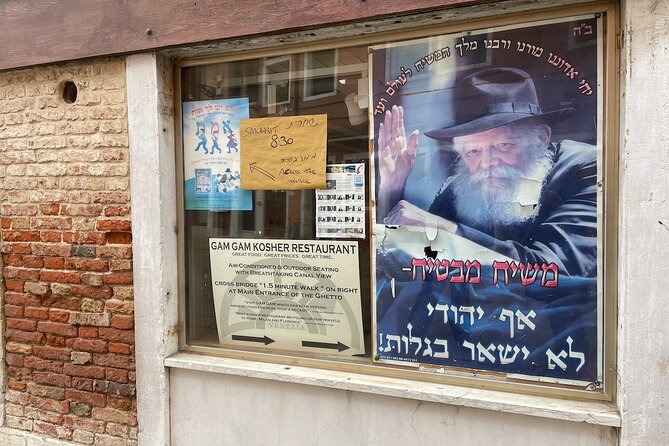
The tour’s big payoff is the synagogue visit segment. You’ll see the Spanish Synagogue and the Levantine Synagogue.
What’s included here is not just entry—it’s the interpretation. Your synagogue visit is guided by expert guides from the Jewish Museum. Names mentioned in English-guided experiences include Paola for one of the synagogue parts, with other guides like Alicia, Sylvia, Isabella, Christina, and Claire/Clare praised for their storytelling across the ghetto walk. If you get one of those guides, you’re likely to get clear context and room for questions.
Dress code matters. For the synagogues, both men and women must wear clothing that covers the belly, shoulders, and knee. If you’re traveling in summer and planning to dress light, keep something breathable but covering in your daypack.
Also, the tour notes something small but important: the Levantine Synagogue on Fridays is not part of the visit. If your schedule lands on a Friday, plan for a different synagogue arrangement.
One more practical point: the Jewish Museum itself is under restoration and closed, so you’re not doing a full museum interior visit. Still, the synagogue experience is described as a rare chance to connect with Venice’s Jewish legacy firsthand.
And if you’re wondering about what’s allowed: there’s a clear rule that no weapons or sharp objects (like knives) can be carried on the tour.
The Napoleon moment: why the ghetto’s gates mattered (and why the neighborhood still feels Jewish)
The final segment brings you through the story after confinement. You’ll learn how Napoleon tore down the gates of the Jewish Ghetto, granting Jews the right to live anywhere in Venice.
That’s an idea you’ve probably heard in broad strokes. The tour makes it physical. You hear how the ghetto changed as restrictions loosened, and how—even though only a small percentage of present-day residents are Jewish—the district still shows Jewish culture in everyday life.
You’ll walk past or near places that still feel tied to that heritage, including bakeries, restaurants, and handicraft stores. The guide ties it back to resilience and identity, not as a slogan, but as something you can sense in the streets.
By the end, you’re back among historic buildings and centuries-old landmarks, with the architecture telling the story in a way your usual Venice selfie stops never will.
Price and value: is $88.10 a fair trade for 2 hours?
At $88.10 per person for about 2 hours, this isn’t a bargain-basement Venice activity. But it’s not priced like a generic walk, either.
Here’s what you’re paying for:
- A local professional guide for the ghetto route
- Small-group size (up to 10 travelers)
- A synagogue visit led by Jewish Museum experts
- Tickets provided for the synagogue part
You’re also getting access to places and context that you’re unlikely to recreate on your own in the same time, especially if you’re trying to avoid the trap of “we walked there, we saw it, we moved on.”
The main trade-off is time on your feet versus “walking miles.” The ghetto is compact. Some people feel there’s a lot of standing during explanations. If you’re the type who likes constant movement, this may feel a bit stop-and-go.
Who this tour suits best (and who might want a different Venice plan)
This tour fits best if you want:
- a meaningful neighborhood walk that connects place to history
- synagogue access with expert guidance
- an experience for Jewish and non-Jewish visitors alike—because you get both cultural practice and historical context, not just one angle
You might want to consider another option if:
- you get uncomfortable standing in one spot for long explanations
- you hate tight routes where you’re often looking at something specific, not wandering freely
- you prefer tours with a heavier focus on inside museum time (the Jewish Museum interior is not included)
If you do go, bring comfortable shoes. Venice stone and time-on-feet add up fast, even when the route is short.
Should you book this Venice Jewish Ghetto tour?
I’d book it if you want one of the more focused, human-scale ways to understand Venice beyond postcards. The synagogue visit with Jewish Museum-guided interpretation is the anchor, and the ghetto walk gives it context.
I’d pause before booking if you’re only looking for scenic Venice photos and lots of flexible wandering. This is an intentional route. It asks you to pay attention.
If you go, do two things that make a big difference: arrive early at Campo di Ghetto Nuovo, and dress with the synagogue rules in mind so you don’t scramble at the last second.
FAQ
How long is the Venice Jewish Ghetto walking tour with synagogues visit?
It runs about 2 hours.
What language is the tour offered in?
The tour is offered in English.
What’s included in the price?
You get a professional local guide, a 2-hour walking tour of the Ghetto, and a synagogues visit led by expert guides connected to the Jewish Museum. Synagogue tickets are provided.
Are the Jewish Museum and synagogue interiors both included?
The tour includes the synagogue visits. The Jewish Museum of Venice interior is not included because it is listed as closed to visitors, though the synagogue guidance is provided by Jewish Museum experts.
Is the Levantine Synagogue included on every day?
The Levantine Synagogue is not included on Fridays.
What should I wear for the synagogue visit?
You must wear clothing that covers the belly, shoulders, and knee.
Where do I meet and when does the tour end?
Meet at Campo di Ghetto Nuovo, 30121 Venezia VE, Italy, and the tour ends back at the same meeting point. Arrive 5 to 10 minutes early.