REVIEW · VENICE
two-hour walk from Rialto to San Marco between history, traditions and art
Book on Viator →Operated by Tour Leader in Venice · Bookable on Viator
Venice changes when you walk it with a local. This two-hour private walk links Rialto trade stories to San Marco power and art, with Alessandro guiding you through the city like he’s still seeing it for the first time. I love how the route mixes “what you’re looking at” with “why it mattered,” so the big sights feel earned, not rushed.
I also like the practical pacing and the stop choices: you’ll cross the Rialto Bridge, step inside Fondaco dei Tedeschi, and reach the St. Mark’s area in time to think before the crowds take over. One consideration: St. Mark’s Basilica has a strict dress code, and you can’t bring in a backpack or large bag, plus no photos/videos inside.
In This Review
- Key highlights you’ll feel on the walk
- From Rialto Market to the bridge: where Venice traded its future
- Fondaco dei Tedeschi and the Marco Polo connection you’ll actually remember
- Campo San Giovanni e Paolo and the Acqua alta library moment
- Colleoni’s equestrian monument, San Giovanni e Paolo, and a breather
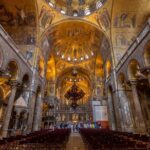
- Piazza San Marco and St. Mark’s Basilica: skip the line, but plan the rules
- How the 2-hour format works: private group energy and efficient routes
- Price and value: is $139.93 worth it for two hours?
- Who should book this walk (and who might skip it)
- Should you book this Rialto to San Marco tour?
- FAQ
- What’s the duration of the tour?
- Is it a private tour?
- Where do we meet, and where does it end?
- Is a mobile ticket provided?
- Is entrance to St. Mark’s Basilica included?
- What are the dress requirements for St. Mark’s Basilica?
- Can I bring a backpack or large bag into St. Mark’s Basilica?
- Are photos and videos allowed inside St. Mark’s Basilica?
- What if Venice has bad weather?
Key highlights you’ll feel on the walk
- Local-native storytelling from Alessandro with lots of English explanations and street-level context
- A tight 2-hour path from Rialto to Piazza San Marco that still covers real art and tradition
- Fondaco dei Tedeschi interior stop plus the area connected to Marco Polo
- Acqua alta library visit area placed early enough to keep it fun, not chaotic
- Equestrian Statue of Bartolomeo Colleoni viewpoint with a short 10-minute break
- St. Mark’s Basilica with skip-the-line access, plus important rules to plan around
From Rialto Market to the bridge: where Venice traded its future
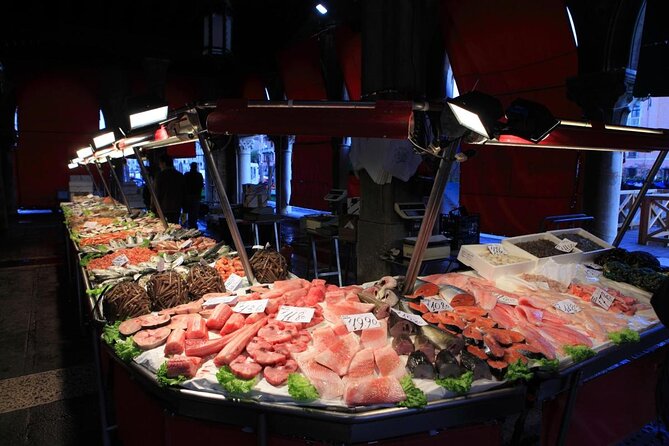
Most Venice days start with photos. This one starts with how the city worked. The walk begins in the Rialto area, where commerce and daily life have shared space for centuries. Expect the energy of the market district—food, buyers, shopfronts, and the constant sense that people come here to do business, not just to look around.
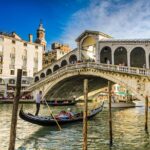
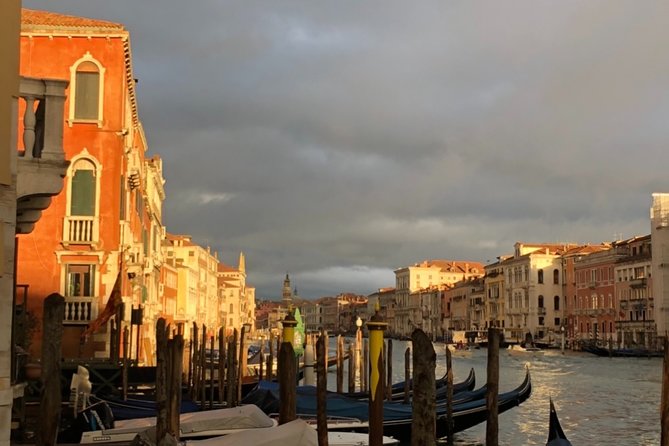
Then you do the quick, memorable jump across the Grand Canal by crossing the Rialto Bridge. It’s not just a postcard moment. It’s a viewpoint on Venice’s power. On one side you feel the trading heartbeat. On the other, you’re being led toward the political and religious center of the Republic of Venice.
I like starting here because it sets your brain up for the rest of the walk. When you understand what Rialto represented—trade routes, wealth, influence—you’re better prepared for the next stops, especially anything connected to St. Mark’s and the Serenissima’s grand image.
If you’re short on time, this section is also a win. In two hours, you’re not trying to “see all of Venice.” You’re learning how Venice shaped itself from the inside out.
You can also read our reviews of more walking tours in Venice



Fondaco dei Tedeschi and the Marco Polo connection you’ll actually remember
Next comes the Fondaco dei Tedeschi stop. You’re not just passing by it—you’re visiting the interior, which is a big difference. These buildings in Venice often look like scenery from the outside, but inside you can understand their purpose: identity, wealth, and control of people and goods.
From there, the guide brings you toward the area connected to Marco Polo. Even if you know his name already, the value here is the grounding. Venice loves legend, but this kind of stop ties stories to streets and buildings you can point at. It’s the difference between reading about the Renaissance (or earlier) and standing in a neighborhood that still carries the same social logic.
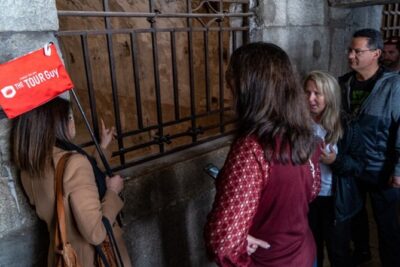
This is also where I noticed why the guide gets such strong marks. In the best moments, Alessandro turns a wall, a doorway, a route choice into an explanation. He uses practical language, plus visual aids in a binder, which helps you keep up without feeling like you’re in a lecture hall.
Campo San Giovanni e Paolo and the Acqua alta library moment
As the walk moves along, you reach Campo San Giovanni e Paolo, a key square that anchors a lot of Venice’s religious and civic presence. A campo is Venice’s living room. It’s where the city’s “official” side and “everyday” side overlap. Even for a short tour, it helps you feel that balance.
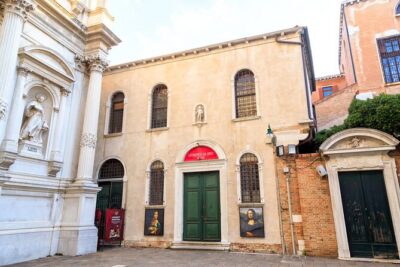
Then you head toward the Acqua alta library. It’s famous, but the best part is how it fits into the flow of the walk. You’re not sprinting from one ticket line to the next. You’re taking a natural pause between heavier historical stops.
Also, “Acqua alta” (high water) is a reminder that Venice is not an imaginary museum. It’s a city with real conditions, including flooding risk. Seeing a library associated with that reality makes the whole place feel more human. You remember it as a functioning workaround, not just a tourist photo.
This section tends to hit particularly well if you like architecture details and the street-by-street feel of Venice. It also helps families, since the guide style is interactive and energetic, not dry.
Colleoni’s equestrian monument, San Giovanni e Paolo, and a breather
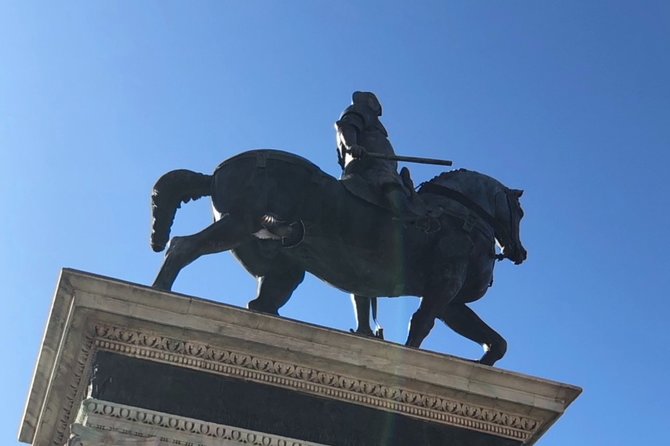
The walk continues to the Equestrian Statue of Bartolomeo Colleoni, a striking 15th-century mercenary monument tied to Venice’s military and political world. You’ll see why Colleoni matters: he fought for Venice and for Milan, and the monument is built to project strength.
From this same zone, you also get the Gothic church of San Giovanni e Paolo and the large school of San Marco in your sightline. That cluster is valuable because it shows how power expressed itself: faith, public institutions, and civic identity all in walking distance.
There’s even a built-in pause here: a 10-minute break. I’m glad this exists on a short tour. Venice walking adds up fast, especially near the most crowded areas. A small rest makes the final stretch to Piazza San Marco feel calmer instead of frantic.
Piazza San Marco and St. Mark’s Basilica: skip the line, but plan the rules
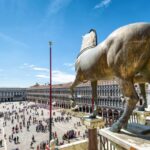
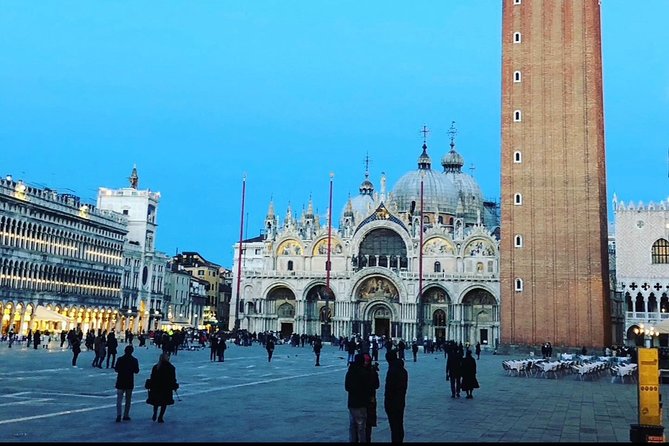
Eventually you arrive in Piazza San Marco and get your time at St. Mark’s Basilica, with a skip-the-line element. This is a huge practical advantage. St. Mark’s can eat up half a day with waiting, and you only have two hours here. Getting in efficiently changes the whole experience.
Now, the important part: St. Mark’s Basilica has strict entry rules.
- Shoulders must be covered with a scarf
- Legs must be covered up to the knee
- Backpacks or large bags are not allowed inside
- Inside the basilica, you can’t take photographs or make videos
These rules can sound annoying until you’re standing outside with a light jacket and a bag that’s too big. Then they become the entire day. I’d plan for this like you’re dressing for a serious church, not a casual sightseeing stop.
Also, the ticket situation needs a little attention. The tour is set up to support “skip-the-line” entry, but you should expect to handle basilica admission tickets separately (either in advance or on the spot). That way there are no surprises right when you’re ready to go in.
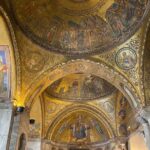
Finally, be ready for the reality of St. Mark’s interior: it’s not a place for a quick walkthrough. Even with limited time, the guide’s job is to point out what you’d otherwise miss—how the art supports the city’s religious and political message.
You can also read our reviews of more historical tours in Venice



How the 2-hour format works: private group energy and efficient routes
This is a private tour/activity, meaning it’s just your group. That matters in Venice. In crowded areas, the difference between moving smoothly and getting stuck behind strangers is the difference between liking your day and wishing you had planned differently.
It also runs about 2 hours. That short duration is part strategy: you’ll cover the most meaningful stretch from Rialto to San Marco without turning your day into nonstop walking. The guide’s local knowledge helps you move efficiently, and the pace is set for explanation time, not just transit.
You’ll receive a mobile ticket, and the meeting point is near public transportation. That’s helpful if you’re staying in a neighborhood that requires a vaporetto hop or a bit of walking anyway.
One more practical note: this experience requires good weather. Venice weather can change quickly, especially around open squares and canal crossings. If conditions are poor, you’ll be offered a different date or a full refund.
Price and value: is $139.93 worth it for two hours?
$139.93 per person sounds like a serious number for a short walk, so I’d judge it on what you actually get.
You’re paying for:
- Private guiding (not a big group drift)
- A tightly managed route from Rialto to St. Mark’s without wasting time
- Access support for St. Mark’s skip-the-line, plus a guided visit that helps you understand what you’re seeing
- Stops that mix commerce, institutions, art, and the very Venice-feeling “small detail” streets
On top of that, the guide style has been a standout: passion for Venice, strong English, and the way he answers questions. Visual aids also show up in the way he teaches, which makes complex topics easier to track.
One small “extra” that some groups report is a nice end-of-tour snack and spritz. That’s not something you should rely on as the main value—but it does fit the idea that the tour isn’t only academic. It’s built to feel like an actual Venice day.
So is it worth it? If you want a guided Venice route that compresses the best context into two hours, and you value getting into St. Mark’s efficiently, then yes, it’s fair value. If you’re the type who prefers self-guided wander time with no dress-code planning, you might want something simpler.
Who should book this walk (and who might skip it)
This walk fits best if:
- you have limited time and want the Rialto → San Marco spine covered thoughtfully
- you care about how Venice’s power worked (trade, institutions, religion, art)
- you want a guide with strong communication and real local passion—especially if you like asking questions
- you’re bringing kids. The guide approach has been described as excellent for children, with the ability to hold attention for a full stretch
You might skip it if:
- you dislike dress-code constraints (St. Mark’s rules are real)
- you want lots of free time for independent roaming rather than a guided route
- you’re carrying big bags or you don’t want to manage photo limits inside the basilica
Should you book this Rialto to San Marco tour?
If you want a Venice experience that feels grounded—markets, monuments, churches, and art all tied into one logical walk—this is a strong choice. The short duration helps you avoid the “see everything, understand nothing” trap, and the private format makes it smoother.
My advice: do the St. Mark’s planning first. Bring a scarf that can cover shoulders, wear knee-covering pants, and pack light. If you do that, the rest of the walk becomes the fun part: crossing Rialto, stepping into Fondaco dei Tedeschi, pausing at Acqua alta, and ending in Piazza San Marco with context you can feel.
If the weather isn’t cooperating, take the refund or alternate date and try again. In Venice, the best days are the ones where the city lets you walk.
FAQ
What’s the duration of the tour?
It lasts about 2 hours.
Is it a private tour?
Yes. Only your group participates.
Where do we meet, and where does it end?
You start in the Rialto area (Rialto, 30125 Venezia VE, Italy) and end at Saint Mark’s Basilica (P.za San Marco, 328, 30124 Venezia VE, Italy).
Is a mobile ticket provided?
Yes. The tour uses a mobile ticket.
Is entrance to St. Mark’s Basilica included?
The tour includes a skip-the-line experience for St. Mark’s Basilica, but the entrance tickets are not included in the tour price. You’ll need to pay for basilica admission either in advance or on the spot.
What are the dress requirements for St. Mark’s Basilica?
You must cover your shoulders with a scarf and cover your legs up to the knee.
Can I bring a backpack or large bag into St. Mark’s Basilica?
No. You cannot enter with backpacks or large bags.
Are photos and videos allowed inside St. Mark’s Basilica?
No. You can’t take photographs or make videos inside the basilica.
What if Venice has bad weather?
This experience requires good weather. If it’s canceled due to poor weather, you’ll be offered a different date or a full refund.