REVIEW · VENICE
The Heart of Venice: A Self-Guided Audio Tour
Book on Viator →Operated by VoiceMap Audio Tours · Bookable on Viator
Venice feels like a maze; this tour keeps it sane. It’s a self-guided audio walk from Piazza San Marco to Rialto Bridge, with stories triggered as you reach each landmark. You get the fun of wandering on your own, without totally flying blind.
I love the auto-playing audio system. When you arrive at a stop, the narration starts, so you can keep your eyes on the canals and architecture instead of fighting your phone. I also really like the offline setup: audio, maps, and geodata are included, so you’re not stuck hunting for signal.
One thing to consider: you’ll need your own smartphone to run the VoiceMap application (it’s not included). And like any GPS tour, you’ll get the best results if you’re paying attention to where you’re standing when the next audio trigger is meant to start.
In This Review
- Key things to know before you go
- Why this self-guided Venice audio tour actually works
- Price and value: $11.99 for a 1-hour route you can repeat
- Piazza San Marco: La Piazza, the drawing room, and the drama you’d miss
- Campo San Salvador: the 1898 marble column and the revolt story
- Teatro Comunale Carlo Goldoni: why comedy mattered in the Venetian dialect
- La Fenice and the opera start line: Rigoletto and La Traviata
- Palazzo Cavalli and Centro Maree: tides, weather, and acqua alta predictions
- Rialto Bridge: the third of its kind and why earlier versions mattered
- How to pace the tour so it feels fun, not rushed
- Who this VoiceMap Venice audio tour fits best
- Quick decision: should you book The Heart of Venice?
- FAQ
- How long is The Heart of Venice self-guided audio tour?
- Is the tour offered in English?
- Do I need mobile data to use the audio and maps?
- What app do I use for this tour?
- Where do I start and end the tour?
- Is there a smartphone included?
- Is this a private tour or shared with other people?
- Is there any extra access fee in Venice?
- What’s the cancellation policy?
Key things to know before you go
- Auto-playing narration when you reach each spot, so you can explore at a real strolling pace
- Offline audio, maps, and geodata, which helps a lot in spotty coverage zones
- A tight 1-hour route built around Venice’s most important sights and stories
- Piazza San Marco to Rialto Bridge gives you a logical, easy-to-follow flow
- English VoiceMap guide with directions that help you start in the right place
Why this self-guided Venice audio tour actually works
This isn’t a slow guided lecture, and it’s not a “read this and run” scavenger hunt either. The design is simple: you use the VoiceMap application, and the audio plays automatically as you arrive at each location. In Venice, where every corner can steal your attention, that matters.
You’re not constantly tapping through menus. You’re not trying to line up pins while tourists squeeze past you. Instead, you can wander, pause for a look at a façade, then let the next story roll in when you reach the next stop.
It also helps that the tour includes directions to the starting point. That sounds basic, but in a place like Venice, it’s the difference between starting relaxed and starting stressed. The end point is Rialto Bridge, which gives you a satisfying finish at one of the city’s most famous views.
You can also read our reviews of more guided tours in Venice

Price and value: $11.99 for a 1-hour route you can repeat
At $11.99 per person for about 1 hour, this is priced like a smart add-on to your Venice day rather than a big-ticket guided tour. The real value isn’t just the hour—it’s the lifetime access.
That means you can come back later, refresh the stories, or use the same tour style when you revisit the center again. Venice rewards repeat visits. The streets look similar until you learn what to look for, and an audio guide can steer your attention in the right direction.
Also, the offline feature is quietly worth money and time. If your phone data is unreliable or expensive while roaming, the fact that audio, maps, and geodata are available offline can save you from the classic Venice problem: standing somewhere gorgeous but unable to figure out the next step.
Piazza San Marco: La Piazza, the drawing room, and the drama you’d miss
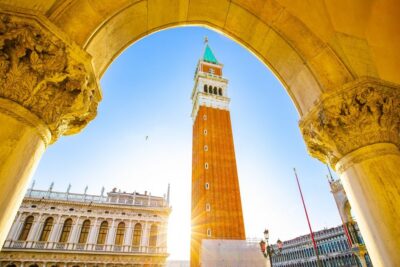
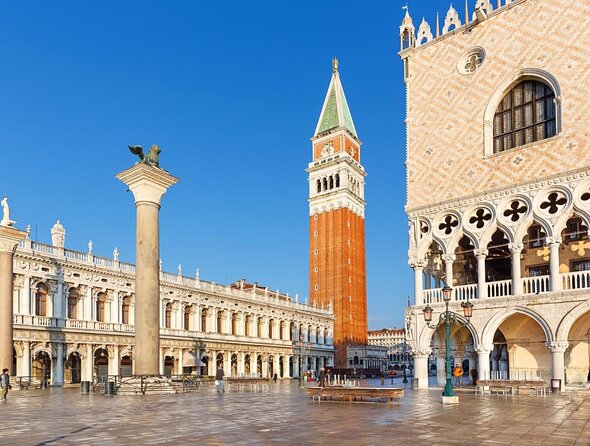
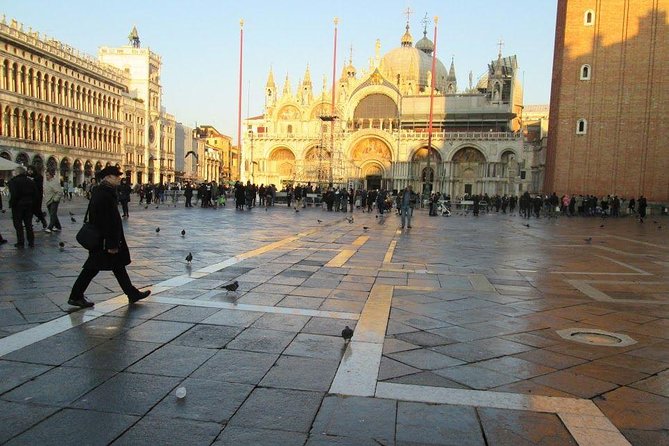
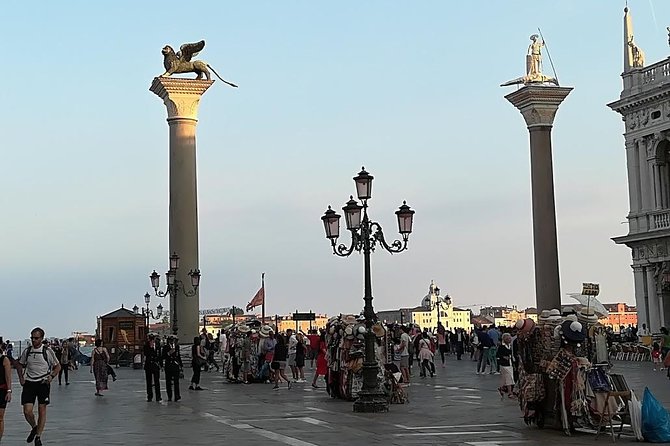
Your tour begins at Piazza San Marco, the one spot almost everyone in Venice has seen. The area is described as the most famous and central point of the city—so the payoff is immediate. Even if you’ve been here before, the narration is built to give you a reason to look closer.
You’ll hear why Piazza San Marco was once called the drawing room of Europe, and you’ll also learn how Venetians simply call it “the Piazza.” That contrast is a great way to cut through the tourist gloss. This square isn’t just pretty; it’s where major public life played out.
The stories you get focus on big moments: state visits by popes and emperors, public executions, religious processions, and of course Carnival. If you’ve ever stood in a square and wondered why it feels both ceremonial and tense at the same time, the audio helps explain that feeling. It turns your photos from decor into context.
Potential drawback: Piazza San Marco can be crowded. The audio makes you want to stop and listen, but you’ll still need to be mindful of where people flow. If you find yourself stuck in the thickest crowd pocket, look for a spot slightly off the main foot traffic while the audio runs.
Campo San Salvador: the 1898 marble column and the revolt story
Next you move to Campo San Salvador, where a tall marble column stands in the middle of the square. This is one of those details you’d normally walk past because it doesn’t look like a “top attraction.”
The column was set up in 1898, and it commemorates a 17-month Venetian revolt against Austrian occupation in 1848 and 1849. That’s the kind of history that makes a square feel less like a postcard backdrop and more like a civic memory.
What I like about this stop is that it’s not only “Venice is old.” It’s “Venice fought, resisted, and marked it in stone.” The audio gives you a thread to follow, so you’re not just admiring a monument—you’re understanding why it exists.
Practical consideration: Campo San Salvador is smaller than Piazza San Marco, which usually makes it easier to pause. Still, keep an eye on where you’re standing so the GPS trigger for the next audio doesn’t get confused by you moving too far away.
Teatro Comunale Carlo Goldoni: why comedy mattered in the Venetian dialect
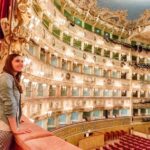
From politics and rebellion, the tour shifts into culture at Teatro Comunale Carlo Goldoni. The theater is named for Carlo Goldoni, a Venetian playwright from the 1700s.
Goldoni wrote comedies in the Venetian dialect. The audio emphasizes why that was revolutionary: he made characters feel like real people, and he highlighted the quirks of ordinary Venetians. That matters, because it reframes the theater as something tied to daily life, not just royal entertainment.
If you enjoy the idea that language and identity shape art, this stop is a good mental pivot. You stop thinking only about churches and palaces, and you start thinking about what Venetians sounded like, laughed like, and argued like.
Possible drawback: theaters can be visually impressive from the outside, but you might not be seeing stage life up close. This is an audio storytelling stop, so treat it like a chance to re-read the building with better context, not like a guaranteed behind-the-scenes visit.
You can also read our reviews of more tours and experiences in Venice


La Fenice and the opera start line: Rigoletto and La Traviata
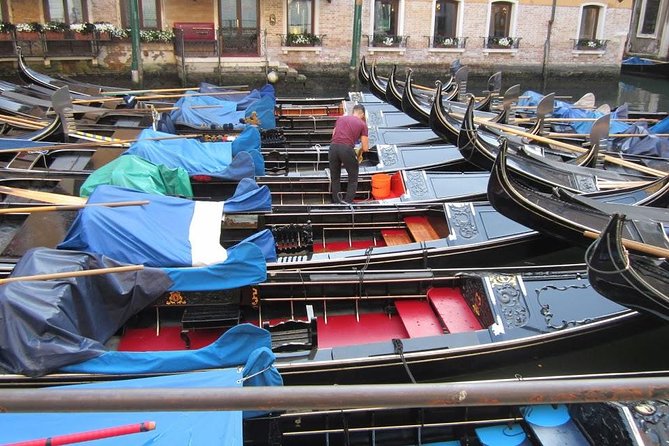
The audio then heads to La Fenice, and it makes a strong point: many famous operas had their first performance here, including Rigoletto and La Traviata. La Fenice is still described as one of Italy’s most important opera houses.
So even if opera isn’t your main travel obsession, this stop gives you a way to understand why the building carries weight. Venice isn’t just architecture; it’s performance, spectacle, and storytelling—all packed into one city.
One way to enjoy this more: while the audio runs, look at how the theater sits in its urban space—how Venice’s tight streets frame big artistic places. It’s a neat reminder that “grand” can happen even in cramped city geometry.
Practical consideration: if La Fenice is busy with foot traffic, you’ll need to keep moving when the crowd demands it. The audio route is designed for an easy walk, so don’t try to camp in one spot if you’ll block others.
Palazzo Cavalli and Centro Maree: tides, weather, and acqua alta predictions
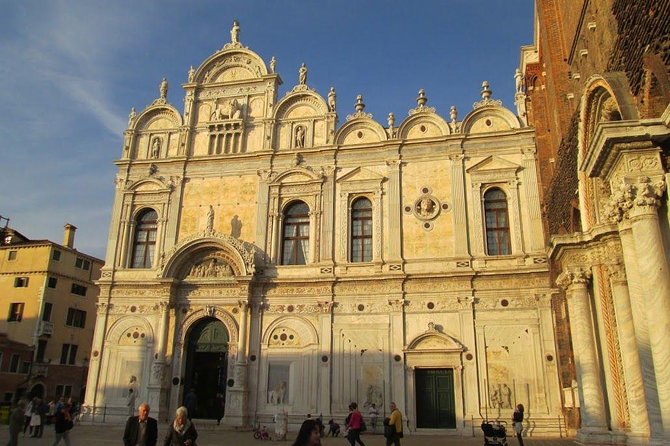
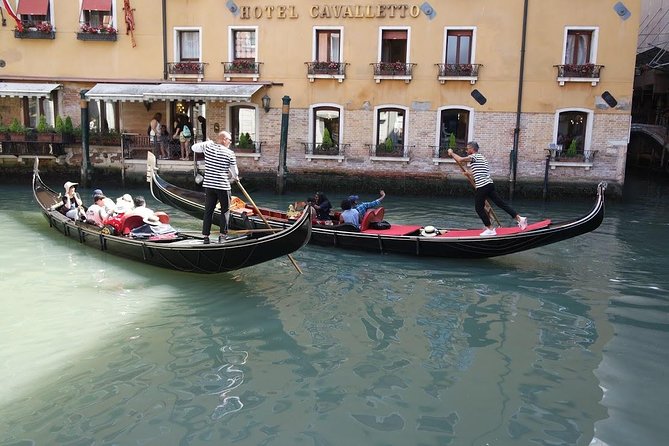
This part of the tour is where Venice gets practical and very “you’re really in the city” real. You’ll reach Palazzo Cavalli, which hosts civil marriage services and also houses the Centro Maree—the Tide Center.
The audio explains what happens here: monitoring data related to tides and weather, with daily predictions of the tide—especially for high tide, known as acqua alta.
This stop is valuable because it connects the romance of Venice to the science of living with water. Instead of only hearing about floods like a dramatic disaster, you learn that Venice treats tide forecasting as something managed and measured.
If you’re planning your trip around photos of acqua alta, this is the kind of context that helps. You’re seeing that the city isn’t just reacting to nature; it’s tracking it daily.
Possible drawback: this stop might feel quieter than the opera and squares. That’s not a downside, but it does mean you’ll enjoy it more if you’re the type who likes systems, not just sights. If you’re in Venice for pure wow-factor every minute, you may want to mentally shift gears and treat this as the “how the city works” chapter.
Rialto Bridge: the third of its kind and why earlier versions mattered
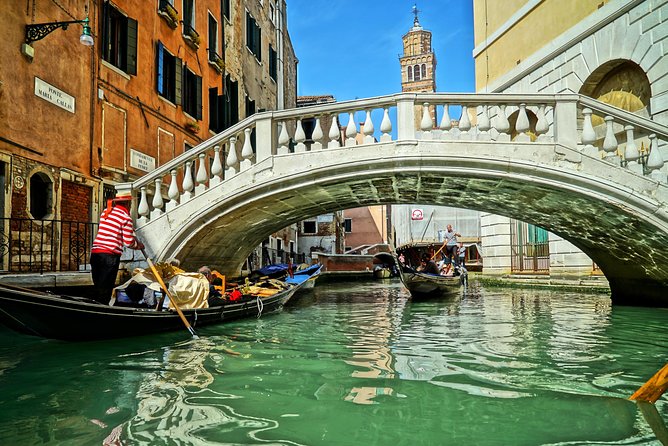
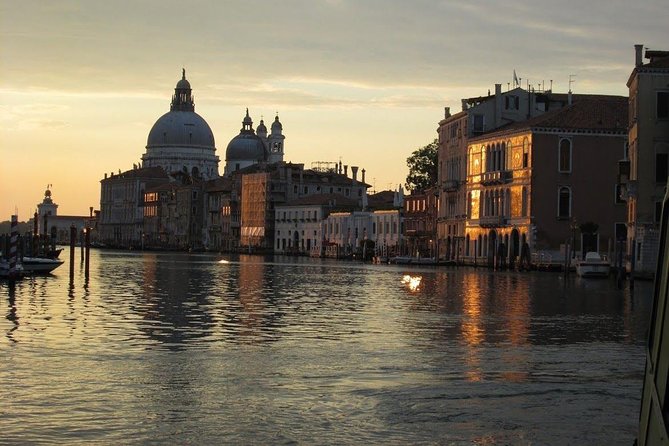
The final walk brings you to Rialto Bridge. The narration notes that it’s the third bridge of its kind. Earlier Rialto bridges were made of wood, and they were bascule bridges—meaning the center could be raised to let ships with masts pass.
That detail is a great reminder that Venice was built on water traffic long before modern tourism. The bridge wasn’t just a crossing; it was part of a system. The city needed a way for people to move across and for boats to keep moving through.
In an audio tour, endings matter. By ending here, you land at a viewpoint that gives you an easy way to wrap up the stories you just heard. You’ve gone from power and public drama, to revolt memory, to theater and dialect, to tide monitoring, and finally to a bridge that explains how life worked across canals.
Practical consideration: Rialto can be crowded, especially near the main viewpoints. If you want the best listening experience, aim to pause slightly off the densest bottleneck while your final audio segment runs.
How to pace the tour so it feels fun, not rushed
The route is about 1 hour, but the point of a self-guided setup is flexibility. The audio plays automatically when you reach each spot, yet you’re still choosing how long to look around in between.
Here’s how I’d pace it in real life:
- Walk steadily so the GPS triggers aren’t fighting you.
- When you hear the next audio cue coming, slow down before you hit the tightest crowd area.
- Treat each stop like a mini scene, not a checklist. If you rush, Venice will win the distraction battle.
One more practical tip: because the tour includes offline audio, maps, and geodata, you don’t need to be constantly searching for a connection. That makes it easier to keep your phone in your hand and still rely on the route. You can focus on reading faces, canals, and details instead of watching your signal bars.
Who this VoiceMap Venice audio tour fits best
This tour is ideal if you:
- Want independent exploration but still want guided storytelling beats
- Like having offline navigation and audio so your day doesn’t depend on data
- Prefer an easy walking route that connects major sights without you booking something timed to the minute
- Enjoy cultural context as you move—history, theater, and even tide prediction
It’s also a good fit for couples and small groups who don’t want to listen to one person talk over other conversations. And since it’s listed as a private tour/activity, you’re not dealing with strangers being folded into your walking rhythm.
If you hate smartphone-based experiences or you’d rather take a live guide in a language you can ask questions in, this may feel like the wrong tool. But if you’re comfortable with a self-guided audio app, it’s a strong way to get more meaning out of Venice’s top landmarks.
Quick decision: should you book The Heart of Venice?
Book it if you want a story-led walk from Piazza San Marco to Rialto Bridge with offline VoiceMap audio that starts when you arrive. For $11.99, the value is the combination of a tight route, clear pacing, and lifetime access you can reuse.
Skip it only if you know you’ll be uncomfortable relying on your own smartphone for narration and GPS triggers. Also consider the crowds: since the tour runs through Venice’s busiest showpieces, you’ll get the most enjoyment if you can pause briefly and then flow with foot traffic.
In short: if you want Venice to feel like a place with real characters—not just a highlight reel—this is a smart, low-stress way to get there.
FAQ
How long is The Heart of Venice self-guided audio tour?
The tour duration is listed as about 1 hour.
Is the tour offered in English?
Yes, it’s offered in English.
Do I need mobile data to use the audio and maps?
No. It includes offline access to audio, maps, and geodata, so you should not need data during the tour.
What app do I use for this tour?
You use the VoiceMap application.
Where do I start and end the tour?
The start is Piazza San Marco (P.za San Marco, 328, 30124 Venezia VE, Italy) and the end is Rialto Bridge (Ponte de Rialto, 30100 Venezia VE, Italy).
Is there a smartphone included?
No. A smartphone is not included, so you’ll need to bring your own device to use the VoiceMap app.
Is this a private tour or shared with other people?
It’s listed as a private tour/activity, so only your group participates.
Is there any extra access fee in Venice?
On certain dates, visitors staying outside of Venice who are planning to visit for the day may be required to pay a €5 access fee. You can check applicable days and exemptions at https://cda.ve.it.
What’s the cancellation policy?
You can cancel for free up to 24 hours in advance for a full refund. If you cancel less than 24 hours before the start time, the amount paid is not refunded.