REVIEW · VENICE
Secret Venice, an unusual walk – Private Walking Tour
Book on Viator →Bookable on Viator
A quiet Venice walk can change your whole day. This private Secret Venice stroll mixes famous sights with lesser-known stories—plus you’ll see art by Titian and Tintoretto right where it was made to be seen.
I love that the group stays small, so you’re not stuck hearing the guide from the back row. I also like the way the walk connects the dots, from Venice’s weird geography (like why there are so few wells) to the city’s famous theater of masks.
One possible drawback: it’s weather-dependent, so if rain rolls in you may need to switch dates or consider the refund option that the operator offers.
In This Review
- Key things to know before you go
- Why this Secret Venice walk feels different
- Small group size: the secret sauce is question time
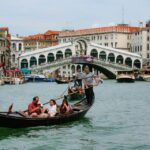
- Starting at Campo San Giacomo di Rialto: where Venice begins
- Rialto markets and merchants: how Venice made money
- Rio Terà de le Carampane: the city’s red-light chapter
- Campo San Polo: wells, altana, and Venice’s clever workarounds
- Campo San Toma: Carnival and why masks mattered
- Frari Basilica: Titian and Tintoretto in the places they were made for
- Scuola Grande di San Rocco: decoration you can read up close
- Price and value: what you’re really paying for
- Timing, pace, and how to enjoy the walk
- Who should book this tour?
- Should you book Secret Venice, an unusual walk?
- FAQ
- How long is the Secret Venice private walking tour?
- Where does the tour start and end?
- What time does the tour begin?
- Is the tour private?
- How many people are allowed in the group?
- What language is the tour offered in?
- Are there entrance fees included for the stops?
- Is there an extra Venice access fee on some dates?
- What happens if the weather is bad?
Key things to know before you go
- Cap of eight keeps the conversation flowing and your questions from getting lost
- Titian and Tintoretto in context—you don’t just see names, you see where the art belongs
- Rialto + local systems: markets, merchants, and how Venice fed itself and its ambitions
- Red-light district stories at Rio Terà de le Carampane, told with real city context
- Carnival and masks at Campo San Toma, with an explanation of why it mattered
- Wells and altana at Campo San Polo—small details that explain a big city reality
Why this Secret Venice walk feels different
Venice is easy to photograph and hard to understand. This tour is built for that second part. You’ll move through central neighborhoods that most people hit fast, but you’ll slow down enough to hear how Venice worked—socially, economically, and even physically.
What makes it special is that it’s not only about stunning architecture. It’s about the logic behind it. You’ll hear about Carnival, Venice’s complicated moral geography (including the former red-light district), and why the city has so few wells despite living on water.
And because it’s a private experience for your group, you get something you don’t always get with big-city tours: space. Space to ask, to clarify, to ask again if the answer sparks another question.
You can also read our reviews of more walking tours in Venice
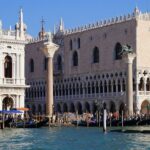

Small group size: the secret sauce is question time
The tour is capped at eight people. That matters more than you might think. In Venice, even short distances can feel long, and churches and courtyards can fill with noise. With a small group, your guide can pace the walk so you’re not sprinting just to keep up.
It also means the guide can adjust on the fly. If something they say lands with you—Titian, Tintoretto, Carnival, altana rooftops—you’ll have time to ask about it. This is the kind of tour where the good parts keep going, because the guide isn’t fighting for time.
Starting at Campo San Giacomo di Rialto: where Venice begins
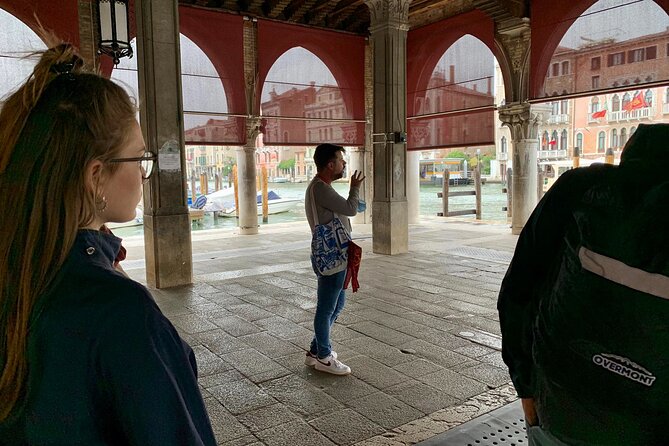
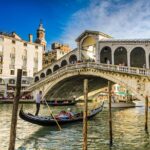
Your walk starts at Campo San Giacomo di Rialto, at the Chiesa di San Giacomo di Rialto. This is a strong way to begin because it anchors your visit in the city’s long timeline. You’ll get an introduction to roughly 1600 years of Venice’s history, tied to the location where it was originally funded.
This first stop sets the tone: you’ll hear Venice explained through institutions and buildings, not just through postcard views. It’s also a good moment to get your bearings. You’re in the Rialto area, where the city’s trade energy has always been close by.
Rialto markets and merchants: how Venice made money
Next up is Mercati di Rialto. This is more than a “look at the market” moment. The guide walks you through what the market system meant, and what you need to know about the merchants—who they were, why they mattered, and how their work shaped the city’s daily life.
If you’ve ever wondered why Venice felt so powerful for so long, start here. A city with canals still needs supply chains, competition, and trust. Rialto is where those ideas become practical reality you can sense underfoot.
A plus: the stop timing is short and focused (about 15 minutes). That keeps it from turning into a blur, and it gives you a rhythm for the rest of the walk.
Rio Terà de le Carampane: the city’s red-light chapter
Then you head to Rio Terà de le Carampane. This is where the tour turns storytelling-mode. You’ll hear curiosities about the former red light district—without pretending the topic is neat or simple. The guide connects the past behavior to how Venice’s street layout, privacy pockets, and social structure worked.
For me, this kind of stop is valuable because it makes Venice feel like a real lived-in city, not a museum. Venice has always been complicated, and this is one of the places where that complexity shows up in how people used the city.
You’ll also learn how the city’s reputation got shaped over time—and why those reputations can be misleading if you only know the headlines.
You can also read our reviews of more private tours in Venice

Campo San Polo: wells, altana, and Venice’s clever workarounds
At Campo San Polo, the guide gets into a topic I actually love: why Venice has so few wells. It sounds like a quirky fact until you connect it to the bigger picture—water management, building limits, and how people survived in a place that’s never fully out of the “wet” zone.
You’ll also learn about the altana—the raised roof platforms you see on buildings across Venice. Even if you’ve spotted them before, you usually haven’t had the why explained. Here you’ll understand how these rooftops fit into daily life and how Venetians adapted their living spaces to the city’s constraints.
Tip for this segment: take a second to look up. This stop is one of the best spots on the route to notice the details you’d otherwise walk right past.
Campo San Toma: Carnival and why masks mattered
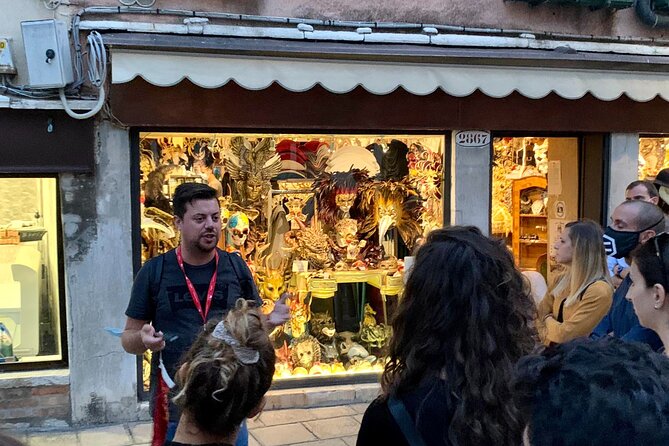
Next is Campo San Toma, where Carnival takes center stage. You’ll get an overview of Carnival and the importance of masks—what they were for, and why Venice leaned into that tradition so hard.
This is a great stop because it reframes Carnival. It’s not only costumes and street drama. It’s also a social tool. In a city where people were tightly connected by politics and commerce, masks could shift power, blur identities, and let people act out roles that were otherwise locked in.
If you’re visiting during Carnival season, this stop will make your later experience feel more grounded. If you’re not, it still helps you understand why Venice is so good at theatrical reinvention.
Frari Basilica: Titian and Tintoretto in the places they were made for
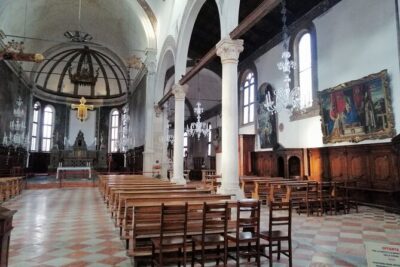
At Basilica di Santa Maria Gloriosa dei Frari, you’ll spend time with one of Venice’s major churches. This stop is also where the tour really flexes its art-history side.
You’ll learn about some of the works by Titian and Tintoretto, and the big point is that you see them in the churches they were painted for. That matters. Seeing famous art in the right setting changes how it reads—lighting, sightlines, and the church’s purpose all shape the experience.
This is one of those moments where you’ll likely slow down without realizing it. The guide’s job here is to give you anchors: what to look for, what themes connect to the church’s role, and how the artwork fits into Venice’s religious and civic life.
Practical note: churches mean standing, looking up, and sometimes dealing with crowds outside the tour’s group flow. Wear shoes you can handle comfortably.
Scuola Grande di San Rocco: decoration you can read up close
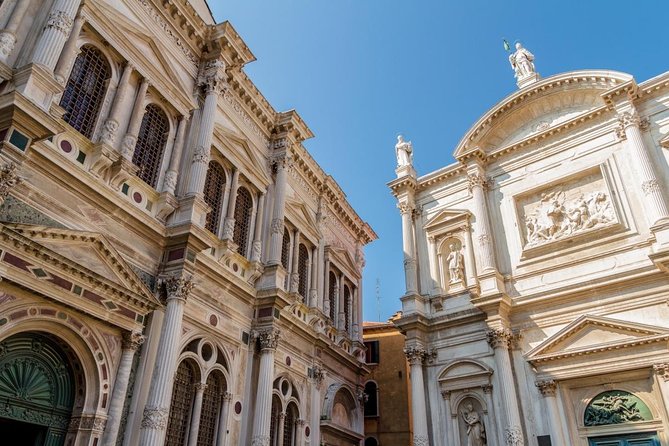
The final artistic stop is Scuola Grande di San Rocco. The tour brings attention to how beautiful and detailed the building is—and why it’s so important in Venice’s world of major confraternities.
This is not just “pretty wall” territory. You’ll get a guided sense of what you’re looking at, which helps when you’re surrounded by ornate surfaces that can blur together if you don’t have a path through them.
One reason this finish works well: you end at the Campo San Rocco area, in front of the Scuola Grande di San Rocco. So you naturally leave the tour in a strong spot for continuing on your own—near more sights and easy wandering routes.
Price and value: what you’re really paying for
This tour costs $453.01 per group (up to 15), and the experience is private. The cap of eight means the “value math” depends heavily on group size.
Here’s the simplest way I think about it:
- If it’s just you or two people, you’ll feel the price because you’re basically buying guaranteed guide time.
- If you can fill more spots within that small-group cap, the cost per person drops fast.
- What you’re buying is time with a guide who can explain and adjust, not just point and move.
For Venice, where self-guided wandering can be beautiful but hit-or-miss, this is a reasonable option if you want fewer photos and more understanding. If you love art history, the Titian/Tintoretto element becomes a big part of the justification.
Timing, pace, and how to enjoy the walk
The tour runs about two hours, starting at 11:00 am. The pacing is set by short focused stops (around 15 minutes each), with walking between them.
That structure is smart because it helps you avoid the classic Venice problem: you reach one church and then another and by the time you finish the loop, your brain is tired and your notes are blank.
To get the most out of it, I’d plan to keep the rest of your day looser. Let the tour give you context, then use that context for the next sights you choose on your own.
Also, it’s offered in English and includes a mobile ticket. If you’re the type who likes everything organized before you leave the hotel, you’ll appreciate that.
Who should book this tour?
Book it if you want:
- A private Venice walking tour that focuses on meaning, not just monuments
- Art history that explains why Titian and Tintoretto matter in their original settings
- Stories that bring Venice’s social life into focus, including the red-light district chapter
- A calm pace with room for questions
It may be less ideal if you want a long sit-down museum format or you prefer a tour that stays purely outdoors. This walk has church stops, so you should be ready for indoor time and normal church etiquette.
One more point: the experience requires good weather. If you tend to have limited flexibility, consider that when choosing dates.
Should you book Secret Venice, an unusual walk?
If you like Venice with context, yes, I think it’s worth booking. The tour hits a sweet spot: major landmarks plus the city’s side stories, with art explained in the places it belongs. The small group cap is a real quality upgrade, not a marketing detail.
I’d especially recommend it if you’re the kind of visitor who hates hearing facts that don’t connect. Here, the dots connect—markets to merchants, wells to rooftops, Carnival to masks, and great art to the churches built for it.
If you’re coming during a time when rain is common for you, build in date flexibility. Otherwise, this is the sort of tour that can make Venice feel less like a maze and more like a story you can actually follow.
FAQ
How long is the Secret Venice private walking tour?
It lasts about 2 hours.
Where does the tour start and end?
It starts at Campo San Giacomo di Rialto (Campo S. Giacomo di Rialto, 30125 Venezia VE, Italy) and ends at Campo San Rocco (Campo S. Rocco, 30125 Venezia VE, Italy), in front of the Scuola Grande di San Rocco.
What time does the tour begin?
The start time is 11:00 am.
Is the tour private?
Yes. It’s private, meaning only your group participates.
How many people are allowed in the group?
The experience is capped at eight.
What language is the tour offered in?
The tour is offered in English, and you’ll receive a mobile ticket.
Are there entrance fees included for the stops?
The stops are listed as free admission.
Is there an extra Venice access fee on some dates?
On certain dates, some visitors who are staying outside Venice and visiting for the day may be required to pay a €5 access fee. You can check applicable days and exemptions here: https://cda.ve.it
What happens if the weather is bad?
This experience requires good weather. If it’s canceled due to poor weather, you’ll be offered a different date or a full refund.