REVIEW · VENICE
Walking Tour of Venice with Mini Cruise
Book on Viator →Operated by Consorzio Vidali Group · Bookable on Viator
Venice in 90 minutes can feel like magic, especially when the route mixes major sights with water views. I like that you get a fast, guided Grand Canal to Rialto to St Mark’s sweep, and I also like the practical structure: short walks, quick stops, and private transportation to keep things moving. One thing to consider: the tour can run in more than one language at once, so if you want strict English-only, you’ll want to confirm what your guide will do.
This is a good “first day in Venice” plan because it hits several neighborhoods you might otherwise skip, including the first Jewish ghetto area and the classic Rialto bridge zone. Guides like Carlotta, Marta, Julia, Camilla, Irene, Georgie, Rebecca, Nicole, and Giorgia have been specifically praised for keeping groups engaged, answering questions, and switching languages when needed.
In This Review
- Key things to know before you go
- A Mini Cruise Plus Big-View Stops in 90 Minutes
- Meeting Outside KFC at Santa Lucia: The Easy Start
- Ghetto Ebraico: Why the Word Ghetto Exists
- Strada Nova and Santa Sofia: A Main Street Feel, Then Over the Water
- Canal Grande and Rialto Bridge: The Classic Venice Photo Run
- Piazza San Marco: The Heart of Venice in a Short Burst
- Giudecca Canal: Seeing San Giorgio and Redentore from the Water
- Guide, Language, and Group Size: How Your English Might Feel
- Is the Mini Cruise a Gondola Ride? What the €2 Option Means
- Pace and Comfort: A Tiring Walk Can Happen
- Value Check on a $30.04 Ticket
- Should You Book This Tour or Choose a Different One?
- FAQ
- How long is the Walking Tour of Venice with Mini Cruise?
- Where does the tour start, and where does it end?
- Is the gondola ride included?
- What areas of Venice does the tour cover?
- What language is the tour offered in?
- Is there an access fee for some visitors?
Key things to know before you go
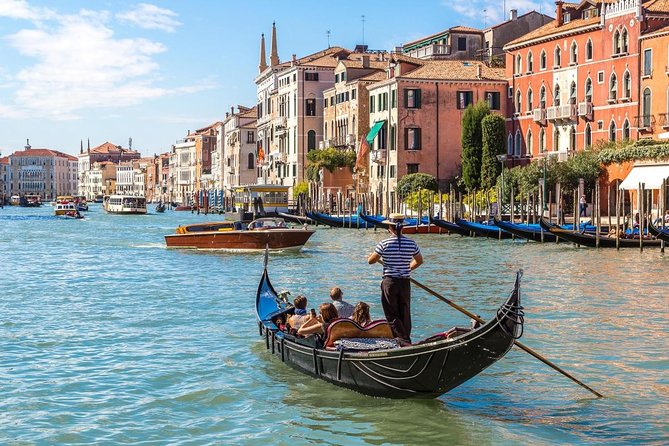
- Grand Canal views without the full-day commitment: you’ll see the big sights fast.
- Jewish Ghetto context: you’ll learn why the term ghetto traces back here.
- Rialto Bridge and St Mark’s Square: classic Venice landmarks on one route.
- Mini cruise is not always a gondola: water transport happens, but the gondola is optional.
- English can mix with other languages: confirm expectations if you’re traveling language-specific.
- A “small-group feel” can happen: some departures run with fewer people, which helps the pace.
A Mini Cruise Plus Big-View Stops in 90 Minutes
This tour is built for momentum. Instead of trying to conquer Venice solo for an entire day, you follow a guide through a tight loop that combines walking with short water moments. The advertised duration is about 1 hour 30 minutes, but in real life it can stretch if the group is chatty, the guide is holding back extra details, or you slow down for photos.
The core value is simple: you get a guided orientation to Venice’s layout—what’s on which side of the main sights—and you’re not stuck guessing where to walk next. I also like that it’s not just postcard stops. You pass through real city streets like Strada Nova, so you start to feel how Venice works day to day, not just how it looks on a calendar.
You can also read our reviews of more walking tours in Venice
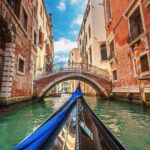
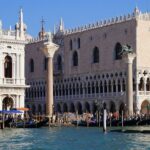
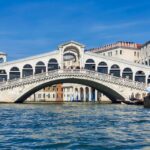
Meeting Outside KFC at Santa Lucia: The Easy Start
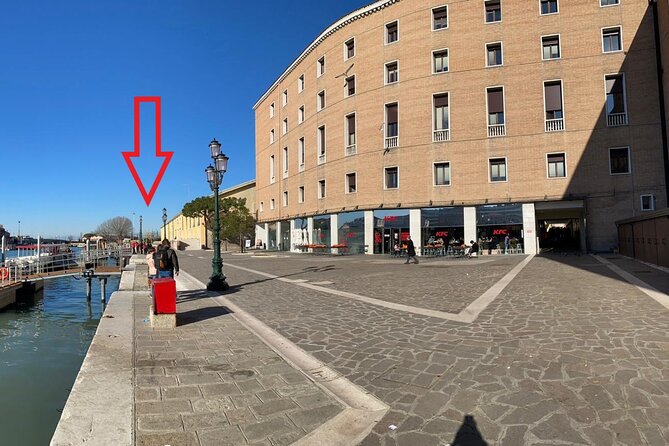
Your meeting point is outside KFC near Venezia Santa Lucia station. That’s a smart choice for anyone arriving by train, because it anchors you near major transport instead of making you hunt through side canals like a medieval treasure map.
The tour ends back at the same meeting point, so you’re not left halfway across Venice with no clear next step. Service animals are allowed, and pets/animals are allowed too. If you have walking limitations, the tour isn’t automatically designed for them, but it’s listed as possible—still, you’ll want to bring your patience and plan for cobblestones.
Ghetto Ebraico: Why the Word Ghetto Exists
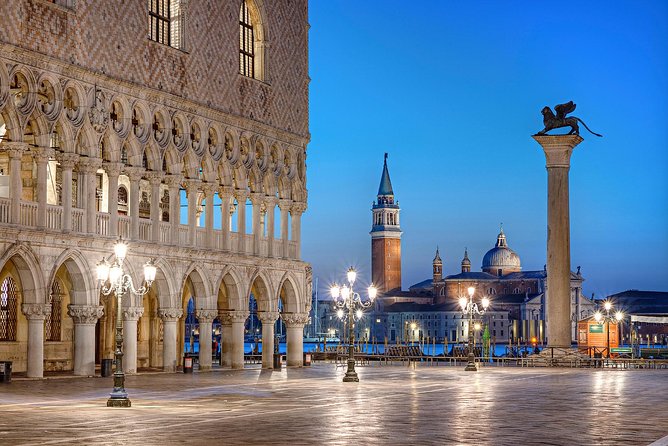
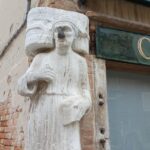
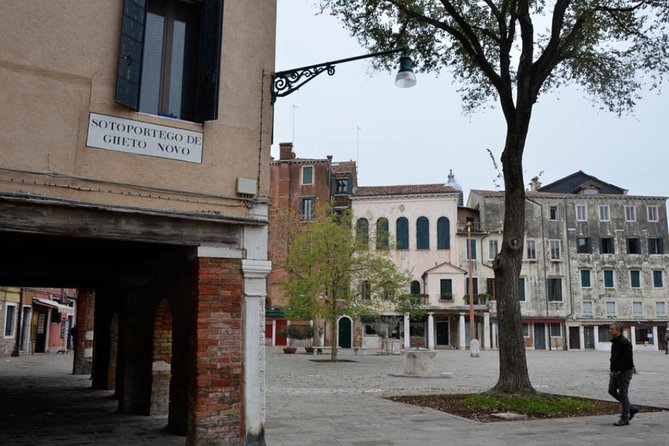
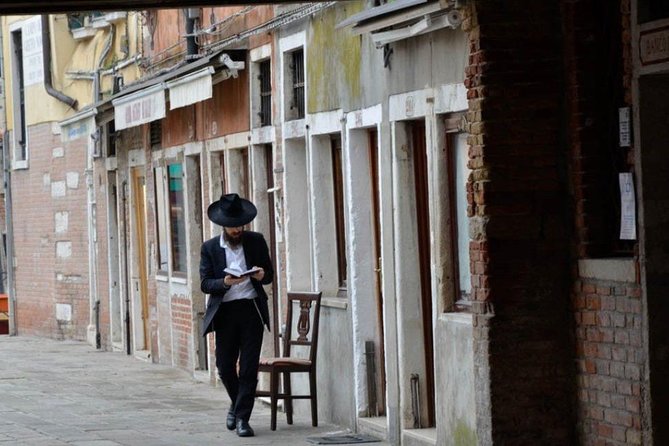
Stop one is Ghetto Ebraico, the Jewish quarter tied to the Venetian Republic’s forced segregation rules. This is where the English word ghetto traces back—an important linguistic and historical detail that turns a neighborhood into a real lesson, not just scenery.
What I like about starting here is the contrast. You begin with depth before the “greatest hits” landmarks. It also helps you understand why Venice’s bridges, gates, and river traffic weren’t just for convenience. They shaped lives.
Practical note: this area is easy to explore on foot, but it’s still Venice. Expect uneven surfaces and small spaces. This isn’t the kind of stop where you’ll linger for hours, but it gives you a strong foundation quickly.
Strada Nova and Santa Sofia: A Main Street Feel, Then Over the Water
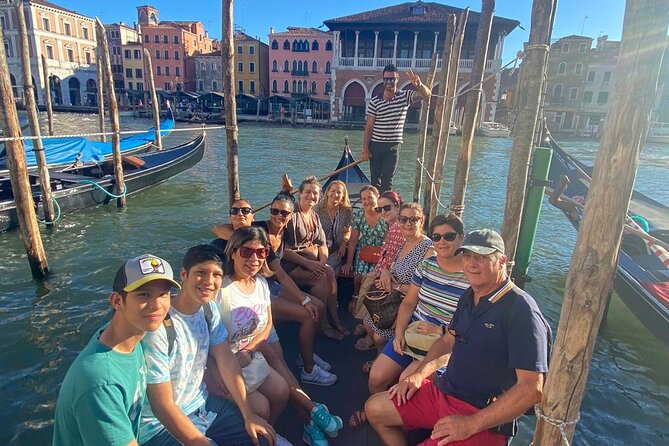
Next you move to Strada Nova, described as Venice’s main road. Even though Venice is famous for canals, this kind of thoroughfare matters because it shows how people actually move between neighborhoods. It also sets you up for the idea that Venice isn’t only boats and bridges—it’s streets, commerce, and daily errands.
Then you reach Chiesa di Santa Sofia, where the plan includes crossing the Grand Canal on a short gondola-style public crossing (the tour frames it as a mini crossing to reach the area near the ancient Rialto market). You’re not paying for a full sightseeing gondola here by default; you’re using the water route as part of the city’s rhythm.
Why this works: crossing the Grand Canal is a “wow” moment, but you don’t burn time hunting a gondolier or waiting around. You just follow the guide and let Venice do the heavy lifting.
Canal Grande and Rialto Bridge: The Classic Venice Photo Run
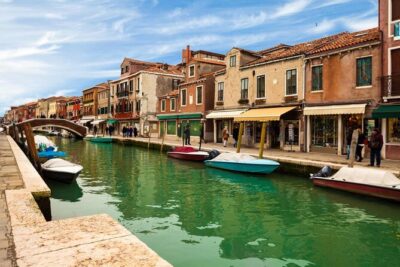
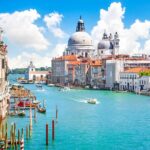
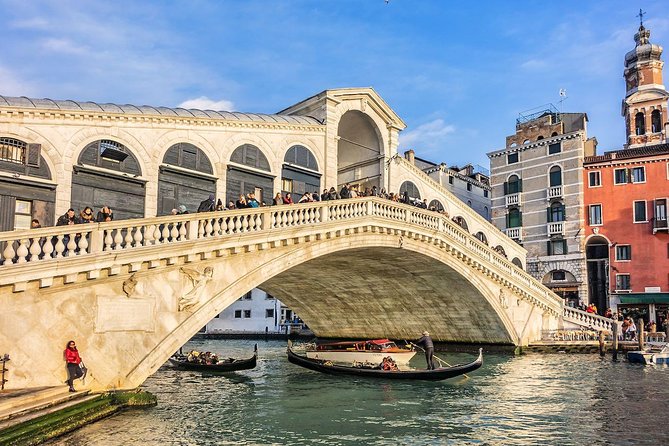
The tour brings you into Canal Grande, Venice’s best-known canal, running through the city center. This is the moment you’ll likely recognize from movies, paintings, and every travel poster. But the guided value is what comes with it: you’re learning where the landmarks sit relative to each other, so later when you wander on your own, you’re not completely lost.
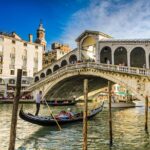
Then comes Ponte di Rialto, one of Venice’s most ancient and beautiful bridges. Here’s the practical advantage of being guided: you’re shown viewpoints and context that turn a bridge from a single snapshot into a landmark that makes sense in the city’s layout.
If you love architecture and street-level views, this is where you’ll want to take your time—just don’t let it swallow the whole tour. The plan is tight, and you still have St Mark’s Square later.
You can also read our reviews of more boat tours in Venice


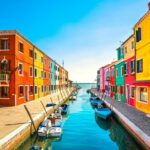
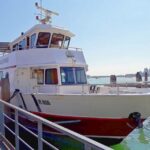
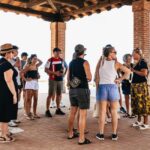
Piazza San Marco: The Heart of Venice in a Short Burst
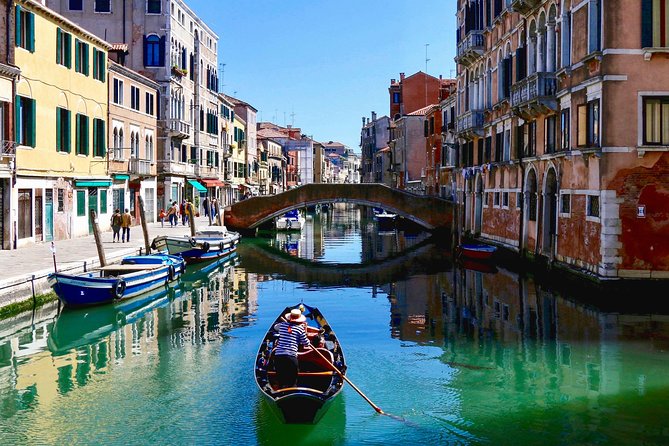
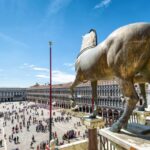
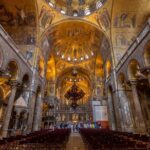
You finish with Piazza San Marco, the biggest, most famous square in Venice. You’re there long enough to feel the scale and take in the energy of the place, but not so long that you’re trapped in the busiest part of the city without a plan.
What you’ll appreciate here is timing. You see it as part of a guided arc—from lesser-known layers (Ghetto Ebraico) to the iconic center (Rialto and St Mark’s). That makes your visit feel coherent instead of random.
Giudecca Canal: Seeing San Giorgio and Redentore from the Water
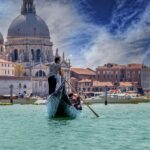
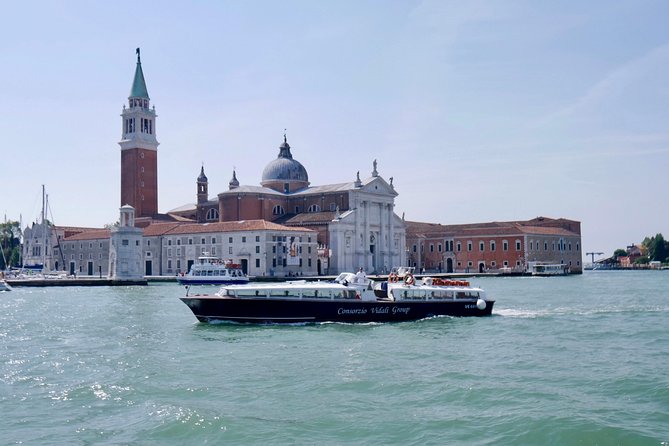
One of the most interesting segments is the Giudecca Canal crossing by motorboat. The tour frames it as the bigger, deeper canal separating the main island from Giudecca.
From this water perspective, you get a chance to spot the churches of San Giorgio and Redentore, tied to architect Palladio. Even if you don’t zoom in on details, you’ll notice how this part of Venice feels calmer and more expansive than the postcard streets you walked earlier.
If you’re wondering why a canal crossing matters: Venice can look same-ish when you only see it from footpaths. A water angle forces perspective. It also gives your legs a break—Venice leg fatigue is real.
Guide, Language, and Group Size: How Your English Might Feel
This is the biggest “read the fine print” topic for this tour.
The tour is offered in English, but multiple departures can run with mixed languages at the same time. Some guides switch between languages easily; other groups experience the language split as less satisfying—especially when the English portion gets shortened by group dynamics.
If you’re traveling as an English-only speaker, your best move is simple:
- Plan on the guide possibly using more than one language.
- If language is a must, message or confirm expectations before you go.
- Arrive ready to enjoy the structure even if your guide occasionally switches modes.
The good news: several named guides have been praised for handling multi-language needs with patience—Marta, Camilla, Julia, Irene, Georgie, Rebecca, Nicole, and Giorgia are all examples of guides who’ve earned strong feedback for keeping people comfortable and answering questions.
Is the Mini Cruise a Gondola Ride? What the €2 Option Means
Here’s where you should calibrate expectations.
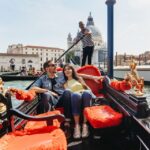
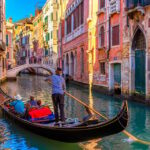
The tour includes water transport elements. But the classic gondola ride you might picture is not automatically included. The tour notes that a gondola ride is available for an additional fee of about €2, and that cost is tied to the gondolier doing the job.
Also, the “mini cruise” may not always turn into a full gondola sightseeing loop. Depending on conditions like tide, the tour may handle return transport differently (including short water taxi hops). In other words: you should think of water transport here as part of the route plan, not as a guaranteed gondola tour.
My practical advice: if gondola is on your personal must-do list, treat the €2 option as a separate add-on you need to choose. Ask what’s included on your exact departure day and what the group is expected to do.
Pace and Comfort: A Tiring Walk Can Happen
Even though it’s short on paper, the walking can still feel like real work—especially if you’ve just arrived from overseas, you’re carrying bags, or it’s hot and you’re trying to stop for photos every few minutes. Some people loved the pace. Others found it fast enough that the tour felt like it moved ahead of their comfort level.
If you’re traveling with a child, the tour can work well when the guide is skilled at managing the moment. Carlotta, for example, has been praised for handling a child with an intense emotional moment getting on a boat. That’s a reminder that guides on this route can be flexible—but it still won’t remove the basic challenge of Venice footpaths and steps.
If you want a slower day, consider arriving earlier, carrying less, and using the water crossings as your built-in “breathing breaks.”
Value Check on a $30.04 Ticket
For about $30.04 per person, you’re paying for more than walking. You’re paying for a guided route that hits major landmarks plus multiple water elements—without needing to plan transportation yourself.
Where the value is strongest:
- If you’re seeing Venice for the first time and want a guided orientation sweep.
- If you like history explained in bite-size chunks as you move.
- If you want Grand Canal, Rialto Bridge, and St Mark’s Square all stitched into one coherent half-day plan.
Where the value can disappoint:
- If you expect a long, detailed masterclass in Venice history with zero rushing.
- If you strongly want English-only and find the group language split reduces your time with the guide.
- If you want a gondola ride as a must-see and the day’s water plans handle it differently.
This tour is best when you treat it as an introduction plus a taste, not the final word on Venice.
Should You Book This Tour or Choose a Different One?
Book it if you want a structured introduction to Venice that covers the big visual hits and also includes a meaningful neighborhood like Ghetto Ebraico. It’s especially useful when your time is tight or you want help turning “where do I go next?” into “I’ve got a plan.”
Skip or choose differently if:
- You need strict English-only instruction and are worried about mixed-language groups.
- You’re primarily chasing a full gondola experience (because the gondola add-on is optional and may not be treated as a guaranteed highlight).
- You prefer long-form history over quick route stops.
If you’re flexible, the strengths add up fast: iconic waterways, classic landmarks, and a guide who can keep your day moving. For many first-timers, that’s exactly the right kind of value.
FAQ
How long is the Walking Tour of Venice with Mini Cruise?
The tour is listed at about 1 hour 30 minutes (approx.), but real-world timing can vary depending on pacing and how the group moves through stops.
Where does the tour start, and where does it end?
It starts at KFC near Venezia Santa Lucia (30121 Venezia VE, Italy) and ends back at the same meeting point.
Is the gondola ride included?
A gondola ride is not included by default. The tour mentions an additional gondola option for about €2.
What areas of Venice does the tour cover?
You’ll visit the Jewish Ghetto area (Ghetto Ebraico), Strada Nova, Chiesa di Santa Sofia, Canal Grande, Piazza San Marco, Ponte di Rialto, and the Giudecca Canal area.
What language is the tour offered in?
English is listed as an offered language, but the guide may use more than one language during the tour.
Is there an access fee for some visitors?
On certain dates, visitors staying outside Venice and planning to visit for the day may need to pay a €5 access fee. The tour info points to the city’s website for applicable days and exemptions.