REVIEW · VENICE
Verona Guided Tour from Venice by Train
Book on Viator →Operated by Amigo Tours Spain · Bookable on Viator
Romeo and Juliet meets Roman ruins. This Verona day trip from Venice saves you the planning headache by bundling train tickets included with a guided walking tour of the city’s biggest sights. My only caution: the start is early, and the free time in Verona can feel a bit tight if you want to go deep into ticketed attractions.
You’ll leave Venice early from Stazione di Santa Lucia, ride to Verona, and then spend most of your day exploring on foot and at street level where the city really comes alive. The tour is capped at 30 people, and it runs about 7 hours 30 minutes total with a mobile ticket.
In This Review
- Key highlights worth your attention
- A Verona day trip that actually fits into your Venice trip
- Price and what you’re really buying: a bundled day, not just a guide
- Getting to Verona from Venice: the early start that pays off
- Porta Nuova to the old center: how the walk sets your bearings
- Porta Borsari: the Roman gate that explains the town’s rules
- Piazza Bra and Arena di Verona: Roman amphitheater energy, with real-life use
- Piazza delle Erbe: where Roman forum meets market-square life
- Ponte Pietra: the last Roman bridge and a good photo angle
- Free time in Verona: how to use it without rushing
- What’s included, what isn’t, and how to plan around it
- Group size, pacing, and the guide factor
- Who should book this Verona tour, and who might want a different approach
- Should you book it? My practical take
- FAQ
- What is the total duration of the Verona day trip?
- Where do we meet in Venice?
- What time does the tour start?
- How do you get to Verona?
- What does the guided portion cover?
- Are monument entrances included?
- What languages is the guide available in?
- Is there a limit on group size?
- Can I cancel for a full refund?
Key highlights worth your attention
- Train out-and-back with tickets handled: no hunting schedules the night before.
- Porta Borsari and the Roman core: you’ll get the what and the why behind the old gate.
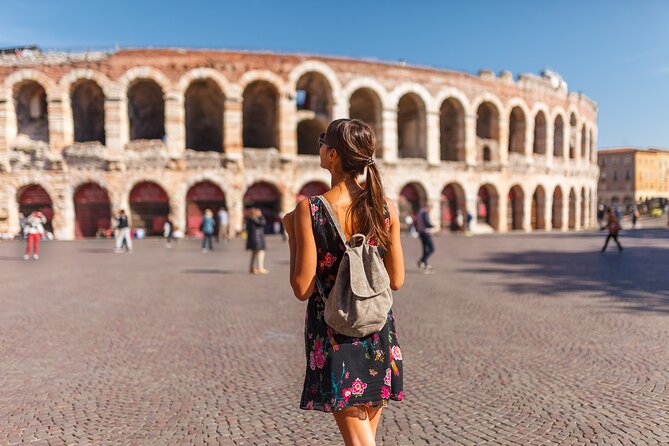
- Piazza Bra and the Arena di Verona setting: spot the amphitheater context even if you don’t enter.
- Ponte Pietra, the last Roman bridge: five arches and strong views toward Castle of San Pietro.
- Piazza delle Erbe, Roman forum to market square: layered buildings and an easy lunch-zone.
- English and Spanish guiding: helpful if you want stories without losing the thread.
A Verona day trip that actually fits into your Venice trip
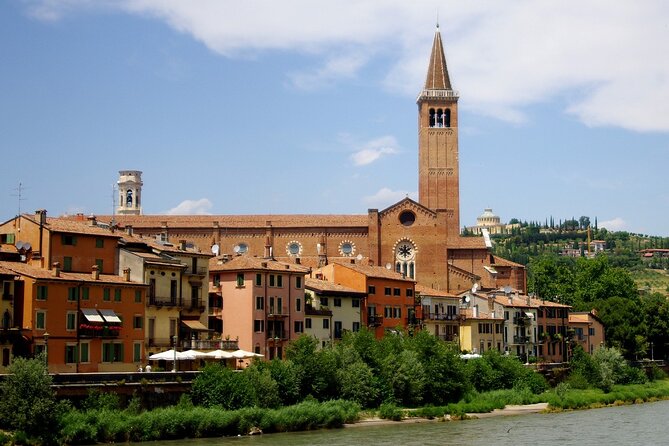
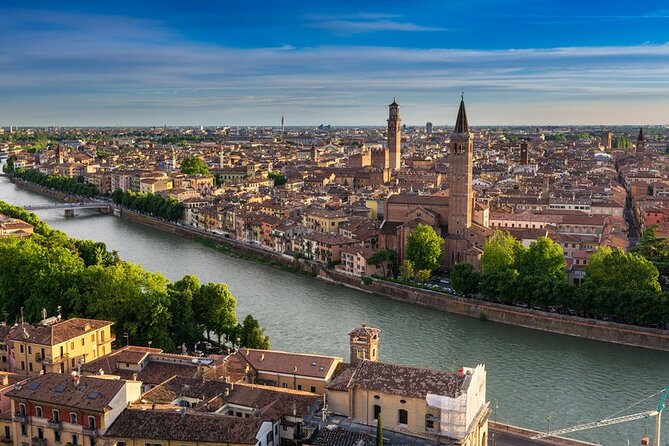
Venice is a world-class time sink. If you’re there for more than a couple days, a day trip to Verona is a smart way to add variety without switching cities. Verona gives you an ancient-medieval core along the Adige River, plus the Shakespeare connection that keeps the town famous even when you’re not hunting for storybook spots.
What I like most here is the combination of logistics and guidance. You get the train covered, and you also get a guided walk through the key historic areas so you’re not just wandering and hoping you picked the right streets. The pacing is built for seeing a lot, not for slow touring.
The one trade-off is time. You’re moving early, you’re walking, and after the guide finishes the main orientation, you’ll have free time that may not be enough if you want to add multiple big-ticket entries. If your plan is to enter major monuments all day long, you may need a different kind of Verona itinerary.
You can also read our reviews of more guided tours in Venice
Price and what you’re really buying: a bundled day, not just a guide
At $79.79 per person, this isn’t a budget-only tour, but it can still feel like good value because it includes two big costs that are easy to underestimate:
- Train tickets to and from Verona
- A professional guide in English and Spanish for the walking portion
Once you’ve priced separate transportation plus a guided orientation, the bundle starts to make sense—especially if you’d rather spend your energy on finding good squares and stopping for coffee than managing routes at dawn.
Also, the tour is capped at 30 travelers, so you’re less likely to get swallowed by a huge crowd. That matters when a guide is trying to keep everyone together and answer questions on the move.
Getting to Verona from Venice: the early start that pays off
You start at 6:45 am at Relaxation & Coffee, Stazione di Santa Lucia. That early departure is the backbone of the trip. It gives you a full day in Verona without burning daylight on travel.
The good news is the train part is designed to be straightforward. You don’t need to decide which station or which train times to use because the train tickets are provided. That’s a relief, especially if you arrive in Venice from somewhere else and still feel half-asleep when the day starts.
Practical tip: plan to be ready for a quick exit from your hotel and a calm walk to Santa Lucia. If you’re the type who needs coffee before moving, this meeting point choice helps.
One more Venice-specific note: on certain dates, people staying outside Venice may need to pay a €5 access fee for Venice. Check the official guidance for which days apply, since exemptions can exist.
Porta Nuova to the old center: how the walk sets your bearings
When you reach Stazione Ferroviaria Verona Porta Nuova, you’re at the starting point of the city portion. The station dates to 1914–1915, and it’s been renovated over the years, so it’s a modern base for a very old city.
From there, you’ll walk up toward the center. The guided portion is about 1 hour, so it’s not a slow museum-style experience. Instead, it’s an orientation tour that helps you understand where you are and why these specific sites matter.
This is also the moment where you’ll feel the tour’s style. The best part is that the guide doesn’t only point. You get the “what you’re looking at” and the “how it connects,” which makes the rest of your day easier to enjoy because your brain has a map now.
If you prefer lots of deep narration at every step, consider using your free-time hours to ask follow-up questions or to focus on one or two neighborhoods where you want more context.
Porta Borsari: the Roman gate that explains the town’s rules
One of the highlights of the orientation is Porta Borsari, an old gate in Verona’s walls dating back to the 1st century AD.
It’s called Porta Borsari because of the soldiers who collected tariffs when people entered the city. That detail is more than trivia—it helps you picture Verona as a working, controlled place, not just a postcard town. Once you hear that, the gate becomes a story about commerce and city life.
Look closely as you pass: you’ll start to recognize how Verona’s Roman skeleton runs under later medieval and modern layers. It’s one of those sights that becomes more meaningful when you know what function it served.


Piazza Bra and Arena di Verona: Roman amphitheater energy, with real-life use
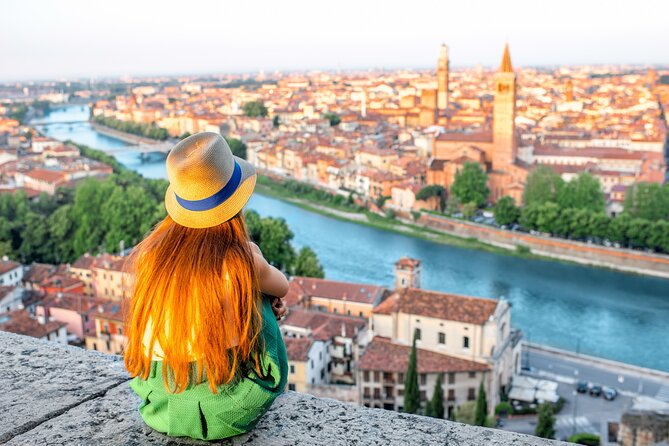
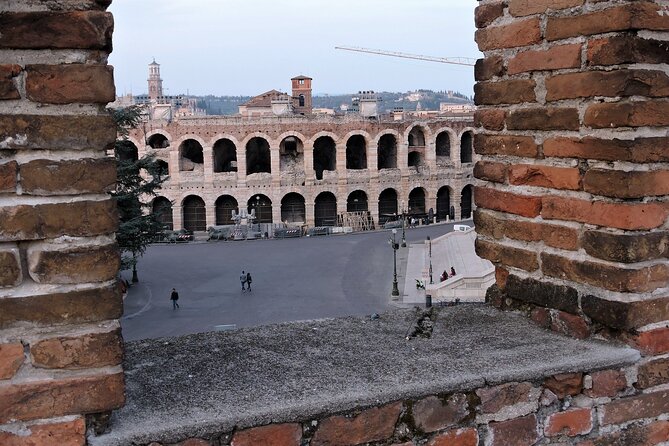
Then you move into the area around Piazza Bra, Verona’s central square. The tour points you toward Piazza Bra as a main hub because it’s where the city’s daily energy meets historic scale.
This square is described as one of the largest in Italy. It wasn’t treated as a square until the first half of the 16th century, which tells you something about how European city spaces evolved over time. Today, it’s a practical place to be: bars and restaurants fill the area, so it’s ideal for a casual lunch or an espresso break during your free time.
Nearby is the Roman amphitheater, now known for opera and concert events. It can hold up to 22,000 spectators, which is mind-blowing when you remember it’s essentially a Roman structure still doing modern work.
Important reality check: the tour describes these as sites you’ll see, but entrance to monuments is not included. So if your plan includes going inside the Arena, you’ll need to arrange that separately—or adjust expectations to viewing from the outside and enjoying the setting.
Piazza delle Erbe: where Roman forum meets market-square life
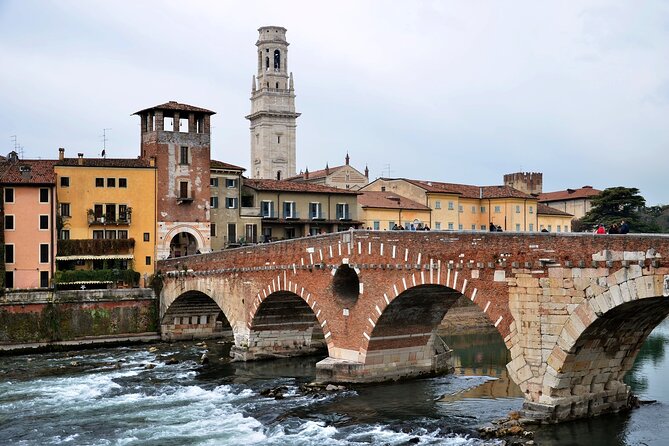
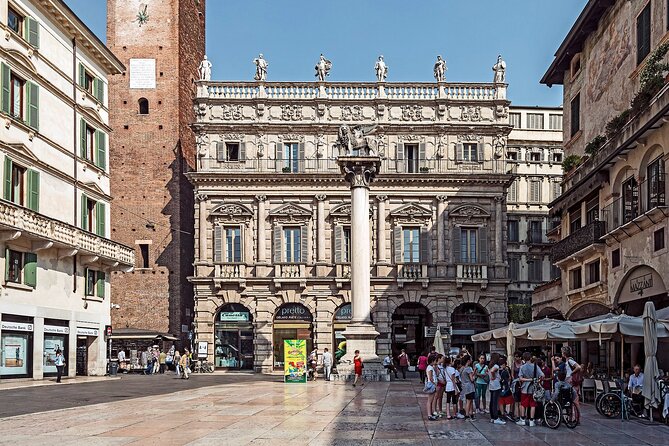
Next comes Piazza delle Erbe, and this is one of those stops that works even if you’re not chasing a checklist.
The buildings here blend Roman, Baroque, and medieval elements, and the key detail is that this area used to be the Roman forum. That means you’re walking over centuries of public life: business, announcements, and the everyday rhythm of a city.
As a practical matter, Piazza delle Erbe is also one of the easiest places to turn the guided portion into a comfortable pause. You’ve got a square that’s clearly meant for people to stop, sit, and watch. So when you get your free time afterward, this is a smart place to remember and return to.
Ponte Pietra: the last Roman bridge and a good photo angle
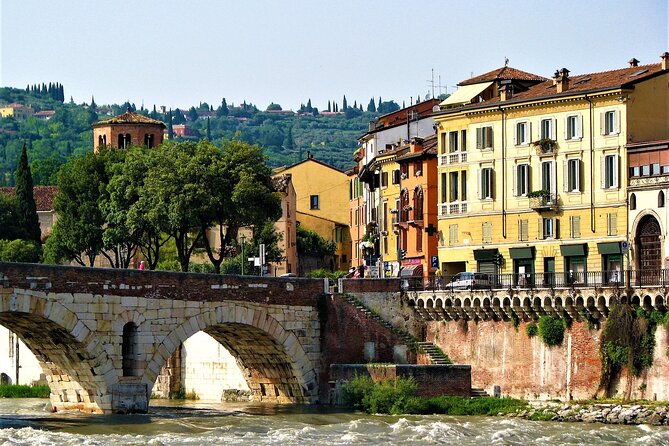
One of the most memorable stops in Verona is Ponte Pietra—not just because it looks classic, but because it’s described as the only Roman bridge left in the city.
It has five arches, and it connects the city center to the Adige riverside where Castle of San Pietro sits. That connection is what makes this bridge feel functional, not just scenic. You’re linking two sides of town and seeing how the river shapes Verona’s layout.
Even if you don’t stop for a long time, take a minute at the bridge area. This is the kind of place where a short pause improves the whole day because it gives you a wide view and resets your pace after walking through dense streets and squares.
Free time in Verona: how to use it without rushing
After the guided orientation (about an hour), you’ll have additional time in Verona. In total, you’ll spend roughly 6 hours in the city before heading back to Venice.
Here’s how to make that time feel generous:
- Start with slow wandering around the central area you just got oriented to.
- Decide if you’re a museum person or a street-level person. If you want streets and squares, you’re set up well.
- If you hope to enter major attractions, pick one. With a packed day, trying to do two big ticket sites can turn into stress.
If you’re tempted by Shakespeare-themed stops, this is a good moment to look for Juliet and Romeo references at your own pace. The tour doesn’t pin you to specific storybook locations, but Verona’s reputation is part of the atmosphere, so you’ll naturally see a lot of references while you roam.
What’s included, what isn’t, and how to plan around it
Included:
- Train tickets from Venice to Verona and back
- Professional guide (English and Spanish)
- Mobile ticket for the tour
Not included:
- Entrances to other monuments
This affects your day in a simple way: treat the guided walk as your orientation and your chance to see the settings. If you want to go inside major monuments, you’ll need to add those on your own, and it may compress your free time.
Group size, pacing, and the guide factor
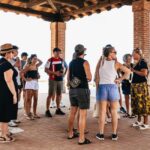
The group is limited to 30 travelers, which usually keeps things manageable. The walking portion is short enough to stay moving, but long enough to feel like you’re actually learning the city instead of only taking photos.
Guides can vary in style. Some keep things highly narrative; others may be more walk-and-point. Either way, you’ll get the key historic sites. If you care a lot about stories and context, lean in during the orientation time and ask questions while you still have a guide next to you.
A positive sign from past experiences with this operator is that the team supports multiple languages and keeps the group together. That means you spend less time waiting around and more time actually seeing Verona.
Who should book this Verona tour, and who might want a different approach
This experience is a great fit if you:
- Want a simple day trip from Venice without planning train logistics
- Prefer a guided overview to get oriented fast
- Enjoy history that you can see in real spaces, like a Roman gate and bridge
- Want to spend time in central squares like Piazza Bra and Piazza delle Erbe
It may not be the best match if you:
- Want an unhurried, deep-dive museum day with multiple interior ticketed stops
- Struggle with early starts or want a later departure schedule
- Plan to do lots of monument entrances on the same day (since entrances are not included)
Should you book it? My practical take
Book this Verona guided train day trip if your goal is clear: see the highlights, understand what you’re looking at, and return to Venice without fuss. The bundled transport is a real convenience, and the sights picked for the walking route make sense for first-timers who want immediate context.
Skip or consider a different format if you want lots of time inside big attractions. With the tour structure, your best strategy is to treat the guided portion as the engine of your day and use free time to wander, snack, and soak up Verona at street level.
FAQ
What is the total duration of the Verona day trip?
It runs about 7 hours 30 minutes.
Where do we meet in Venice?
The meeting point is Relaxation & Coffee at Stazione di Santa Lucia, Venice.
What time does the tour start?
The start time is 6:45 am.
How do you get to Verona?
You take a train, and train tickets are provided for the trip to Verona and back.
What does the guided portion cover?
You’ll have a guided walking orientation in Verona (about 1 hour), covering major sights such as the Roman gate area and central squares like Piazza Bra and Piazza delle Erbe.
Are monument entrances included?
No. Entrances to other monuments are not included.
What languages is the guide available in?
The professional guide operates in English and Spanish.
Is there a limit on group size?
Yes, the tour has a maximum of 30 travelers.
Can I cancel for a full refund?
Free cancellation is available. You can cancel up to 24 hours in advance of the experience start time for a full refund.