REVIEW · VENICE
Venice Guided Walking tour
Book on Viator →Operated by Venice Events srl · Bookable on Viator
Venice makes more sense on foot. This 2-hour guided walking tour links the loud drama of St. Mark’s Square to the calmer, more local Venice around Castello, with a real guide and a personal audio headset. You get historical context for what you’re seeing, not just a list of monuments.
I like two things most. First, the guide’s pacing is tight and clear, so you keep moving while still getting enough background to understand why these places matter. Second, the route goes beyond the headline sites into spaces like Campo Santa Maria Formosa and stops tied to Marco Polo and Venice’s trading power, which makes the walk feel like a story, not a stamp-collecting exercise.
One consideration: this is a walking tour with limited time at each stop, and at least one key stop is external viewing only (Teatro Malibran). If you want long, inside-the-building time or deep museum-level detail, you may feel the schedule is a bit short.
In This Review
- Key highlights worth knowing
- Venice in two hours: what this tour is actually good at
- St. Mark’s Square start: why this opening section matters
- The Castello shift: quieter calli and campi at Campo Santa Maria Formosa
- San Zanipolo (Basilica dei Santi Giovanni e Paolo): politics made stone
- Casa di Marco Polo: the merchant story behind the marble
- Teatro Malibran: what you see outside, and what the architecture hints at
- Wrapping back in St. Mark’s Square: turning facts into a map
- Price and value: is $38.13 worth it?
- Practical stuff that actually affects your comfort
- Who should book this tour, and who might skip it
- Should you book this Venice guided walking tour?
- FAQ
- How long is the Venice guided walking tour?
- Where does the tour start and end?
- What’s included in the price?
- Is the tour offered in English?
- Do I need to buy tickets for the sights on the route?
- Is the tour only for fair weather days?
- Is there a group size limit?
- Do food and drinks come with the tour?
- Will there be extra fees on some days?
Key highlights worth knowing
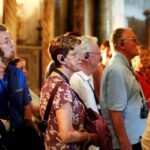
- Headsets and a personal audio system help you hear the guide without having to crane your neck over crowds.
- Small group size (max 20) makes it easier to follow along and ask questions when the moment fits.
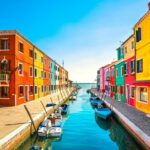
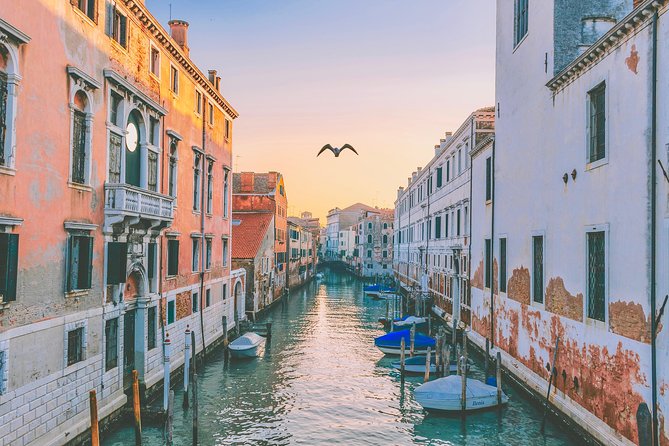
- Castello’s calli and campi route shifts you from the main tourist corridor into calmer residential Venice.
- Marco Polo-linked stop connects you to Venice’s merchant era, not just its royal symbols.
- Teatro Malibran is seen from outside, so set expectations for what you can and cannot do there.
- All-weather operation means you still get the walk even when Venice turns gray and wet.
Venice in two hours: what this tour is actually good at
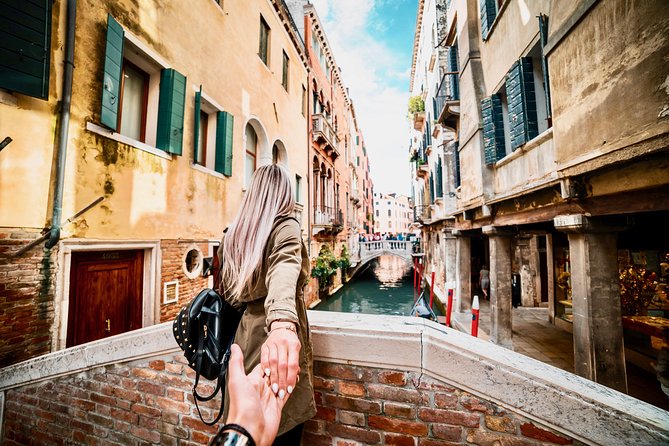
If you’re arriving in Venice and feeling slightly overwhelmed, this is the kind of tour that helps you sort things fast. You start at the center of the tourist universe, then the guide moves you away from that crush and into the smaller lanes, bridges, and pocket squares that locals actually navigate day to day.
What makes it work is the structure. It’s not just sightseeing. The guide gives you origins, symbols, traditions, architecture, and how Venetians live now, while you’re still looking at the places those ideas connect to. That timing matters. When you hear an explanation right where you’re standing, your brain files it away instead of letting it evaporate ten minutes later.
Also, the audio headset is more than a nice perk. Venice streets are loud in their own way, even when you can’t see traffic. The headsets mean you don’t lose the guide whenever you hit a busier corner or a small bridge.
You can also read our reviews of more walking tours in Venice


St. Mark’s Square start: why this opening section matters
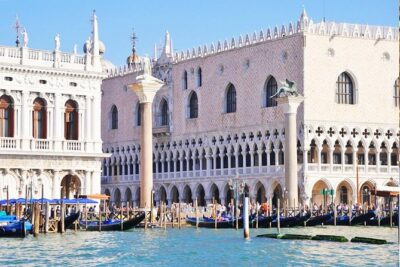
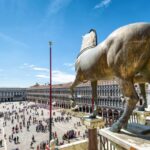
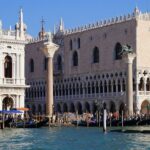
The tour begins at the edge of Saint Mark’s Square, where the buildings and civic symbols are impossible to miss. You get a historical introduction right away, which helps you understand what you’re looking at instead of simply staring.
You’ll get context for:
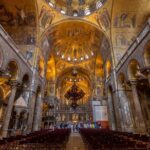
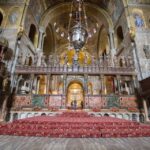
- St. Mark’s Basilica, not just as a pretty facade, but as a major piece of the city’s religious and political identity.
- Doge’s Palace, once the seat of power for the Republic of Venice.
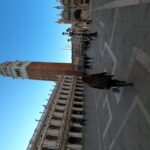
- The renaissance clock tower, which gives the square a signature rhythm and reminds you that Venice ran on schedules, ceremonies, and authority.
One of the best parts of this start is that it trains your “Venice eyes.” After the guide’s orientation, details you might skip (shapes, positions, why certain buildings face certain directions) start clicking.
A small practical note: St. Mark’s Square can be crowded, so you’ll feel the city’s intensity early. The guide’s job is to keep the group moving in a way that doesn’t turn the first 20 minutes into a standstill. Based on how the tour is paced, it’s designed for momentum, not lingering.
The Castello shift: quieter calli and campi at Campo Santa Maria Formosa
After the Square, the tour leaves the main tourist lane and heads into the Castello area. This is where Venice feels more like a neighborhood than a stage set.
Your stop at Campo Santa Maria Formosa is a key transition. It’s one of the larger squares in Venice, and it gives you a different scale. Instead of towering monuments dominating your view, you notice everyday urban life: the way streets bend, how bridges connect, and how open space works like a pause button in a maze.
The square centers on a church named after the Visitation of the Holy Virgin, which gives the place a religious anchor beyond the architecture. You’ll also get the feel for how campi work in Venice: they’re social and practical spaces, not just postcard backdrops.
Two reasons I think this stop is valuable:
- It shows you Venice’s structure at street level. You stop thinking in straight lines.
- It gives you a calmer mental reset after the Square’s intensity.
If your feet are already tired, this part is still manageable. It’s designed as a guided walk that keeps you oriented while you move through the calli (narrow lanes) and over the many bridges.
San Zanipolo (Basilica dei Santi Giovanni e Paolo): politics made stone
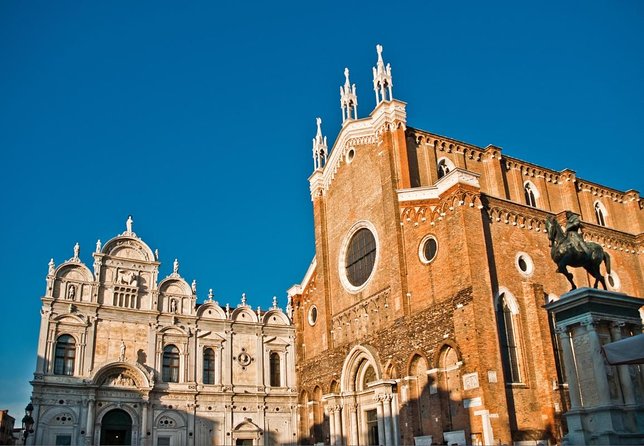
Next comes Basilica dei Santi Giovanni e Paolo, also known as San Zanipolo. This stop changes the tone again. It’s not about figuring out how Venice looks. It’s about understanding what Venice governed and how it rewarded power.
At San Zanipolo, you’ll see key signals of Venice’s political world:
- The church is the resting place of several Doges.
- The equestrian monument of Bartolomeo Colleoni, an Italian mercenary captain, ties military power and civic identity together.
This is one of those stops where a short explanation makes a big difference. Venice wasn’t only merchants and art patrons. It also invested in authority, defense, and prestige. Seeing these markers in the same place helps you understand why Venice’s architecture feels like it’s always making an argument.
The drawback here is time. The stop is brief, so you won’t have a long “read everything” session. But for a first orientation, it’s a good trade: you understand the logic of the place without losing the flow of the day.
Casa di Marco Polo: the merchant story behind the marble
Then you shift to a stop tied to Venice’s famous merchant. You’ll visit Casa di Marco Polo in Corte Seconda del Milion.
This is a smart inclusion because it balances the political and religious weight you’ve already seen. Venice made its fortune by moving goods, information, and influence across distances. Marco Polo is a name people know, but it lands better when you connect it to the idea of a merchant republic.
The tour keeps it practical here. You’re not just hearing a legend. You’re getting a sense of why a merchant could become a symbol in Venice’s self-image. That matters because Venice’s “big stories” often feel abstract until you see how the city physically commemorates them.
If you love mapping history onto real places, this stop will feel like a payoff. It turns a textbook name into a street-level location you can picture later.
You can also read our reviews of more guided tours in Venice
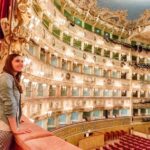



Teatro Malibran: what you see outside, and what the architecture hints at
The final major stop before the wrap-up is Teatro Malibran, viewed externally.
The guide shares what you can know from the building’s history, even if you aren’t going inside:
- The theater of San Giovanni Grisostomo was built in just four months at the end of 1677.
- It was renovated many times.
- The 1919 renovation is what shaped the theater as you know it today.
This is one of those moments where Venice’s layers show. The city doesn’t replace its past so much as it repurposes it. Even looking at the outside, you get a sense that theaters were important civic engines, not just entertainment boxes.
The main consideration is expectation. If you’re hoping for a full theater visit, this won’t be it. You’ll mainly get the exterior view and the context. Still, it’s a good way to keep the walk varied without eating up time that could push the tour beyond the planned length.
Wrapping back in St. Mark’s Square: turning facts into a map
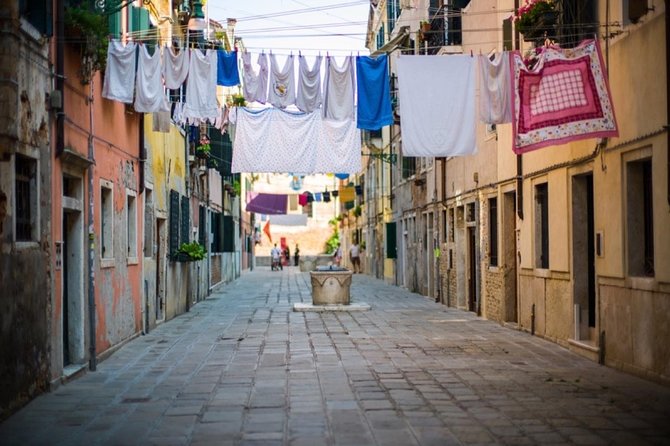
As the tour nears its end, you return to Saint Mark’s Square. This final segment is where the guide ties the day together with more historical facts and architectural call-outs.
You also get small anecdotes about how Venetians live today, which helps you separate old Venice from Venice that still exists in daily routines. That matters because St. Mark’s can feel like a theme park if you only see it through monuments. Hearing how the city functions now makes the square feel less like an island and more like a center that still connects to real life.
The tour ends back at the meeting point area, which is helpful if you want to continue on your own afterward.
Price and value: is $38.13 worth it?

At $38.13 per person for about two hours, the value is strongest for people who want orientation plus context.
Here’s what you’re paying for, in real-world terms:
- A professional guide who connects symbols and history to the places you see.
- Personal headsets, which keep the experience understandable in a noisy city.
- A route that mixes the obvious with the quieter. That reduces the chance you’ll “waste” time only seeing what you’d spot alone.
Is it perfect value? Not if you’re expecting long museum time or multiple indoor entries. Also, one stop is external only, and the whole walk is a set-length experience. If your goal is maximum time at every major attraction, you might feel the schedule is short.
Still, if you want a first pass that helps you plan the rest of your trip, this tour is priced like a smart primer.
Practical stuff that actually affects your comfort
This is a walking tour, so you’ll want to plan for feet, not just curiosity.
A few practical highlights from how it’s run:
- It operates in all weather conditions, so dress for rain or damp wind.
- It’s built for comfortable listening, thanks to the headset system.
- The guide handles the walking logistics so you’re not constantly getting stuck in traffic of people.
- The tour runs with a maximum group size of 20, which helps you keep your bearings.
St. Mark’s and the surrounding areas can be slick when wet, so wear shoes you trust. If you’re carrying heavy bags, consider traveling light. You’ll be moving through narrow lanes where bumping into someone can be annoying even when everyone is polite.
One more cost to be aware of on certain dates: if you’re staying outside of Venice and visiting for the day, you may need to pay a €5 access fee on specific dates. The tour info points you to the official site for whether it applies to your day.
Who should book this tour, and who might skip it
This tour is a great fit if:
- You want a fast, guided orientation to central Venice.
- You’d rather learn how the city works than just collect landmarks.
- You like hearing the “why” while you’re still standing in front of it.
- You appreciate smaller groups and clear audio.
You might skip it if:
- You’re not a walking person and you prefer a slower, transit-based plan.
- You’re hoping for lots of inside access or long museum-style time.
- You already know the basics and want advanced, niche detail.
If you’re on a tight first-day schedule, this is the kind of booking that can save you time later. You’ll know what to revisit and what you can safely skip.
Should you book this Venice guided walking tour?
I’d book it if you want your first Venice days to feel organized, not chaotic. The mix of St. Mark’s Square plus Castello’s quieter campi and calli makes the walk feel like it shows you more of the real city than a straight line through the biggest postcards.
It’s also a good value when you remember the audio system and the guide-led pacing. You’re not just paying for a route. You’re paying for interpretation, and that’s what helps Venice stay in your head after you leave.
Just go in with the right expectations: it’s about two hours, it’s mostly outside, and one key stop is external. If that fits your style, this tour is an easy win.
FAQ
How long is the Venice guided walking tour?
The tour lasts about 2 hours.
Where does the tour start and end?
It starts at TU.RI.VE. Meeting Point, Calle larga de l’Ascension, 30124 Venezia VE, Italy and ends back at the same meeting point.
What’s included in the price?
You get a professional guide and a personal audio system with headset for the commentary.
Is the tour offered in English?
Yes. The tour is offered in English (and also French, German, and Spanish).
Do I need to buy tickets for the sights on the route?
The tour notes admission ticket free for the stops listed in the itinerary.
Is the tour only for fair weather days?
No. It operates in all weather conditions, so you should dress appropriately.
Is there a group size limit?
Yes. The tour has a maximum of 20 travelers.
Do food and drinks come with the tour?
No. Food and drinks are not included.
Will there be extra fees on some days?
On certain dates, if you are staying outside Venice and visiting for the day, you may need to pay a €5 access fee. Check the official information linked in the tour details for which days apply.