REVIEW · VENICE
The Essence of Venice in a Stress Free Small group Walking Tour
Book on Viator →Operated by Stress Free Tours - Guided Tours and drivers in Rome and Italy · Bookable on Viator
Venice makes sense faster when someone local leads. This small-group walking tour is a stress-free way to get your bearings, with an English guide who talks history, landmarks, and everyday life as you move through classic areas like Rialto Bridge.
I especially like the pacing: you’re not stuck on a bus schedule, and the walk gives you time to actually notice the city. The second thing I really appreciate is the route balance—big-name sights plus quieter squares that help you understand how Venice fits together. One possible drawback: the first stretch can feel like you’re standing and listening for a bit, so it’s not the best choice if you prefer to sprint straight to photos.
In This Review
- Key highlights that matter
- Why a Venice “essentials” walk saves you time (and stress)
- Starting at Campiello dei Squelini: the first win is easy meeting clarity
- The square stops that teach you how Venice used to work
- Campiello dei Squelini: where you get your bearings
- A large public square tied to grazing and agriculture
- The square east of Rialto with the Carlo Goldoni monument
- Another important Venice square with unique landmarks
- Rialto Bridge: the iconic part, handled without the chaos
- Ending at St. Mark’s Square: what you do next is the real payoff
- Price and value: $42.33 for a local guide and a guided route
- Practical tips that make the walk smoother
- Wear walking shoes and expect real stone underfoot
- Keep your pace steady during busier times
- The city has a day-visitor access fee on certain dates
- Weather matters in Venice
- Service animals are allowed, and most people can participate
- Who this tour fits best (and who might skip it)
- Guides and what you’ll likely get from them
- Should you book this stress-free Venice walking tour?
- FAQ
- How long is the Venice walking tour?
- What does the tour cost?
- Where do I meet, and where does the tour end?
- Is the tour in English, and will I get a mobile ticket?
- Do I need to pay a city access fee?
- What happens if the weather is poor or I need to cancel?
Key highlights that matter
- Small-group feel (up to 20 travelers, often described as capped at 10), so you can ask questions without shouting over crowds
- Rialto Bridge plus major squares, giving you a clean “Venice essentials” overview in about 2 hours
- Local commentary, including the meaning behind plazas like the one tied to early grazing/agriculture
- End at St. Mark’s Square, which is the perfect launch point for your next wander
- Most of the time is on foot, with a route designed to avoid relying on water taxis
- Mobile ticket and English guide, making it easy to plan and follow along
Why a Venice “essentials” walk saves you time (and stress)
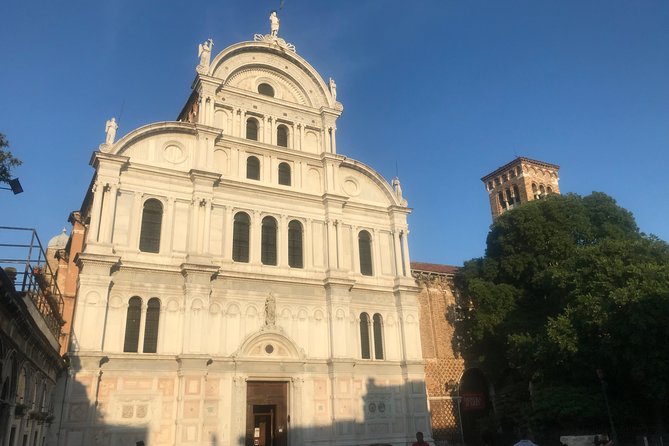
Venice can be charming and confusing at the same time. Streets twist. Bridges pop up out of nowhere. One wrong turn can cost you a long loop. This tour’s whole job is to help you read the city quickly, so later you can roam with confidence instead of guessing.
The biggest value here is the blend of orientation and context. You’ll see famous spots—yes, including Rialto Bridge—but the guide’s commentary helps you understand what you’re looking at. That turns Venice from a postcard into a place with patterns: where communities formed, how public squares were used, and why certain landmarks became important.
Also, the tone is practical. This is not a performance where you’re trapped in a line. You’re moving through Venice at a walking pace that’s meant to let you take in details and keep up without that panicked feeling of falling behind.
You can also read our reviews of more walking tours in Venice



Starting at Campiello dei Squelini: the first win is easy meeting clarity
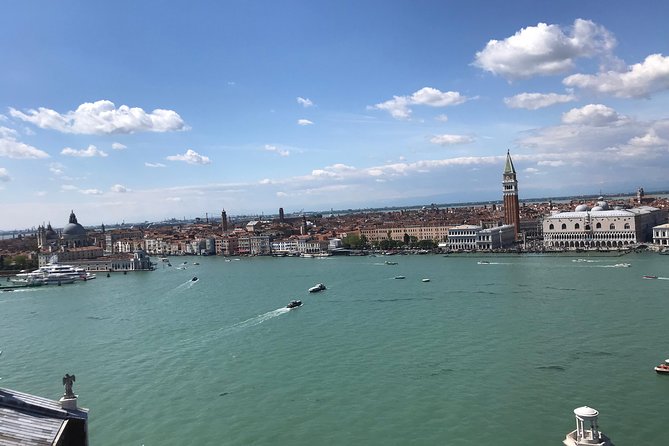
The tour begins at Campiello dei Squelini, at the colored wall area (meet there first, not halfway down some side street). Starting in the right spot matters in Venice because the city doesn’t forgive delays the way other places do.
From your perspective, this is a good setup if you want an organized afternoon without a lot of back-and-forth. You’ll also be near public transportation, which helps if you’re combining this with other stops in town later.
Two small real-world tips, based on how this kind of walk typically works in Venice:
- Wear shoes with grip. You’ll be on uneven stone and narrow lanes.
- Arrive a few minutes early so you can settle your bearings before the guide starts talking.
One caution: there can be occasional meeting-point changes if the operator adjusts logistics. If you’re the type who might ignore messages while sightseeing, make a habit of checking your phone before you head over.
The square stops that teach you how Venice used to work
After meeting, the walk turns into a sequence of plazas and viewpoints. The purpose isn’t just “see stuff.” It’s to help you understand what a square meant in Venice—who used it, what it was for, and why certain monuments are where they are.
Campiello dei Squelini: where you get your bearings
This starting campiello is the warm-up. Expect the guide to set the stage—how Venice is laid out, what direction you’re roughly heading, and what kinds of details to watch for as you walk. It’s the part of the tour where you’re most likely to feel the early standing-and-listening time, so come with a mindset of orientation.
A large public square tied to grazing and agriculture
One of the next stops is a major public square that was originally dedicated to grazing and agriculture. That detail is easy to miss if you only think of Venice as a city of canals and churches. Hearing how the city used public space for food production and daily movement helps the rest of the route click.
Look around during the talk. Even when Venice is visually dominated by stone facades, there’s a logic to where people gathered—routes, edges, and open areas. This stop teaches you to see those open spaces as part of the city’s function, not just scenery.






The square east of Rialto with the Carlo Goldoni monument
Next comes a city square east of the Rialto Bridge with a large monument dedicated to Carlo Goldoni. This is a great place to learn that Venice wasn’t only art and architecture from a distance—it was also culture, performance, and public identity.
Goldoni is a name that tends to show up in serious Venetian arts discussions, and seeing his monument in the context of a working city square gives it meaning. You’ll likely pick up why monuments get placed where they do: it’s about visibility and public life.
Another important Venice square with unique landmarks
The tour also includes another notable square featuring distinctive landmarks. This part is especially useful if you want variety. You’re not only hopping between one icon and another; you’re getting a sense of how many different “types” of Venice squares exist—each with their own vibe, architectural focus, and role in movement through the city.
Practical note: squares are where you get good sightlines for photos and easier listening. But they can also be busy, so use the moment to ask your questions before you move on.
Rialto Bridge: the iconic part, handled without the chaos
The highlight most people picture is the Rialto Bridge, and the tour does it in a smart way. Instead of treating Rialto as a one-stop “look and leave” moment, you’ll get context that makes the bridge feel like part of Venice’s everyday structure.
Rialto is always crowded, but the small-group format helps. You’re more likely to hear the guide’s explanation about why the area mattered and what you’re seeing—rather than simply standing in the background of other people’s selfies.
Also, your timing matters. If you do this earlier in your trip, you’ll leave with a mental map. If you do it later, you’ll understand what you missed the first time and where you want to return.
Ending at St. Mark’s Square: what you do next is the real payoff
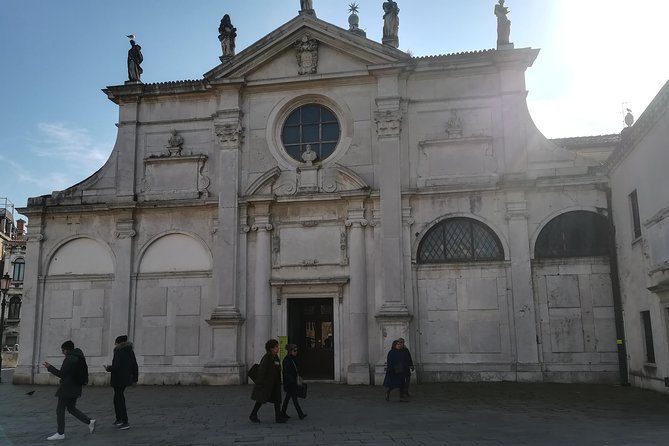
The tour ends in St. Mark’s Square (Piazza San Marco). That’s an ideal landing spot because it’s a classic “hub” area. From there, you can:
- keep walking through the square for atmosphere and views
- branch out into side streets with more confidence
- plan your next stop without constantly re-checking directions
St. Mark’s Square can feel like a magnet for crowds. The good news is that finishing here gives you control. You’re not forced to keep moving with the group if you want to linger for photos, or just sit and people-watch for a few minutes before you continue.
Price and value: $42.33 for a local guide and a guided route
At $42.33 per person for about 2 hours (approx.), this tour sits in the “solid value” range for Venice. You’re paying for three things that matter here:
- a local guide who can explain what you’re seeing
- an organized route through compact, confusing streets
- a small-group experience that makes questions possible
The fact that it’s offered in English and uses a mobile ticket is a bonus for planning. And since the walk is designed to cover major sights like Rialto and the finish at St. Mark’s Square, you’re not buying a tour that feels like it barely touched the city.
One more value point: many of the guides associated with this experience (names that show up include Michaela, Julia, Valentina, Flavia, Annalisa, and Gianmarco) are presented as locals. That matters because the best Venice explanations aren’t just dates and names—they’re how people lived, what buildings meant, and why squares functioned the way they did.
Practical tips that make the walk smoother
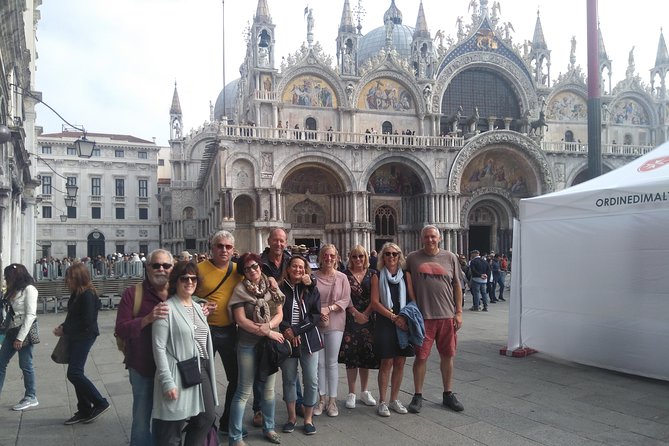
Venice rewards preparation. Here’s how to set yourself up so the tour feels easy instead of tiring.
Wear walking shoes and expect real stone underfoot
Multiple guides and past participants emphasize the need for good footwear. Venice isn’t built for fragile soles. Plan for uneven stones and short bursts of stairs and bridge transitions.
Keep your pace steady during busier times
Some departures can run close to 2.5 hours depending on the group and the flow. That extra time can be useful for Q&A and getting oriented, but it also means you should keep up.
If you like to stop often for photos, do it strategically:
- pause for one photo, then move
- ask a question while the group is gathered
- save slower photo sessions for St. Mark’s Square at the end
The city has a day-visitor access fee on certain dates
If you’re coming from outside Venice just for the day, you may need to pay a €5 access fee on applicable dates. It depends on the day, and you can check details and exemptions here: https://cda.ve.it. If you’re unsure, check before you go so you don’t get surprised.
Weather matters in Venice
The experience requires good weather. If it’s canceled due to poor conditions, you’ll be offered a different date or a full refund. That’s not trivial—rain changes everything in Venice, from footing to crowd movement.
Service animals are allowed, and most people can participate
The tour notes that service animals are allowed and most travelers can participate. If you’re unsure about your own comfort level with walking in Venice’s streets, it’s worth considering how long you’re comfortable on uneven surfaces.
Who this tour fits best (and who might skip it)
This is a great match if you want a confident start to Venice. I’d especially recommend it if:
- it’s your first trip to Venice and you want the city in perspective
- you don’t want to piece together directions and “where do I go next” on your own
- you like history when it’s tied to the actual street you’re standing on
- you prefer a small-group guide over a larger bus-style crowd
It may be less ideal if:
- you already know Venice well and want only “must-see, no lectures” stops
- you dislike any early standing time for explanations
- you’re extremely photo-focused and hate sharing viewpoints in busy spots
Guides and what you’ll likely get from them
A big part of why this tour works is that it’s built around local storytelling. Different guides are listed across bookings—like Julia, Valentina, Flavia, Annalisa, and Gianmarco—and the common thread is an easy, question-friendly style.
In practice, you can expect explanations that connect:
- squares to daily life
- monuments to public identity
- bridges and landmarks to how people moved through the city
That’s what turns a “walk past” experience into one that gives you a personal map in your head.
Should you book this stress-free Venice walking tour?
I think you should book this if you want a guided “Venice essentials” day that doesn’t feel like chaos. For the price, you get local context, a manageable route, and a finish in St. Mark’s Square where you can continue exploring on your own.
Skip it only if you’re already deep into Venice and just want a straight line to the icons with minimal explanation, or if you hate any early standing time for orientation. Otherwise, this is a smart, low-stress way to start understanding the city quickly—so your later wandering feels more like discovery and less like navigation.
FAQ
How long is the Venice walking tour?
It runs for about 2 hours.
What does the tour cost?
The price is $42.33 per person.
Where do I meet, and where does the tour end?
Meet at Campiello dei Squelini, 30123 Venezia VE, Italy. The tour ends at St. Mark’s Square (Piazza San Marco), 30124 Venezia VE, Italy.
Is the tour in English, and will I get a mobile ticket?
Yes, it’s offered in English. You’ll receive a mobile ticket.
Do I need to pay a city access fee?
On certain dates, visitors staying outside Venice who plan to visit for the day may be required to pay a €5 access fee. Check applicable dates and exemptions at https://cda.ve.it.
What happens if the weather is poor or I need to cancel?
The experience requires good weather. If it’s canceled due to poor weather, you’ll be offered a different date or a full refund. You can cancel for a full refund up to 24 hours in advance.