REVIEW · VENICE
Ellegi Murano Glass: The Art of Tradition
Book on GetYourGuide →Operated by Ellegi Murano Glass Srl · Bookable on GetYourGuide
Murano glass is one of those Venice things you should see in real life. At Ellegi Murano Glass, you get a quick walk from the main boat stop to a family-run tradition that’s been passed down for generations, long before modern “schools” existed. The real hook is watching glass become art right in front of you, including the heat-and-shape drama of the furnace and the two main processing techniques explained live.
I also like the fact that this is a small-time visit you can actually fit into a crowded day. The tour is short, the language options are broad (Italian, English, Spanish, French), and you end up in the same area as the showroom/shop where you can buy the handmade results. If you’re traveling with kids or just hate complicated logistics, the basics help a lot: kids under 15 are free, pets are welcome, and access is described as smooth with no architectural barriers.
One possible drawback to keep in mind: the experience depends on the day’s flow. A few bookings flagged issues like language mismatch, audio that can be hard to catch, or interruptions during the demonstration—so I’d plan to arrive a bit early and position yourself so you can hear the guide at the glass area.
In This Review
- Key Things You Should Know Before You Go
- Why Ellegi’s 600-Year Murano Glass Tradition Feels Different
- Price and Time: The $5 Demo That Fits a Tight Venice Day
- Finding Ellegi on Murano: From Faro Boat Stop to a Courtyard Meet
- What Happens During the Glass Demonstration: Hot Blown and Molded Glass
- Furnace Time: Why This Small Workshop Moment Sticks
- Showroom and Shop: Turning Watching Into Buying
- Language, Sound, and Day-of-Operation Reality
- Who This Is Best For (and Who Might Want Something Else)
- Value Check: Is This Worth It at $5?
- Should You Book Ellegi Murano Glass?
- FAQ
- FAQ
- How long is the Ellegi Murano Glass visit?
- Where do I meet for the tour?
- How much does it cost?
- What languages are available for the guide?
- Is the experience wheelchair accessible?
- Are kids free?
- Are pets allowed?
- What is included in the ticket?
- What should I know about drinks and snacks?
- What’s the cancellation and payment flexibility?
Key Things You Should Know Before You Go
- A furnace-focused demo: you watch glass heated and shaped before you, not just a slideshow
- Two techniques explained live: hot blown and molded glass, with guidance in your language
- Murano access is simple: just a few steps from Faro boat stop and near major island sights
- Same stop for the shop: the original showroom is in the same area for easy browsing and buying
- Good for families and pets: kids under 15 are free, and pets are welcome
- Short and practical: you’re looking at about 15 minutes, with the demonstration described as roughly 20 minutes in the tour info
Why Ellegi’s 600-Year Murano Glass Tradition Feels Different
Murano glass has a reputation for being beautiful. Ellegi’s angle is different: it’s about craft as a living line of work. The factory is described as family-run and opened around 600 years ago, with skills passed from generation to generation because there are no schools in the traditional sense. That matters, because it changes the vibe from museum-like to work-station-like.
In plain terms, you’re not just looking at finished objects. You’re watching people follow technique—heat, timing, and hands-on shaping—while someone explains what’s happening. When a tour is built around processing rather than presentation, it tends to feel more honest. And Murano glass only makes sense when you see the heat and speed involved.
You can also read our reviews of more tours and experiences in Venice.


Price and Time: The $5 Demo That Fits a Tight Venice Day
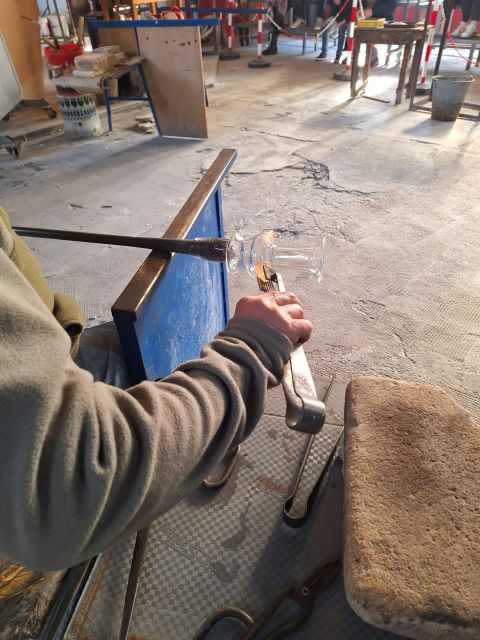
At about $5 per person for a short visit, this is priced like a practical add-on rather than a big-ticket experience. That’s a good thing. Venice is expensive in a hurry, and you can easily end up “paying a lot to wait.” Here, you’re paying for time in the workshop action.
The duration listed is 15 minutes, while the description also says the experience lasts around 20 minutes. Either way, you’re not committing half a day to glass. You’re getting a focused taste of how Murano glass works day-to-day, plus a showroom stop.
If you’re the type who wants one memorable craft moment without turning your day into a schedule puzzle, this timing fits well. It’s also a smart choice if you’re already on Murano for other sights and want something hands-on near where you land.
Finding Ellegi on Murano: From Faro Boat Stop to a Courtyard Meet
Getting to Murano can be the most stressful part of a Venice day. The good news here: Ellegi is described as just a few steps away from the main boat stop (Faro), which keeps you from wandering while your ferry time ticks away.
You’ll also be in the same general area as major Murano highlights like the Glass Museum and the Basilica of Santa Maria e San Donato. That means you can thread this visit between other stops without planning a whole new trek.
Meeting point is in the internal courtyard of the Ellegi Murano Glass factory, and there’s a sign above the entrance with the factory name. That courtyard setup is helpful because it’s easy to spot when you arrive, and it reduces that awkward moment of not knowing where the group gathers.
Two extra practical details are worth noting:
- Access is described as smooth for everyone, with no architectural barriers.
- They welcome pets, and kids under 15 are free, which can change the math for family travel.
And if you’re coming by private transport, the factory notes it has a private boat pier, so you’re not forced into standard walking-only routes.
What Happens During the Glass Demonstration: Hot Blown and Molded Glass
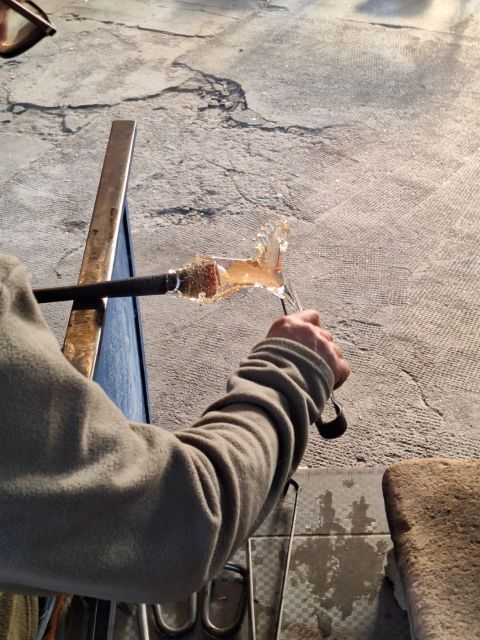
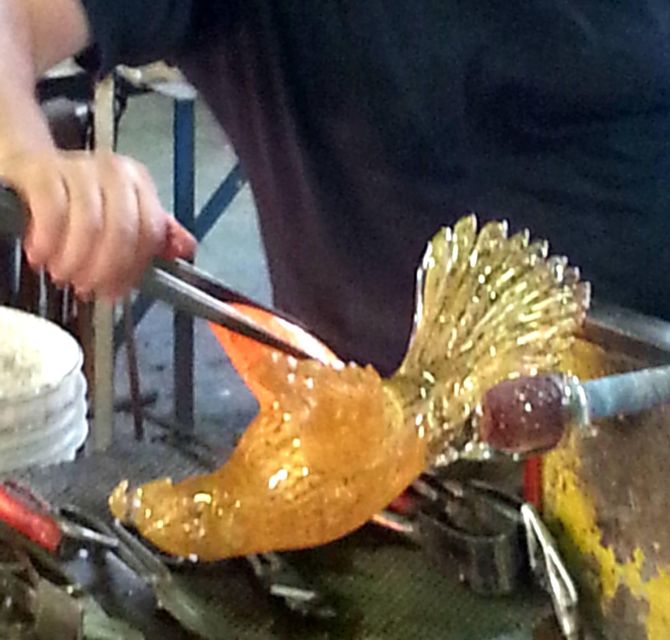
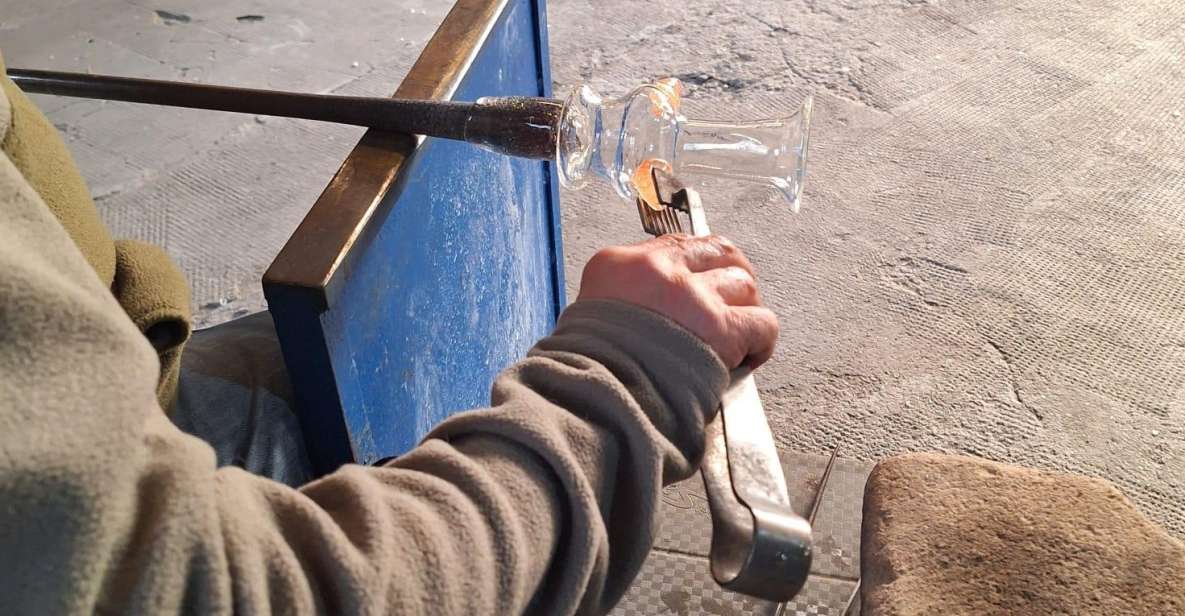
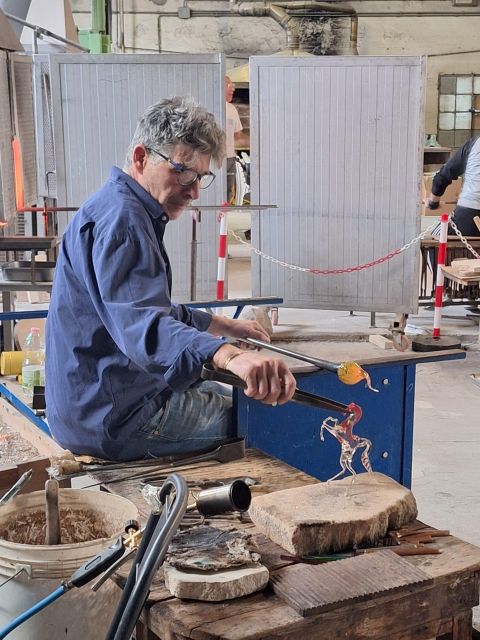
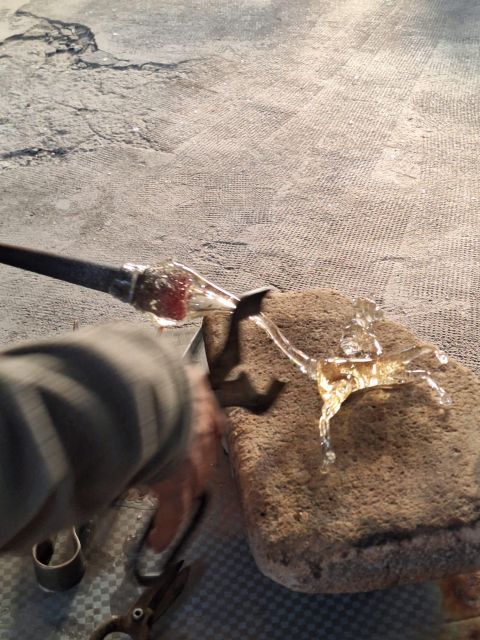
The heart of Ellegi is the processing demonstration. Instead of only showing examples, you get to watch glass being extracted at high temperatures and shaped in front of visitors. The description emphasizes that the shaping happens while you’re watching—meaning you see the glass go from molten to form.
You’ll also get explanations for two techniques used in the workshop:
- Hot blown glass
- Molded glass
A live speaker explains each technique in the required language. The tour languages are listed as Italian, English, Spanish, and French, so the goal is that you’ll understand what you’re seeing rather than standing there guessing.
One detail that really helps you picture what you might see: some bookings mention specific crafted pieces—like a horse and a teller (plate)—being made during the demonstration. Even if the exact object changes from day to day, the point stays the same: this is about watching a craftsman at work and understanding the method behind the final shape.
Furnace Time: Why This Small Workshop Moment Sticks
A lot of factory tours are either too long (and start to feel like waiting) or too generic (and you leave with names but not understanding). Ellegi’s furnace focus works because it’s short and visually dramatic.
Glass at high temperatures is a different kind of craft physics. The pressure isn’t in the theory—it’s in the hands-on control. That’s what you’ll notice when the glass is extracted and shaped quickly. You’re watching timing, technique, and adjustments in real time.
It also helps that the setting is set up for people of different ages. The tour info calls out that it’s open to all age groups, and the watch-and-explain format tends to keep kids interested while still being worthwhile for adults who want to know how the process works.





Showroom and Shop: Turning Watching Into Buying
After the demonstration, you move into the showroom area. The tour includes a visit to the showroom, and the factory shares that you can visit the original shop in the same area.
This matters for two reasons:
- You can translate what you watched into what you buy. Seeing hot blown or molded work makes shopping less random.
- You can browse at a normal pace. You’re not forced to race through a gift shop as a penalty for finishing early.
What to expect in the showroom isn’t described in detail beyond the fact that it sells their own handmade products. The key value here is that the showroom stop is tied to the same place where the processing demo happens. That’s how you avoid the feeling of paying for one experience and then being sold something unrelated.
Language, Sound, and Day-of-Operation Reality
This is where I’d be smart rather than optimistic. The tour info promises that the live guide is available in Italian, English, Spanish, and French. Still, a few bookings flagged problems like Spanish not matching what was expected, or not hearing clearly at times.
There are also notes about organization and how the demonstration flowed. One booking described the experience as feeling like more of a mass-handling format, where you might not see everything. Another mentioned a master artisan being interrupted during business conversations, which can make the demo feel less focused.
So what should you do with that?
- Arrive a few minutes early so you can get a spot where the guide’s voice carries.
- If sound is hard, don’t just look at the glass—shift your position toward the speaker area.
- If you’re particular about language, double-check you’re in the right-language group when you arrive in the courtyard.
Also, one booking said that on a weekend the demonstration portion was under refurbishment, with no clear signage or staff at the moment they arrived. That doesn’t mean this is common, but it does suggest you should treat it as a “check on arrival” situation—especially if you’re going out of your way for the demo.
Who This Is Best For (and Who Might Want Something Else)
Ellegi fits best with travelers who want craft with a time limit. It’s a strong pick for:
- Families: kids under 15 are free, and the setup is described as welcoming across ages
- First-time Murano visitors: you get the key processing techniques without needing a full workshop day
- People who enjoy watching skilled work up close: furnace shaping and technique explanation do the heavy lifting
- Pet owners: pets are welcomed, which is not universal in Europe’s attractions
It’s less ideal for you if you’re hunting for a deep, long lecture or a polished, uninterrupted performance-style tour. Some bookings hint at interruptions, audio issues, and a feeling of being processed through quickly. If you want a super-structured, museum-grade explanation with perfect audio, you might prefer a different kind of workshop experience.
Value Check: Is This Worth It at $5?
For $5, the value is mostly in what you witness in that short window. You’re not paying for a long guided walkthrough. You’re paying to see how hot glass turns into shape—plus get an explanation in a language you can understand—and then check out the showroom where the handmade products are sold.
If your Venice schedule is tight and you want one authentic craft moment on Murano, this is the kind of purchase that feels sensible. You’re not taking a huge risk on time. And because it’s near major sights like the basilica area and the Glass Museum, it plays well with real sightseeing routes.
Should You Book Ellegi Murano Glass?
If you want a quick Murano craft stop that’s easy to reach, inexpensive, and built around watching real glass processing with live explanations, I’d say it’s worth booking. It’s also a great option if you’re traveling with kids or pets, because the basics are clearly set up to welcome them.
Just go in with eyes open: expect a short demo, not a private lesson. And if language clarity or audio is a deal-breaker for you, I’d arrive a bit early and make sure you’re positioned well for the guide’s instructions.
FAQ
FAQ
How long is the Ellegi Murano Glass visit?
The guided tour is listed as 15 minutes.
Where do I meet for the tour?
Meet in the internal courtyard of the Ellegi Murano Glass factory. There’s a sign above the entrance with the factory name.
How much does it cost?
The price is listed as $5 per person.
What languages are available for the guide?
Live guided tour languages are Italian, English, Spanish, and French.
Is the experience wheelchair accessible?
Yes, it’s described as wheelchair accessible, with smooth access and no architectural barriers.
Are kids free?
Yes. Kids until 15 years old are for free.
Are pets allowed?
Yes, pets are welcome.
What is included in the ticket?
It includes the glass processing demonstration and a visit to the showroom.
What should I know about drinks and snacks?
Drinks and snacks are described as available via automatic vending machines at the entrance, which are not included in the tour.
What’s the cancellation and payment flexibility?
Free cancellation is available up to 24 hours in advance for a full refund, and there’s a reserve now & pay later option.