One sentence can change how you see a city. Venice’s Jewish Ghetto tour turns the streets of Cannaregio into lived history. You’ll follow a private guide through the area that helped define what a ghetto meant, plus the daily-life details that get missed when you only skim the big sights.
I especially like that the tour is built around real places and real stories, from the first ghetto-era rules to the Holocaust traces you can still spot today. I also like the pace: it feels like a walking tour with room to absorb what you’re seeing, not a frantic sprint. A fair caution: synagogue and museum time is not guaranteed, so if you want interiors, plan to ask in advance and stay flexible.
In This Review
- Key highlights you’ll feel during the walk
- Why Venice created a ghetto (and why it still matters)
- Campo San Geremia: the view, the setup, and the origin of ghetto
- Fondamenta Cannaregio: reaching an ancient gate into the ghetto
- Calle Ghetto Vecchio: old, new, and the synagogues you can spot outside
- Ghetto Ebraico: seeing Stolpersteine and Holocaust traces in context
- Fondamenta dei Ormesini and Campiello de l’Anconeta: finishing in a calmer pocket of Venice
- Optional add-on: synagogues and the Jewish Museum when timing allows
- Price and value: $372.45 per group for up to 6 people
- Who should book this private Venice Jewish Ghetto tour
- Should you book it?
- FAQ
- FAQ
- How long is the Jewish Ghetto tour in Venice?
- Is this tour private or shared?
- What language is the guide offering?
- What’s included, and is there food or wine?
- Are synagogue visits included?
- Does the tour include the Jewish Museum?
- Where do we meet and where does it end?
- Is there a day visitor access fee in Venice?
Key highlights you’ll feel during the walk
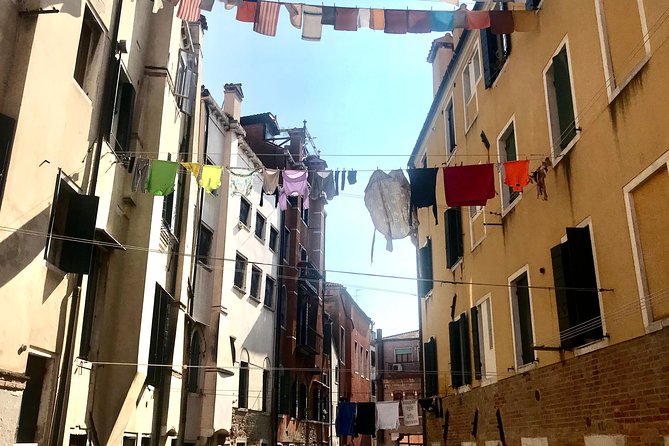
- A first-ghetto lesson in street form: you learn why Venice forced Jewish residents into strict rules.
- The word ghetto explained: you’ll connect the term to what you see as you walk.
- Gate-to-ghetto navigation: you pass one of the ancient entrance points and keep moving through the district.
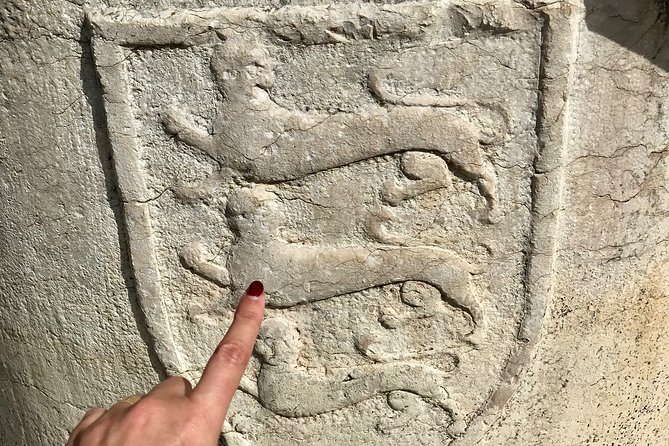
- Symbol spotting: you’ll notice hidden marks and curiosities that give context to everyday life.
- Holocaust memory in the pavement: you’ll see Stolpersteine and monuments from outside as part of the story.
- Food and drink break built in: traditional Jewish cake plus a glass of local wine.
Why Venice created a ghetto (and why it still matters)
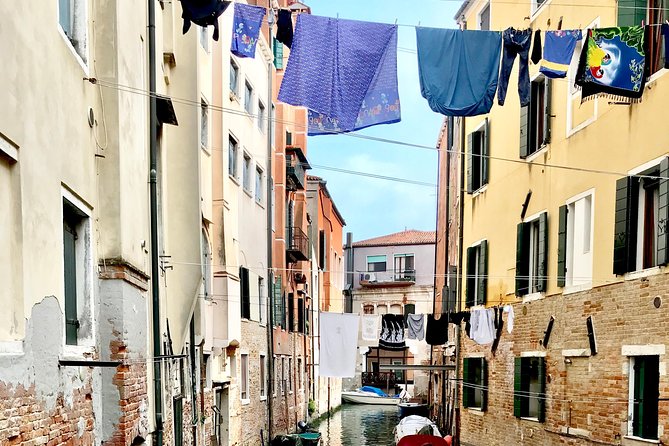
Venice didn’t treat Jewish residents like other groups inside the city. In this walk, you get a clear explanation of how and why the Serenissima began to discriminate against Jews, and how those policies shaped where people could live and how they had to survive.
The value here is not just dates. It’s the cause-and-effect logic that ties old rules to what you can still recognize in the neighborhood today. You’re not hunting for answers on your own—you’re walking with someone who knows what to point out and what it means.
This is also a tour where you’ll hear about major moments like World War II in Venice, and then shift back to the human side of the story—who lived here, how oppression shaped daily life, and what survives in public space.
You can also read our reviews of more private tours in Venice



Campo San Geremia: the view, the setup, and the origin of ghetto
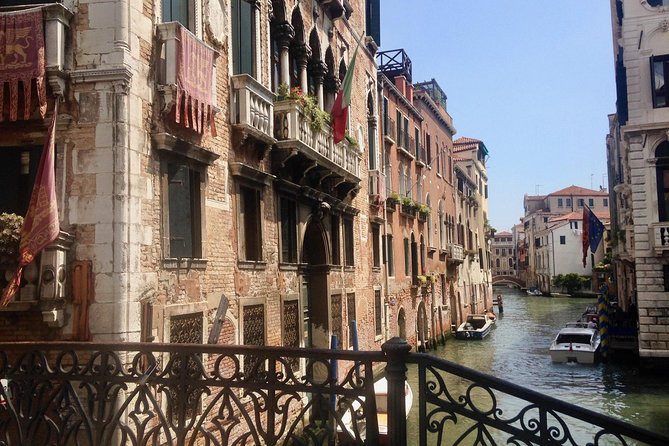
You start at Campo San Geremia (30121 Venezia VE), and you’ll feel immediately why this area works for walking tours. The guide begins with an orientation—what you’re about to see, what history is tangled underneath the streets, and where to look for the small clues.
This first stretch is about getting the framework. You’ll hear how the ghetto’s story is complex, and you’ll get help making sense of it from the past through modern daily life. Along the way, you’ll also learn about the origin of the word ghetto, and why it’s so surprising that the term is tied to this corner of Venice.
From there, the route keeps you in the less tourist-heavy rhythm of Cannaregio, and that matters. When the streets are calmer, symbols and architectural quirks stand out more. You’ll also get a chance to taste something at this stage of the tour—traditional Jewish cake and a glass of local wine—the kind of pause that makes a heavy topic easier to hold.
A practical note: the tour is designed to work with good weather. If conditions are poor, you may be offered a different date or a full refund.
Fondamenta Cannaregio: reaching an ancient gate into the ghetto
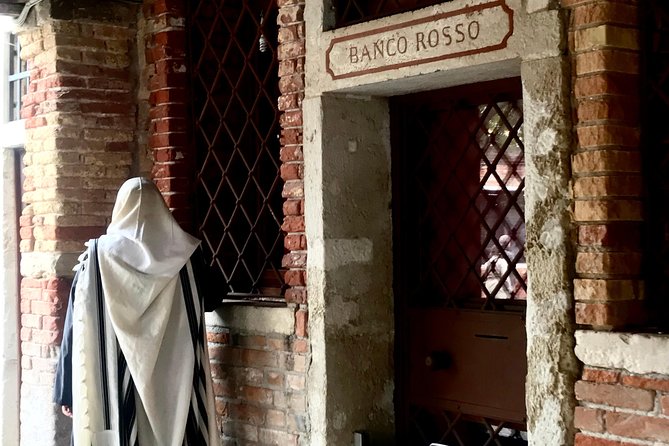
Next, you move to Fondamenta Cannaregio, where you reach one of the three gates for entering the ancient ghetto area. This is a small stop in time, but it’s big in meaning. Standing near a gate point changes how you think about movement—who could enter, who couldn’t, and what restrictions looked like in real life.
You’ll also get context on how the Jewish community lived under pressure over the centuries, not just during one dramatic period. That gives you a sense of continuity: the rules evolved, but the constraints shaped everyday routines.
If you like tours that connect history to geography, this is a strong moment. The district stops feeling like a labeled attraction and starts feeling like a place with boundaries.
Calle Ghetto Vecchio: old, new, and the synagogues you can spot outside
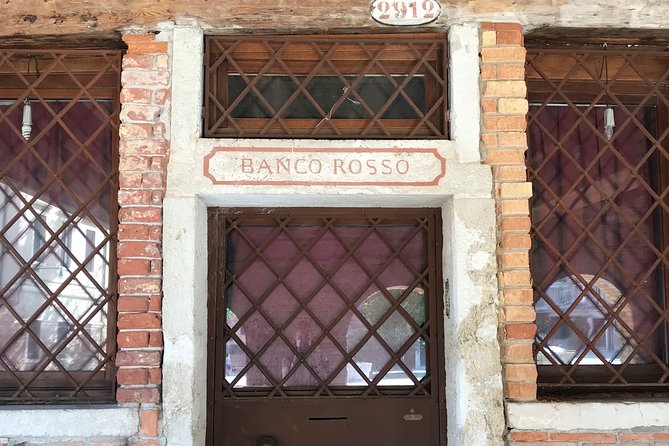
Now you wander through Calle Ghetto Vecchio, described as the old but still living part of the Venetian Jewish quarter. This section is where the guide sharpens your attention. You’ll connect the discussion of the word ghetto to what you see, and you’ll likely notice how the neighborhood layout communicates time—old layers, newer structures, and the way communities adapted.
One of the most interesting things you’ll do here is learn about Venetian origins of the term ghetto and then walk through a neighborhood that still shows why it became such a loaded word. You’ll also hear stories while you discover the highlights and details of a living community.
Synagogues enter the picture in a street-view way. You can see two historic Sephardic synagogues from the outside here, while the other three are linked to Ghetto Novo (described as the oldest area of the ghetto). If you want to go inside, that’s possible on request, but entry is not always available.
This stop also includes the famous Venice “skyscraper” conversation—why those tall, close-by structures are here, and how they were possible in Venice’s built environment. Even if you’re not a building-nerd, you’ll probably enjoy how the explanation turns architecture into social history.
Ghetto Ebraico: seeing Stolpersteine and Holocaust traces in context
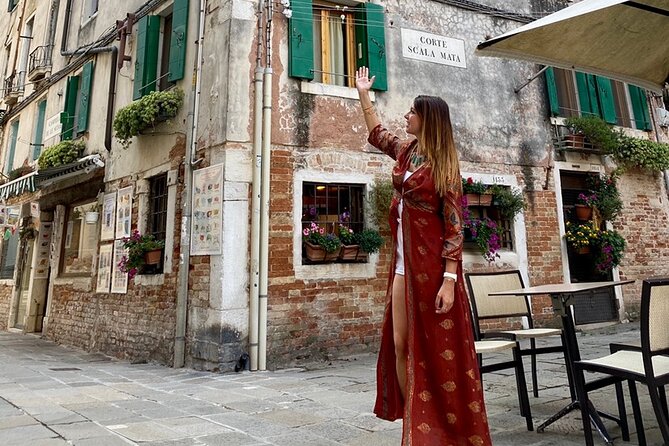
Then you reach Ghetto Ebraico, and the tone shifts in a necessary way. This is described as the oldest Jewish ghetto in the world, and you’ll hear local stories about how Venetians lived under oppression.
You’ll also see Stolpersteine, the stumbling blocks placed to remember individuals. The guide connects these monuments to the Holocaust’s deep mark on Venice, so the memorials don’t feel like random objects on the sidewalk. Instead, you understand what they represent and why they matter.
This portion also includes street-side views of key sites, including three ancient synagogues from outside, Holocaust monuments, special wells, and the presence of the Chabad of Venice. The outside-only framing is important: you get the big map of the area without losing time to waiting around for interior access.
If you’re the kind of traveler who wants your museum time to be meaningful, this section is a great bridge. It gives you the “why” before you ever consider going indoors.




Fondamenta dei Ormesini and Campiello de l’Anconeta: finishing in a calmer pocket of Venice
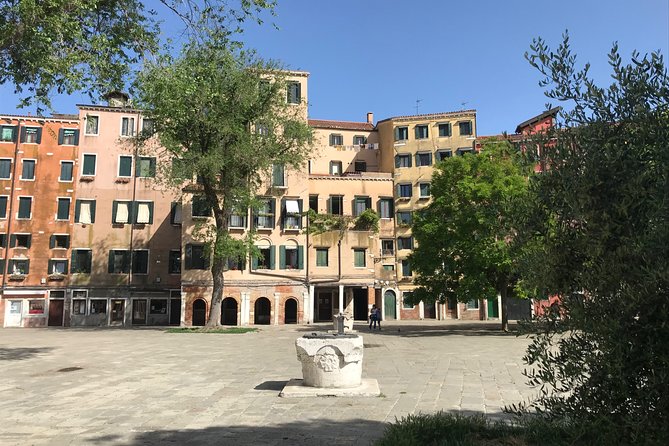
After the core history stops, the tour eases into a more relaxed Venice pace. You end at Fondamenta Dei Ormesini in the Cannaregio district, in a beloved area where you can unwind.
The final goodbye is at Campiello L’anconeta. This is where the guide gives you practical tips for continuing on your own—what to notice next, where to walk if you want more quiet, and how to keep learning even after the guided portion ends.
What I like about this finish is that it doesn’t leave you feeling “tour exhausted.” Instead, it hands you back control. You get to keep Venice going in your own direction.
Optional add-on: synagogues and the Jewish Museum when timing allows
There’s an optional add-on on request: Sinagoghe e Museo Ebraico di Venezia. The Jewish Museum is described as currently closed, but the guide notes that there may be synagogue access on certain days and times because they’re licensed to guide visits inside.
Entrance tickets are not included. So if synagogue interiors are a top priority, treat this as a request-based option rather than a guaranteed ticket.
This matters for decision-making. If you’re traveling with a strong interest in religious architecture and interior details, you’ll want to contact the guide ahead of time. (The guide’s email is listed as [email protected].)
Price and value: $372.45 per group for up to 6 people
At $372.45 per group (up to 6), the tour is priced for private, not solo-bargain travel. For a 2-hour walk, that sounds like a lot if you’re thinking per person, but the value changes when you split the cost across friends or family.
You’re paying for:
- a private guide who can tailor the walk,
- English availability,
- and focused attention on a topic most people only skim.
Also, this experience is often booked far ahead (an average of 136 days in advance). That’s usually a sign of steady demand for niche-but-serious tours where guide quality is a huge part of the payoff.
So I’d think of the price as buying time with a guide who knows the neighborhood’s signals—symbols, gate points, and memorial context—rather than buying “a generic walking tour.”
Who should book this private Venice Jewish Ghetto tour
This tour fits best if you want:
- a private, English-guided walk through Cannaregio,
- a history-focused route that still stays human and readable,
- and an itinerary that can be tailored if you have special requests.
It’s also a good match if you don’t want to fight crowds. The route is designed around getting away from typical tourist paths while still staying in central, walkable Venice.
If you’re interested in religious sites, remember that synagogue interiors are request-based and not always possible. If your group needs predictable indoor access, make sure you ask early.
Finally, service animals are allowed, and the meeting point is near public transportation—helpful if you’re combining this with other parts of your Venice plan.
Should you book it?
Book it if you want to understand Venice beyond postcards: the ghetto story, the street evidence, and the memorial meaning—with a guide who can point to the details and keep the pacing comfortable. The “private group up to 6” structure is also ideal if you’re traveling with friends or family who will actually share the cost.
Skip it (or at least adjust expectations) if you need guaranteed synagogue and museum access during your exact time window. That part is request-dependent, and the museum is listed as currently closed.
FAQ
FAQ
How long is the Jewish Ghetto tour in Venice?
It’s listed as about 2 hours.
Is this tour private or shared?
It’s a private tour. Only your group participates.
What language is the guide offering?
The experience is offered in English, and the guide is described as speaking Italian and English.
What’s included, and is there food or wine?
The tour includes a local guide and tips. The experience highlights include tasting traditional Jewish cake and a glass of local wine.
Are synagogue visits included?
Synagogues are not included in the standard tour. You can contact the guide to request a tailored tour, and synagogue entrances are not always possible.
Does the tour include the Jewish Museum?
There is an on-request option connected to the Jewish Museum area, but the Jewish Museum is described as currently closed. Synagogues inside may be possible on some days and times.
Where do we meet and where does it end?
You start at Campo San Geremia, 30121 Venezia VE, Italy and end at Campiello L’anconeta, 30121 Venezia VE, Italy.
Is there a day visitor access fee in Venice?
On certain dates, travelers visiting for the day from outside Venice may need to pay a €5 access fee. The info notes exemptions and points you to https://cda.ve.it.