REVIEW · VENICE
Create Your Own Murano Glass: Beginner’s Glassblowing Class
Book on Viator →Operated by Wave Murano Glass · Bookable on Viator
That molten-glass glow is what makes Murano different. This beginner class in Murano lets you learn the hands-on basics of the island’s glass craft in a small group capped at 4. You’ll practice first with no glass, then work with hot material, and finally blow a small piece you can bring home later.
I especially love the training style. You start with no-glass drills to build control and hand-eye timing, then you move to working with about 1000°C molten glass (yes, it’s real heat, not a demo). I also like that you’re not just watching: you make your own drinking cup/bowl or a small vase, with close coaching from instructors like Tam, Hilary/Hillary, Melissa, Emilia/Emelia, and Stefania.
One drawback to plan for: this is physically intense. If you struggle with extreme heat, panic easily, or have health limits, this may not be your experience. Also, your piece needs time to cool and anneal overnight, so you’ll either pick it up the next day or pay extra to ship it.
In This Review
- Key things to know before you go
- Murano glassblowing is the Venice souvenir you actually make
- Meeting at Fondamenta da Mula: easy to find, plan your “how to get there”
- The factory feel: how the workshop gets you from curious to capable
- Step 1: no-glass drills that actually teach control
- Step 2: working with hot glass around 1000°C
- Step 3: blow your own Murano piece (cup/bowl or vase)
- Annealing overnight: why you might not take it home immediately
- Pickup vs shipping: the real decision is time and packing
- Small group size and instructor attention: why max 4 matters
- What’s included, what’s not, and what to wear so you don’t regret it
- Price and value: $296.41 for a real skill lesson, not a watch-and-buy stop
- Who should book, and who should skip this beginner class
- My call: should you book this Murano glassblowing class?
- FAQ
- How long is the beginner glassblowing class?
- Where is the meeting point for the class?
- How many people are in a group?
- Is the class offered in English?
- What do I make in the workshop?
- Do I get my piece the same day?
- Can the glass be shipped home?
- What safety gear is included?
- What should I wear?
- Is it okay for kids?
Key things to know before you go
- Max 4-person sessions mean more time at the bench and less waiting around
- Step-by-step practice starts with no-glass exercises, then moves to working with hot glass
- You’ll choose a shape: drinking cup/bowl or a small custom vase
- Heat is part of the job, and you’ll be coached on safe movement
- Your piece needs annealing time, so same-day pickup depends on your session timing
- Shipping costs extra, though some guests have reported paying about €40 to ship pieces to the US
Murano glassblowing is the Venice souvenir you actually make
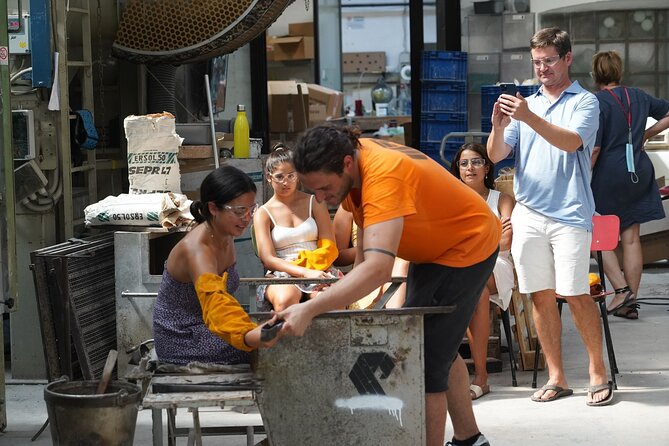
Venice gives you plenty of classic keepsakes. This one hits differently because it’s skill, not shopping. You’re working inside a real glassmaking environment on Murano, where the craft is fast, precise, and hands-on.
What you’re really buying is time with the process. The workshop is structured so you can learn the basics without feeling lost, then apply them immediately. And because the group is limited to 4 people, you’re not stuck watching someone else for most of the session.
If you want a calm, sit-and-listen tour, this won’t be it. This is more like fitness plus art. You’ll use your arms, shoulders, and hands in a controlled way while being around intense heat.
You can also read our reviews of more tours and experiences in Venice


Meeting at Fondamenta da Mula: easy to find, plan your “how to get there”
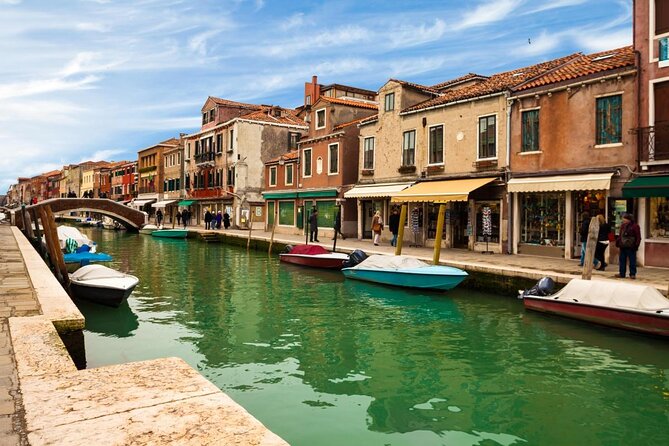
Your class starts at Fondamenta da Mula, 152, 30141 Venezia VE, Italy. The good news: it’s near public transportation, which matters because Venice can eat your time fast if you’re guessing.
Also, confirm the exact meeting spot on the day you go. One review shared a common problem: there are multiple glassblowing options on/around Murano, and people sometimes end up at the wrong place. The class team called to help, but it’s still smart to double-check you’re heading to the right dock address.
Because this workshop is in a working studio setting, show up a little early. Even if you’re great at travel logistics, you’ll want a few minutes to get oriented, get your shoes sorted, and settle your mind before the heat training begins.
The factory feel: how the workshop gets you from curious to capable
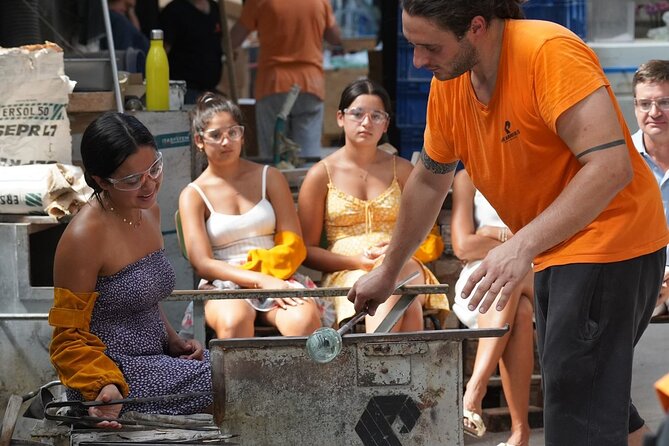
Before the hot stuff, you get guidance and structure. Many classes in this style include an up-close look at how the studio works, not just a storefront explanation. Reviews mention instructors walking people through the working space and the speed of production—how quickly glass moves from workable to not.
I like this part because it sets expectations. You’re learning a craft where timing matters. Glass doesn’t wait for your questions.
And the teaching vibe is a big deal. Multiple instructors are named in reviews—Tam, Hilary/Hillary, Melissa, Emilia/Emelia, Stefania—each described as patient, step-by-step, and hands-on where it counts. That matters because beginner mistakes are normal, and the best studios correct you without making it stressful.
Step 1: no-glass drills that actually teach control
The workshop starts with practical exercises with no glass. This is not filler. It’s how you learn the basic movements and hand-eye coordination without the pressure of hot material.
Think of it like learning choreography before you try it under stage lights. You’ll practice the motions you need later—how you hold, how you move, and how you coordinate hands while reacting to what you see.
You’ll feel the difference between “I get it” and “I can do it.” Those early drills help you get to the second one.
Step 2: working with hot glass around 1000°C
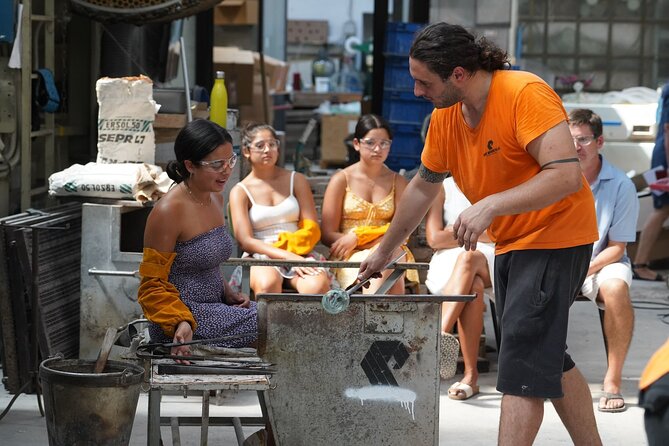
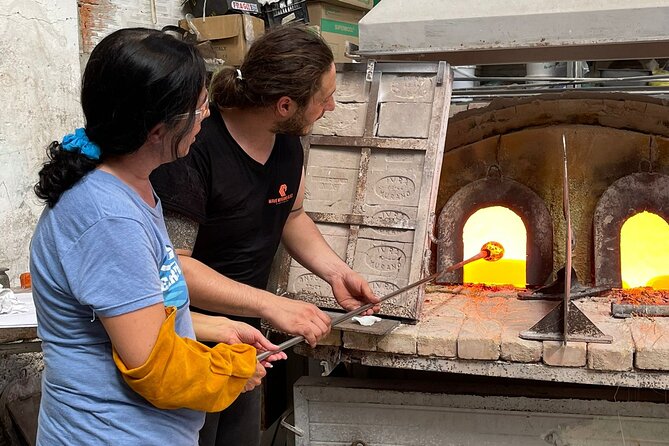
Then you move into practical exercises with hot glass, where you get a feeling for molten material near 1000°C. This is where the workshop becomes real.
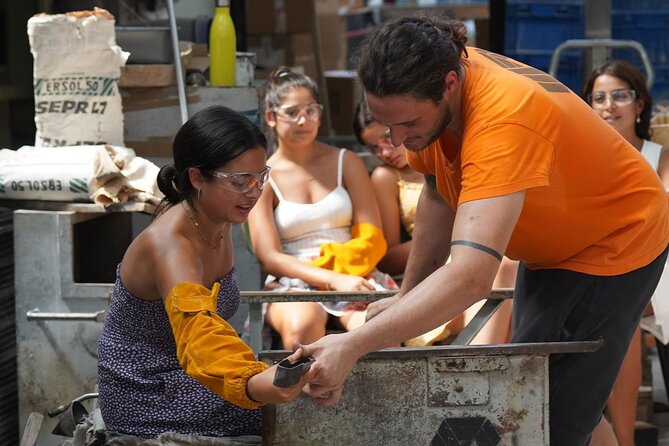
You’ll be working close enough that you can’t treat it like a casual craft day. The studio provides protective gear, including safety glasses and a sleeve to protect your arm from furnace heat. Water is also included to help you stay comfortable.
Here’s the honest part: this is hot, and it takes focus. If you’re the type who worries about temperature, fumes, or getting splashed, you might find this stressful. If you can handle heat and follow directions calmly, it’s also where the “how do people do this?” feeling turns into “I’m doing it.”
One review also warned about the physical side—splashes can happen, so wearing the right clothing matters.






Step 3: blow your own Murano piece (cup/bowl or vase)
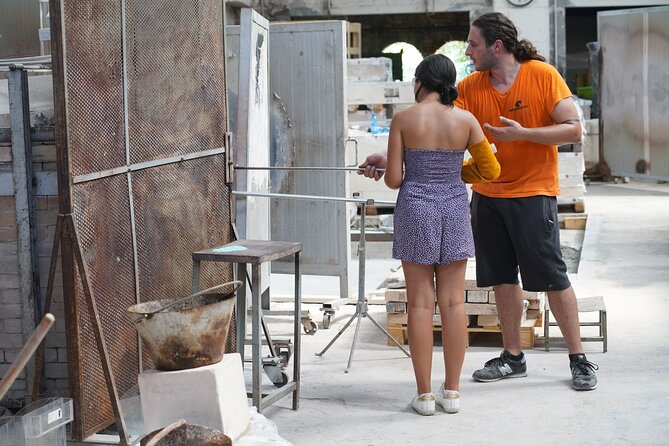
In the final making stage, you blow your own Murano glass artifact. You’ll have time to create either:
- a drinking cup or bowl, or
- a small custom glass vase
This is the moment you’ll remember on repeat. You’re no longer rehearsing movements. You’re shaping something that looks like real Murano work.
Instructors guide you through what to do at the key steps, and you can expect coaching while you’re working—especially with beginners. Reviews mention specific kinds of coaching like adjusting size and turning the glass with colored fragments, depending on the chosen design.
The shape you leave with depends on the session structure and what you’re able to make. Either way, you’re walking away with your own piece, not just a certificate and photos.
Annealing overnight: why you might not take it home immediately
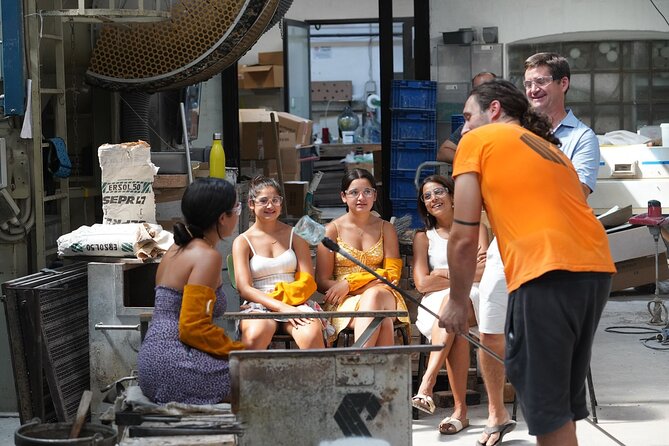
Your glass piece needs time to anneal overnight. That means you usually won’t carry it out at the end of class.
In practice, you have two options:
- Pick up the piece the next day (this is the normal plan)
- Have it shipped to your home for an extra fee
Some sessions can make pickup easier. One review noted that an early morning class can allow pickup in the early afternoon before leaving the island. Other reviews emphasized that it takes hours after the class for the glass to cool before it’s handled safely.
So if you’re tight on scheduling—last-day flights, same-day day trips—plan for next-day pickup or shipping from the start.
Pickup vs shipping: the real decision is time and packing
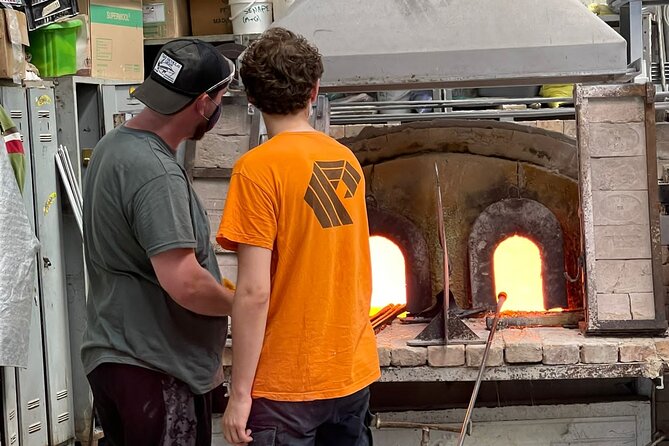
If you can handle the schedule, pickup is straightforward: you return the next day and collect your piece once it has cooled and annealed properly.
If you can’t, shipping is the workaround, but it’s not included in the price. Reviews confirm that shipping is available and some people successfully shipped pieces back to the States. One reported shipping cost was about €40 to Indiana for two pieces.
One practical thought: shipping is convenient, but always account for extra cost and the time it takes to arrive. And because glass is fragile, packaging quality matters—reviews specifically mention secure packing for safe travel.
Small group size and instructor attention: why max 4 matters
This workshop is capped at 4 travelers, and that’s not a marketing detail. It changes your experience.
With a small group, you get more time at the work area and more individualized correction. If you’re learning a high-heat craft, that’s huge. You’ll need help at transitions—what to do next, how to adjust, and when to step back.
It also explains why reviews are so positive about the learning experience. Many mention that instructors stayed patient, fun, and encouraging while still making sure people stayed safe and followed the process.
If you’re traveling with kids or teens, smaller groups also tend to help. One family described learning success for ages 12 to 18, with staff supporting different levels of help. That doesn’t guarantee every child will feel comfortable—heat and focus still matter—but it shows the class can work for a range of experience levels when guidance is close.
What’s included, what’s not, and what to wear so you don’t regret it
Here’s the practical part that affects comfort and safety.
Included:
- Water to rehydrate
- Safety glasses
- A sleeve to protect your arm from furnace heat
Not included:
- Shipping of the piece
- Clothing (you provide your own outfit)
What to wear:
- Closed shoes are required (no sandals, flip-flops, or slippers)
- Synthetic clothing is not recommended
- Reviews strongly suggest long pants to reduce the chance of hot-glass splashes on skin
Also consider how you’ll feel if you sweat a bit. Even with a sleeve and good coaching, you’re in a hot setting. Closed-toe shoes and breathable, non-synthetic layers help you stay steady.
Price and value: $296.41 for a real skill lesson, not a watch-and-buy stop
The price is $296.41 per person for about 2 hours (with the making experience often described as around 2.5 hours). On the surface, glassblowing sounds like an activity you might compare to a factory tour.
But the value here is different. You’re not paying just to see Murano glass. You’re paying for guided practice, close coaching, and time to create something tangible. The inclusion of water and protective gear reduces the hassle of figuring out essentials.
The max 4 group size also justifies the cost. Many “glassy” options are big-group demos where you watch mostly. This one is built so you can actually do the work.
Shipping is extra, so factor that in if you can’t do next-day pickup. But even then, it’s a legitimate option if you treat your glass like something fragile and worth the extra planning.
Who should book, and who should skip this beginner class
This experience is awesome if you want the real craft. It’s also intense.
Book it if:
- You want a hands-on Murano skill experience
- You’re okay with heat and working actively with your hands
- You follow instructions well and can stay calm during corrections
Skip it if:
- You’re afraid of extreme heat or panic easily
- You have health issues that might be affected by intense warmth
- You aren’t able to handle physical activity and concentration
One more note: the workshop provides protection, but it’s still a studio where glass can be messy and hot. Wear the right clothing. If you can’t commit to that, pick a calmer Venice activity instead.
My call: should you book this Murano glassblowing class?
If you want your Venice story to be more than photos, I think you should seriously consider booking. The combination of small group learning, real practice steps, and leaving with your own cup/bowl or vase makes this feel like a true experience rather than a souvenir factory.
But don’t ignore the warnings. This is not a gentle craft day. If heat and physical intensity make you uneasy, pick a different Murano experience and enjoy the island at a safer pace.
If you do book: wear closed shoes, plan for annealing overnight, and decide early whether you’ll return for pickup or budget for shipping. That one planning choice is what keeps the day smooth instead of stressful.
FAQ
How long is the beginner glassblowing class?
The class is listed at about 2 hours (approx.).
Where is the meeting point for the class?
The meeting point is Fondamenta da Mula, 152, 30141 Venezia VE, Italy.
How many people are in a group?
The workshop has a maximum of 4 travelers.
Is the class offered in English?
Yes, the experience is offered in English.
What do I make in the workshop?
You can make a drinking cup/bowl or a small custom glass vase.
Do I get my piece the same day?
Your piece has to anneal overnight, so pickup is typically the next day. Some early sessions may allow earlier pickup, but plan on next-day timing.
Can the glass be shipped home?
Yes. Shipping is available for an extra fee, and it is not included in the cost of the experience.
What safety gear is included?
You’ll receive safety glasses and a sleeve to protect your arm from furnace heat.
What should I wear?
Wear closed shoes. Clothing is not provided, synthetic clothing is not recommended, and long pants are advised in reviews.
Is it okay for kids?
One family reported success with children ages 12 to 18 with full-time assistance. Still, the class requires moderate physical fitness and you must handle heat, so it’s best suited to children who can follow safety guidance comfortably.