REVIEW · VENICE
Venice: Venetian Masks Workshop
Book on GetYourGuide →Operated by Carta Alta Snc · Bookable on GetYourGuide
Paper-mâché masks, serious Venice energy. At Carta Alta’s workshop, you’ll learn how Venetian masks evolved and then decorate your own using their signature baroque technique, all inside a studio known for film mask production. I especially like the hands-on guidance that helps non-artists get a really polished result, and the fact that the studio’s history isn’t just talked about. One possible drawback: several guests note the finished masks can be smaller than they expect, so treat this like a detailed personal craft project, not a huge wearable costume.
This is also one of the easier “creative” things to fit into a Venice day: 1.5 hours, small groups (up to 8), and an air-conditioned space, which matters when Venice gets warm. You’ll choose from multiple paper-mâché bases, paint and embellish, and leave with a take-home souvenir you actually made. If you’re starting from central Venice, plan for a water-bus ride to Giudecca, and build in time to get there calmly.
In This Review
- Key things I’d plan around
- Carta Alta and the Giudecca Workshop Vibe
- The Mask History Mini-Lesson: Bauta, Moretta, and Peste Doctor
- Choosing Your Paper-Mâché Mask Base (And Yes, Sizes Vary)
- The Baroque Technique: Turning Details Into a Venetian Look
- Make-It-Your-Own Pace, Real Help, and Photo Time
- Price and Value for a 90-Minute Venetian Craft Class
- Who This Workshop Fits Best (Families, First-Timers, and Curious Adults)
- Getting There: Fondamenta S. Biagio to Palace Door (Giudecca)
- Before and After: Use the Quiet Side of Venice
- Should You Book This Venetian Masks Workshop?
- FAQ
- How long is the Venetian Masks Workshop?
- What does it cost, and what do I get for that price?
- Where do I meet, and how do I find the studio?
- Do I need to bring art supplies or special items?
- What languages are available for the instruction?
- Can I take photos during the experience?
Key things I’d plan around
- Carta Alta studio, linked to film work (masks made for productions like Gossip Girl, Fifty Shades of Grey, and Spider-Man 2/Far From Home)
- Signature baroque technique that turns layered details into a classic Venetian look
- Mask history mini-lesson covering Commedia dell’Arte masks, the Bauta, Moretta, and Dottore della Peste
- Small group size (max 8), so you get real help while you’re decorating
- A/C workshop + photo time with your mask and display pieces
- Giudecca meeting point = a quieter setting, but you’ll want to time your water-bus trip well
Carta Alta and the Giudecca Workshop Vibe
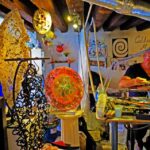
You’re not doing this in a tourist-style studio. The class happens at Carta Alta, an artisanal mask-making workshop where masks for film productions have been made, including high-profile titles like Gossip Girl and Fifty Shades of Grey, plus Spider-Man 2 and Spider-Man Far From Home. That film connection isn’t just bragging rights; it shows up in how the space is organized and how confidently the team explains materials and decoration.
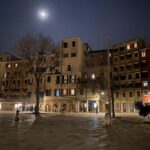
The setting on Giudecca also gives you something Venice usually won’t: a bit of calm. Multiple guests liked being out of the busiest center for a couple hours. And yes, it’s air-conditioned, which turns this from a “hot craft” gamble into a comfortable plan on warmer days.
You can also read our reviews of more tours and experiences in Venice
The Mask History Mini-Lesson: Bauta, Moretta, and Peste Doctor
Before you touch paint, you get a short history briefing. Expect a guided introduction to the historically important models that helped define Venetian mask culture: Commedia dell’Arte masks, the Bauta, the Moretta, and the Dottore della Peste. It’s a compact lesson, but it gives you a way to understand why masks look the way they do, not just how to copy them.
This part is also why the class feels more meaningful than a basic paint session. Once you know the purpose and visual language of a mask type, your choices during decorating start to feel intentional—like you’re building a small piece of Venetian storytelling. If you’re traveling with kids, this history block tends to land well because it’s explained in a way the instructors can adjust by age and interests.
Choosing Your Paper-Mâché Mask Base (And Yes, Sizes Vary)
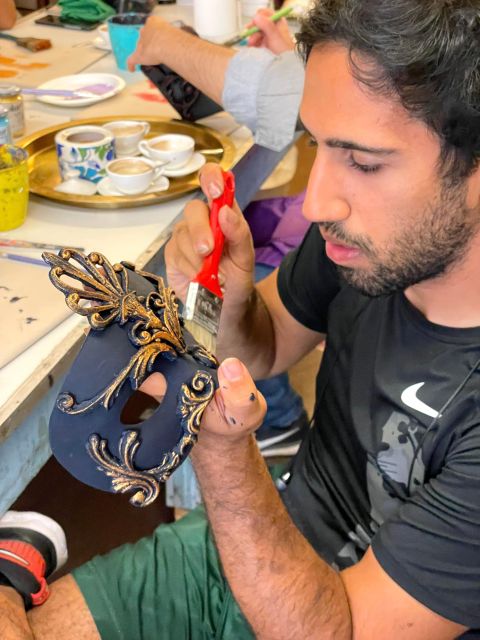
Next comes the fun moment: picking your paper-mâché base. You’ll have a wide range of masks to choose from, and that selection matters because your base shape influences the whole look. Some guests specifically liked how many options they had for adding embellishments, not only painting.
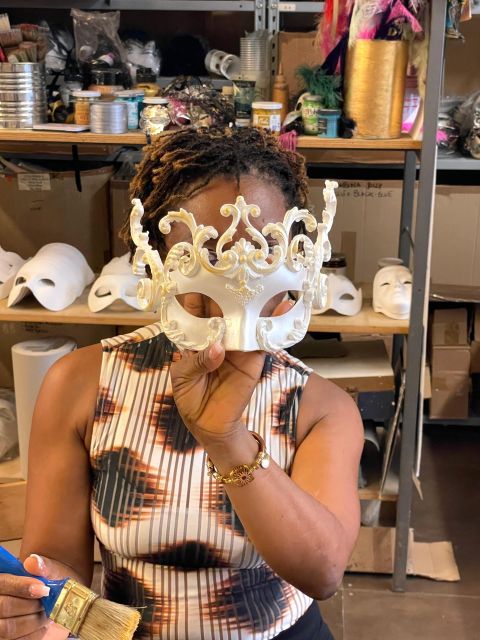
One practical heads-up: at least a couple people say the masks are smaller than they expected. That doesn’t mean the project is tiny—it just means you’re making a detailed face design rather than a big showpiece you can wear like a theater prop. If you’re buying this as a “center of the room” souvenir, go in knowing it’s meant to be admired up close.
Also, a note from a reviewer: you may not have every fantasy add-on available (one guest wished for extra elements like glitter or feathers). If you want a specific look, plan to achieve it with the materials they do provide—paint, layered decorations, and the baroque-style approach.
The Baroque Technique: Turning Details Into a Venetian Look
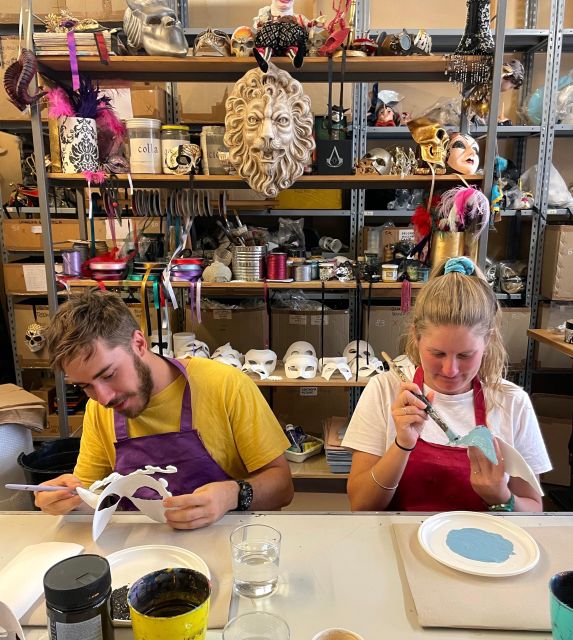
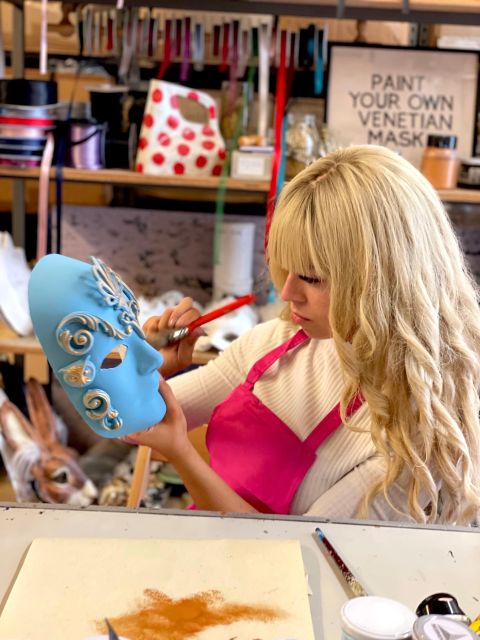
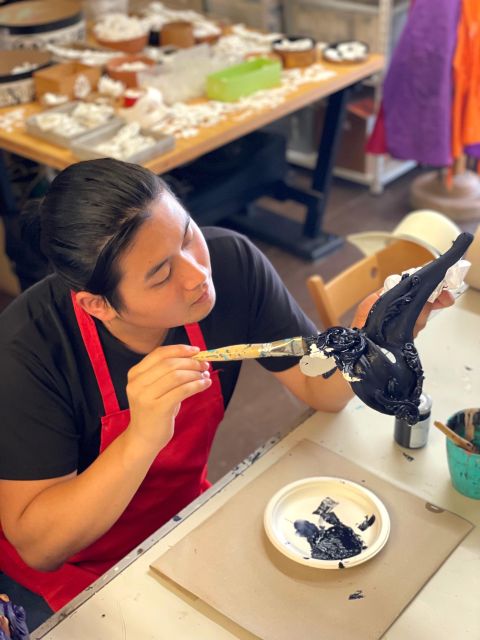
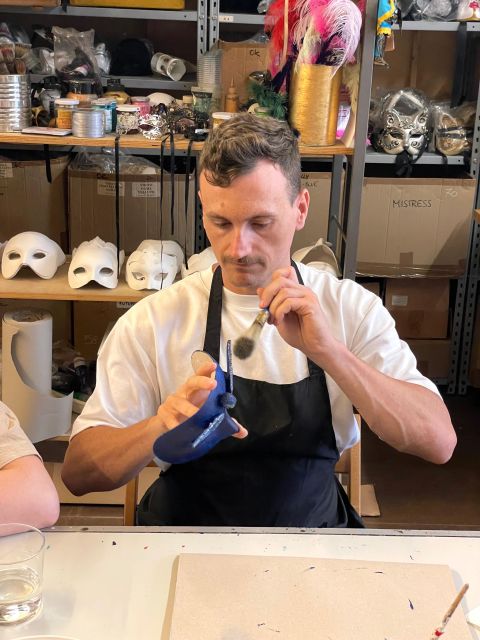
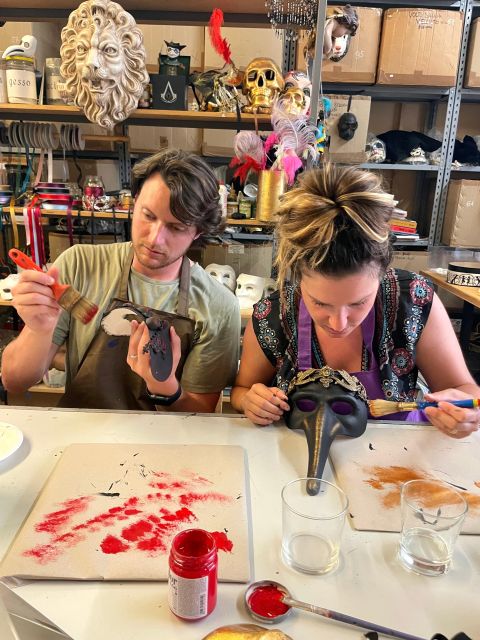
This is the workshop’s signature. You’ll learn the baroque technique and how to decorate with the kind of layered detail that makes Venetian masks feel ornate without looking chaotic. The team explains the key decoration methods, then supports you as you apply them to your chosen base.
In plain terms, the baroque part is about building visual richness: choosing colors that complement each other, adding decorative pieces in a way that guides the eye, and finishing in a way that makes the mask look intentional from multiple angles. In a few experiences, guests said the process involved more than just painting—there are appliqués and embellishment pieces you can use to personalize your mask.
Even if you’re not the artsy type, this method helps. Guests repeatedly mention that the instructors give step-by-step directions and patience that makes the final result look better than you’d expect for a first-timer. The “make it yours” feeling is real, but it’s supported by craft know-how.
Make-It-Your-Own Pace, Real Help, and Photo Time
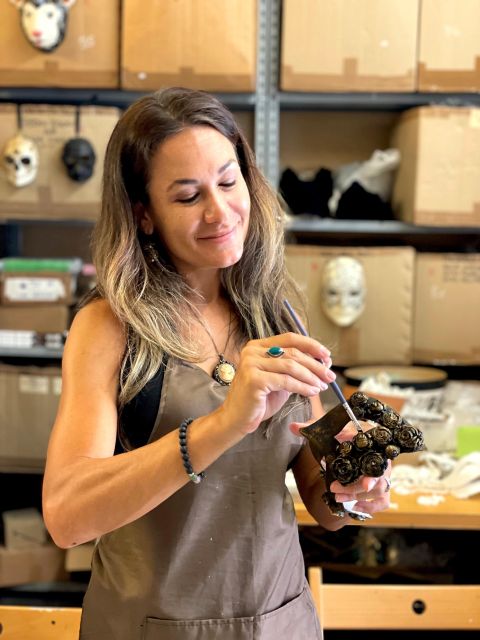
The workshop runs for 1.5 hours in a small group (up to 8 participants). That timing is long enough to learn the basics, build confidence, and finish a mask you’ll feel proud of. It’s also short enough that you don’t get stuck waiting while everyone else catches up.
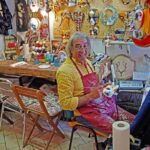
Your experience depends a lot on the instructor you get. Carta Alta’s owner Augusto shows up in many positive accounts, often described as charming and supportive, with an assistant artist and painter who helps guide the decoration. One guide named Cate also gets mentioned by name for doing a great job ensuring participants could still complete the workshop even when travel plans got disrupted. In general, the common thread is that the team keeps things friendly and encouraging, and they answer questions as you go.
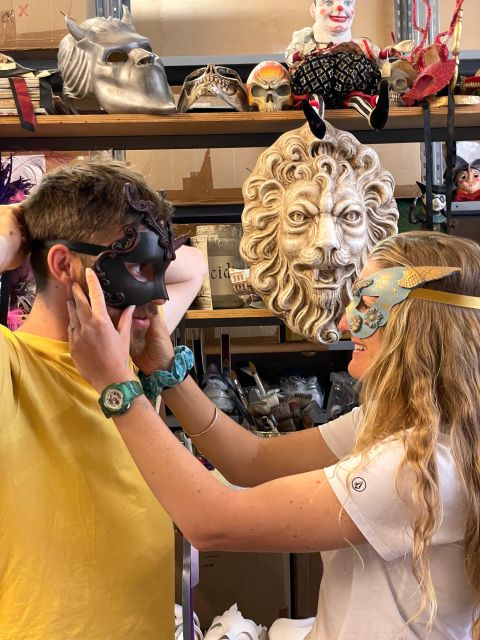
There’s also time to take photos—both with your finished mask and with their display of famous masks from film work. That’s a smart perk: it gives you a souvenir beyond the object in your hands, and it helps you remember what techniques you used when you’re back home.

Price and Value for a 90-Minute Venetian Craft Class
At $71 per person for about 1.5 hours, this is priced like a proper artisanal workshop, not a quick “do-it-yourself” stop. I think it’s good value if you care about craft quality and like the idea of learning a specific tradition (baroque decoration plus classic mask history), not just copying a template.
The value gets stronger because of three things that show up again and again:
- Small group size (max 8) means you’re not stuck working solo.
- The studio is linked to film productions, which hints you’re learning from people who do this professionally.
- You leave with a take-home mask, and guests often say the finished quality exceeded expectations.
If you’re very sensitive to the mask being small, that’s the only pricing-to-expectations mismatch I’d watch for. Otherwise, for a structured creative experience with real instruction, the cost makes sense.
Who This Workshop Fits Best (Families, First-Timers, and Curious Adults)
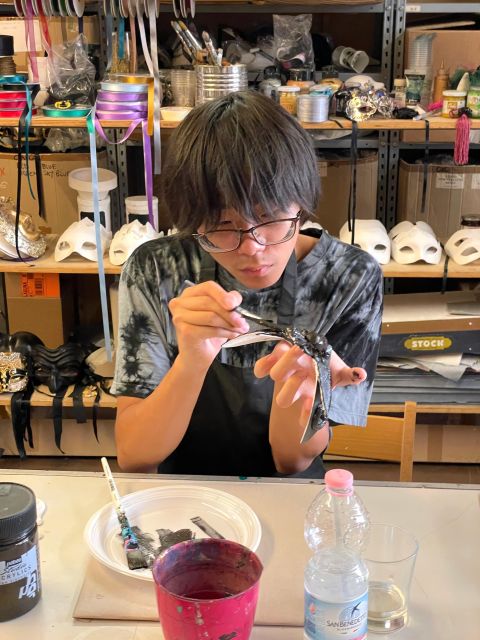
This is one of those activities that seems to work across ages and skill levels. Families have enjoyed it with kids ranging from younger ages to early teens, and adult guests also said it was stress-free even when they worried they wouldn’t be artistic.
If you’re traveling solo, you still get plenty of attention because the group stays small. If you’re with friends, it’s a good break from the “move, see, photograph, repeat” rhythm and lets you do something you can’t fully replicate elsewhere.
If you’re traveling in a language other than English, note that the instructors can work in English, Spanish, and Italian. One reviewer reported their session was mostly in English even though they booked Spanish, so if language matters a lot to you, it’s worth double-checking the expected language for your time slot.
Getting There: Fondamenta S. Biagio to Palace Door (Giudecca)
The meeting point is at the Palace Door at Fondamenta S. Biagio 796. The directions provided are straightforward: you’re about five minutes from the vaporetto stop Giudecca Palanca. From there, go right, take the first bridge, and walk for about two minutes to reach the place.
If you’re arriving by taxi, the closest stops are listed as Hilton Hotel or Harry’s Dolci – Cipriani. That’s handy because taxis in Venice can drop you in spots that make the final walk easier.
Water travel time can vary. One guest notes a commute of about 1 hour by boat if starting from farther out, while another says access from central stops can be just a few minutes by water ferry. I’d plan with a comfortable buffer so you don’t arrive flustered.
Before and After: Use the Quiet Side of Venice
A lot of the enjoyment is not only what happens at the workshop, but what it gives you afterward. The studio sits close to atmospheric restaurants, and several guests appreciated being in a calmer pocket of Venice for a break between sightseeing clusters.
If you want to eat nearby without chasing the loudest tourist menus, ask the staff for recommendations. Many guests say the instructors offered suggestions for local food and even pointed them toward pasta options in the area. It’s the kind of advice you can’t easily search for afterward because it’s based on what’s nearby and what you’ll actually enjoy.
If you’re timing your day, treat the 1.5 hours as a reset. Go in ready to slow down for once. Come out with a souvenir that proves you spent time on something real, not just snapped photos from the street.
Should You Book This Venetian Masks Workshop?
If you want a hands-on Venice experience with history and craft, I’d book it. The combination of classic mask references (Bauta, Moretta, Dottore della Peste), plus a baroque decoration technique, plus the fact that Carta Alta has produced masks for recognizable film titles makes this more than a generic souvenir craft.
Book it especially if:
- you want a small-group class where instructors can help you
- you like learning why things look the way they do, not only how to paint them
- you’d enjoy a calm, air-conditioned activity away from the densest crowds
Skip it (or set expectations carefully) if:
- you expected a large, wearable theatrical mask
- you’re looking for lots of specific “extras” like feathers or glitter—those aren’t guaranteed in the materials provided
Overall, it’s a strong value choice for anyone who wants to take home a piece of Venetian artistry made with their own hands.
FAQ
How long is the Venetian Masks Workshop?
The workshop lasts about 1.5 hours.
What does it cost, and what do I get for that price?
It costs $71 per person, and you take home your handmade mask. You also get expert guidance, a history lesson on key Venetian mask models, and support as you decorate using the studio’s baroque technique.
Where do I meet, and how do I find the studio?
Meet at the Palace Door at Fondamenta S. Biagio 796. It’s about five minutes from the vaporetto stop Giudecca Palanca, with directions to go right, take the first bridge, and walk about two minutes.
Do I need to bring art supplies or special items?
No. The studio provides what you need for the workshop. You just need the desire to make a Venetian mask.
What languages are available for the instruction?
The workshop offers instruction in English, Spanish, and Italian.
Can I take photos during the experience?
Yes. There’s time to take pictures with your creation and with the famous masks in the studio.