REVIEW · VENICE
Secrets of Venice Carnival and Life of Casanova Tour
Book on GetYourGuide →Operated by Venice Events srl · Bookable on GetYourGuide
Carnival in Venice has a way of making everything feel like theater. This tour gives you that feeling with the Casanova story woven through masks, costumes, and backstreet wandering. I like that the guide shows you the city through the lens of Giacomo Casanova, and I especially like the end stop for a hot cappuccino with Venetian frittelle. The main watch-out: the group can get large, and in rain you may struggle to hear if the guide cannot project well.
You’ll meet near La Fenice and follow a route that connects Casanova’s upbringing around San Samuele with Venice’s Carnival traditions—how masks worked, what life looked like in the 18th century, and why the city turned so many nights into big social events. Even if you know a few Casanova facts already, the fun here is how the guide ties people, places, and party culture together as you walk.
In This Review
- Key Highlights You’ll Actually Care About
- The Casanova Angle on Venice Carnival
- Meeting at Teatro la Fenice: Costumes, the route, and how it starts
- How the Casanova Trail Connects to San Samuele and Giorgio Baffo
- Palazzo Contarini del Bovolo: when architecture becomes part of the show
- Campo Santo Stefano: Carnival traditions, masks, and how they’re made
- Ridotto and courtesans: the social engine behind the parties
- The Carnival moment: costumes, Grand Balls, and street theater
- Ending at Le Café Venezia: cappuccino and Venetian frittelle
- Price and value: is $88 fair for what you get?
- Practical tips so the tour stays fun
- Who should book this Casanova and Carnival tour
- Should you book this Secrets of Venice Carnival and Life of Casanova Tour?
- FAQ
- Where do I meet for the tour?
- How long is the Secrets of Venice Carnival and Life of Casanova Tour?
- Is the tour guided in English?
- What’s included in the price?
- Is extra food or drinks included?
- Is a Carnival costume recommended?
- Is this tour suitable for wheelchair users?
- Are there luggage restrictions?
- Does the tour include any ticket-line benefits?
- Can I reserve and pay later, and can I cancel?
Key Highlights You’ll Actually Care About
- Casanova-inspired walking route that threads San Samuele alleys into Carnival history
- Mask-making stories plus why masks mattered for anonymity in older Venice
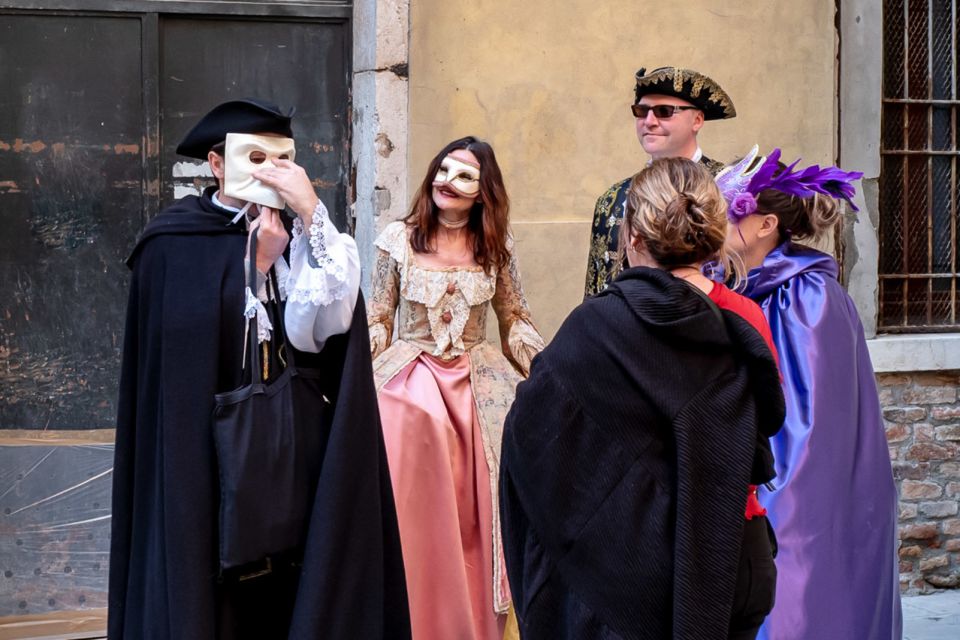
- Costume and ball talk that explains how 17th-century and aristocratic fashions showed up in the streets
- Ridotto context: where Casanova met Venetian aristocracy and how the city’s “play” worked
- A real break at the end with cappuccino and Carnival frittelle at a local café
- A guide-led, theatrical vibe—Sergio aka The Swiss and Dennis are specifically noted for humor and engaging storytelling
The Casanova Angle on Venice Carnival
If you’re going to do Venice Carnival, you want more than parade photos. This is one of the better ways to connect the spectacle to a real social world—romance, secrecy, gambling, clever disguises, and the kind of courtly entertainment that made Venetian nights feel important.
What makes it work is the focus. Instead of turning Carnival into random trivia, the guide builds a clear story: how masks helped people move through society with less risk, how elite festivities functioned behind private palaces, and how figures like Casanova fit into that scene. You’ll also hear about Giorgio Baffo, the poet linked to Casanova’s early introduction to worldly pleasures, and it gives you a useful way to understand why the same streets can feel both gritty and glamorous.
I also like that the tour is playful without going fluffy. The tone stays “Casanova would approve,” but you still get grounded historical context: where Casanova’s life started in Venice, how Carnival traditions formed, and how the Ridotto shaped social mixing among the aristocracy.
You can also read our reviews of more tours and experiences in Venice.

Meeting at Teatro la Fenice: Costumes, the route, and how it starts
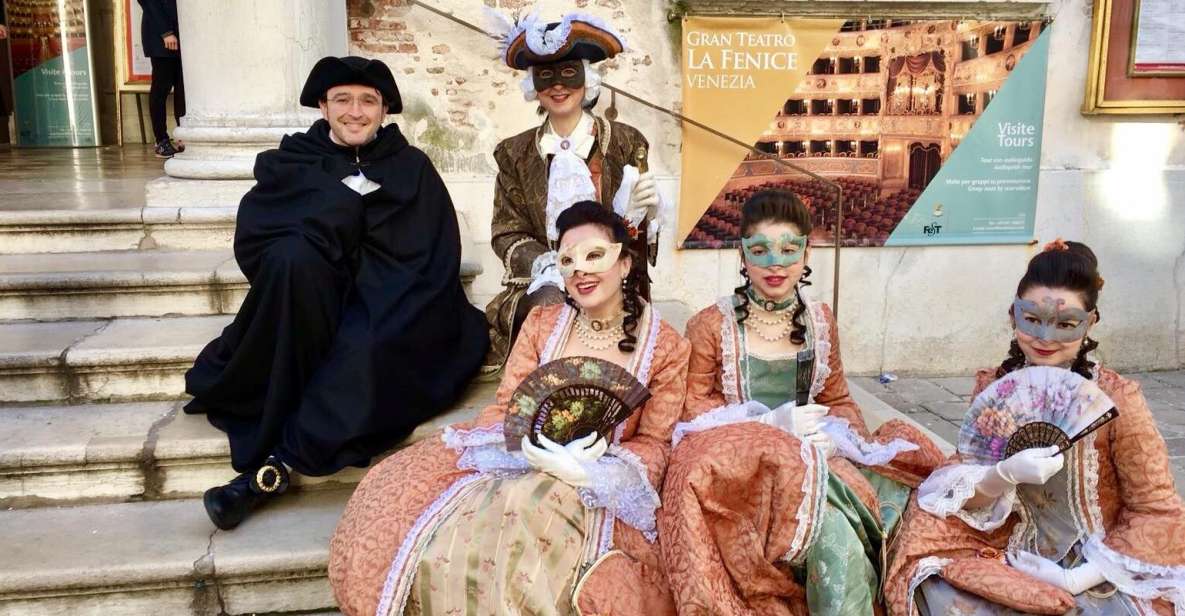
The meeting point is Campo della Fenice, in front of Teatro la Fenice. It’s a good spot to find because the theater is a bright landmark, and you should see the guide holding a sign with the tour name.
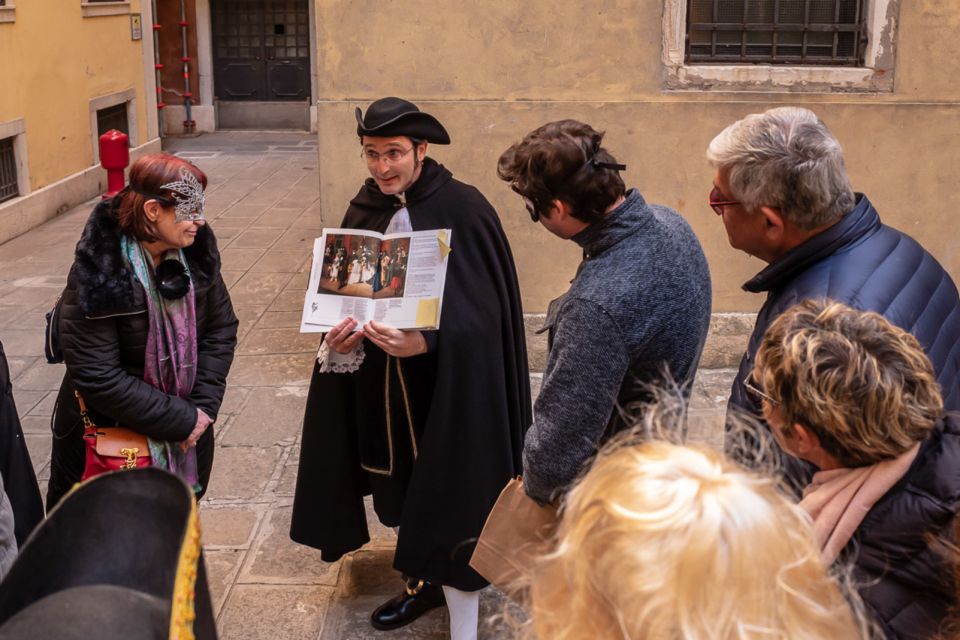
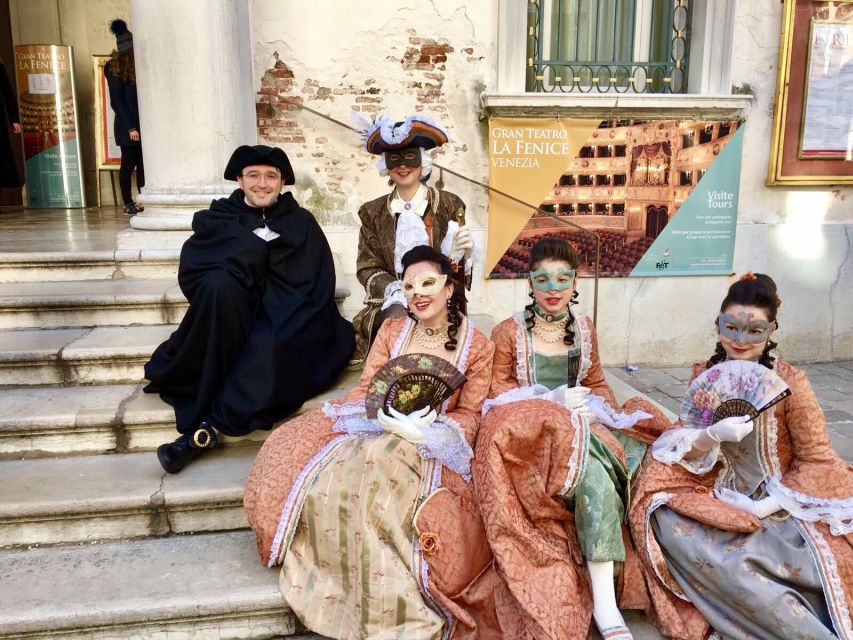
From the start, the guide is part of the show. You meet an English-speaking guide dressed in a traditional Venetian Carnival costume, and that matters more than you might think: it sets the tone so you’re not just hearing history, you’re feeling like you walked into a period scene.
This tour is also designed for backstreets. You’re walking through narrow calle (alleys), not just standing in big open squares. That makes the experience feel more local and less like a checklist. It also means you’ll want to be comfortable with a steady pace and frequent turns—Venice is Venice.
One practical tip: wear shoes you trust. Even though the route is only around a couple of hours, the stones and bridges add up fast in winter Carnival crowds.
How the Casanova Trail Connects to San Samuele and Giorgio Baffo
Once you start walking, the tour quickly anchors itself to Casanova’s life. You’ll hear how he was born in Venice and grew up in the San Samuele area, then follow the alleys that pass his home. That detail keeps the story from floating in the abstract.
You’ll also pass Casanova’s house and the house of the poet Giorgio Baffo, the figure tied to Casanova’s early pull toward worldly pleasures. When you’re standing in the kind of narrow streets where people once had to be clever to move freely, these names feel less like a textbook. They turn into places.
This section is the heart of the “life story” approach. You don’t just learn about masks; you learn why someone like Casanova would want them, use them, and talk about them. You also hear him described in the broader social sense—lover, adventurer, extravagant figure, and linked to circles that shaped Venetian entertainment and status.
Palazzo Contarini del Bovolo: when architecture becomes part of the show
One of the stops is Palazzo Contarini del Bovolo. This is the kind of Venice location that instantly makes Carnival feel plausible: elegant spaces, high visual drama, and that mix of public theater and private living.
Here, the story shifts from “who Casanova was” to “how Venice performed.” The guide connects the look of grand design to the kinds of people who attended Carnival events, including the luxury costumes worn for the Grand Balls held in private palaces. Even if you don’t go inside anything (the tour is mainly walking and storytelling), you still get a sense of why the city’s elites would treat entertainment like a social obligation—and why Carnival would be the perfect stage.
Potential drawback for this type of stop: if you’re the type who likes long sitting breaks, you might find yourself standing a bit while the guide talks. Some visitors in past tours have said certain stops felt too long, so keep expectations flexible.
Campo Santo Stefano: Carnival traditions, masks, and how they’re made
Next comes Campo Santo Stefano, and this is where the tour leans hardest into Carnival craft and meaning. You’ll hear the history of masks—especially how they were used to hide identity. That piece is crucial, because it explains why Carnival wasn’t only about fun. Anonymity changed behavior. It created freedom, but it also shaped how people protected themselves socially.
You’ll also learn about how the traditional masks are made. The tour doesn’t just tell you what a mask is; it gives you practical detail about the process and why it mattered for the look and use of the mask in street life.
If you come to Venice Carnival mostly thinking about aesthetics, this is the part that gives you context. When you understand how the mask functioned—who it protected, what it signaled—you’ll start noticing more than decoration in the streets.


Ridotto and courtesans: the social engine behind the parties
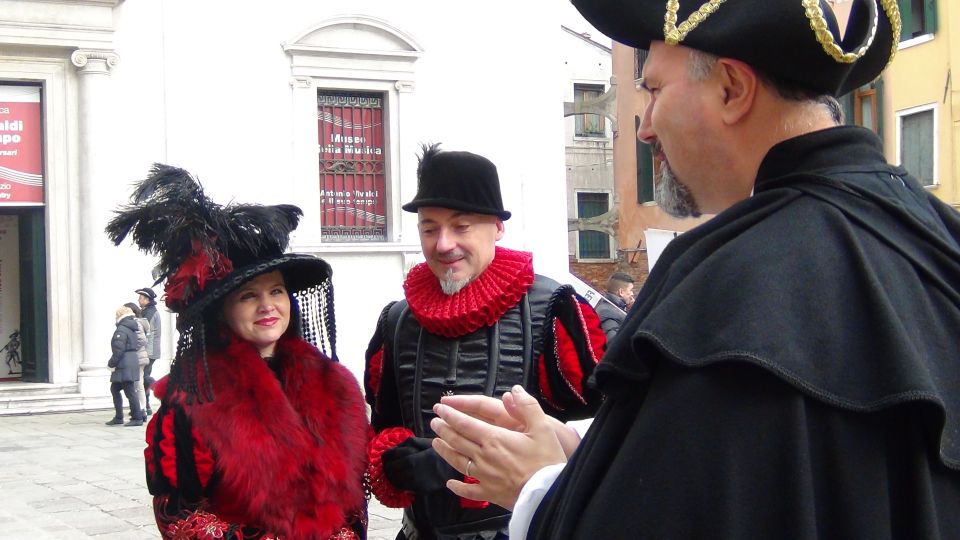
A key part of the story is the Ridotto, described as the first casino in Venice. You’ll hear how Casanova would meet Venetian aristocracy there, and how that space fits into the wider Carnival world. This matters because it reframes “Casanova as a romantic legend” into Casanova as a person moving inside systems: money, status, and social mixing.
You’ll also hear about courtesans and their role in making Venice feel animated. That’s not a random tangent. It helps explain why Venice had such a reputation for entertainment and clever social navigation. Carnival amplified it, turned it visible, and made the city feel like it was always in on the joke.
This part of the tour is also where the guide’s storytelling style shows up. Several guides leading this experience are noted for humor and keeping attention. Sergio aka The Swiss is singled out for being especially engaging and for managing a fairly large group without the energy dropping. That kind of pacing is what makes the facts enjoyable instead of heavy.
The Carnival moment: costumes, Grand Balls, and street theater
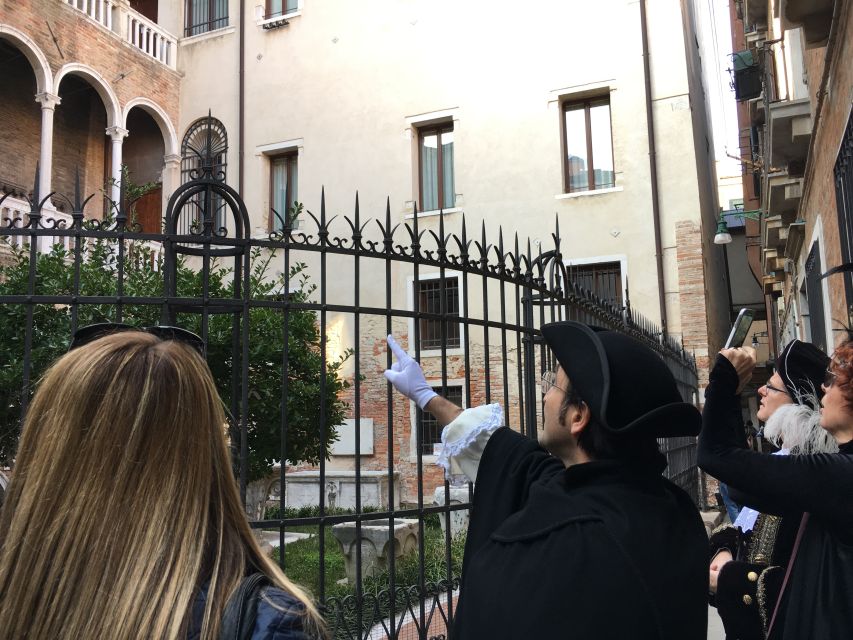
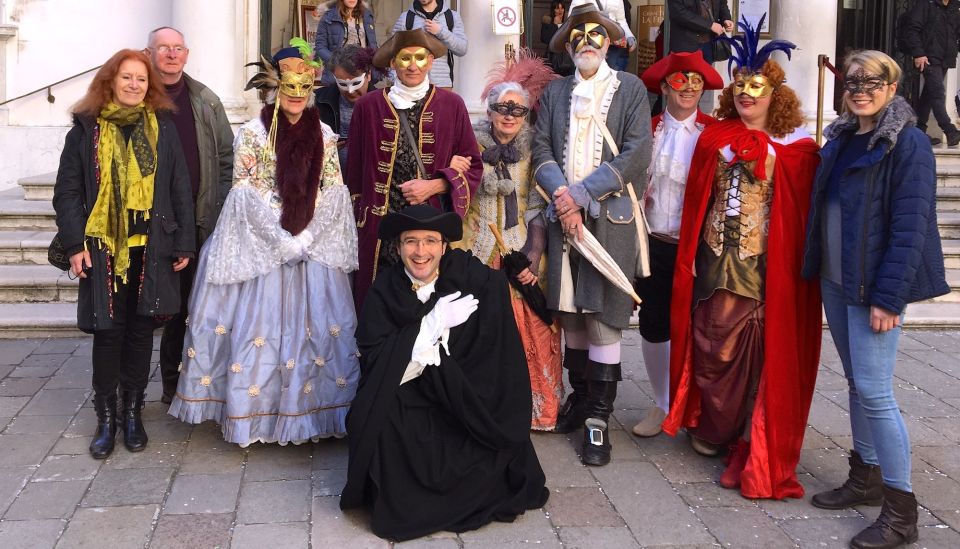
Throughout the walk, you’ll see and hear descriptions of costumes from the 17th century that people used during Carnival time. The idea is to help you visualize the street as a costume stage, not just a backdrop for tourists.
You’ll also hear about luxurious costumes used by people attending Grand Balls in private palaces. Even though Venice palaces can feel off-limits from the outside, the tour helps bridge that gap with explanations of what these events represented and how people dressed for them.
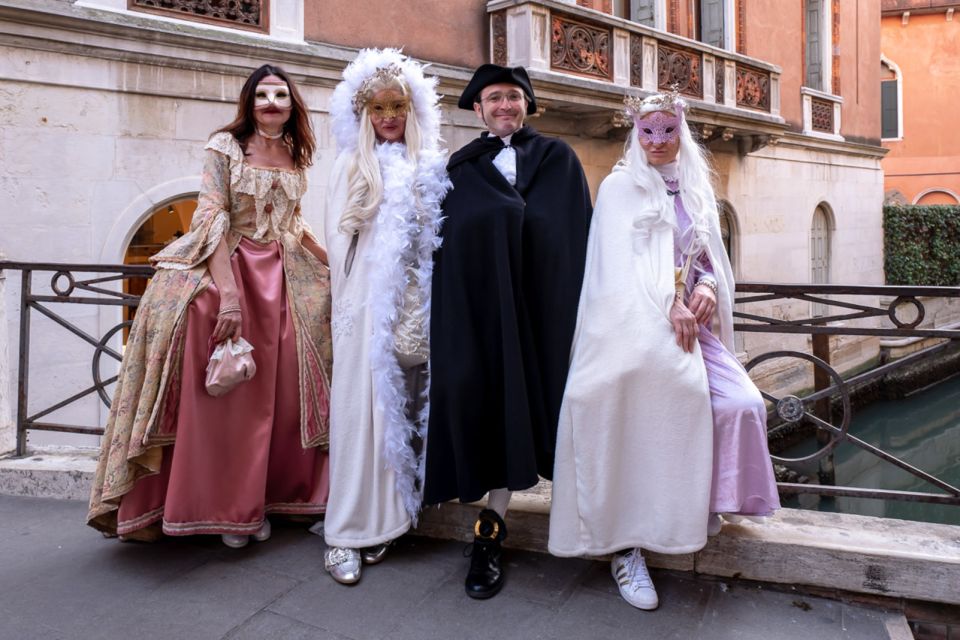
Here’s where your own outfit choice can pay off. You’re encouraged to come wearing a Carnival costume, or at least a cape with a mask. It’s fun for photos, and it also helps you feel less like you’re watching history and more like you’re participating in a living tradition.
Ending at Le Café Venezia: cappuccino and Venetian frittelle
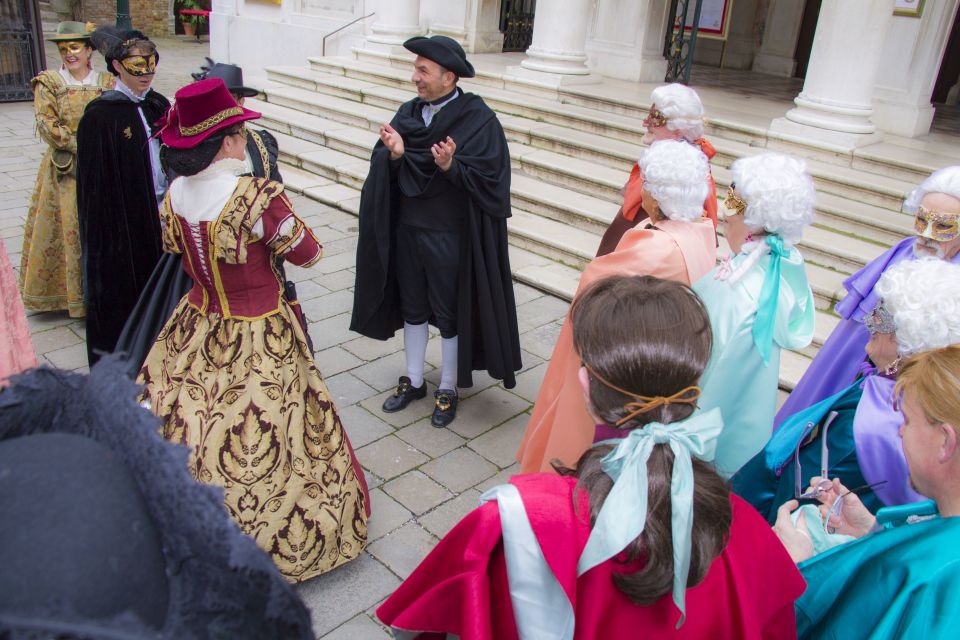
The tour ends about a short walk from St Mark’s Square at Le Café Venezia. This is when you catch a breather and switch from walking story-time to something warm and sweet.
You’ll be served a hot cappuccino and a Venetian Carnival cake called frittelle. Frittelle are described as Carnival-period only, and that timing matters: the tour gives you the sense that Carnival is seasonal ritual, not year-round novelty.
I like that the café stop isn’t just an afterthought. It gives your legs a reset, and it’s also a natural place for questions. In the feedback for these tours, visitors mention guides sticking around to chat after the experience, which can help you connect the story to what you see later on your own.
Price and value: is $88 fair for what you get?
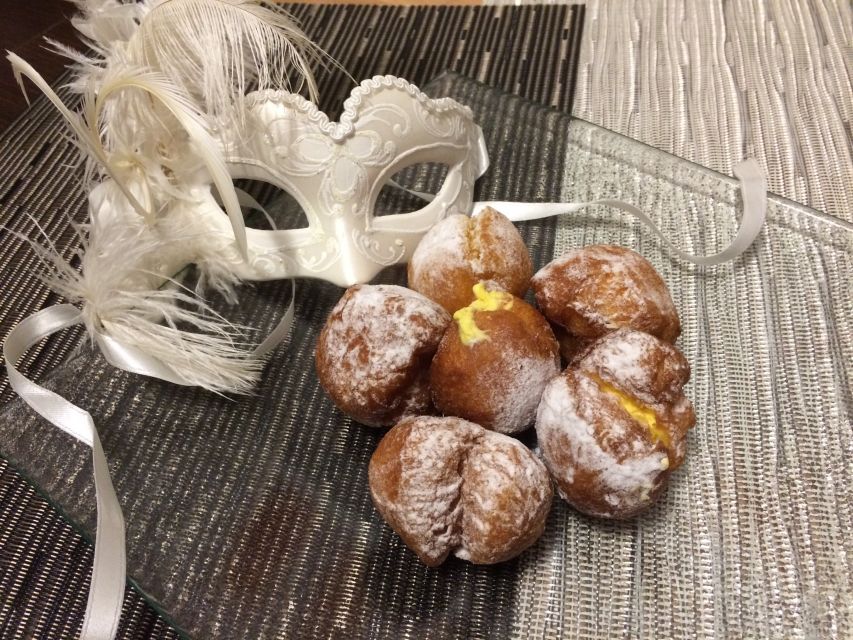
At $88 per person for around two hours, the value hinges on two things: (1) you’re paying for an English-speaking guide who provides a connected story, not just generic facts, and (2) you’re getting an included food and drink stop that fits the season.
You’re not asked to spend extra on lunch or a separate experience to make the tour feel worthwhile. The included cappuccino and Carnival frittella are small, but they’re correctly placed at the right moment: after walking, in a local café. That reduces decision fatigue and keeps the tone consistent.
Also, the tour checks a practical box: it includes a skip-the-ticket-line element. The exact sites you’ll deal with aren’t spelled out in the details you provided, but in general, skipping lines in Venice saves time when crowds are thick.
If you’re the type who prefers to self-explore with a map, you might question paying for a guided route. But if you want your Carnival day to feel guided and coherent, this price is easier to justify.
Practical tips so the tour stays fun
A few things can make or break the experience in Venice Carnival season:
- Wear shoes that handle uneven stone and frequent turns.
- Bring a layer. Even if you’re out for only about two hours, it can feel colder with wind off the water.
- If you’re going to join in with a mask or cape, keep it secure. You want to feel comfortable while walking.
- If your group is large, try to stay close to the guide for the clearest storytelling. Some prior visitors have noted hearing can be tougher in busy streets, especially in rain.
The tour is not suited to wheelchair users, and oversize luggage isn’t allowed. If you’re traveling light, you’ll enjoy the backstreet walking far more.
Who should book this Casanova and Carnival tour
This tour is a good match if:
- You want a Carnival experience that explains meaning, not only photos.
- You like historical characters and want places tied to real names like Casanova and Giorgio Baffo.
- You enjoy walking routes with lots of alleyway scenes rather than only major landmarks.
- You appreciate a guide who uses humor to keep the story moving. Sergio aka The Swiss and Dennis are examples of guides known for that style.
It’s not the best fit if:
- You dislike standing while a guide talks at each stop.
- You need lots of time to sit down or you get frustrated when a group moves as a single unit.
- You require wheelchair access.
Should you book this Secrets of Venice Carnival and Life of Casanova Tour?
Yes, if you want Carnival with a narrative spine. For $88, you’re getting a guided walk tied to Casanova’s Venice, mask-focused context, costume storytelling, and a proper end stop with cappuccino and frittelle. That combination makes it more than a generic Carnival stroll.
Consider skipping or choosing a different option if you’re sensitive to noise and crowd pressure, especially in rain, or if you strongly prefer quieter group dynamics. The route is best enjoyed when you can stay close, hear the guide clearly, and follow the story without getting pulled off pace.
If you book, do one thing that will improve your day: come ready to walk and be in character a little—mask, cape, or just the mood. This is a Venice tour built for people who want the city to feel like a play.
FAQ
Where do I meet for the tour?
You meet at Campo della Fenice, in front of Teatro la Fenice. Look for the guide with the tour sign.
How long is the Secrets of Venice Carnival and Life of Casanova Tour?
It lasts about 2 hours total, with a guided walking experience listed as 1.5 hours.
Is the tour guided in English?
Yes. The tour includes an English-speaking guide.
What’s included in the price?
An English-speaking guide (dressed in a Carnival costume) plus a hot cappuccino and a Venetian frittella at a local coffee shop.
Is extra food or drinks included?
No. Extra food and drinks are not included.
Is a Carnival costume recommended?
Yes. You can come in Carnival costume, or wear a cape with a mask. It’s encouraged for fun and photos.
Is this tour suitable for wheelchair users?
No, it is not suitable for wheelchair users.
Are there luggage restrictions?
Oversize luggage is not allowed.
Does the tour include any ticket-line benefits?
It notes that you skip the ticket line.
Can I reserve and pay later, and can I cancel?
Yes. You can reserve now and pay later, and there is free cancellation up to 24 hours in advance for a full refund.