REVIEW · VENICE
Palladio. A wonderful live tale through time&soul, from Ve/Pd/Vr
Book on Viator →Operated by Palladian Routes · Bookable on Viator
Time travel happens in Vicenza.
This private day trip links Palladio’s world to Venice through a guided, time-and-ideas storyline, and I love two things right away: the welcome at Palazzo Valmarana Braga and the way Teatro Olimpico turns architecture into a living experience with light and sound. The only real consideration is the schedule: it runs about 8 hours, and it’s a full day with no lunch included.
I also like how the route mixes big-ticket monuments with quieter street moments, so you’re not just collecting photos. You’ll get insider-style context at the UNESCO sites, plus a drink moment in a Palladian setting, which makes the day feel less like a tour bus loop and more like an actual narrative. Just keep in mind a couple of key villa entrances are not included, so you may pay extra depending on the day.
In This Review
- Key highlights you’ll feel immediately
- A private Vicenza day that explains Venice, too
- Villa Chiericati: the door of time (and why you don’t enter)
- Palazzo Valmarana Braga: a private reception in a UNESCO palace
- Piazza dei Signori and Basilica Palladiana: Vicenza’s living room
- The loggia moment that connects Vicenza and Venice
- Strada Maior and Contrà Porti: reading the city street-by-street
- Palazzo Chiericati civic museum: portraits and the people behind Palladio
- Teatro Olimpico: the dream show inside Palladio’s theater ideal
- Palladio Museum: wooden models that make design finally concrete
- The Palladian loggia aperitif: a good ending inside the story
- Villa La Rotonda (Villa Capra): what you can enter, and when
- Villa Foscari: another chapter of Palladio, with optional access
- Price and logistics: when this day trip is worth it
- Should you book Palladian Routes Palladio in Venice and Vicenza?
- FAQ
- FAQ
- How long is the Palladian Routes Palladio tour?
- What does the tour cost per person?
- Is the tour private?
- Is pickup available in Venice?
- Is the tour guided in English?
- Are entrance tickets included?
- Is lunch included?
- Can I use an e-bike to reach Villa La Rotonda?
- Do I need to pay a Venice access fee?
- What if I need to cancel?
Key highlights you’ll feel immediately
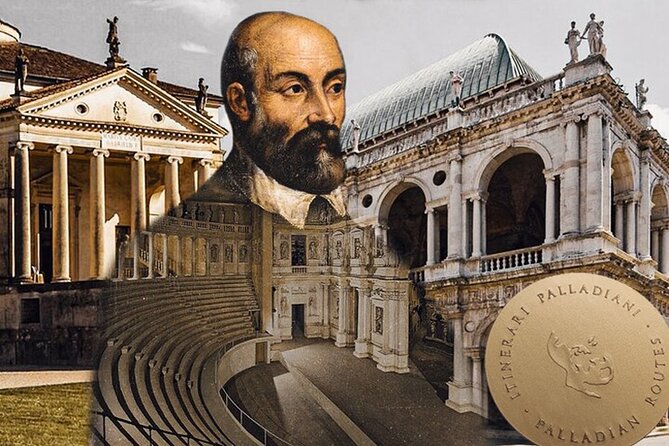
- A director-led tale through time that connects Palladio to wider ideas, not just dates and facts
- Palazzo Valmarana Braga reception + Palladians’ loggia aperitif, with history woven into the setting
- Teatro Olimpico with a light-and-sound show, one of the most distinctive moments in Vicenza
- Basilica Palladiana terraces + goldsmith traditions nearby, combining viewpoints with craft
- Palladio Museum wooden models, a hands-on way to understand how villas were designed
- Optional Villa La Rotonda access with strict calendar rules (and an e-bike option)
A private Vicenza day that explains Venice, too
This tour is built like a timeline you can walk through. You’re picked up in the Venice area (pickup is offered), then you head to Vicenza, where Palladio’s influence shows up in buildings, streets, and even the way people think about space. It’s private, so your group moves as one unit instead of being swallowed by a larger crowd.
At $612.81 per person for about 8 hours, it’s not a “cheap and cheerful” outing. The value comes from what you’re not doing yourself: private transportation, a guided itinerant story, many entrance fees, a drink included at the end in a Palladian setting, and even possible use of an e-bike for the Villa La Rotonda ride. If you’re the type who loves context more than checklists, this style usually feels worth it.
You can also read our reviews of more tours and experiences in Venice.
Villa Chiericati: the door of time (and why you don’t enter)
You start at Villa Chiericati for a stop called The Door of Time, which is described as a symbolic doorway rather than a normal museum entry. You spend only about 5 minutes here, and admission is not included because it’s a no-entry moment. That might sound like a tease, but it sets the tone: the day is framed as a time-and-soul journey, with the buildings acting like chapters.
What I like about this kind of opening is that it gives you a lens before you see the architecture. Instead of jumping straight into facades, you start with the idea that Palladio’s work is about transfer—of principles across eras. If you’re prone to getting lost in “too many sights,” this opener helps keep the day coherent.
Palazzo Valmarana Braga: a private reception in a UNESCO palace
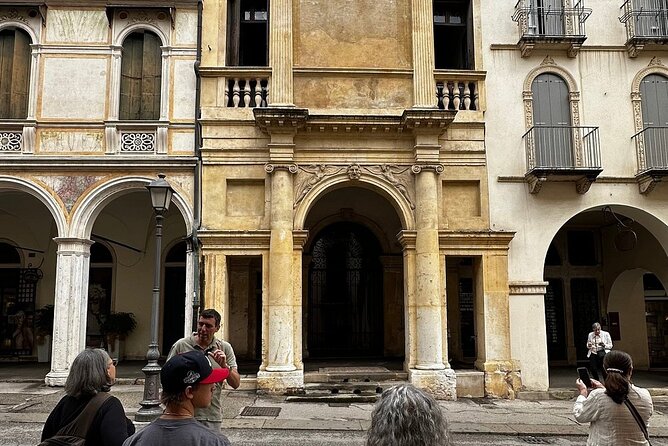
Palazzo Valmarana Braga is one of the tour’s main emotional anchors. You get a welcome, described as a private reception in one of the most beautiful palaces within the UNESCO heritage context. The visit runs about 25 minutes and includes admission.
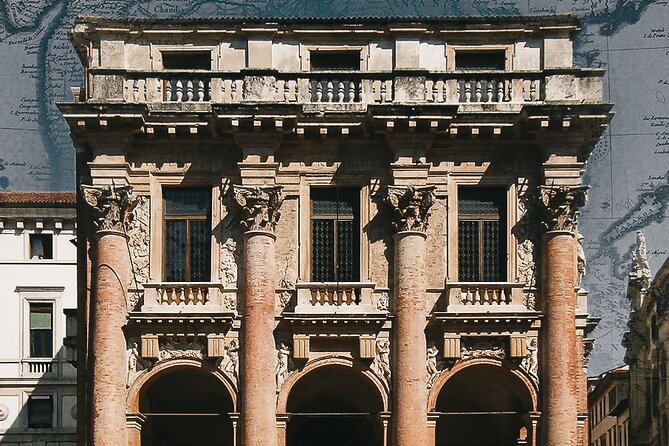
Here’s what makes it more than sightseeing: you’re introduced to the UNESCO heritage story through the lens of Palladio-related villas and the network of the owners of those Palladio Villas. You also get to contemplate the palace’s extraordinary facade, plus a precious Renaissance fresco on the ceiling of the Count’s study. And the guide connects it to what an Empress of Austria supposedly saw on her visit—useful because it helps you picture how these places functioned for powerful visitors, not just modern cameras.
If you care about architecture as culture, this stop is a strong reason to book.
Piazza dei Signori and Basilica Palladiana: Vicenza’s living room
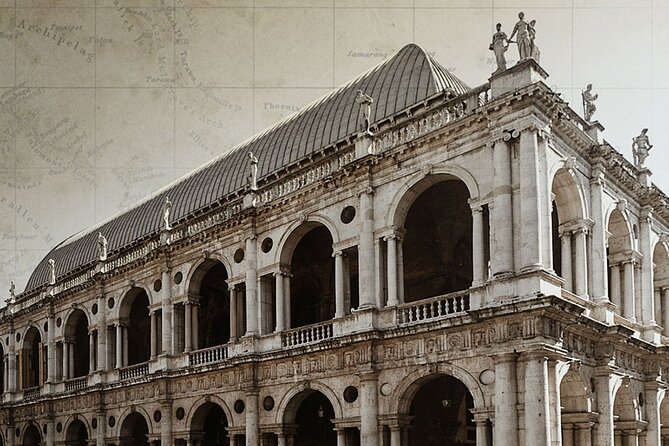
Next comes Piazza dei Signori, about 20 minutes, offered as Vicenza’s living room. It’s a quick stop, but the point is to take in the patrician feel of the square and get your bearings. You’re set up for the bigger perspective moment: the view toward Piazza dei Signori from the Basilica Palladiana terraces.
Basilica Palladiana is one of the most symbolic Palladian buildings in the city. You enter here (about 30 minutes), and admission is included. From the terraces, you can appreciate how the square plays out from above—perfect for understanding why the city layout matters. Then you go down among the arcades, where you’ll see the Vicenza tradition of goldsmith work represented by the Jewelery Museum (one of a kind).
If you want a practical takeaway: this is the place where Palladio’s visual logic clicks. It’s not just isolated buildings; it’s architecture shaping public space.
The loggia moment that connects Vicenza and Venice
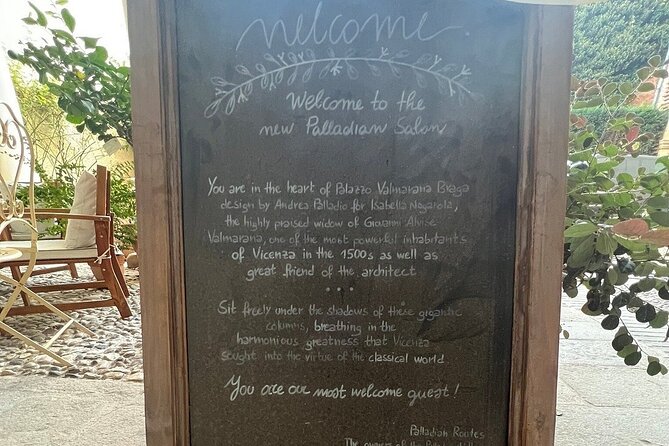
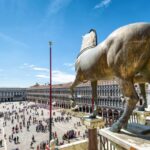
Between stops, the program explicitly calls out a contrast: Venice is silent, but present, in reference to the loggia area in front of the Basilica. It’s still in the Vicenza setting, but the guide is nudging you to see shared visual ideas across the two cities.
I like this kind of bridge because it prevents Vicenza from feeling like a random day trip. Venice and Palladio are not “totally separate worlds.” Even when you’re physically in Vicenza, the guide keeps the Venice connection in your head.
Strada Maior and Contrà Porti: reading the city street-by-street
Then it’s time for street work. Strada Maior is called the most important street in Vicenza and also a connector between Palladian works. Expect about 15 minutes of strolling with historic shops as part of the backdrop. The tour frames it as normal daily life with architecture in the background—useful if you don’t want your day to feel like standing in lines all day.
After that, you visit Contrà Porti for about 15 minutes. This street is described as aesthetically beautiful, but the real hook is cultural layers meeting in one place. The narrative brings up the Renaissance north-to-south tension and the Reformation coming from the continent, mixing ancient virtue with the genius of new men. You can treat this stop as a palate cleanser: instead of another museum, you’re reading the city.
If you’re tight on time, these street segments are also how you get authentic atmosphere without ticket lines.
Palazzo Chiericati civic museum: portraits and the people behind Palladio
Palazzo Chiericati is a UNESCO World Heritage site and also the stop where you shift into art and civic collecting. You’ll visit the Museo Civico di Palazzo Chiericati for about 30 minutes with admission included.
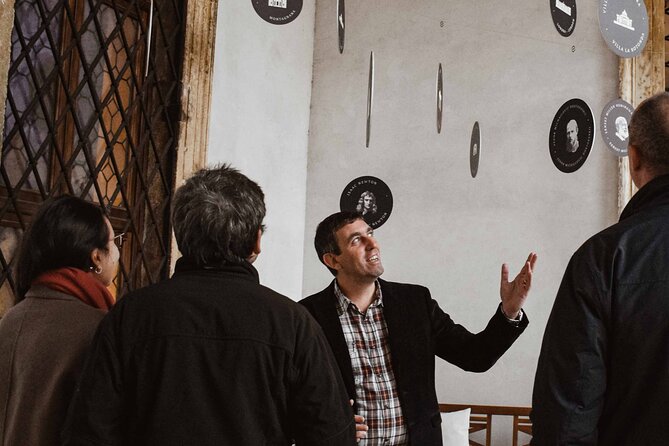
The emphasis here is on Venetian works of art inside—Tintoretto, Veronese, Sansovino, and others are named—and the tour focuses on the main floor’s large portraits of men who in different ways helped shape the architect. That focus matters. Palladio wasn’t working in a vacuum; he had patrons, power, and a social network. Seeing portraits and courtly influences in the same setting as the art makes it easier to understand how buildings like villas become possible.
If your brain likes cause-and-effect, this stop will reward you.
Teatro Olimpico: the dream show inside Palladio’s theater ideal
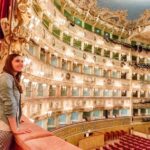
This is one of the biggest-ticket emotions of the day. Teatro Olimpico gets about 35 minutes, and admission is included. It’s described as unique and exciting, with an evocative light and sound show.
The program highlights that it’s the first covered theater in history and also tied to the ancient Greek ideal pursued by Palladio and his circle of clients. Even without quoting old theory, you can feel the intent: this theater is designed to make you experience a world, not just watch a performance.
Practical advice: if you care about how the space sounds and feels, arrive mentally ready to sit and watch the show. This stop is often the moment people remember from the whole day.
Palladio Museum: wooden models that make design finally concrete
After the theater, you’ll head to the Palladio Museum for about 40 minutes with admission included. This is where the architecture turns into something you can understand with your hands, figuratively.
You can discover Palladio’s legacy of villas by looking closely at the wooden models. That’s important because models translate design principles fast. If you’ve ever looked at villas and felt like you were missing the “how,” models tend to fix that. The tour also notes they can open it for you even outside standard opening hours to the public, which is nice because it keeps your day moving and avoids wasted time.
The Palladian loggia aperitif: a good ending inside the story
Then you circle back to Palazzo Valmarana Braga for a private aperitif in the Palladians’ loggia. This takes about 25 minutes, and admission is included.
This is a smart ending point. You’ve already seen the big buildings, the museum explanations, the theater impact, and now you’re back in a setting that looks like it belongs to the same world as the villas. The tour includes alcoholic beverages, so it’s also a built-in moment to relax without hunting for a café on your own.
Villa La Rotonda (Villa Capra): what you can enter, and when
Now for the big name: Villa La Rotonda by Andrea Palladio, also called Villa Capra. The tour includes a stop here, but entry is excluded, so you’ll need to consider admission separately.
There are timing rules you should care about. The program says you can enter only until 10 December and starting from 11 March, excluding Mondays. It also notes that from Tuesday to Thursday, entry to Villa La Rotonda is exclusive—meaning the villa is normally closed to the public on those days.
You have an optional approach, too. If you want, you can reach Villa La Rotonda by pedaling with a comfortable Palladian e-bike. Otherwise, the group goes by transport. The e-bike use is mentioned as possible and free for a pleasant ride to the villa.
And here’s an extra real-world benefit: on at least one occasion, the visit to Villa La Rotonda included exploration of spaces normally not included in the standard visit. That kind of detail depends on circumstances, but it’s the type of advantage a private, story-led day can create when the program allows it.
Villa Foscari: another chapter of Palladio, with optional access
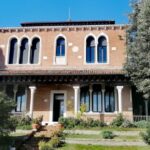
The final villa stop is Villa Foscari, about 20 minutes. Like La Rotonda, entry is excluded, meaning any interior access would be extra.
The tour describes this as the first Palladio villa where a pronaos appears on the main facade, replacing the loggia, turning it into a princely country palace that dominates the placid Brenta canal. The idea is that it marks the beginning of Palladian language traveling beyond local borders—so you’re ending with a “Palladianism spreads” kind of takeaway.
There’s also a possibility of extra entry on opening days (at extra cost), and the note says that if you do enter, the program in Vicenza can be reduced proportionally based on your indication. That’s worth thinking about: if you’re trying to maximize time at Vicenza landmarks, you might skip extra villa access; if your heart is strictly set on villas, the trade can be good.
Price and logistics: when this day trip is worth it
Let’s talk value without fog.
You’re paying for: private transportation, the guided itinerant tale, entrance fees for the places where admission is included in the program, possible use of an e-bike, an aperitif with alcoholic beverages, and a little final Palladian gift. Lunch is not included, and you’ll want to plan your meals around that.
You should also factor in the calendar rules for Villa La Rotonda. If your dates fall outside the entry window, you may still visit the exterior and get the villa context, but you won’t be able to enter without meeting those constraints.
For who it fits best:
- Couples or small groups who want a narrative more than a photo march
- People who like UNESCO heritage when it’s explained inside the building, not only through plaques
- Architecture fans who care about how streets, civic buildings, and villas connect
If you’re short on time in Italy and want one “big Palladio day” that’s structured and guided, this is a strong option.
Should you book Palladian Routes Palladio in Venice and Vicenza?
Yes, if your goal is understanding. If you want the day to make sense—how Palladio’s ideas move through time and why Vicenza and Venice feel connected—this itinerary does that job.
I’d say book it now if:
- You’re excited by Teatro Olimpico and want the show experience
- You’d enjoy reception-style moments at Palazzo Valmarana Braga
- You want to leave with a clearer grasp of villa design through Palladio Museum models
- Your dates line up well for Villa La Rotonda entry (or you’re okay treating it as an architectural stop)
Skip it (or at least adjust expectations) if:
- You hate long days with a busy schedule
- You need lunch included
- You want guaranteed interior access to both La Rotonda and Villa Foscari on every date, because entry for those is not included and depends on the stated rules
FAQ
FAQ
How long is the Palladian Routes Palladio tour?
It runs about 8 hours.
What does the tour cost per person?
The price is $612.81 per person.
Is the tour private?
Yes. It’s a private tour/activity, with only your group participating.
Is pickup available in Venice?
Pickup is offered. The provider can also possibly arrange a water taxi transfer from your hotel in Venice for an extra cost if you contact them at least 3 days before the tour date.
Is the tour guided in English?
Yes, it’s offered in English.
Are entrance tickets included?
Many admissions are included in the program, but some stops specify entry is not included: The Door of Time at Villa Chiericati is no entry, Villa La Rotonda entry is excluded, and Villa Foscari entry is excluded.
Is lunch included?
No. Lunch is not included.
Can I use an e-bike to reach Villa La Rotonda?
Yes, the tour mentions possible free use of an e-bike for a pleasant ride to Villa La Rotonda, if you choose.
Do I need to pay a Venice access fee?
On certain dates, most visitors staying outside Venice who plan to visit for the day may need to pay a €5 access fee. You can check the applicable days and exemptions at https://cda.ve.it
What if I need to cancel?
The experience is non-refundable and cannot be changed for any reason.