REVIEW · VENICE
Off the Beaten Path Walk in Venice
Book on Viator →Operated by deTourist Venice Valerio Coppo · Bookable on Viator
Venice gets quieter when you walk past the icons. This off-the-beaten-path walk takes you through lesser-seen corners like Dorsoduro, with a guide who keeps the pace relaxed and the stories grounded in everyday life. I especially like how the route mixes famous landmarks with small squares and side-streets you’d miss without someone pointing them out.
I also like the mix of art, architecture, and local habits, from San Pantalon’s ceiling painting to the craft reality at Squero San Trovaso. The one real drawback: this is still a walking tour (about 2 hours), so you’ll want solid shoes and you should be ready for Venice’s uneven ground.
In This Review
- Key highlights you’ll actually feel on the walk
- Starting at Campiello dei Squelini: the Venice you only see when you slow down
- Ca’ Foscari area and Venetian Gothic details along the Grand Canal
- San Pantalon: the ceiling masterpiece and the Banksy-style surprise
- Campo Santa Margherita and Campo San Barnaba: squares with real personalities
- Zattere waterfront: Molino Stucky’s industrial-to-luxury story
- The Zattere promenade’s long docking history and wide-open views
- Squero di San Trovaso: gondola craftsmanship in a real working setting
- Punta della Dogana and the Fortune Goddess at the Grand Canal–Giudecca meeting point
- Price, pace, and why the small-group format is the real value
- Should you book Off the Beaten Path Walk in Venice?
- FAQ
- How long is the Off the Beaten Path Walk in Venice?
- How big is the group?
- Where does the tour start and where does it end?
- Is pickup available?
- What is included in the tour?
- Do you pay admission for the stops?
- What is the €5 access fee for day visitors?
Key highlights you’ll actually feel on the walk
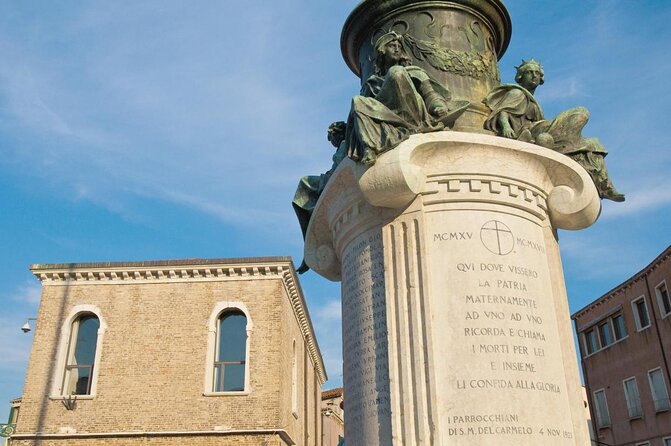
- Small group (max 15) with a relaxed pace so questions don’t get rushed
- Dorsoduro focus around Ca’ Foscari for gothic architecture and student-life context
- San Pantalon church stop with the largest painting on canvas covering the ceiling
- Campo Santa Margherita for the square that turns into an evening meeting point
- Zattere waterfront with Molino Stucky plus long-ago docking history in plain view
- Squero San Trovaso gondola craftsmanship where boatbuilding tradition still matters
Starting at Campiello dei Squelini: the Venice you only see when you slow down
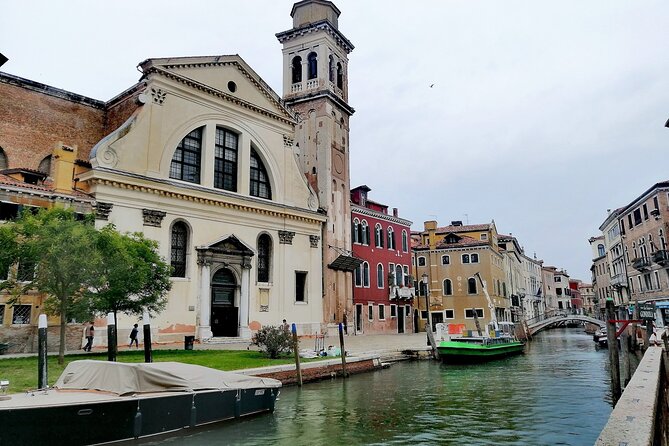
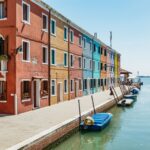
The tour begins at Campiello dei Squelini in Dorsoduro, under the trees, with the guide ready to orient you fast. You’re not thrown into crowds or forced along a single-picture route. Instead, you start in a small, livable Venice pocket near Ca’ Foscari and let the city’s shapes set the tone.
From the first stretch, the route makes sense for first-timers and returners. First-timers get bearings without the overwhelm, and returners get new viewpoints on places they might have walked past. Either way, you’ll notice how quickly Venice changes when you turn away from the postcard lanes.
You can also read our reviews of more walking tours in Venice
Ca’ Foscari area and Venetian Gothic details along the Grand Canal
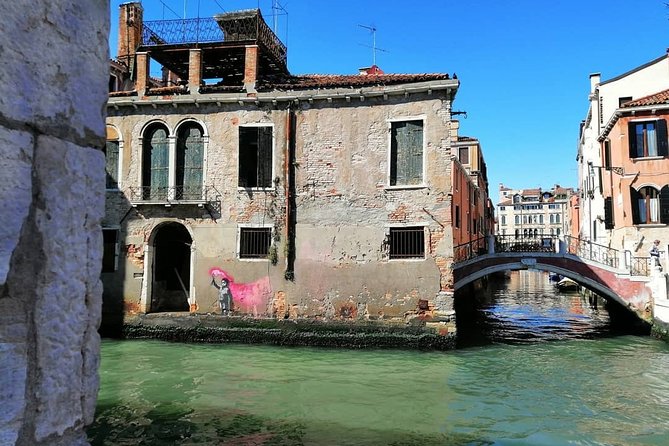
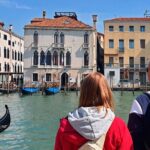
One of my favorite parts is the way the walk uses Ca’ Foscari as a teaching tool, not just a photo stop. You pass key sections tied to the university headquarters, housed in a gothic palace on the Grand Canal. The focus is on architectural cues: the stonework, the intricate detailing, and what that style meant when the wealthy Foscari family lived here.
This is also where you get a useful shift in perspective. Venice isn’t only monuments; it’s also classes, homework schedules, and daily routines. Seeing Ca’ Foscari in that light makes the gothic grandeur feel less like a museum and more like part of the city’s rhythm.
San Pantalon: the ceiling masterpiece and the Banksy-style surprise
Next comes a church stop that feels almost unreal: San Pantalon has a ceiling covered by the largest painting on canvas in the world. The idea here isn’t just scale; it’s the wow effect of art literally taking over your field of view. It’s the kind of moment that makes your neck hurt a little from looking up, in the best way.
Right outside, you also catch a clever modern-art twist: Venice’s only Banksy graffito, reflected in the canal water. That contrast is part of what makes this stop memorable. You see how Venice can hold old and new in the same frame, without either one feeling out of place.
Practical note: churches can vary in lighting and airflow, so give yourself a minute to settle your eyes before you try to take in the ceiling detail. If you’re photos-inclined, arrive ready to slow down rather than rush.
Campo Santa Margherita and Campo San Barnaba: squares with real personalities
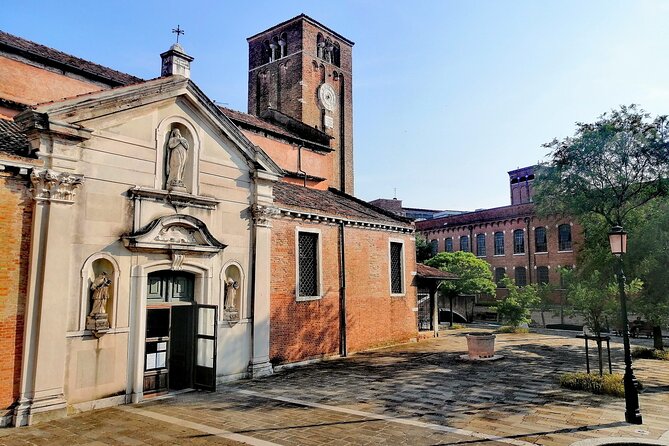
Then the walk shifts from architecture to atmosphere, and it’s a smart change. At Campo Santa Margherita, you’ll see why this square becomes a social magnet—especially in the evening—with cafés, local bars, and outdoor seating spilling into the open space. Even if you’re there during the day, the layout practically explains the night vibe.
After that, Campo San Barnaba brings a different energy: calmer, cinematic, and quietly photogenic. It’s known for the church and for a famous film link—Indiana Jones and the Last Crusade—plus the Katharine Hepburn moment where she is associated with falling into the water. You also get a view of the canal that makes the whole place feel like a small stage, set for everyday life rather than tourist performances.
The main drawback here is timing. If you want the nightlife energy of Santa Margherita, daytime light is useful but not the same as late evening. Still, the upside is you’ll experience both squares in a way that keeps the walk from turning into one long crowd scene.
Zattere waterfront: Molino Stucky’s industrial-to-luxury story
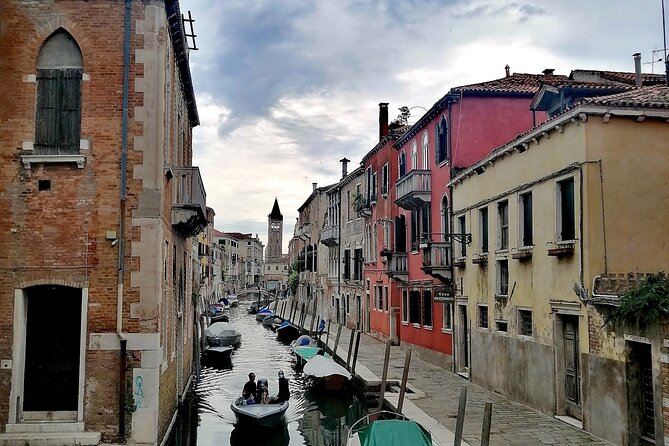
When the route reaches the Zattere, it starts speaking in a different language: maritime Venice. You stroll along the San Basilio area, once the steamers’ maritime terminal in the 19th century, with views toward the Canale della Giudecca. This stretch gives you breathing room compared with tighter lanes, and the water views do the job of making the city feel bigger than it first appears.
A standout visual is Molino Stucky, a former flour mill transformed into a luxury hotel. The important part is that it still shows its industrial past through its architecture. You get a clear sense that Venice keeps adapting—sometimes without erasing what came before.
If you’re the type who likes your photos with context, this is one of the best places on the walk. You’re not just taking a building shot; you’re seeing how a city with water-based logistics turns heavy industry into something new.


The Zattere promenade’s long docking history and wide-open views
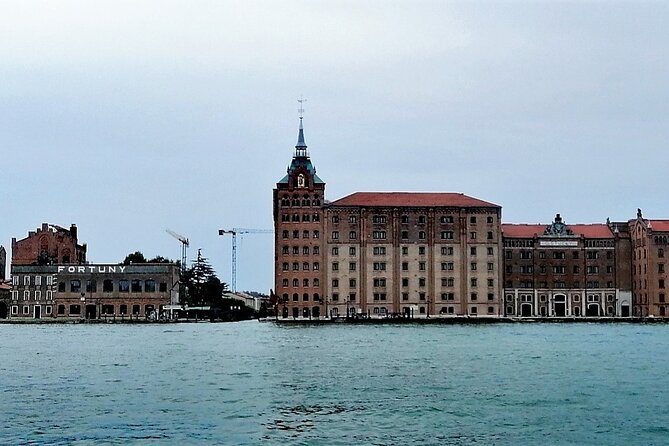
Right after Molino Stucky, you continue along a wider stretch of fondamenta that explains the names you see on signs. This section is linked to older roles like Carbonaia for coal unloading, and later “delle Zattere,” connected to the rafts called Zattere that carried wood toward the Arsenale from the mainland. You also learn that the area was paved in 1519, which gives you an immediate sense of how long people have relied on these landings.
Today, that long past becomes a calm promenade with big water-and-building views. It’s a chance to walk without stopping every ten steps to look for the next landmark. In other words: it helps you reset your energy for the craft and museum stops ahead.
Squero di San Trovaso: gondola craftsmanship in a real working setting
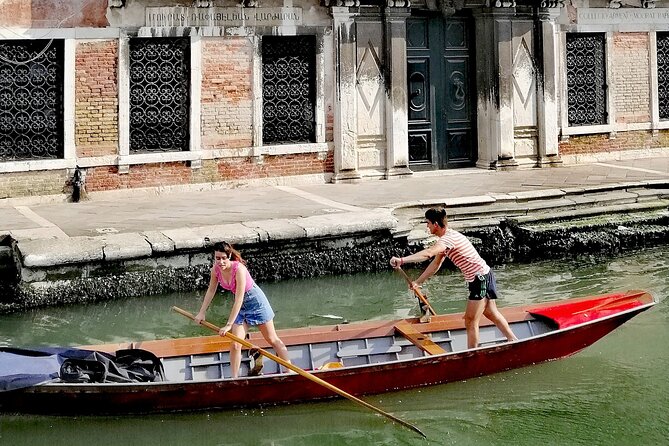
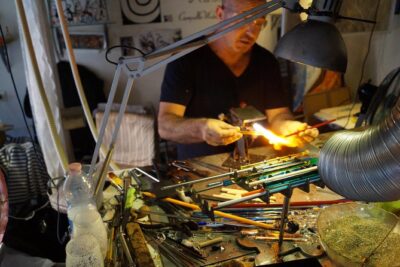
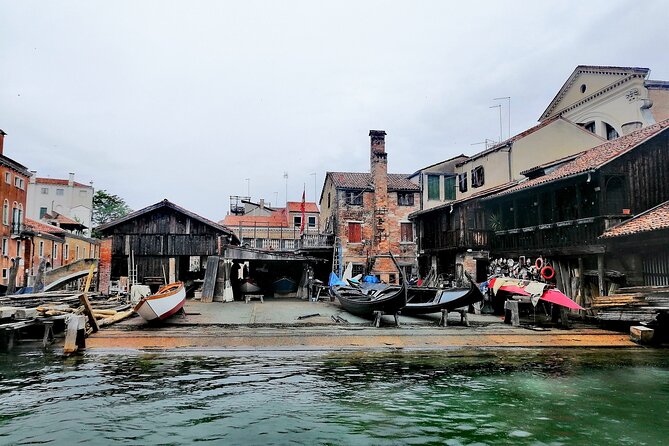
Now the tour turns hands-on. Squero San Trovaso is a working boatyard devoted to gondola crafting, grounded in centuries-old tradition. The atmosphere here feels different from the grand palaces and church interiors: you’re closer to the materials, the tools, and the practical side of Venice.
What I like about this stop is how it reframes the gondola. Instead of treating it as a symbol, you see it as a craft—something built by people with skills that take time. Even with only a brief visit window, it’s the kind of stop that makes Venice feel earned, not staged.
Tip: if you tend to read signs slowly and watch how locals move, give yourself extra attention here. This is where your brain switches from sightseeing mode to noticing-process mode.
Punta della Dogana and the Fortune Goddess at the Grand Canal–Giudecca meeting point
At the end, you reach the tip of the Dorsoduro triangle at Punta della Dogana, where the Grand Canal meets the Giudecca Canal. The location does something simple and powerful: it gives you perspective. You can see the city’s water geometry clearly, and the views make the earlier walking feel like more than just a string of stops.
This final stretch also stacks several landmarks close together. You’ll pass an art museum housed in an old customs building, then a baroque church, and the Patriarchal Seminary of Venice. The visual capstone is the Fortune Goddess statue, which watches over the scene—symbolic, but also just a great focal point when you want one last photo that doesn’t feel like every other Venice shot.
The tour ends here, which is practical. You finish at a scenic, open-feeling spot rather than getting dropped back into a tight maze.
Price, pace, and why the small-group format is the real value
The price is $92.92 per person for about 2 hours, and that’s not cheap in Venice terms. But here’s where the value actually shows up: you get a licensed guide, a group capped at 15 travelers, and multiple stops where admission isn’t listed as an extra expense. You’re also paying for interpretation—what to look at and what it meant—rather than just movement from one famous point to the next.
Booking tends to happen early, with an average booking window of around 122 days. If you’re traveling in high season or on popular weekends, don’t wait until the last week to lock it in.
Pace matters too. This isn’t a marathon route, and the small size helps the guide adapt as you go. In reviews, the best compliments consistently center on a friendly, humorous style and the way the guide responds to what the group wants to focus on.
What to pack is simple:
- Wear comfortable shoes you trust on stone streets
- Bring water if you run hot
- If you’re sensitive to stairs or long walking legs, keep an eye on your comfort early, not at the end
Pickup is another point to understand. The tour offers pickup only for private group options. If you’re not in a private group, you’ll meet at the main meeting point in Campiello degli Squelini.
And one more Venice reality check: on certain dates, some day visitors staying outside Venice may need to pay a €5 access fee. The tour info directs you to check applicable days and exemptions, so do that before you plan the day.
If you’re deciding between this walk and a big-sit-in-a-boat or main-attraction tour, I’d choose this if you want a Venice that feels used—student life, work spaces, working waterfront history, and neighborhood squares.
Should you book Off the Beaten Path Walk in Venice?
Book it if you want Dorsoduro and the Zattere waterfront without fighting crowds, and if you care about small details like architectural style and how Venice’s waterfront logic shaped everyday life. This is also a great pick if you like variety: church art overhead, modern-art surprises by the canal, two different squares with distinct personalities, and real gondola craft at Squero San Trovaso.
Skip or reconsider if you’re only interested in the absolute biggest sights and want a faster hit of St. Mark’s-type landmarks. Also think twice if you’re worried about a solid 2-hour walking stretch on uneven streets, even with a relaxed group pace.
FAQ
How long is the Off the Beaten Path Walk in Venice?
The tour lasts about 2 hours.
How big is the group?
The group size is capped at a maximum of 15 people.
Where does the tour start and where does it end?
It starts at Campiello dei Squelini, 30123 Venezia VE, Italy, and ends at Punta della Dogana in Dorsoduro.
Is pickup available?
Pickup is offered only for private group options. If you booked a share tour in a small group, you’ll meet at the general meeting point in Campiello degli Squelini under the trees.
What is included in the tour?
A licensed tour guide is included. Mobile tickets are offered as well.
Do you pay admission for the stops?
Admission tickets are listed as free for the stops included on the walk.
What is the €5 access fee for day visitors?
On certain dates, people staying outside Venice who are visiting for the day may be required to pay a €5 access fee. Check the official details and exemptions using the link provided with the tour.