REVIEW · VENICE
Murano Glass Blowing Demonstration – The Glass Cathedral
Book on Viator →Operated by The Glass Cathedral · Bookable on Viator
Murano glass, in a real church setting. The Glass Cathedral puts a glass-blowing show inside the former church of Santa Chiara, with soft music and the artisans working inches from your seat.
What I really like is the small-group feel. With a maximum of 30 people, it stays close and personal instead of turning into a distant spectacle. I also appreciate the experience’s low-pressure vibe: you can enjoy the craft first, then browse at your own pace afterward.
The main drawback to consider is that the show leans on audio and music more than live storytelling. If you want a running, hands-on explanation from the demonstrator, you may find it a little too quiet and observational—and the building can be easy to miss if you’re rushing.
In This Review
- Key things to know before you go
- Entering the Glass Cathedral Santa Chiara (and why the building matters)
- The 25-minute Murano glass-blowing show: what you’ll actually see
- Audio, music, and the guide: how much narration you get
- Drinks and shopping: enjoying Murano glass without a sales trap
- Timing your Murano day (and the €5 access fee on certain dates)
- Price and value: is $16.94 for 25 minutes a fair deal?
- Who should book this glass cathedral demo?
- Should you book The Glass Cathedral?
- FAQ
- How long is the Murano Glass Blowing Demonstration?
- How much does it cost?
- What language is the demonstration offered in?
- What’s included in the ticket price?
- Are drinks included?
- Is there an age minimum?
- Is there free cancellation?
Key things to know before you go
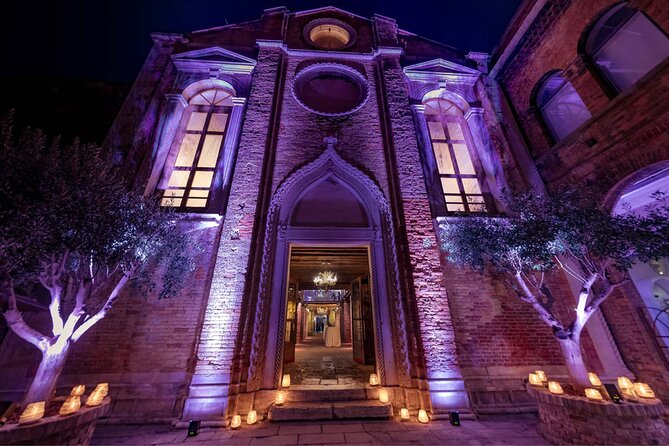
- Former Santa Chiara church setting: you sit in a historic space, not a storefront showroom
- 25 minutes (approx.): short enough to fit into a busy Murano day
- Two original pieces created during the demonstration
- English is available and the venue uses sound system audio for context
- No hard sell mentioned by many visitors, with optional shopping afterward
- Max 30 travelers keeps the room from feeling like a big bus drop-off
Entering the Glass Cathedral Santa Chiara (and why the building matters)
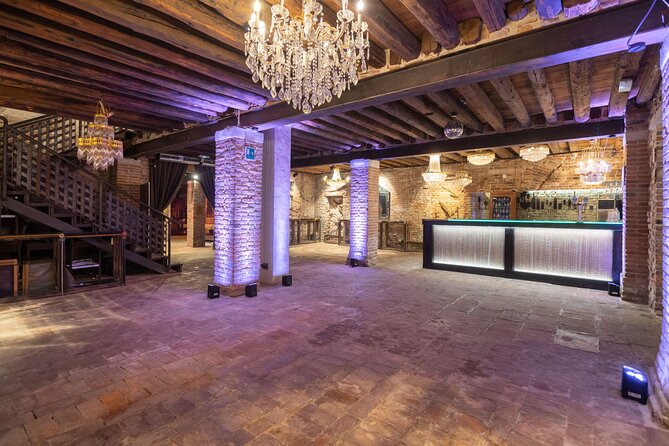
This isn’t just a glass show in a pretty room. The Glass Cathedral is set in a historic, former church linked to Santa Chiara. That context changes how you experience the craft.
For one, the acoustics and mood do some of the work. Reviews repeatedly call out the atmosphere: soft music during the demonstration, plus an audio layer explaining what you’re seeing. Sitting where people once prayed gives the whole act a kind of ceremony. Glass blowing can look like a simple trick from far away. Here, it feels like a performance tied to place.
The building also helps you focus. You’re not drifting through a workshop maze or standing behind a rope line at a factory-style stop. You watch the masters, and the room’s scale keeps your attention on what’s happening with the molten glass.
Practical tip: if you hate hunting for entrances, give yourself a few extra minutes. One common complaint is that the venue can be tricky to locate if you’re arriving late or using the wrong turn.
You can also read our reviews of more tours and experiences in Venice.

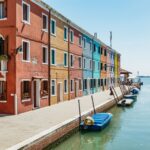
The 25-minute Murano glass-blowing show: what you’ll actually see
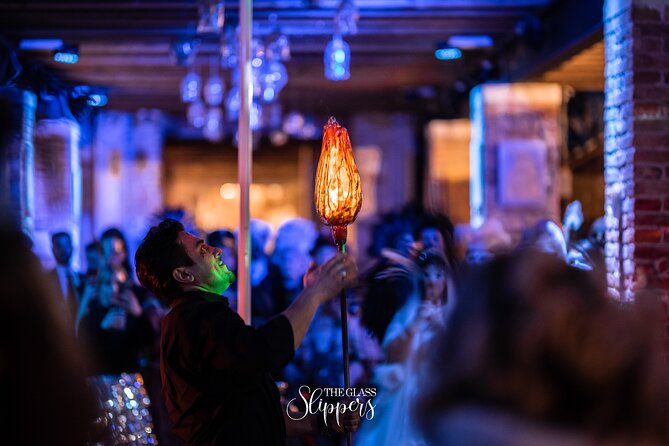
The demonstration runs about 25 minutes, and the format stays consistent: you watch the glass masters use precision methods to bend and sculpt hot glass, then you see the transformation from glowing material into finished work.
Here’s the flow to expect:
- You’ll take your seat inside the cathedral-like venue.
- You’ll see the masters working directly in front of you, with the tools and technique clearly in view.
- During the show, they create two original pieces before your eyes.
- After the demonstration, the venue’s display area is there if you want to look longer.
What makes this more than a quick stunt is the craftsmanship detail. The hands-on skills are visible: how the glass is shaped, controlled, and moved as it cools and hardens. Even if you’ve watched videos before, there’s something about seeing the speed and precision in person.
Small group size helps too. With up to 30 people, you’re not stuck in the back. You can actually read the process, not just the finished result.
One more useful detail: you may be able to enjoy a drink while you watch. The ticket itself doesn’t include drinks, but the venue does offer them on-site, which many visitors liked because it turns the demo into a relaxed mini break rather than a rushed attraction.
Audio, music, and the guide: how much narration you get
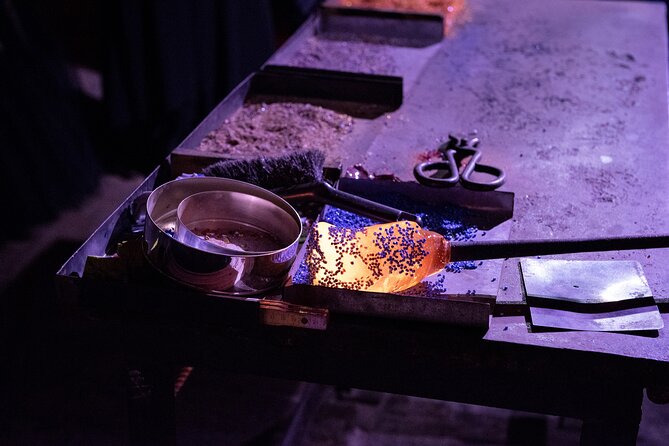
This is where expectations matter.
The experience includes a guide, and there’s audio support in the background. Reviews mention recorded information about the history of glass work that plays through the sound system, with music during quieter moments while the glass master works.
But not everyone experiences it the same way. Some people loved the show’s pacing and felt the audio/historical context was enough to make the craft click. Others wanted more direct, live commentary—someone explaining techniques as they happen, not just a pre-recorded overview.
So here’s my practical takeaway: if you’re okay with a calm, observational show where the action speaks for itself, you’ll likely enjoy it. If you’re the type who needs a running explanation of techniques and terminology to stay engaged, you may find the narration a bit light.
Also note the “human factor” element. A few reviews describe the demonstrator as theatrical and engaged. Other reviews say the demonstrator didn’t interact much. That’s not something you can guarantee, but it helps explain the range in ratings.
Drinks and shopping: enjoying Murano glass without a sales trap
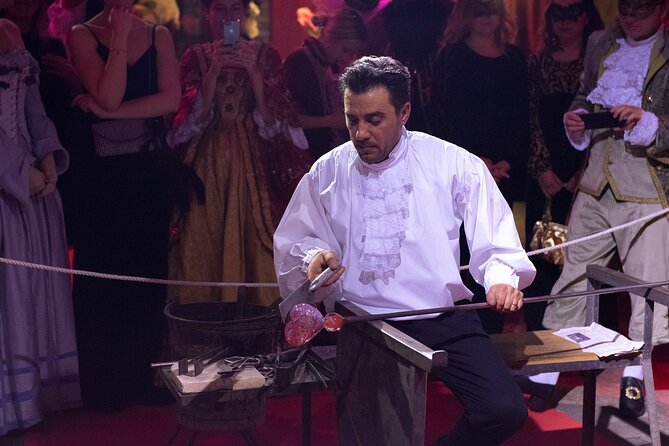
The glass itself is the star, but the business reality is still there: there are pieces available for sale, and there’s a display area.
The good news is that many visitors praise the lack of pressure. People specifically liked that you can sit, watch, and enjoy the craft without feeling steered toward a purchase. That matters in Venice and Murano, where some shops can feel pushy the moment you walk in.
About drinks: the experience states that drinks are excluded, so plan on paying if you want a cocktail, prosecco, or something similar. Reviews do mention bar service and people ordering drinks during the show, which suggests the venue is set up for this.
My suggestion: if you’re going to buy anything, do it after you’ve seen the final pieces. It’s the easiest way to shop with your eyes open, since you’ll better understand what you actually watched.
Timing your Murano day (and the €5 access fee on certain dates)
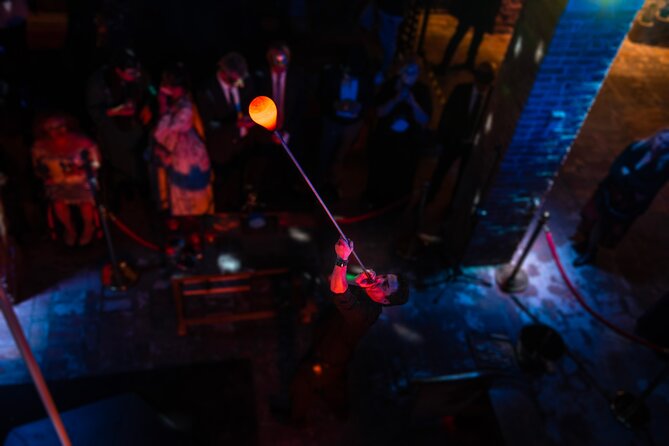
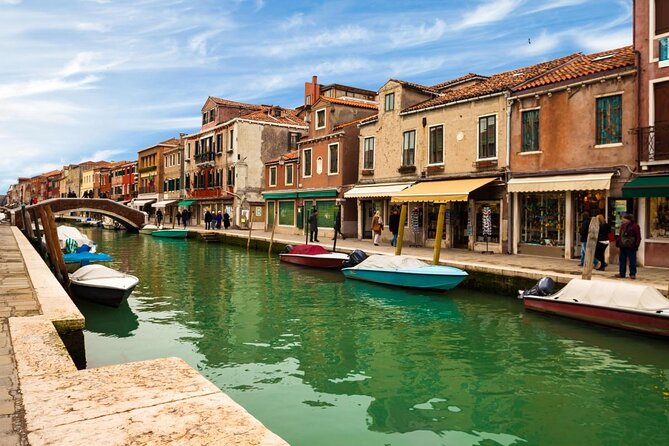
Murano glass is often a half-day plan for many Venice itineraries. This demo is short, so it works well between other Murano stops like glass shops, canals, and viewpoints.
Before you go, check one important detail: some day visitors staying outside Venice may have to pay a €5 access fee on certain dates. The tour info points to the official site for which days apply and exemptions. If you’re planning a same-day trip from mainland Venice or elsewhere, it’s worth verifying ahead of time so there are no surprises when you’re trying to get to the island.
As for timing inside the venue: reviews say it helps to arrive a few minutes early and confirm your reservation at check-in. With a show that’s only around 25 minutes, a late arrival can feel like losing part of the act.
Transportation note: it’s near public transportation, which is helpful on a small island where you may be mixing walking, vaporetto stops, and short transfers.




Price and value: is $16.94 for 25 minutes a fair deal?
At $16.94 per person, this is positioned as a focused, ticketed experience rather than a long workshop or a multi-stop tour.
Whether it feels like a bargain depends on what you want:
- If you like watching artisans work and you enjoy a calm, theatrical setting, the value is strong. You get a historic room, music, audio context, and the chance to see the process unfold in a short window.
- If you want a fully interactive class with lots of explanation, this may feel too brief. The show is designed to be a demonstration, not a hands-on lesson.
The ratings back up the “value for time” argument. Many comments highlight that it’s only long enough to learn the process, and it avoids the hard sell typical of some Murano demos. Others point out disappointment when the narration felt minimal.
Here’s my balanced rule of thumb: pay attention to your tolerance for “watching with audio” versus “listening to live teaching.” If you’re flexible, this can be an excellent use of your Murano hours.
Who should book this glass cathedral demo?
This experience is a good match if you want:
- A short Murano activity you can fit into a day without burning half the afternoon
- A historic venue that makes the craft feel special, not just functional
- A view of glass work that’s close enough to appreciate technique and timing
- A family-friendly stop where children can still enjoy the spectacle (with an adult)
It’s also well suited for visitors who don’t want a shopping-heavy trap. Many people specifically mention they felt comfortable—watch first, browse only if you want.
It may be less satisfying if:
- You’re the type who needs lots of live explanation of techniques
- You really care about demonstrator personality and interaction
- You expect a talk-through of every step rather than a short narrated setup plus visual process
For families: there’s no minimum age, and children must be accompanied by an adult. Reviews include kids enjoying it more than expected, which makes sense: watching molten glass turn into shapes is naturally dramatic.
Accessibility note from the info provided: service animals are allowed, and most travelers can participate.
Should you book The Glass Cathedral?
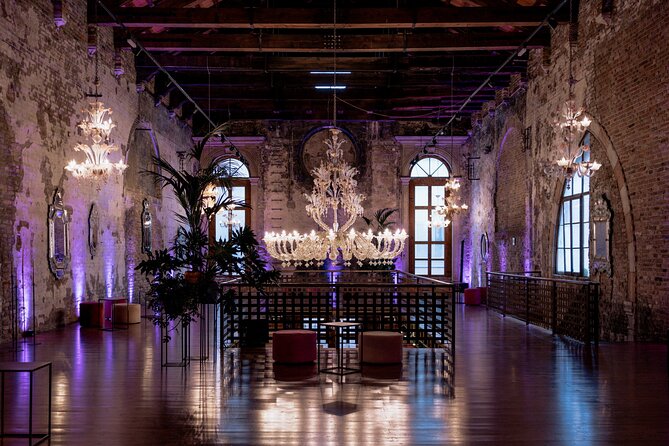
If you’re doing Murano for the glass craft and you like experiences with a bit of atmosphere, I’d book this. The combination of Santa Chiara’s historic setting, a small group size, and a short, watchable demonstration makes it a strong “time-smart” choice.
My only caution is expectation-setting: treat it as a show where you watch skilled artisans create pieces with audio and music support. If you’re hoping for a constant live lecture and deep technical commentary throughout, you might feel underfed.
If you’re flexible and want an easy, memorable Murano stop that doesn’t bully you into buying, this one makes sense.
FAQ
How long is the Murano Glass Blowing Demonstration?
It’s listed as about 25 minutes.
How much does it cost?
The price is $16.94 per person.
What language is the demonstration offered in?
The tour is offered in English.
What’s included in the ticket price?
The included items are the guide, the Glass Masters show, and all taxes, fees, and handling charges.
Are drinks included?
Drinks are excluded, though you may have the option to buy a drink on-site while enjoying the show.
Is there an age minimum?
There is no minimum age required, but children must be accompanied by an adult.
Is there free cancellation?
Yes. You can cancel for a full refund if you cancel up to 24 hours in advance.