REVIEW · VENICE
Da Vinci Interactive Museum Venice Scuola di San Rocco
Book on Viator →Operated by Leonardo da Vinci Museum · Bookable on Viator
Venice has a knack for surprising you. The Da Vinci Interactive Museum at Scuola di San Rocco turns Leonardo’s ideas into something you can play with, not just read about.
I really like the way the exhibition mixes working replicas with high-quality visual explanations, so you get both the why and the how. I also enjoyed the backlit viewing format for Leonardo’s paintings, which makes his details easier to study.
One thing to keep in mind: it’s small, so it’s not the kind of big, all-day museum where you drift for hours. You’ll likely finish in about an hour once you find your pace.
In This Review
- Key Things I’d Prioritize
- What You Actually Get at the Da Vinci Interactive Museum
- A Smooth Walk Through Earth, Water, Air, Fire
- Working Replicas: The Hands-On Part That People Love
- Backlit Painting Copies: Close Looking Without the Stress
- Anatomy Studies: Where His Science Gets Personal
- The Film and Multilingual Wayfinding
- Audio Guides: Easy Fix If You Want More Structure
- Timing It Right: Hours, Last Entry, and a Realistic Visit Length
- Steps and Exhibit Rules: Small Notes That Save You Friction
- Price and Value: Is $10.21 Worth It?
- Where It Fits in Your Venice Day
- Who Should Book (and Who Might Be Disappointed)
- Should You Book This Da Vinci Interactive Museum?
- FAQ
- How long should I plan for the Da Vinci Interactive Museum in Venice?
- Is the museum offered in English?
- Is a professional guide included?
- Are audio guides available?
- What are the opening hours and last entry?
- Can I eat or drink inside the exhibit areas?
Key Things I’d Prioritize
- Four themed zones (Earth, Water, Air, Fire) that keep the flow easy
- Working replicas built from Leonardo’s designs, with careful attention to proportions
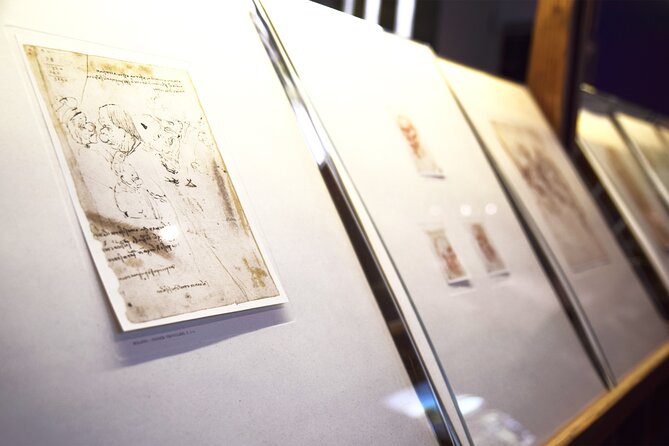
- Backlit high-resolution painting copies that are made for close viewing
- Anatomy study displays that connect his science and art thinking
- Interactive models that are especially fun if you like hands-on learning
- Audio guides available on request at the entrance (free)
What You Actually Get at the Da Vinci Interactive Museum
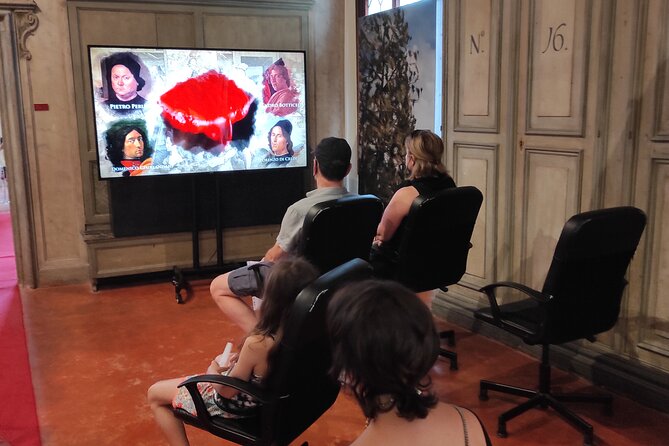
This museum is built around the idea that Leonardo da Vinci wasn’t only an artist. He was an inventor who kept testing concepts with sketches, studies, and models. Here, you don’t just see drawings behind glass—you encounter machines and studies meant to show the logic behind his imagination.
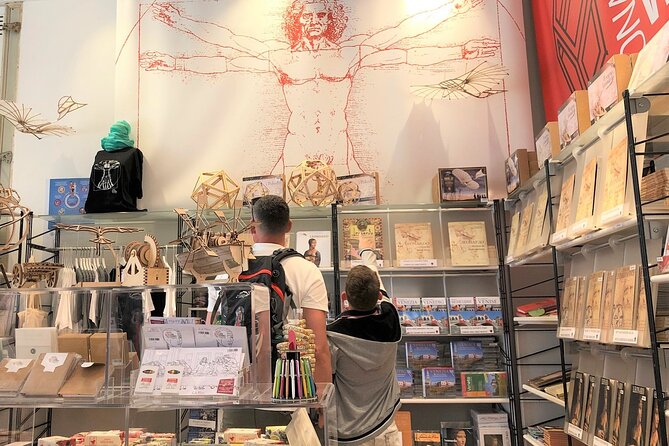
At a price of about $10.21 per person for roughly 45 minutes (and a lot of people naturally spending around an hour), it works best as a smart “add-on” to a Venice day. You’re paying for hands-on interaction plus organized learning, not for rare originals. Expect replicas, reconstructions, and careful explanations that help you interpret what you’re looking at.
You can also read our reviews of more museum experiences in Venice


A Smooth Walk Through Earth, Water, Air, Fire
The exhibition is organized into four sections: Earth, Water, Air, and Fire. That structure matters more than it sounds. Instead of wandering through random inventions, you move through themes that make Leonardo’s interests feel connected.
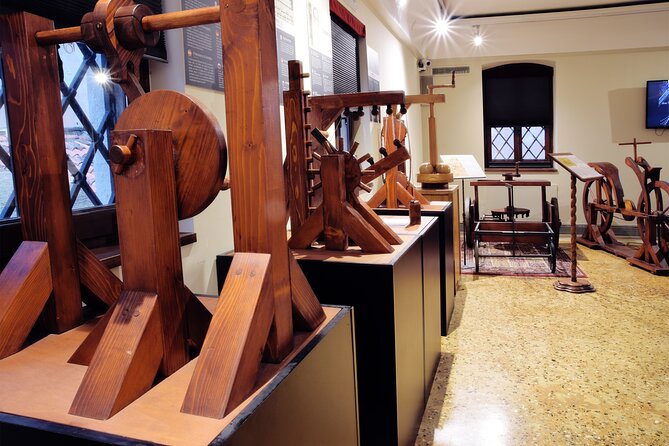
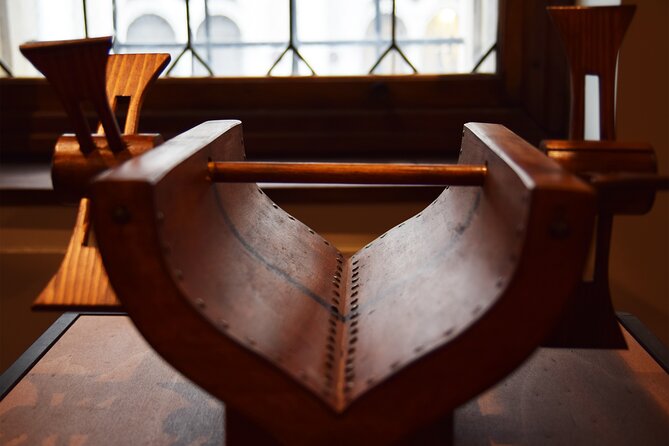
In each section, the museum presents machines built according to Leonardo’s designs. The display notes that the replicas follow the original proportions unless adjustments were needed. That’s a subtle but important point: it’s not just “look, a cool machine.” It’s “look, here’s how Leonardo sized and shaped the idea.”
This layout also helps kids (and adults who get impatient in museums). You’re less likely to feel lost. You get a clear “topic” window, then you move on when your attention starts to fade.
Practical tip: if you’re visiting with children, let them choose one section to linger in. After that, switch gears before everyone hits the tired-wall.
Working Replicas: The Hands-On Part That People Love
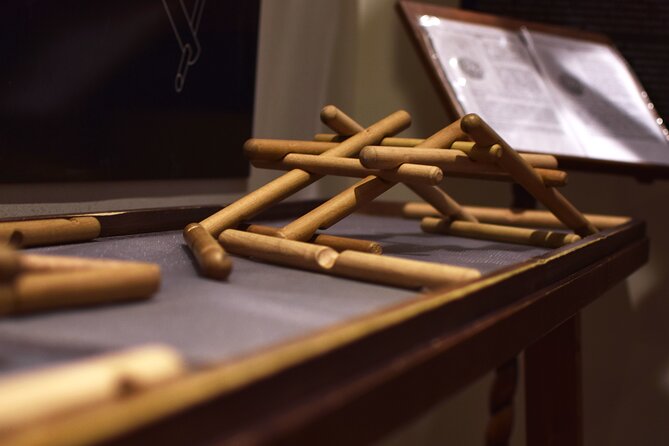
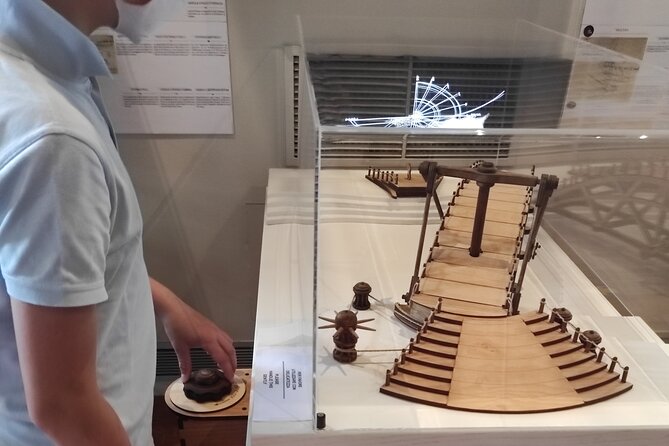
When the museum is at its best, it’s when you’re interacting with the interactive models. The highlights are the inventor’s fantastical machines presented in a way that feels tangible. You can approach them like puzzles: what does this component do, how would this mechanism work, and why would Leonardo sketch something that looks so unusual?
A lot of visitors clearly appreciate the fact that the experience is hands-on, not passive. Some reviews even mention that they needed more time to solve puzzles or operate designs than they expected—in a good way. That tells me the interaction isn’t just “press a button once.” It’s there to get you thinking.
Still, don’t show up expecting a huge, cinematic show. The museum is compact, and the interaction is spread across rooms and displays. If you want a multi-hour, theatrical “WOW” production, you might feel it’s too small.
Backlit Painting Copies: Close Looking Without the Stress
Leonardo’s art is part of the story here, but the way it’s presented is very visitor-friendly. You’ll see high-resolution backlit copies of his paintings designed for prime viewing. Backlighting helps you focus on fine details because the viewing conditions are controlled.
This section also connects the art side to the science side. The museum includes Leonardo’s studies of anatomy, and it frames how his medical observations fed his understanding of form—especially the way the human body moves and is proportioned.
If you’ve ever wished you could slow down and actually study what you’re looking at, this is the format that supports that. Instead of rushing past images, you can stand and examine. The descriptions and multimedia components (available alongside the displays) help you link the artwork to the broader “Leonardo mind” theme.
Why it’s valuable: Leonardo is easy to treat like a legend—big name, big genius, little context. Backlit copies + explanations turn him back into a person working through questions step-by-step.
Anatomy Studies: Where His Science Gets Personal
One of the most interesting angles in the museum is that it doesn’t keep his inventions and his art in separate boxes. It includes major studies of anatomy and pairs them with explanations of his approach.
The anatomy displays let you explore Leonardo’s medical and artistic interests together. That connection is the whole point: the human body wasn’t only something he painted. It was something he studied to understand structure, motion, and the underlying “rules” of appearance.
For parents: this section can be a hit with curious kids who like biology, drawing, or how things work. For adults: it’s a reminder that Leonardo’s curiosity was systematic.
Small caution: if you’re expecting mostly famous masterpieces like Mona Lisa or The Last Supper, you may feel the emphasis is broader. The museum is built for his ideas and studies, not for presenting the most famous original artworks.





The Film and Multilingual Wayfinding
You’ll find multimedia elements that summarize Leonardo’s life and work. One common mention is a short film introduction, which is useful if you want a quick orientation before you start operating replicas and reading details.
The museum also provides descriptions in multiple languages: Italian, English, French, German, Spanish, and Russian, with multimedia support. Since English is offered, most visitors should be able to follow along without struggling.
If you care about language support, this matters. A lot of museums in Venice look international on paper but feel confusing in practice. Here, the text and media support the experience.
Audio Guides: Easy Fix If You Want More Structure
There’s one practical thing I’d flag: audio guides are available free of charge upon request at the entrance. Some people mentioned they expected audio to come with the online ticket and didn’t see it right away. The good news is you can ask for them in person.
If you’re the type who likes a steady narrative while you look around, grab the audio guide. It can help you pace the visit and avoid that feeling of reading everything—or nothing.
Timing It Right: Hours, Last Entry, and a Realistic Visit Length
The museum is open Monday through Sunday, 10:30 AM to 4:30 PM, with the last entrance at 4:00 PM. The hours are generous enough for flexibility, which is great in Venice where plans can change fast.
This is also a museum you can slot into a tight schedule. With an approximate 45-minute visit window, you can comfortably pair it with another nearby stop or a meal afterward without turning your day into a sprint.
Because it’s compact, I suggest arriving with a little curiosity, not a long checklist. Give yourself time for the interactive parts and at least a couple minutes at the backlit painting displays.
Tip for a smoother visit: aim for earlier in the afternoon if you want a calmer feel. If you arrive late, you may feel rushed since last entry is 4:00 PM.
Steps and Exhibit Rules: Small Notes That Save You Friction
The museum is organized over two floors and includes steps. If anyone in your group uses a stroller, mobility aids, or just needs flatter routes, plan for that.
Also note the exhibit rules: food, chewing gum, and beverages are prohibited in exhibit areas. It’s a small museum; people usually bring snacks out of habit. Don’t. If you need a snack, grab it before you enter or save it for later.
Service animals are allowed, and the museum says most travelers can participate, which is reassuring if you’re traveling with someone who gets nervous about “too intense” activities.
Price and Value: Is $10.21 Worth It?
Let’s talk value. At $10.21 per person for about 45 minutes, this museum is priced like a focused experience. You’re not paying “big museum” money, and the museum doesn’t pretend to be a massive art institution.
Instead, you’re paying for three things:
- interactive models (you’ll actually do something)
- high-quality interpretive displays (the backlit copies and themed explanations)
- a family-friendly pace (clear zones and activities that don’t require deep prior knowledge)
If you’re a Leonardo fan, you’ll likely feel it’s money well spent. If you’re hoping to be blown away by original masterpieces, you may feel it’s limited—especially since the paintings here are copies presented for viewing.
I’d summarize the value like this: it’s a smart buy if you want a short, hands-on Leonardo experience with enough context to understand what you’re seeing.
Where It Fits in Your Venice Day
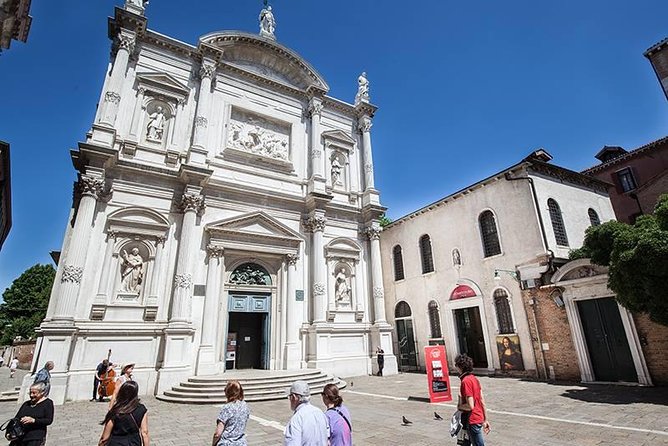
This museum sits at Scuola di San Rocco, and it pairs nicely with the surrounding area. Many people also use it as a bridge between learning and exploring the neighborhood.
If you’re the kind of traveler who likes planning a day around themes—art, science, architecture—this works well. You can treat it like the “thinking part” of your day, then walk on to something visually dramatic nearby.
And because the museum is easy to handle time-wise, it’s a good option if Venice weather turns or your feet are starting to complain.
Who Should Book (and Who Might Be Disappointed)
This is for you if:
- you like hands-on learning, especially with kids
- you’re curious about Leonardo’s inventions and studies
- you want backlit art viewing plus structured explanations in multiple languages
- you want a short stop that doesn’t swallow your whole day
You might reconsider if:
- you expect an enormous, immersive-scale exhibition with lots of cinematic spectacle
- you’re mainly chasing original famous masterpieces
- you hate stairs and movement between two floors
In other words: this is a “small but thoughtful” museum. It rewards attention, not speed-running.
Should You Book This Da Vinci Interactive Museum?
Yes, I’d book it if you fit the sweet spot: families, Leonardo fans, or anyone who wants a short Venice stop that’s more active than passive. The interactive machines, backlit painting copies, and anatomy study focus give you a well-rounded idea of what made Leonardo so unusual.
If you’re the type who gets restless in compact spaces or wants a bigger-than-life production, read the room first. Plan it as a smart 45–60 minute detour, not a full-day anchor.
FAQ
How long should I plan for the Da Vinci Interactive Museum in Venice?
Plan for about 45 minutes, though you may want a bit longer if you spend time operating the interactive models or reading more of the displays.
Is the museum offered in English?
Yes. The experience is offered in English, and the exhibition materials are also available in several other languages.
Is a professional guide included?
No. A professional guide is not included with this experience.
Are audio guides available?
Audio guides are available free of charge upon request at the entrance.
What are the opening hours and last entry?
The museum is open from 10:30 AM to 4:30 PM, with the last entrance at 4:00 PM.
Can I eat or drink inside the exhibit areas?
No. Food, chewing gum, and beverages are prohibited in the exhibit areas.