REVIEW · VENICE
Venice Commissario Brunetti and Donna Leon: Walk His Beat
Book on Viator →Operated by deTourist Venice Valerio Coppo · Bookable on Viator
Venice has a second story if you know it. This walk links Donna Leon’s Commissario Brunetti scenes to real corners in Venice, then ends at the famous green doors that lead to the Questura. If you like crime fiction, side streets, and learning how the city breathes beyond the big-name sights, you’ll get a lot here.
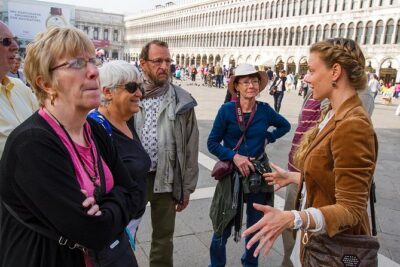
I love two things most. First, the route stays in quieter neighborhoods like Cannaregio, so you see daily Venice instead of only postcard Venice. Second, the guide—Valerio is often mentioned—ties the fiction to local details with humor and solid city talk. The group stays small, topping out at 15, which helps you actually hear the story and ask questions.
One consideration: it’s a steady walk for about two hours, and it needs good weather. Some film locations can look a bit run-down in real life, and that’s just the tradeoff when you chase story places in a living city.
In This Review
- Key highlights you’ll feel right away
- A Brunetti walk that goes past the postcard Venice
- Meeting at Campo dei Gesuiti and finishing near the Questura green doors
- Cannaregio start: the Brunetti front door moment
- Chiesa di Santa Maria Maddalena and the Angelo Animale chase scene
- Strada Nova: when the story pauses for neighborhood life
- Cannaregio pub talk and the animal-angels investigation thread
- Rosa Salva near San Giovanni e Paolo: a bar stop with local tastes
- Basilica dei Santi Giovanni e Paolo (San Zanipolo): where the story meets neighborhood signage
- San Francesco della Vigna and the green-door finish at the Questura
- Why this format feels satisfying in Venice
- Price and value: $93.16 for a focused two-hour guided walk
- Who should book this walk (and who might skip it)
- Final verdict: should you book Venice Commissario Brunetti and Donna Leon: Walk His Beat?
- FAQ
- How long is the Walk His Beat tour?
- How much does the tour cost?
- Where do I meet the guide?
- Where does the tour end?
- Is pickup available?
- What languages is the tour offered in?
- How big is the group?
- Are entrance tickets required for the stops?
- Is service allowed, and is public transportation nearby?
- Do I need to pay a Venice access fee?
- Is free cancellation available?
Key highlights you’ll feel right away
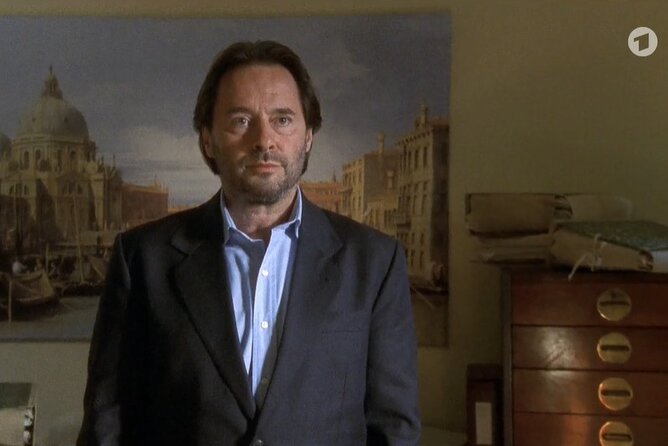
- Cannaregio start at Brunetti’s front door to kick things off with instant recognition for fans
- Chiesa di Santa Maria Maddalena tied to an Angelo Animale chase scene
- Bar stops in the real rhythm of the neighborhood, not just “look and leave” sightseeing
- San Zanipolo (Basilica dei Santi Giovanni e Paolo) where the tour points out story-linked neighborhood life
- The famous green doors at the Questura area to close the walk with payoff
A Brunetti walk that goes past the postcard Venice
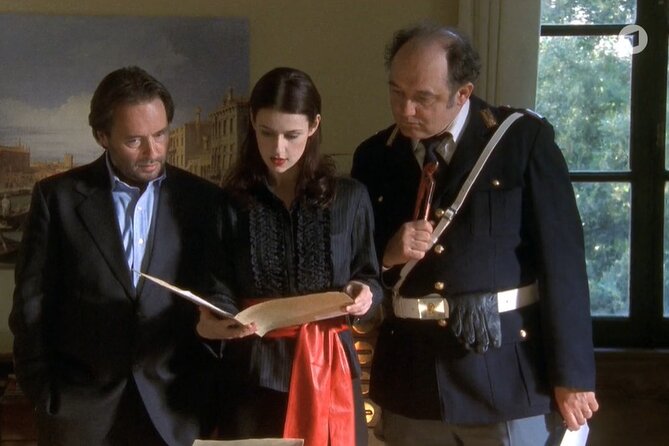
This isn’t the usual Venice checklist. It’s a story-based walk where the “plot” is Venice itself. You’ll move through real places that show up in Donna Leon’s crime world, and the guide points out the exact kind of street angle and corner mood that makes the series feel believable.
What I like is how the walk makes you look harder. You start noticing small things: where a street narrows, where people would naturally pause, and how a campo works as a meeting point. That’s the practical gift. Even if you don’t read the books (or you’re returning after a long gap), you still come away with a stronger map in your head.
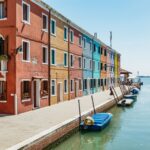
The tour also leans into Venice as a lived-in place. Stops include church buildings, local bars, and neighborhood street-level scenes, so you get the city’s texture—stone, shadows, doorways, and the way locals move through Cannaregio and around San Zanipolo.
You can also read our reviews of more walking tours in Venice
Meeting at Campo dei Gesuiti and finishing near the Questura green doors
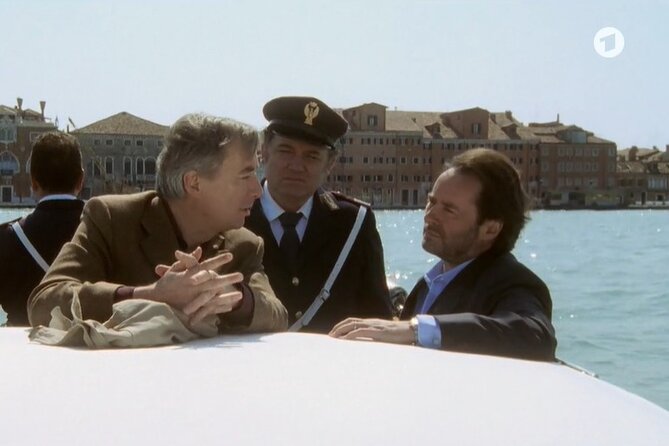
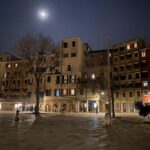
You’ll start at Campo dei Gesuiti, 4878, 30121 Venezia, and the walk ends at Campo San Francesco della Vigna, Campo S. Francesco, 30122 Venezia. The end point is set up so you’re near the police headquarters area where the famous green doors are part of the film framing.
Plan on a smooth, concentrated two hours. Each featured stop is brief (about ten minutes), so you don’t get long “tour bus” pauses. You get enough time to stand in the right spot, hear what the guide is pointing at, and then move on while the story stays fresh.
A small practical note: the tour runs with up to 15 people. That matters more than it sounds. In Venice, one tight group can feel like a crowd, but a small group is easier to manage at corners and doorways—especially when the guide is giving specific pointers.
If you’re using a phone, you’ll have a mobile ticket. Service animals are allowed, and the meeting point is near public transportation.
Cannaregio start: the Brunetti front door moment
The walk begins in Cannaregio at the door of the Brunetti family. For fans, this is the “I know this spot” kickoff. It’s not about chasing a view. It’s about matching a remembered front door to the exact real-life threshold where the story’s world opens.
This start works because it sets the tone. You aren’t just walking through Venice—you’re walking through Venice as a set. Once you’re anchored there, the rest of the route feels connected instead of random stops.
If you’re not a dedicated fan, you’ll still enjoy it because it trains your eye. You start thinking like a viewer: What direction does someone approach from? Where would a conversation happen? How does the street guide your attention?
The stop itself is short, but that’s a plus. Venice is too big to linger too long at every place if you want the story arc to keep moving.
Chiesa di Santa Maria Maddalena and the Angelo Animale chase scene
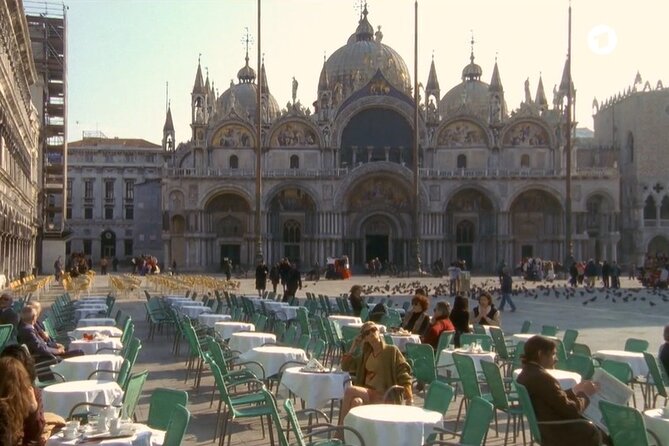
Next you’ll reach the Chiesa di Santa Maria Maddalena, where a palazzo is tied to the radical animal protection organization called Angelo Animale. The guide describes a tense side-entrance escape and chase sequence—complete with the amazement twist that one of the masked figures turns out to be Brunetti’s daughter Chiara.
Here’s why this stop is more than a themed photo stop. Churches and palazzi in Venice aren’t just pretty facades. They shape movement: where people could slip in and out, where someone might vanish around an edge, and how quickly a pursuit would have to change pace once you turn a corner.
Also, it’s a quick hit. You’ll get about ten minutes here, which is usually enough to understand the staging logic without slowing the whole walk.
Strada Nova: when the story pauses for neighborhood life
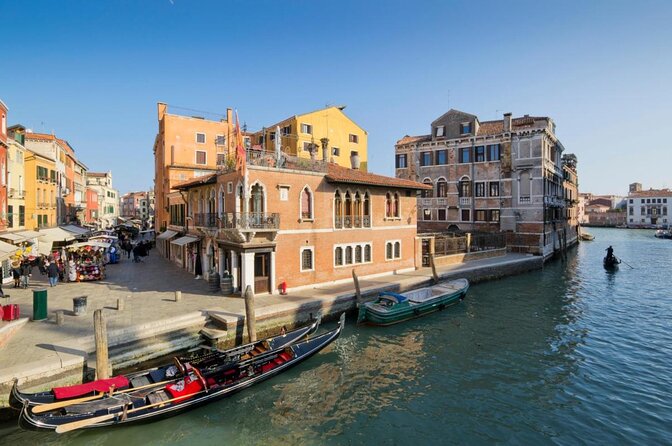
On Strada Nova, the tour points you toward a bar scene connected to Signora Gismondi and the kind of small, human detail crime stories often use to make characters feel real. Think chocolate ice cream, neighborly rivalry, and that everyday texture that makes the plot land.
This is one of the smarter parts of the tour because it breaks the rhythm. After more dramatic beats like chases and arrests, you get a quieter moment that feels more like real Venice: locals talking, the door opening and closing, and the city doing its normal thing while the story runs in the background.
You’re also learning something useful for exploring Venice on your own. Once you notice how often bars and small counters define a neighborhood’s social life, you’ll naturally start looking for them while you wander.

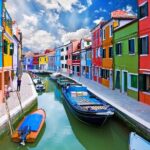
Cannaregio pub talk and the animal-angels investigation thread
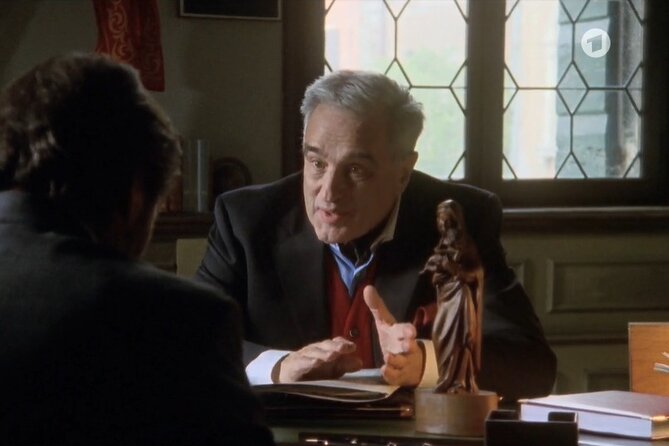
Back in Cannaregio, you’ll stop at another pub-linked scene where Brunetti and Chiara discuss the Angelo Animale connection. From there, the investigation focus changes after the murder of Professor Nava, who used to be employed in the slaughterhouse, and the tour uses that shift to point out how the story ties ideology to evidence.
This segment is good for two reasons. One, it’s a reminder that crime fiction isn’t only about action—it’s about the questions people ask and the connections they make. Two, it reinforces how Venice’s neighborhoods can feel intimate and sharp at the same time. Even streets that look simple from a distance can hide complicated relationships up close.
It’s still a short stop, but it feels like a turning point.
Rosa Salva near San Giovanni e Paolo: a bar stop with local tastes
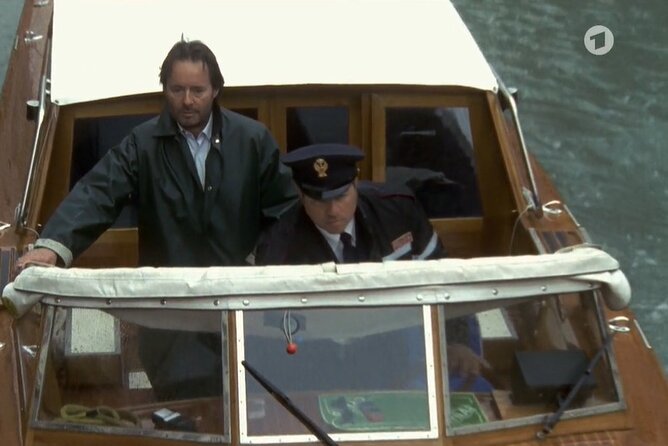
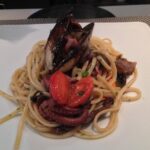
Then you’ll reach Rosa Salva in the area of SS. Giovanni e Paolo, also connected with story mentions around Vice-Questore Patta. The tour describes the inspector treating himself here, including a taste of grappa too much in the past, plus practical “what you might like” details: a strong café reputation, croissants, and options such as panino prosciutto or a tramezzino with ham and artichoke, with a glass of white wine.
Even if you don’t order anything on the spot, this helps you understand how Venice story-places map onto Venice food life. Neighborhood bars and cafés aren’t just scenery. They’re where people actually gather, and they keep the fictional world grounded.
A consideration: bar areas can be lively. With a group, it helps to stay flexible and keep moving when the guide is ready to go. The tour’s value comes from pacing.
Basilica dei Santi Giovanni e Paolo (San Zanipolo): where the story meets neighborhood signage
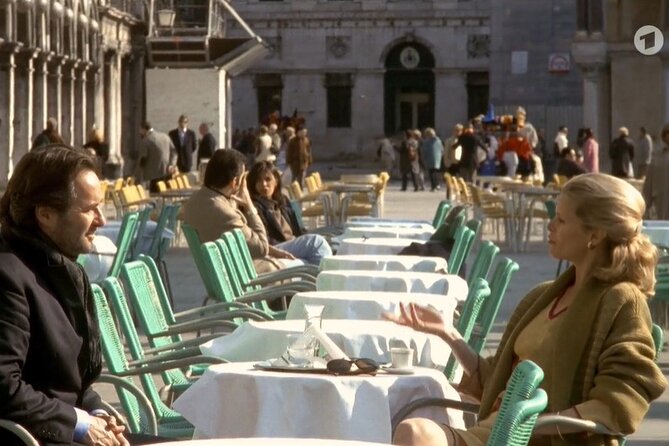
The walk continues to the Basilica dei Santi Giovanni e Paolo (San Zanipolo), and the tour points out the location of Signora Maria’s kiosk—plus how the guide connects the area to an American archaeologist named Brett Lynch.
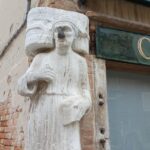
San Zanipolo is one of those Venice landmarks that can look grand from afar but still feels human at street level. The tour makes you look at the “in-between” spaces: where a kiosk would sit, how local conversations would flow, and how the church area functions as a node in the neighborhood.
This stop also helps if you’re the type who likes to understand Venice beyond aesthetics. You’re not only looking at a building—you’re seeing how a neighborhood’s services and chatter sit alongside religion and architecture.
San Francesco della Vigna and the green-door finish at the Questura
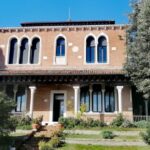
Near the end, you’ll reach Chiesa di San Francesco della Vigna. The guide leads you to the striking columned hall through a campo. From there, the tour points you to how the real place lines up with the film world: employees, visitors, or delinquents hurrying toward the Questura area, with the famous green door and a portal framing the arrival.
This is the payoff moment. The walk is built like a story, and the final beat is the clearest connection between fiction and location. When you finish here, you’re not just tired from walking—you’re also holding a vivid mental image of where the series’ authority and tension show up in real space.
A heads-up from reality: some references in the city change over time. One location might look more weathered than the set version. Still, that doesn’t ruin the experience. It makes the whole thing feel more honest: you’re seeing the city where the story was filmed, not a theme park recreation.
Why this format feels satisfying in Venice
What makes this walk work is the mix of three ingredients:
- Fiction as a guide to perception
Donna Leon’s Brunetti world gives you a reason to look at doorways, corners, and street angles. You end up learning how Venice is arranged, not just what it looks like.
- Local neighborhoods, not a single highlight loop
Cannaregio is a big deal here. You see the quieter Venice side where daily life exists without constant tour crowd pressure.
- A guide who actually talks like a person
Valerio comes up again and again for reasons that matter: humor, city context, and answering questions. One review-style detail that stuck with me is that Valerio mentioned a very low number of murders in Venice over a long stretch of years—basically a reminder that the real city is calmer than the fiction. It’s a fun contrast, but it also shows he’s paying attention to how people experience the city.
If you like crime stories, it feels like a guided “reader’s map.” If you don’t, it still works because it teaches you how Venice neighborhoods connect to real human rhythms.
Price and value: $93.16 for a focused two-hour guided walk
At $93.16 per person for about two hours, you’re paying for a licensed guide (registration listed) and a route that’s built around specific places. You’re not paying just for generic sightseeing time.
Here’s where the value lands for me:
- The walking time is tight. You get multiple story stops without turning the day into a half-ghost town of waiting.
- The group size stays small (max 15). That’s usually where “value” turns into “comfort.”
- Stops include churches and other set-linked locations with ticket-free admission for the featured points.
The main cost risk is your own interest. If you’re not into Donna Leon or Commissario Brunetti at all, you might treat this like a cool walking route with movie-style points—still fun, but not as satisfying.
Who should book this walk (and who might skip it)
I’d put this on your list if:
- You’re a Donna Leon / Brunetti reader (even if you’re a casual fan)
- You want Venice beyond the biggest sights
- You like guides who share city context in plain language
- You like small groups and short, well-paced stops
You might skip it if:
- You only want “major landmark” highlights
- You hate walking and would rather do one long sit-down tour
- You’re coming only for the most famous architecture shots and nothing else
Final verdict: should you book Venice Commissario Brunetti and Donna Leon: Walk His Beat?
If you’re even a little curious about Donna Leon’s world, I think this is a smart use of time in Venice. It’s not just a fan tour. It’s a neighborhood walk that trains your eyes, adds story-linked context, and ends at the green-door Questura finish that makes the whole thing feel complete.
If you’re the type who enjoys learning how a city works at street level, you’ll come away with a better map and a stronger sense of place than you’d get from only chasing famous squares.
Book it if you can show up with decent walking legs and good weather. Skip it if you want a slow, sit-heavy tour or you’re traveling with zero interest in the series.
FAQ
How long is the Walk His Beat tour?
It runs for about 2 hours.
How much does the tour cost?
The price is listed at $93.16 per person.
Where do I meet the guide?
The start point is Campo dei Gesuiti, 4878, 30121 Venezia VE, Italy.
Where does the tour end?
It ends at Campo San Francesco della Vigna (Campo S. Francesco, 30122 Venezia VE), near the Questura green-door area.
Is pickup available?
Pickup is offered, but personalized pick-up is available only for private group bookings. For small group bookings, you meet at Campo dei Gesuiti.
What languages is the tour offered in?
The tour is offered in English. The details also mention a small group tour in German.
How big is the group?
The tour has a maximum of 15 travelers.
Are entrance tickets required for the stops?
The listed stops include admission tickets that are marked as free for those points.
Is service allowed, and is public transportation nearby?
Service animals are allowed, and the start area is near public transportation.
Do I need to pay a Venice access fee?
On certain dates, visitors staying outside Venice and planning a day visit may be required to pay an access fee. The exact days and exemptions are listed at https://cda.ve.it.
Is free cancellation available?
Yes. You can cancel up to 24 hours in advance for a full refund, and cancellations can also happen due to poor weather with either a different date or a full refund.