Venice glows best after the crowds thin out. This 1 hour 30 minute evening tour is built around the moment when Venice looks softer, palaces and churches catch the light, and you can actually hear your guide over the noise. It is a small-group stroll through landmarks and lesser-known corners, with time to pause and take photos.
What I love most is the after-hours timing. The route starts once attractions have shut, so you spend less time waiting and more time noticing details—façades, doorways, and street-level stories you miss in daytime rush. I also like the way the guide strings history and legends into what you can see right in front of you, especially around the hospital church area and St Mark’s.
The main drawback to plan for: there is no hotel pickup for shared tours, and the tour ends in a different spot than it starts. If you hate walking or you are tight on location logistics, you’ll want to choose the private option.
In This Review
- Key points to know before you go
- How after-dark timing changes what Venice feels like
- Where to meet and how the night tour ends
- Santa Maria Assunta ai Gesuiti: Baroque light on an over-the-top façade
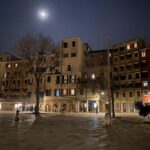
- Cannaregio after dark: narrow lanes, calm squares, and real unpredictability
- The Scuola Grande / hospital façade: Scuola-like sculpture and a living building
- Colleoni’s equestrian statue: history in bronze and political attitude
- Libreria Acqua alta and Ponte dei Colafelzi: a peaceful pause with canal views
- Basilica Dei Santi Giovanni e Paolo (San Zanipolo): the Doge Pantheon effect
- Campo Santa Maria Formosa: the boundary between tourist Venice and real Venice
- Piazza San Marco at night: soft light, calmer air, and an almost-empty square
- Price and value: what $93.12 buys you in Venice time
- Walking comfort: what to plan for when Venice gets dark
- The Venice access fee on certain days (read this before you arrive)
- Should you book this night tour or skip it?
- FAQ
- How long is the Venice by Night tour?
- How much does the tour cost?
- Is the tour offered in English?
- Is there a limit on group size?
- Do I get hotel pickup?
- Where do I meet the guide?
- Where does the tour end?
- Are entrance tickets included?
- What’s the cancellation policy?
- What happens if the weather is bad?
Key points to know before you go
- Night-first route: crafted for the lighter, quieter feel of Venice after daytime crowds move on
- Small group size (max 15): easier pacing and more questions than the big buses
- Photo-friendly stops: church façades, canal views, and the night-lit St Mark’s approach
- Scuola Grande / hospital façade viewing: an iconic marble front you can appreciate without a big-ticket museum stop
- Two possible directions: some start at Campo dei Gesuiti; others begin near St Mark’s and work toward Rialto
- English-escorted with a licensed guide: stories plus practical pointers for reading the city at night
How after-dark timing changes what Venice feels like
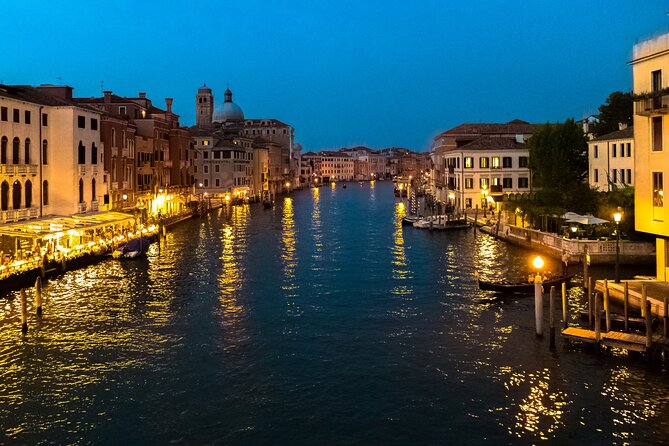
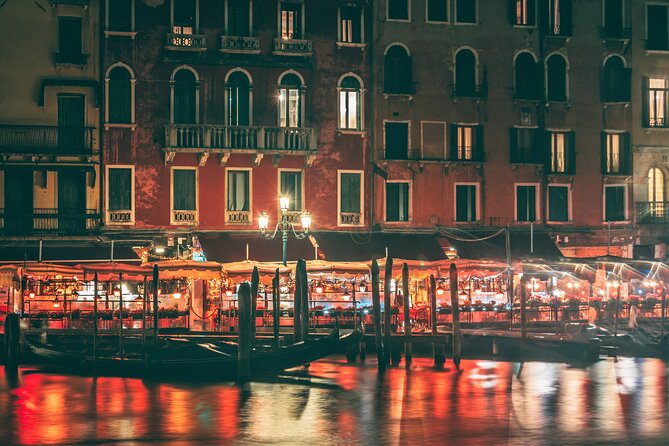
Daytime Venice can be a lot of beautiful chaos: lines, crowds, and people jostling for the same photo angle. This tour flips that. You’re out at night when the city’s lights turn stonework into something almost theatrical—especially Baroque and Renaissance façades.
You also get better “walk-and-look” time. Because the start is set after attractions close, the stops feel less like you’re squeezing into another checklist. Instead, you can slow down at each corner—check the canal reflections, spot the details along church exteriors, and let the guide’s stories give context to what you’re seeing.
If you like Venice the way you see it in old movies—glowing windows, quiet alleys, and the occasional surprise view—this is the right vibe.
You can also read our reviews of more evening experiences in Venice

Where to meet and how the night tour ends
Meeting points depend on the specific departure time and route direction.
- A 19:30 departure starts at Combo in Campo dei Gesuiti and finishes at Piazza San Marco.
- A 21:30 departure starts near St Mark’s Square and finishes near Rialto, effectively working the route in reverse.
- If you book a private group, you may have hotel pickup and drop-off within the historical center, and the route can be tailored to what you care about most.
One practical note: the tour ends in a different place than it starts. If you’re planning dinner reservations or trying to catch a specific vaporetto, you’ll want to know your end location in advance.
Santa Maria Assunta ai Gesuiti: Baroque light on an over-the-top façade
The tour begins at Combo, the former Convento dei Gesuiti, stepping outside to take in the Chiesa di Santa Maria Assunta ai Gesuiti façade. It’s the kind of church front that feels designed for drama—rich ornamentation, dramatic Baroque angles, and details you only notice when the shadows are doing their job.
In a night setting, the stonework reads differently. You’re not just looking at architecture; you’re seeing how Venice uses light on surfaces. Even if you only get a few minutes at the stop, you’ll come away with a stronger sense of why Venice built its reputation on spectacle.
Practical tip: this is a pause-and-camera moment. If your phone is struggling at night, switch to a stable stance, and shoot a couple of shorter bursts rather than one long exposure.
Cannaregio after dark: narrow lanes, calm squares, and real unpredictability
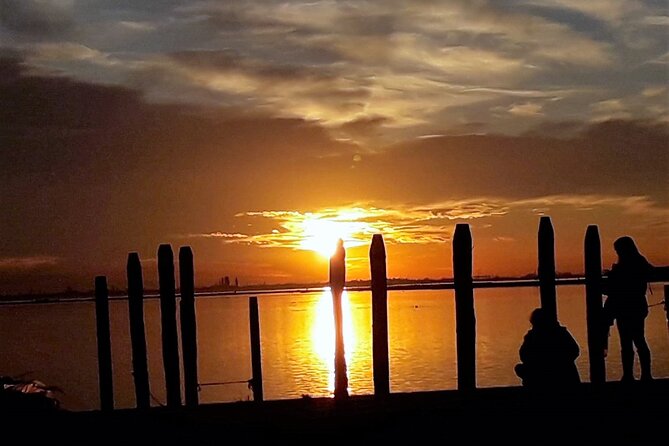
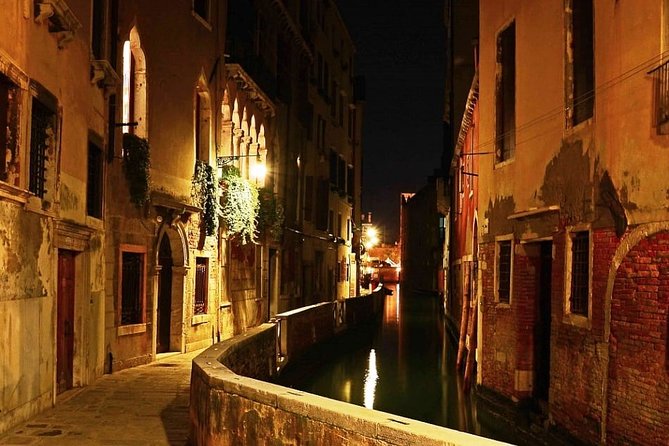
From there, you head into Cannaregio, where the best part is the city’s refusal to behave like a straight line. You’ll wander narrow streets and small squares that don’t fit neatly into the daytime tourist map.
This is where the tour earns its promise of showing Venice like locals do: it’s not just about hitting famous points. It’s about teaching you how to move through the city at a human pace—how to turn corners, follow the canal glimpses, and let the street plan change the mood.
The drawback here is also simple: you’re walking. If you don’t love uneven stone underfoot or you’re sensitive to night fatigue, go slow and wear shoes that won’t punish you in 20 minutes.
The Scuola Grande / hospital façade: Scuola-like sculpture and a living building
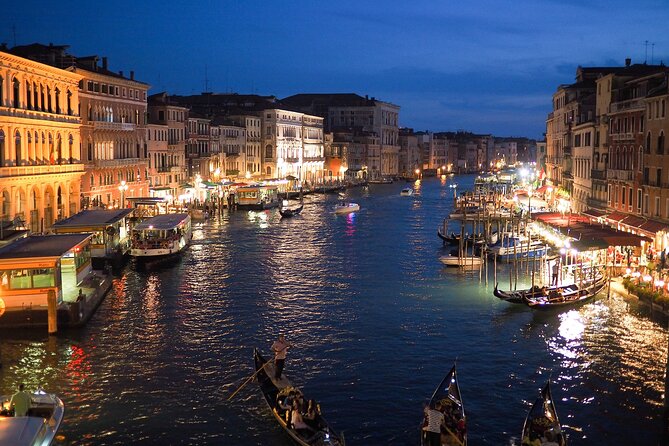
One of the most striking stops is around the Scuola Grande di San Marco area, described as the most beautiful hospital. The façade you’ll admire is tied to the Ospedale di San Giovanni e Paolo, with credit given to Pietro Lombardo and Mauro Codussi.
Here’s what makes it special at night: you’re seeing a high Renaissance marble front with color and visual tricks that feel made for nighttime viewing. And the history lands with extra weight because this place doesn’t just sit there as a monument. It continues as a public hospital, so the façade connects grand design to everyday life.
Time at this stop is short, but that’s actually a benefit. You’re not stuck in a long interior visit. You get a clear exterior look and the story that explains why it matters.


Colleoni’s equestrian statue: history in bronze and political attitude
Next up is the Equestrian Statue of Bartolomeo Colleoni. It’s one of only two public equestrian monuments in Venice—so yes, it’s rarer than it sounds. And it comes with a story about loyalties, mercenary command, and the Republic’s complicated relationships.
What I like about including this in a night walk is how it breaks the pattern of only churches and palaces. A bronze statue gives you a different kind of scale and presence. It’s also a good “reset” moment between denser architecture stops.
You’ll likely stand for a few minutes, take in the surrounding streetscape, and then move on with your brain already switching into story mode.
Libreria Acqua alta and Ponte dei Colafelzi: a peaceful pause with canal views
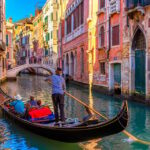
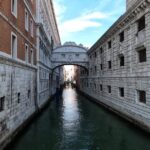
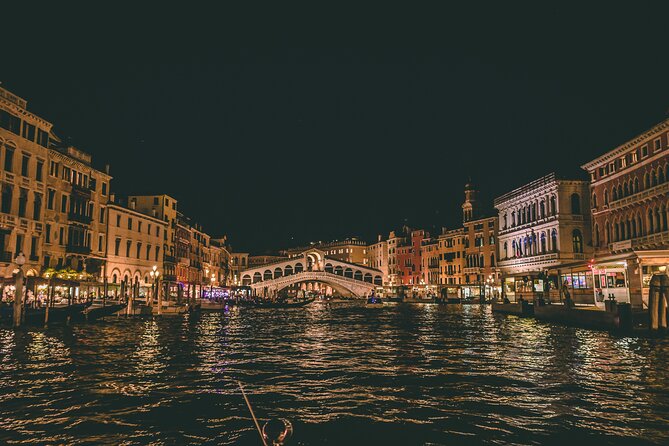
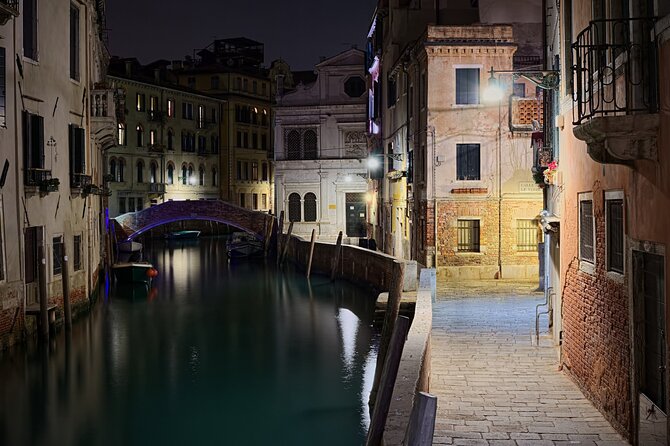
Then comes Libreria Acqua alta and the nearby Ponte dei Colafelzi. This is one of the calmer stretches, with a chance to step aside and look at canal views without the press of a major square.
The bookshop itself is famous, but the bridge is what makes this stop work on a night tour: it gives you a quiet spot to breathe, frame reflections, and take photos that feel less like you’re copying a postcard.
If you enjoy photography, take advantage of the water reflections. If you don’t, enjoy the change of rhythm—Venice feels different when you’re not craning your neck at a façade.
Basilica Dei Santi Giovanni e Paolo (San Zanipolo): the Doge Pantheon effect
At Basilica Dei Santi Giovanni e Paolo, you get the “Pantheon of the Dogi” feeling. In Venetian dialect it’s often called San Zanipolo, and the church served as the final resting place for Venice’s rulers.
What you’ll appreciate from the outside and immediate area is the scale: the church is designed to inspire awe, with a vast interior and famous stained glass. The bigger draw here is the 25 Doge tombs, which anchor the site in political power and funerary tradition.
Even with a brief stop, this is the moment where the tour’s history-to-architecture link really clicks. Your guide can point out what you’d likely miss on your own—why certain details mattered to a city that built authority into stone.
Campo Santa Maria Formosa: the boundary between tourist Venice and real Venice
Then you reach Campo Santa Maria Formosa, and this is where the tour tries to draw a line: not between “famous” and “not famous,” but between crowded routes and spaces where locals actually exist.
This campo is also tied to pop culture via the setting used in Spider-Man: Far From Home, where a superhero moment happens around the bell tower. If you’re a movie fan, it adds a fun modern layer. If you’re not, you’ll still enjoy the sense of stepping into a more everyday Venice.
At this point in the tour, I like how it feels like the city’s switch flips. You stop thinking only about architecture and start noticing street life—how the light falls on doorways, how the campo frames the sky, and how quiet can still feel lively.
Piazza San Marco at night: soft light, calmer air, and an almost-empty square
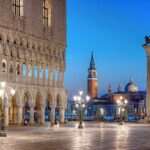
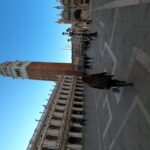
The finale is Piazza San Marco, where night turns the square into something serene. The contrast is the whole point. During the day, the square can feel like it’s constantly auditioning for attention. At night, the café lights and basilica glow create a more intimate mood, and the space can feel almost empty.
This stop is also a good photography payoff. Instead of fighting for a spot, you can take a few minutes to compose shots with breathing room. And the guide’s final stories help you connect what you saw earlier—how Venice’s power and devotion show up in façades, monuments, and squares.
One practical thing to consider: if you’re expecting a long wander inside major sites, this is not that kind of tour. It’s a walk-and-pause experience designed for night views and exterior appreciation.
Price and value: what $93.12 buys you in Venice time
At $93.12 per person for about 1 hour 30 minutes, the value is mainly in three places:
- Time efficiency: after-hours start means fewer crowd delays and better chances to actually look.
- A licensed guide: you’re paying for interpretation—what the façades mean, why certain monuments exist, and how the city’s legends connect to real places.
- Small group format (max 15): you get movement flexibility and a more human pace than big group tours.
Also, the tour includes a mobile ticket, and it’s conducted in English. If you’re the type who wants to know what you’re looking at instead of just checking boxes, that’s where your money shows up.
If you want hotel pickup, that’s only included for the private option. Shared departures rely on meeting the guide at the stated point.
Walking comfort: what to plan for when Venice gets dark
Night tours sound easy until you’re on Venetian stone after dark. I’d plan for these basics:
- Mosquitoes: one person noted the need to dress appropriately for bugs. Bring repellent and expect you might be outside a while.
- Photo patience: low light means you’ll want stable footing and a willingness to take multiple shots rather than expecting one perfect frame.
- Stamina: it’s about 90 minutes of walking with stops, so it’s doable for most people, but not a sit-and-watch tour.
One more detail that can make the night feel even more real: the guide may tell you how Venice deals with rising water and show you tide-related context. It’s the kind of local practical knowledge that turns a pretty walk into something that sticks.
The Venice access fee on certain days (read this before you arrive)
There’s also a Venice-related rule you should know about: on certain dates, people visiting for the day from outside Venice may be required to pay an access fee. You can check which days apply and whether you qualify for exemptions at https://cda.ve.it.
This doesn’t change the tour itself, but it can affect your day plan and what you pay on top of the ticket.
Should you book this night tour or skip it?
Book it if you want:
- a lighter, quieter Venice experience without spending hours inside buildings
- a story-led walk that helps you read façades, monuments, and squares at night
- a night view of St Mark’s that feels calmer than daytime
Consider skipping or choosing a different format if:
- you strongly need hotel pickup and don’t want to manage meeting and ending locations
- you don’t like walking in uneven streets at night
- you’re hoping for long museum-style interior visits, because this tour focuses on exterior appreciation and street-level stops
My take: if this is your first night in Venice, it’s an excellent orientation. If it’s not, it’s still a great way to see Venice from the side you rarely catch during the day. For value, the combination of small group + after-hours timing + licensed guiding is exactly what makes it feel worth the money.
FAQ
How long is the Venice by Night tour?
It runs for about 1 hour 30 minutes.
How much does the tour cost?
The price is $93.12 per person.
Is the tour offered in English?
Yes, it is offered in English.
Is there a limit on group size?
Yes. The tour has a maximum of 15 travelers.
Do I get hotel pickup?
Hotel pickup is only available for private group bookings. For shared tours, you meet the guide at the general meeting point.
Where do I meet the guide?
For the 19:30 departure, you start at Combo in Campo dei Gesuiti. For the 21:30 departure, you start near St Mark’s Square. The tour ends in a different location depending on the departure.
Where does the tour end?
For the 19:30 departure, it ends in Piazza San Marco. For the 21:30 departure, it ends near Rialto.
Are entrance tickets included?
For the listed stops, admission tickets are listed as free. Gratuities are still at your discretion.
What’s the cancellation policy?
You can cancel for a full refund up to 24 hours in advance. If you cancel less than 24 hours before the start time, the amount paid is not refunded.
What happens if the weather is bad?
The experience requires good weather. If it is canceled due to poor weather, you’ll be offered a different date or a full refund.