REVIEW · VENICE
New – Maleficia: Inquisition, Torture and Witchcraft between the centuries
Book on Viator →Operated by CITY TOURS CO. LTD · Bookable on Viator
Venice shows its darker courtroom secrets. This Maleficia exhibition turns the famous Prisons’ Palace into a guided story of the Holy Office’s witchcraft persecutions, using original documents and period objects and reproductions. You’ll move through testimonies, records, and justice instruments in a setting that feels unmistakably Venetian—heavy stone, grim history, and clear explanation.
I also like the small-group feel. With a maximum of 15 people and a roughly one-hour visit, the pacing is tight, so you’re not trapped in museum fatigue.
One drawback: the meeting point can feel tricky if you’re not arriving with your voucher details handy. A bit of extra time to find the staff and entrance is smart, because signage at historic buildings can point you somewhere else.
In This Review
- Key points to know before you go
- Maleficia in Venice: what you’re really signing up for
- The setting: Circolo Artistico in Palazzo delle Prigioni
- What the exhibition covers: Holy Office documents and justice instruments
- A respectful tone (and a heavy topic)
- Stop 1: The Prisons’ Palace rooms and the guided walk through the evidence
- Original artifacts and reproductions: why that mix is useful
- Instruments of justice and torture: what you should expect
- Famous-name connection: Giacomo Casanova
- How long it takes (and how to fit it into a Venice day)
- Group size and the guide experience
- Price, value, and what $11.56 buys you here
- Logistics that can trip you up (and how to avoid it)
- Who should book Maleficia (and who should skip it)
- Should you book this tour?
- FAQ
- Where does Maleficia start?
- How long is the tour?
- What ticket do I receive?
- Is the ticket refundable?
- What group size should I expect?
- Is there an extra access fee on some dates?
Key points to know before you go
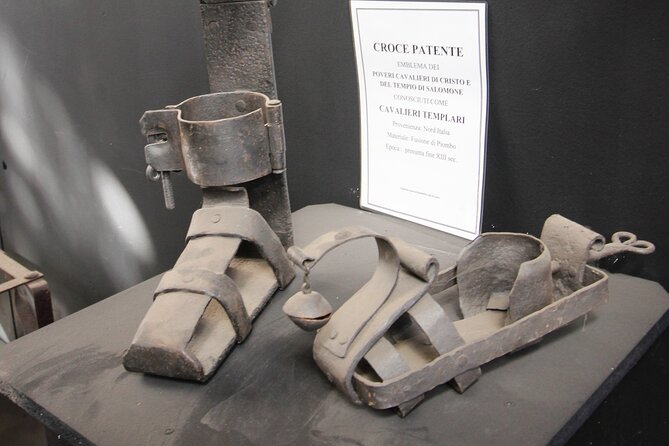
- Prisons’ Palace setting: You’re seeing the topic inside the Venetian Republic’s former prison rooms.
- Documents plus tools: The exhibit uses both paper evidence and the justice instruments linked to persecution.
- 15th to 18th century focus: The time span is deliberate, helping you connect early and later witchcraft narratives.
- Casanova gets a mention: The exhibit references Giacomo Casanova being accused of magic and occult practices.
- 1-hour format: It’s short enough for a busy Venice day, but still guided with time to ask questions.
Maleficia in Venice: what you’re really signing up for
Maleficia is not a general “Venice history” stop. It’s a focused exhibition about the Inquisition-era fear around witchcraft, magic, and accusations of wrongdoing—presented through what looks like the working materials of justice: documents, suggestive testimonies, and the physical instruments used to enforce the verdicts.
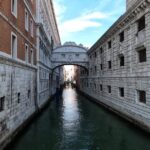
That’s the key value here. You’re not just reading about witchcraft myths. You’re looking at how authorities framed accusations and built cases, including the tools associated with torture and punishment. The venue matters too: the exhibition is housed in the Prisons’ Palace, in rooms tied to the Venetian Republic’s judicial world.
If you’re curious about why these accusations spread (and how power shaped belief), this gives you a concrete starting point. Just be prepared for the subject matter: it’s historically specific, and it centers on suffering and condemnation.
You can also read our reviews of more tours and experiences in Venice.


The setting: Circolo Artistico in Palazzo delle Prigioni
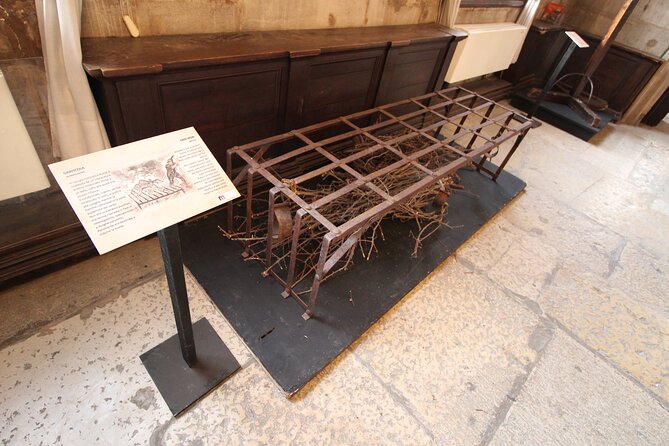
The tour meet-up happens at Circolo Artistico – Palazzo delle Prigioni on Riva degli Schiavoni, 4209. That address puts you in a prime Venice zone—walkable, and generally convenient with public transportation nearby.
This is also one of those places where old architecture can play tricks on you. Buildings around Venice often have multiple entrances or signage that can reflect different current uses. One person found the matching between “meeting” and what they were seeing on site confusing, so I’d treat this as a “arrive early and plan like a pro” situation.
Practical tip: bring your phone with the mobile ticket voucher ready to show, and screenshot the meeting-point details before you leave your hotel. If you’re unsure, ask a staff member at the closest public-facing point which entrance corresponds to the guided visit.
What the exhibition covers: Holy Office documents and justice instruments
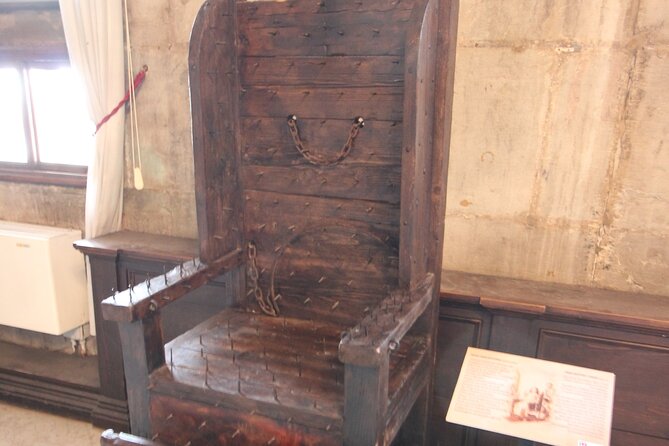
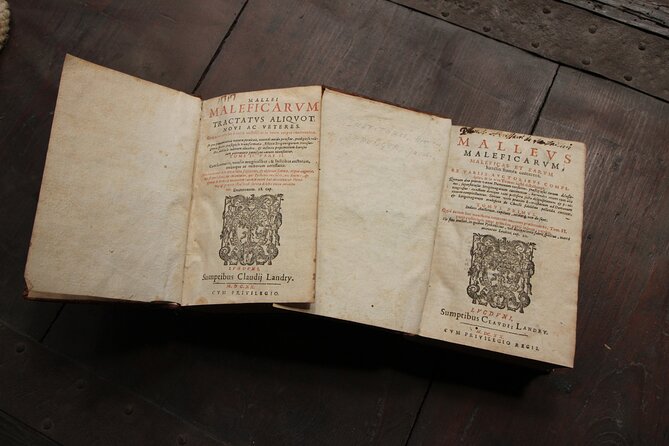
The exhibition is designed to help you connect the dots across centuries. Between the 15th and 18th centuries, it presents the Holy Office style of prosecution, including documents used in the persecution of witchcraft and the tools of justice used to confront it.
In plain terms, you’re walking through a curated mix of:
- original-style documents and written evidence
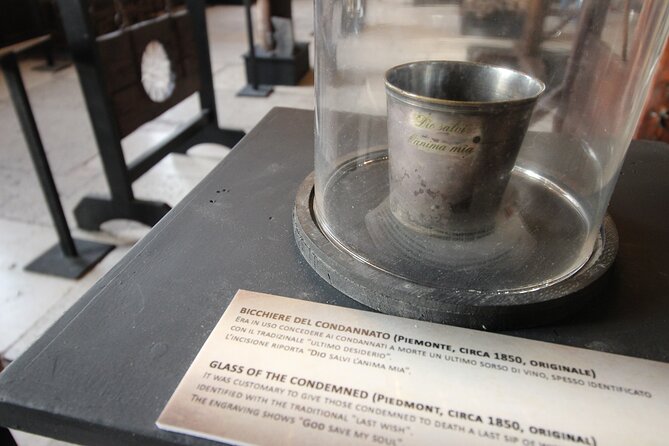
- objects and reproductions tied to legal punishment
- contextual explanations that help you understand what you’re looking at
I like this approach because it avoids turning the subject into pure theater. When you see the physical side of justice—paper, objects, and instrument references—you get a more grounded sense of how the system worked, not just the myths surrounding it.
A respectful tone (and a heavy topic)
The materials are connected to torture and executions, and the exhibit’s goal is reflection as much as education. If you’re the type of person who prefers light museum themes only, you might find the content mentally intense. But if you can handle grim history, the format gives you a reasoned, historical way to think about punishment, fear, and power.
Stop 1: The Prisons’ Palace rooms and the guided walk through the evidence
The experience is essentially one guided circuit inside the Palazzo delle Prigioni. Expect to spend about one hour, and you’ll stay together as the guide points out what matters and where.
Here’s what stands out about the visit format:
- You’re shown the space’s judicial context, not just stored objects.
- You get a guided thread so the items don’t feel random.
- You’re invited to reflect, not just absorb trivia.




Original artifacts and reproductions: why that mix is useful
You’ll encounter both original artifacts and reproductions. That’s a practical museum strategy: it allows the exhibit to show you what evidence and objects looked like, even when originals may be limited.
From a visitor perspective, this matters because documents and tools are often harder to interpret than, say, paintings. Reproductions paired with explanation can help you understand:
- what category an item falls into (document vs. instrument)
- what role it played in the justice process
- how the authorities used evidence and procedure to justify punishment
Instruments of justice and torture: what you should expect
The exhibition specifically references instruments of justice employed to counter witchcraft accusations. That means the tour isn’t only about papers or stories. It’s also about the physical machinery of coercion that authorities relied on.
If you’re sensitive to this kind of topic, keep your expectations realistic: the exhibit is built around that theme. I’d go in with the mindset that you’re learning about history’s systems, not searching for comfort.
Famous-name connection: Giacomo Casanova
One especially memorable element is that the exhibit mentions Giacomo Casanova being accused of dabbling in magic and occult practices. That detail helps many people hook the topic in a way that feels less abstract. Casanova is a familiar name in popular history, and connecting him to these accusations underlines that suspicion wasn’t reserved only for outsiders.
It also keeps the exhibit from feeling like a distant medieval legend. Even in a Venice setting, accusations could brush against well-known figures, depending on how authority and rumor intersected.
How long it takes (and how to fit it into a Venice day)
At about 1 hour, Maleficia is ideal for a Venice schedule that already includes the big sights. You can slot it between churches, canals, and viewpoint walks without losing half your day to museum lines or long explanations.
The price is also part of why it fits. At $11.56 per person, you’re paying for a guided walk through a specific, themed exhibition in an important building. For many visitors, that’s good value because you’re getting more than an unguided ticket: you’re getting a structured story tied to the items you see.
Still, think of it as “focused and compact,” not “all-encompassing.” If you want a full history lecture on witchcraft across Europe, this may leave you hungry for more.
Group size and the guide experience
This tour caps at 15 travelers, and that matters. Smaller groups are easier to manage in tight spaces, and they usually mean you can actually hear the guide when questions come up.
Some reviews mentioned an excellent guide and that the guide was engaging and informative. That lines up with the way the tour is built: if the exhibit is handling grim, specialized content, you really want someone who can translate what you’re looking at into clear context.
If you’re considering skipping any audio option: one reviewer regretted not using an audio guide. The tour info you have doesn’t confirm audio details either way, but it’s a good reminder that historical exhibits can reward extra layers of listening if you’re the kind of visitor who likes to control your own pace.
Price, value, and what $11.56 buys you here
Let’s be honest: Venice can get expensive fast. At $11.56, this doesn’t feel like a premium-price museum experience. That’s exactly why I think it’s worth considering.
What you’re paying for:
- access to the exhibition space inside the Prisons’ Palace
- a guided narrative that links documents, artifacts, and justice instruments
- a relatively short time commitment, so you get a meaningful chunk of learning without draining your whole day
What you’re not getting (based on what’s provided): there’s no mention of a long multi-stop itinerary or extended add-ons. So treat it as a “make time for this specific topic” ticket, not an all-day tour.
And one more value note: if you come at the right time and avoid peak congestion, the experience can feel smooth because it’s short and focused.
Logistics that can trip you up (and how to avoid it)
The meeting point is listed clearly, but the reality of historic Venice is that buildings can be confusing from the outside. One account described the meeting place as unclear due to signage that pointed to a different exhibit, plus a lack of visible company branding right at the spot.
So I’d do three things:
- Arrive a few minutes early.
- Have the meeting-point address saved in your maps app.
- Keep an eye out for other small groups heading inside for the same visit.
Also, confirm whether you’re arriving at the exact location stated: Circolo Artistico – Palazzo delle Prigioni on Riva degli Schiavoni. In Venice, being two blocks off can feel like a half-hour detour.
Who should book Maleficia (and who should skip it)
Book it if you:
- want a short guided museum experience in a real historic setting
- like evidence-based history (documents + objects), not just stories
- are curious about how the justice system framed witchcraft accusations
- enjoy learning about Venice beyond canals and palaces
Skip it if you:
- want only cheerful or light museum themes
- are strongly uncomfortable with subjects tied to torture and punishment
- need a very long, academic deep dive across many locations and time periods
This is a good match for travelers who like compact, topic-specific experiences that still give real context.
Should you book this tour?
I think it’s a good book for the right mood. If you’re in Venice for a few days and you want one structured stop that uses the setting of the Prisons’ Palace to teach how persecution worked, Maleficia delivers a focused hour with guided interpretation.
Just go in prepared. Give yourself time to find the meeting point, and mentally frame it as serious history. For many people, that mix of short duration and strong thematic presentation is exactly what makes it worth it.
FAQ
Where does Maleficia start?
The tour starts at Circolo Artistico – Palazzo delle Prigioni, Riva degli Schiavoni, 4209, 30122 Venezia VE, Italy.
How long is the tour?
The visit is approximately 1 hour.
What ticket do I receive?
You get a mobile ticket.
Is the ticket refundable?
Yes. It is refundable until 24 hours before the visit for a full refund.
What group size should I expect?
The tour has a maximum of 15 travelers.
Is there an extra access fee on some dates?
On certain dates, day visitors staying outside Venice may need to pay a €5 access fee. Details and exemptions are listed at https://cda.ve.it.