REVIEW · VENICE
Gay Life in Venice from the Middle Ages to Present Days
Book on Viator →Operated by deTourist Venice Valerio Coppo · Bookable on Viator
Venice has receipts for love, even when it was forbidden. This 2-hour walk traces LGBTQ life from medieval cruising spots and punishments to modern pop-culture echoes, all through the city’s real street corners and monuments. I like that it’s not a slideshow: you’re moving, looking, and hearing how the past shows up in stone and canal-side architecture.
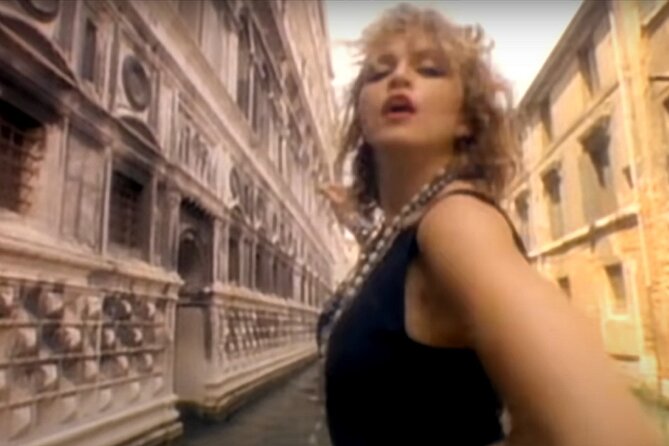
I especially like two things here. First, the tour keeps the group intimate (capped at eight, with a stated maximum of 10), so Valerio Coppo can actually explain the why, not just the what. Second, you get a rare mix of art and everyday locations—church arcades under surveillance, bridges tied to sex work, and even modern links like Harry’s Bar and the Palazzo connection to Madonna’s Like a Virgin.
One consideration: the stories don’t shy away from control and punishment—surveillance, executions, and brutal outcomes are part of the narrative—so if you prefer lighter history, plan on a heavier tone.
In This Review
- Key highlights worth your time
- LGBTQ Venice: how the past still shows up on your route
- Valerio Coppo and the small-group format that makes it work
- Price and what you’re really paying for
- Stop-by-stop: the route from medieval cruising to modern culture
- Campo San Giacomo dell’Orio: a poet’s life and the cost of being seen
- Fondamenta del Megio: the historian and a warning hidden in kindness
- Chiesa Santa Maria Mater Domini: surveillance disguised as church space
- Ponte delle Tette: red-light energy and cat-mask cruising
- Chiesa di San Cassiano: Rolandina Roncaglia, early transgender history in Italy
- Campo San Cassiano: opera-house prestige meets sexuality and state surveillance
- Calle dell’Ogio: the Canal Grande meeting and the British gay movement
- Campo San Giacomo di Rialto: public proclamations near the market
- Ruga dei Oresi: a suspicious pharmacy and the death penalty threat
- Palazzo Ca’ Zenobio: late Baroque interiors and an 80s pop-culture twist
- Chiesa di San Sebastiano: Paolo Veronese and a saint for the community
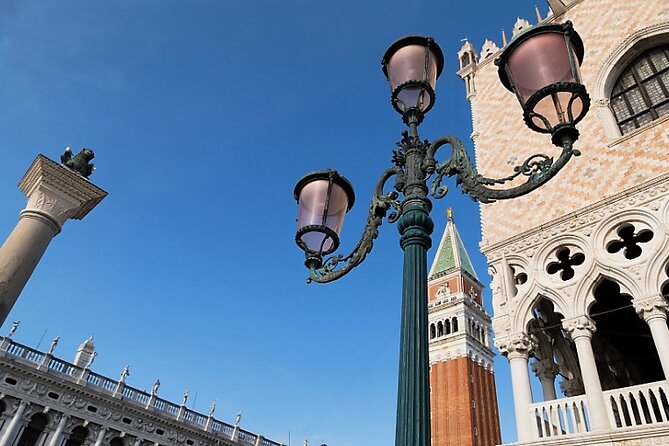
- Campanile di San Marco and the “cheba” cage: punishment staged in public
- Piazzetta San Marco: executions between columns
- Harry’s Bar: the rumor of a queer gathering point
- Riva degli Schiavoni: a staged love story by a rower and a German writer
- Calle del Dose da Ponte: a lesbian American painter and collected love affairs
- Palazzo Ca’ Dario: lots of owners, lots of “unfortunate events”
- Palazzo Mocenigo: bisexuality in a complex sentimental life
- Chiesa Parrocchiale di San Martino di Castello: a 1450 law listing cruising places
- What you’ll come away with (and how to get the most)
- Who should book Gay Life in Venice from the Middle Ages to Present Days
- Should you book it
- FAQ
- FAQ
- How long is the Gay Life in Venice tour?
- What language is the tour offered in?
- How many people are in the group?
- Where does the tour start and end?
- Is it a mobile ticket tour?
- What’s included in the price?
- Is there free cancellation?
- Are there any extra access fees?
Key highlights worth your time
- Valerio Coppo’s storytelling keeps the walk human, not textbook
- Small group size makes it easier to ask questions and stick with the details
- Medieval to modern connections link cruising, literature, art, and pop culture
- Specific locations (church arcades, bridges, campos) show how Venice policed love
- Free stop admissions mean you’re not constantly paying extra at each site
LGBTQ Venice: how the past still shows up on your route
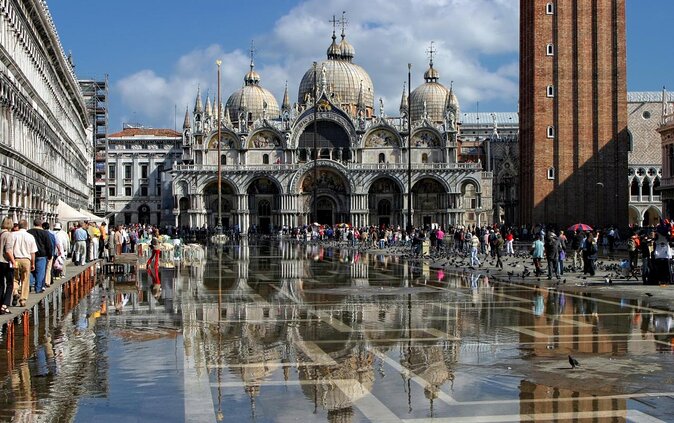
Venice is good at making you feel like time has stopped. But this tour does the opposite—it shows how certain behaviors were noticed, tolerated in patches, attacked in others, and recorded in public spaces. What’s striking is the contrast: the same city that produced famous poets, artists, and writers also built systems to punish people labeled as sodomites.
The walk is built around places you can actually point to: a bridge neighborhood, church galleries, a campo near the Rialto market, and art spaces tied to famous names. Instead of vague references, you get the physical setting and the reason it mattered. That’s why this works even if you don’t know a lot going in.
You’ll also notice something else: the city’s LGBTQ story here isn’t presented as one single straight line. It’s a set of overlapping realities—public announcements and fear, hidden meeting points, coded behavior, and later cultural breakthroughs.
You can also read our reviews of more tours and experiences in Venice.
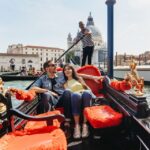
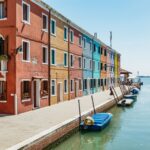
Valerio Coppo and the small-group format that makes it work
The experience is led by deTourist Venice Valerio Coppo, and the setup is designed for close listening. With numbers capped at eight (and a stated maximum of 10), the pace stays manageable for a 2-hour walk that still covers a lot of ground.
In practice, that size matters. Venice streets are narrow. Campo corners fill fast. When you’re in a small group, Valerio can point things out without everyone falling behind, and you’re not stuck craning your neck at a wall of people. You also get the feel of a guided conversation more than a rush-through.
One extra practical detail: the tour uses a mobile ticket, so you can skip the printout hassle. Stops are marked with free admissions, which helps keep the experience from turning into a series of pay-at-the-door interruptions.
Price and what you’re really paying for
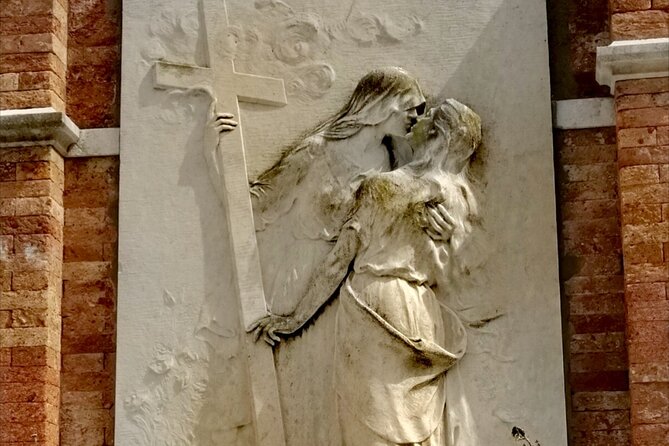
At $92.63 per person for about two hours, this isn’t a bargain-market rate. But you are paying for something specific: a focused, themed route that’s short enough to stay lively, with a specialist guide and a small group. You’re also not paying separate entrance fees for each listed stop, since the itinerary indicates admission tickets are free at every stop.
In other words, the value is in interpretation. Venice is famous, but it can also be repetitive if your sightseeing is all major landmarks. This tour is pricier than a standard generic walking tour, yet it trades in the kind of specificity that’s hard to replicate on your own—especially the way it links locations to LGBTQ life and the legal/social pressure around it.
Stop-by-stop: the route from medieval cruising to modern culture
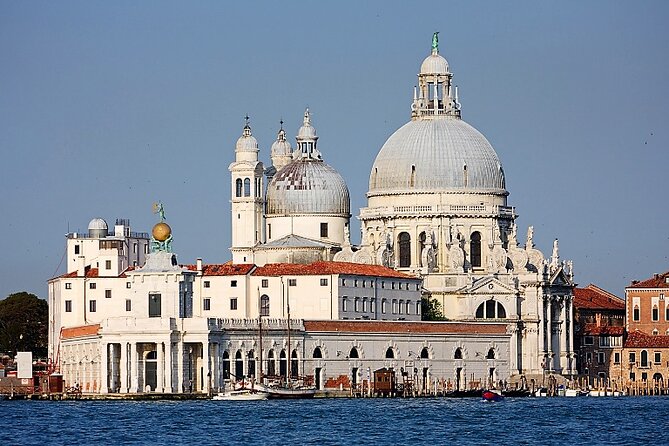
Below is what you’ll experience as you move from start to finish, with the “why it matters” for each location. The tour runs roughly 15 minutes per stop (with a couple shorter ones), and most stops are free to enter or view.
Campo San Giacomo dell’Orio: a poet’s life and the cost of being seen
You begin at Campo San Giacomo dell’Orio. The guide starts with an Italian poet tied to early exploration of homosexuality, including the modern arc of coming out in the early 1970s and a tragic end years later. Even though you’re standing in a normal Venice campo, the story reframes it as a stage for ideas—how poetry can push boundaries before society catches up.
What I like about starting here is the emotional hook. It sets up the tour’s pattern: Venice isn’t just about old scandals. It’s about how identity, art, and consequences keep colliding.


Fondamenta del Megio: the historian and a warning hidden in kindness
At Fondamenta del Megio, you pay respect to a Venetian historian from the 15th–16th centuries. His major chronicle work, the Diarii, is described as an attempt at a comprehensive Venice history before another was officially appointed to do so. There’s also an intriguing twist: he was said to be kind, extremely kind, but the tour explains why that kind reputation might not have been a compliment.
This stop matters because it introduces a softer, more complicated lens. Not all harm arrives wearing a villain’s mask. Venice’s story includes people who could be “nice” while still feeding systems that controlled others.
Chiesa Santa Maria Mater Domini: surveillance disguised as church space
Next is Chiesa Santa Maria Mater Domini. Here the focus is practical architecture: public authorities placed the church arcades under surveillance to prevent sodomites from using the space to cruise and meet in 1488. Standing by a church tied to that moment makes the theme click: sacred spaces were also treated as potential meeting points, and the city responded with monitoring.
The takeaway is uncomfortable but important. Venice wasn’t blind; it was actively managing where and how people met.
Ponte delle Tette: red-light energy and cat-mask cruising
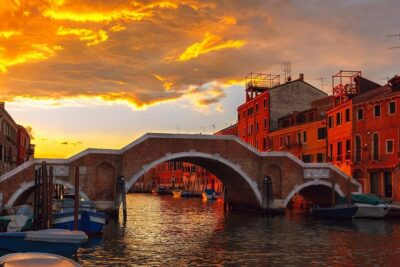
At Ponte delle Tette, the tour turns to the street-level side of history. You’ll walk through what’s described as the 15th-century red-light district of Venice. Authorities, in this telling, encouraged prostitutes to display their wares in an attempt to prevent sodomy in town—an approach that basically admits the city knew what was going on.
Then comes the vivid detail: the “gnaghe,” men dressing as women, covering their faces with cat masks, making plaintive cat-calls, and making explicit proposals to passers-by. It’s the kind of information you don’t stumble upon in standard sightseeing, and it’s also a reminder that gender play and theatrical signals existed long before modern categories.
Chiesa di San Cassiano: Rolandina Roncaglia, early transgender history in Italy
At Chiesa di San Cassiano, you hear the story of Rolandina Roncaglia, described as the first trans person we know of in Italy. Born Rolandino, she lived as a woman for seven years in a house nearby. The tour notes she sold eggs and worked near the local market, and that she became a prostitute. In 1355 she was discovered, and her death is described as terrible.
This stop is one of the most emotionally heavy segments. But it also gives you something rare: a specific life arc tied to a specific place. That’s more respectful than treating transgender history as a general idea.
Campo San Cassiano: opera-house prestige meets sexuality and state surveillance
In Campo San Cassiano, you connect to a theatre that carried the title of the first public opera house in the world. Yet the tour also links the area to homosexual encounters, mentioning Giacomo Casanova’s role when he worked as a spy for state inquisitors in the 18th century.
This is where Venice’s contradictions shine. Cultural refinement and sexual policing lived side by side in the same neighborhoods. You’ll feel the city’s layered identity: art as entertainment, art as influence, and also art as cover or contrast.
Calle dell’Ogio: the Canal Grande meeting and the British gay movement
At Calle dell’Ogio along Canal Grande, the guide shares a story about a famous writer and pioneer of the British gay movement meeting a beautiful 19-year-old porter. It’s one of those stops that doesn’t require you to read archives—you’re simply watching the canal frontage where the story is said to have unfolded.
If you like the mix of literature and location-based storytelling, this is a good moment to lean in.
Campo San Giacomo di Rialto: public proclamations near the market
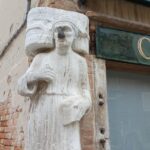
Next, you reach Campo San Giacomo di Rialto, near the Rialto market. A famous statue there served as a podium for proclamations and bans relating to sodomy. An officer read the names of people sentenced to death, with the block described as standing at the end of the staircase.
This stop is chilling because it’s public-facing. It turns a busy area into a reminder that the law wasn’t private. It was designed to be seen, heard, and enforced in the middle of daily life.
Ruga dei Oresi: a suspicious pharmacy and the death penalty threat
At Ruga dei Oresi, you hear about a “suspicious” pharmacy used by sodomites for meetings. The tour emphasizes that even being close to the location could lead to condemnation to death.
This is the most direct “how could a place end your life” kind of stop. It makes you understand why cruising and meeting points developed codes—because the stakes were openly lethal.
Palazzo Ca’ Zenobio: late Baroque interiors and an 80s pop-culture twist
At Palazzo Ca’ Zenobio, the story shifts into art and architecture. The palace is described as a significant example of Venetian late Baroque design. In the 18th century, it became a venue for intense intellectual life. Since 1993 after restoration, it serves as a research center for Armenian studies.
And then the pop-culture link: it’s described as the main indoor location used for Madonna’s Like a Virgin video in the 1980s. The tour uses this contrast on purpose—because LGBTQ life isn’t only about hidden cruising. Later cultural visibility also leaves traces in the city’s real walls.
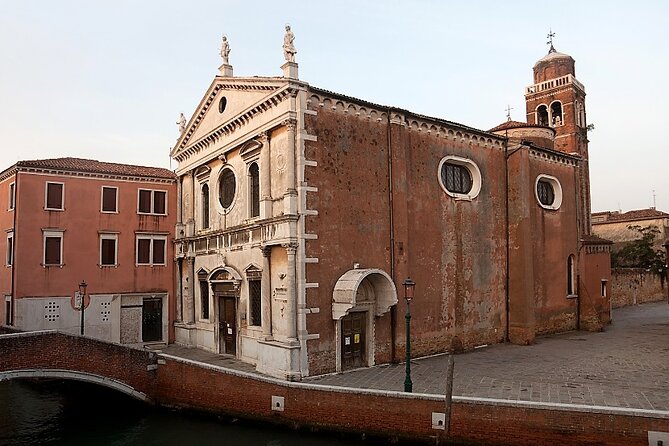
Chiesa di San Sebastiano: Paolo Veronese and a saint for the community
At Chiesa di San Sebastiano, the focus is visual art: Paolo Veronese’s painting cycle, and that he is buried there. The guide also explains why San Sebastiano is considered the patron saint of the LGBT community worldwide.
Even if you’re not a religious-art person, this stop works because it connects symbolism to physical place: you see why a figure could become meaningful enough to be claimed across time.
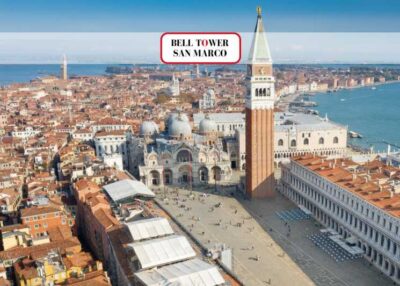
Campanile di San Marco and the “cheba” cage: punishment staged in public
Outside the tallest bell tower in Venice, the tour points out an iron cage called the cheba, dating to the 15th century and used in the 16th century. The tour describes it as used to expose sodomite priests to bad weather and crowd taunts below.
This is Venice as theatre—punishment as performance. It’s hard to hear, but it’s a key part of how law, shame, and power operated.
Piazzetta San Marco: executions between columns
At Piazzetta San Marco, the guide describes where executions took place up to the middle of the 17th century. The story is also connected to what Casanova confirmed in his writings.
If you’re building a mental map of “where things happened,” this stop ties it to the city’s most famous square. It shows how the most glamorous stage could also serve as the public end of a sentence.
Harry’s Bar: the rumor of a queer gathering point
Then you head to Harry’s Bar. The guide shares that the founder said it was just rumors, but the tour checks out the famous bar where gay travelers gathered up to the 1970s.
This is a lightness note in the middle of heavy material. It gives you a sense of how social spaces and conversation mattered too—where people could exist without constant fear, at least compared with earlier centuries.
Riva degli Schiavoni: a staged love story by a rower and a German writer
At Riva degli Schiavoni, you’ll visit a palace where a love story was staged between a Venetian rower and a famous German writer. The tour keeps it focused on the location and the romance-like framing, which adds tonal relief after surveillance and punishment.
It also reinforces that LGBTQ life in Venice wasn’t only about stigma—it was also about relationships, art, and storytelling.
Calle del Dose da Ponte: a lesbian American painter and collected love affairs
At Calle del Dose da Ponte, you hear about a hotel where a famous lesbian US painter used to live, collecting love affairs with both men and women. Even without a detailed timeline here, the stop is valuable because it shows Venice as a place artists chose for living and love, not just a place where society punished.
Palazzo Ca’ Dario: lots of owners, lots of “unfortunate events”
At Palazzo Ca’ Dario, you learn it’s famous for unrelated series of unfortunate events that happened to some of its owners, with many described as gay. This one feels more like a “character of place” stop, where the guide uses history to connect identity to what happened behind the walls.
Palazzo Mocenigo: bisexuality in a complex sentimental life
At Palazzo Mocenigo, the guide describes a palace that housed a famous British poet. This poet is acknowledged in the tour framing not only for poetry but also for a more or less important bisexual component in a complex sentimental and sexual life.
This is another stop where you’re meant to think about how written culture and private life intertwine—how identity can be part of emotional record, not just rumor.
Chiesa Parrocchiale di San Martino di Castello: a 1450 law listing cruising places
Finally, at Chiesa Parrocchiale di San Martino di Castello, the tour explains that an ancient porch (no longer existing) was listed in a 1450 law among places of the night where sodomites cruised.
It closes the loop. You start with poets and end with legislation. You leave understanding that Venice documented and regulated behavior, sometimes down to specific spots people used after dark.
What you’ll come away with (and how to get the most)
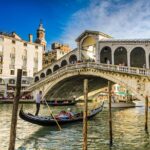
By the time you finish at Ponte di Rialto, you’re not just better informed about famous LGBTQ figures. You’re better at reading Venice itself. You’ll start noticing why certain church arcades, bridges, and public squares don’t feel neutral anymore. They feel like evidence.
If you want maximum value:
- Pay attention to the pattern of “public space vs private meeting.” The tour keeps contrasting the two.
- Don’t treat the pop-culture references as jokes. Madonna and Harry’s Bar help explain that LGBTQ visibility shifts over time, and Venice records those shifts in real buildings.
- Bring emotional readiness. The tour includes horrific punishments for people labeled as sodomites, plus surveillance tactics and executions.
Also, because this is a short 2-hour walk, it may feel like a lot of heavy material in a compressed format. If you like to process slowly, consider pairing it with a long lunch after.
Who should book Gay Life in Venice from the Middle Ages to Present Days
This tour is a great match if you:
- like history tied to exact streets and landmarks
- want LGBTQ stories that include law, punishment, and survival—not only modern pride
- enjoy the mix of art, literature, and even pop-culture footnotes
- want a small-group walk rather than a mass-market route
It might be less ideal if you want:
- purely light and celebratory content
- a long format with time for extended discussion at each stop
- a tone that avoids the harsh side of enforcement and consequences
Should you book it
I think it’s worth booking if you want a guided Venice that feels specific and earned. The combination of Valerio Coppo’s storytelling, a small group, and the way the route connects medieval surveillance to later cultural presence (from Paolo Veronese-linked art spaces to a Madonna video location) makes this more than an odd curiosity tour.
Book it if your ideal day includes walking, listening closely, and leaving with a mental map of how Venice shaped and reacted to LGBTQ life.
FAQ
FAQ
How long is the Gay Life in Venice tour?
It’s about 2 hours.
What language is the tour offered in?
The tour is offered in English.
How many people are in the group?
The experience is capped at eight travelers, with a stated maximum of 10.
Where does the tour start and end?
It starts at Campo San Giacomo dell’Orio and ends at Ponte di Rialto.
Is it a mobile ticket tour?
Yes, the tour uses a mobile ticket.
What’s included in the price?
It includes the tour leader and a nature and interpretive guide.
Is there free cancellation?
Yes. You can cancel up to 24 hours in advance for a full refund.
Are there any extra access fees?
On certain dates, if you’re staying outside Venice and visiting for the day, you may need to pay a €5 access fee. The tour data points to the city page for details and exemptions.